
Dried vegetables– tag –
-

If You Dry and Sell Your Lettuce, How Much Do You Get from 10kg?
Can the lettuce from our field be dried and turned into a product? Yes, we can dry it. But the first thing to know is that leafy vegetables become surprisingly light once dried: 10 kg fresh can end up as around 500 g finished. In this article, based on what we actually offer as OEM and contract processing... -
Dried Shishigatani Kabocha
Dried Shishigatani kabocha is a commercial ingredient made from the Kyoto heirloom vegetable "Shishigatani kabocha." Shishigatani kabocha is a Japanese kabocha of the genus Cucurbita in the gourd family, prized for its distinctive gourd-like shape pinched at top and bottom, and its higher-moisture, light flavor. Agriture... -
Dried Horikawa Gobo
Dried Horikawa gobo is a commercial ingredient made from the Kyoto heirloom vegetable "Horikawa gobo." Horikawa gobo is a large burdock that swells to 6–9 cm thick and around 50 cm long, with a hollow center (su-iri); it has soft flesh and a distinctive fragrance. This thick, hollow shape and the soft... -
Dried Shogoin Kabu
Dried Shogoin kabu is a commercial dried ingredient made from the Kyoto heirloom vegetable "Shogoin kabu." Shogoin kabu is one of Japan's largest round turnips, reaching 15–20 cm in diameter, prized for its white, smooth skin, dense yet soft flesh, and strong sweetness. Agriture handles contract drying of client-supplied raw materials... -
Dried Tamogitake
Dried tamogitake is a commercial dried ingredient made from the edible mushroom "tamogitake," characterized by its vivid yellow color. Known as a mushroom that gives off rich umami and stock flavor, that flavor is locked in through low-temperature drying. Agriture offers it sliced, crushed, or as powder depending on the use... -
Dried Benihoshi Mizuna
Dried Benihoshi mizuna is a commercial ingredient made from "Benihoshi," a mizuna variety that colors red-purple. Unlike ordinary green mizuna, it is characterized by vivid red-purple running from the leaf stalks to the leaf tips; that coloring is locked in through low-temperature drying. Agriture also offers the same Benihoshi mizuna finely powdered... -
Dried Ooba
Dried ooba is a commercial ingredient made from the leaves of green shiso (ooba). Prized for its vivid green and the refreshing aroma typical of shiso in the mint family, that color and aroma are locked in through low-temperature drying. Agriture also runs, in parallel, ooba powder (made to order) that finely powders the same green shiso... -
Dried Green Onion
Dried green onion is a commercial ingredient made mainly from the green leaf portion of leaf onion (banno-negi type), cut into rings. Whereas white negi (nebuka-negi) is eaten for its white blanched part, green onion is a negi used with its green leaves as-is for garnish and color; its vivid green and negi-like aroma are captured by low-temperature... -
Dried Wariboshi Daikon
Dried wariboshi daikon is a dry ingredient thicker than kiriboshi daikon, made by splitting daikon lengthwise and drying it. Unlike kiriboshi daikon, which is julienned, it is split lengthwise before being exposed to the sun, so a firm bite and volume remain well when rehydrated; that texture is stabilized through low-temperature drying... -
Dried mulberry leaf
Dried mulberry leaf is a commercial material made from the leaves of the mulberry tree (family Moraceae). Long cultivated as food for silkworms, mulberry leaves have been a familiar ingredient for mulberry leaf tea and green vegetable drinks, and their vivid green color and rustic flavor are sealed in through low-temperature drying. At Agriture, from the same mulberry leaf... -
Dried leek flakes
Dried leek flakes are a commercial material made by turning the Western leek (leek/porri) into flake form. They have little of the strong pungency or bite of Japanese long onion; when heated, they develop a gentle sweetness and a mellow body, and that flavor is sealed in through low-temperature drying. Agr... -
Dried corn
Dried corn is a commercial material made from the kernels of sweet corn (family Poaceae). The corn's natural sweetness and the color of its yellow kernels are sealed in as they are through low-temperature drying. At Agriture, from the same sweet corn, corn powder finely milled (made to order... -
Dried Japanese pepper (sansho)
Dried sansho is a commercial material made from sansho (genus Zanthoxylum, family Rutaceae). It is characterized by a sharp pungency, a tingling that lingers on the tongue, and a fresh, citrus-like aroma; the pungency and tingling come from sanshool, a compound contained in the pericarp. At Agriture... -
Dried shima pumpkin
Dried shima pumpkin is a commercial material made from shima pumpkin, a native pumpkin variety long grown in Okinawa. In Okinawa it is also called nankwa or chinkwa in dialect, and it is classified among the Japanese pumpkin group. Its flesh is high in moisture and sticky in texture, with restrained sweetness yet... -
Dried island chili pepper
Dried island chili is a commercial material made by turning shima togarashi—the fiercely hot chili that represents Okinawa's island vegetables—into whole form. A small fruit of the bird's-eye chili type, it is characterized by an intense heat said to surpass that of takanotsume and Tabasco. At Agriture... -
Dried kintoki carrot
Dried kintoki carrot is a commercial material made by cutting the Eastern-type carrot "kintoki carrot (Kyoto carrot)" into thin strips. Compared with common Western carrots, it is characterized by a more vivid crimson color and a gentle sweetness, and that color and flavor are sealed in through low-temperature drying. At Agriture, from the same kintoki carrot finely milled... -
Dried goya
Dried goya is a commercial material made by turning goya (bitter melon), Okinawa's signature summer vegetable, into ring-cut form. The flesh, with seeds and pith removed, is finished by low-temperature drying while preserving its characteristic bitterness and the green color of the skin. At Agriture, from the same goya finely milled goya... -
Assembling domestically grown yakuzen ingredients: the difference between familiar vegetables and imported crude drugs
When people hear "yakuzen ingredients," many may picture imported dried goods bought at a Chinese-ingredient store, such as jujube and goji berries. Yet many yakuzen ingredients can in fact be assembled from familiar domestically grown vegetables and dried goods. The image that "you cannot start without ordering something special" is... -
What is yakuzen? Its meaning, the difference from kampo, and the basics of starting with familiar ingredients explained
Many people feel that "yakuzen seems good for you, but doesn't it require special ingredients or crude drugs?" In fact, yakuzen is a style of eating based on the ideas of Eastern medicine that you can start with everyday vegetables from the supermarket. On this page, we explain what yakuzen is... -
山椒はうなぎ以外に何に使う?年4回、姿を変えて出回ります
粉山椒の小瓶が、うなぎを食べたとき以外に開かれないまま台所にある。よくある話です。 先に結論を書きます。山椒は年に4回、違う姿で出回る作物です。春の木の芽、4月の花山椒、5月の実山椒、秋の完熟した実。それぞれ向く料理が違います。「山椒=うな... -
Prepping and Removing Bitterness from Green Sansho: Boiling Time, Freezing, and Salt-Curing Tips
Fresh green sansho, which appears in early summer, is prized for its tingly numbness and refreshing aroma. But once you buy it, prepping comes first, and many people are unsure—"what do I do with the stems?", "how long do I boil it to remove the bitterness?", "how do I store it so it keeps for a year?" On this page, we cover prepping green sansho... -
山椒の種類は?実山椒・粉山椒・青山椒の違いを一覧で
Sansho is essential to eel, mapo tofu, and chirimen sansho. But even under the single name "sansho," it comes in various forms—green sansho, powdered sansho, and kinome—and people often wonder "what's the difference between green sansho and powdered sansho?" or "is it different from huajiao?" It's a spice that represents Japan, defined by its aroma and numbing tingle... -
What Is Ichimi Togarashi? The Difference from Shichimi, Ingredients, Uses, and How to Choose
Ichimi togarashi, sprinkled over udon and soups. When it comes time to choose, people often wonder "what's the difference between ichimi and shichimi?" and "which should I use?" They look and are used similarly, but there's a clear difference in their ingredients and roles. On this page, we cover what ichimi togarashi is... -
唐辛子の乾燥方法は?干し方の日数とカビを出さない保存のしかた
家庭菜園の唐辛子が真っ赤になって、ざるに広げて軒下に置いた。1週間ほどでカラカラになったので瓶に入れた。ひと月後にふたを開けたら、白い綿のようなものがついていた。これは珍しい話ではありません。 先に結論を書きます。天日に干しただけでは、乾... -
唐辛子と鷹の爪とししとうの違いを、国の作物区分から確かめた
スーパーの袋に「鷹の爪」と書いてあり、別の棚には「唐辛子」と書いてある。青果コーナーには「ししとう」と「青唐辛子」が隣り合って並び、東北の道の駅では同じものが「なんばん」と呼ばれている。名前が四つも五つもあって、どれが品種名でどれが総称... -
22 Companies Including Kagome Launch the "Vegetable-Shortage Solution Idea Contest 2026 for Those in Their 20s"—The Reality of 218g for Men and 210g for Women in Their 20s, Recruiting University-Born Solutions with 500,000 Yen in Total Prizes
22 companies led by Kagome launched an idea contest 2026 for students on March 2. Against intake of 218g for men and 210g for women in their 20s, it invites measures to close the gap to the 350g target. Realistic solutions such as keeping dried vegetables stocked in the office are also welcome. -
Dried Maca
Dried maca is a commercial ingredient made from the functional plant maca (scientific name: Lepidium meyenii) in the mustard family, in two forms: julienned root/chips and coarsely crushed (cut) leaves. Known as native to the high Andes of Peru, maca cultivation has spread domestically as well, and it is rich in amino acids, iron, zinc, calci... -
Dried eggplant
Dried eggplant is a commercial material made from this staple summer-to-autumn table vegetable in two forms, slice and dice. The purple color of the eggplant's skin and the texture of flesh that turns tender and melting when heated are sealed in through low-temperature drying. At Agriture, we run it in tandem with eggplant powder made from the same eggplant finely milled... -
Dried Ashitaba
Dried ashitaba is a commercial ingredient made from the leafy vegetable that has drawn attention as a superfood in the carrot family, in two forms: leaf (dried leaves) and coarsely crushed (cut). It locks in ashitaba's distinctive chalcone-type components and the distinctive richness that spreads amid a green freshness, through low-temperature drying. Agriture... -
Dried garlic
Dried garlic is a seasoning material central to a dish's aroma and umami; the allicin-derived fragrance characteristic of garlic and the deep richness that rises with heating are stably sealed in through low-temperature drying. At Agriture, we run it in tandem with garlic powder made from the same garlic finely milled... -
Dried taro
Dried taro is a commercial material made from this traditional Japanese root vegetable—with its distinctive sticky texture and rich, savory flavor—in two forms, slice and dice. It is low-temperature dried in shapes easy to use as ingredients in simmered dishes, soups, wagashi, and side dishes, and when rehydrated, taro's signature stickiness and smooth mouthfeel rise up... -
Dried potato
Dried potato is a commercial material made from this root vegetable (tuber)—able to take the lead in a wide range of dishes such as soups, stews, gratin, and croquettes—in three forms: chip, slice, and dice. The potato's natural fluffiness and starch-derived richness are sealed in through low-temperature drying. Agri... -
Dried Chinese cabbage
Dried Chinese cabbage is a commercial material made from this leafy vegetable—a familiar ingredient in hot pots, soups, and pickles—in two forms, slice and dice. Chinese cabbage's signature juiciness and light sweetness are sealed in as they are through low-temperature drying. At Agriture, from the same Chinese cabbage finely milled Chinese cabbage powder... -
Dried sweet potato
Dried sweet potato is a commercial material for granola, toppings, confectionery ingredients, and snacks, made from this leading root vegetable—whose sweetness rises with heating—in three forms: chip, slice, and dice. The sweet potato's natural sugar content and the deep sweetness born from starch saccharification by β-amylase... -
Dried summer orange peel
Summer orange peel is a material that converts the thick rind—once discarded after squeezing out the sharply acidic juice—through drying into a raw material for many uses such as confectionery, tea, furikake, and bath additives. The white pith (albedo) remaining on the inside of the peel and the citrus essential oil contained in the outer skin (flavedo) give a gentle bitterness and freshness... -
Dried sudachi
Dried sudachi is a commercial citrus material made by carefully drying domestic sudachi, mainly from Tokushima Prefecture, with low-temperature hot air. We offer two forms—skin-on slices and skin-only shreds—for the sharp sudachi character in seasonings, tea, hot pot toppings, drink garnishes, cocktail finishes, and more... -
Dried garland chrysanthemum (shungiku)
Shungiku is a leafy vegetable of the family Asteraceae, a Japanese-cuisine staple characterized by its distinctive bitterness and vibrant aroma. Dried shungiku is a commercial material made by carefully drying domestic fresh produce at low temperature, retaining shungiku's signature fragrance and green color in dried-leaf form. It works as an ingredient in hot pots, a material for dressed and boiled greens, kneading into tempura batter... -
Dried kale
Kale is a leafy vegetable of the family Brassicaceae, drawing worldwide attention as a superfood rich in vitamin K, vitamin C, β-carotene, and dietary fiber. Dried kale is a commercial material made by carefully drying domestic fresh produce at low temperature, retaining its deep green color and nutritional value in dried-leaf form. Fresh... -
Dried turnip
The turnip is a vegetable of the family Brassicaceae, characterized by a gentle sweetness and smooth texture, and used in a wide range of dishes centered on Japanese cuisine—soups, simmered dishes, pickles, and more. Dried turnip is a commercial material made by carefully drying domestic fresh produce at low temperature, retaining the turnip's natural soft sweetness and smooth mouthfeel in dried form... -
Dried bell pepper
This bell pepper has a thick, meaty texture like Manganji chili and is a colorful material available in two colors, red and green. Dried bell pepper is made by carefully drying domestic fresh produce at low temperature, retaining the sweetness of its thick flesh and vivid color in dried form. The red is brightly colored and sweet... -
Dried wakegi
Wakegi is a cross between green onion and onion, a seasoning vegetable characterized by tender leaves and a mild flavor. Dried wakegi is made by carefully drying domestic fresh produce at low temperature, retaining an aroma mellower and less pungent than green onion in dried form. As a topping for okonomiyaki, soups, seasonings, and egg dishes... -
Dried garlic sprout
The garlic sprout is a young shoot at the germination stage, including the garlic bud and root, a unique ingredient combining garlic-derived flavor with the fresh, green aroma of the sprout. Dried garlic sprout is a commercial material made by cutting domestic fresh produce in half or into slices and finishing it by low-temperature drying, for ramen... -
Dried Moringa
Dried moringa is a commercial raw material made by drying the leaves of moringa (Moringa oleifera) grown in Kagoshima Prefecture. Using drying technology adapted from Chiran tea production, the leaves are processed within a short time after harvest to retain their aroma and color. No glucose, colorings or antioxidants are used. For tea, blended tea... -
Dried Rose (Edible Rose)
Dried rose (edible rose) is a commercial flower ingredient made by low-temperature drying domestically cultivated edible roses, finished at our own processing facility in Kyoto Prefecture. Without using glucose, coloring, or antioxidants, it retains the rose's original fragrance and petal color in the dried product. Containing aromatic compounds of a gorgeous scent, herbal tea... -
Dried enoki
Dried enoki is a commercial dried-mushroom material made by low-temperature drying enoki mushrooms produced in Japan and finishing them at our own processing facility in Kyoto Prefecture. Enoki is the most widely produced mushroom in Japan, and drying concentrates guanylic acid (an umami compound), drawing attention in food development for dashi materials and salt-reduction measures... -
Dried asparagus
Asparagus is a vegetable in season from spring to early summer, rich in asparagine and B vitamins, characterized by a crisp texture and sweetness. Dried asparagus is made by carefully drying domestic seasonal asparagus at low temperature, finished in slice and chip forms. It is used in soups, stewed dishes, mixed rice... -
Dried purple chili pepper
The purple chili is a chili characterized by a vivid purple color from anthocyanin pigments, with a fruity heat and distinctive coloring. Dried purple chili preserves the purple color to the fullest through low-temperature drying, offered in three forms: whole, flake, and coarse-crushed. As a spice mix or a drink infusion... -
Dried Basil
Basil is a herb of the genus Ocimum in the mint family, characterized by a sweet, refreshing aroma with linalool as its main component. Dried basil is made by carefully drying domestically grown sweet basil at low temperature, retaining an aroma close to that of the fresh leaf in dried-leaf form. Pasta sauce, pizza, simmered dishes... -
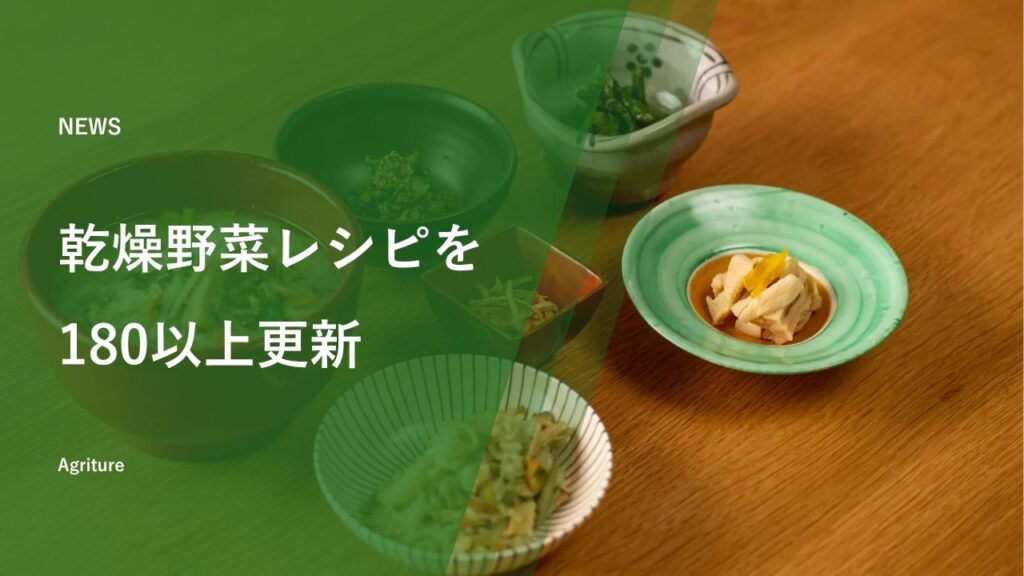
We Updated Over 180 Dried Vegetable Recipes
Recipes Published on OYAOYA. On OYAOYA, the dried vegetable brand we operate, we have published a total of over 180 recipes through user submissions and dedicated recipe creation. We've produced not only ordinary soup recipes but also ones with variations that are only possible because they're dried vegetables... -

Is There Demand for Dried Vegetables in Dubai?
With the backing of Kyoto Prefecture, we exhibited at the Kyoto booth within a trade show held in Dubai this February. In the Middle East region—where desert makes up most of the land and there's no image of agriculture except in Israel—based on the hypothesis that dried vegetables could work, we exhibited at this trade show...