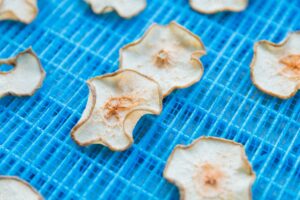
Dried bell pepper

This pepper is a large bell pepper with a thick, meaty texture like Manganji pepper, a colorful material that can be developed in two colors, red and green. Dried bell pepper is domestically grown fresh produce carefully dried at low temperature, keeping the thick flesh's sweetness and vivid color in the dry form. The red has vivid color and strong sweetness; the green is characterized by a refreshing flavor and vivid green. It is a material we get many inquiries for in commercial foods that want to balance color and texture—soup ingredients, salad toppings, pizza and pasta color materials, and more. For consultations on dried vegetable and powder OEM here and let us know your intended use and desired cut form.
TOC
Agriture's dried bell pepper: three points of care
01 Low-temperature drying preserves the thick-flesh sweetness and color
This pepper is a variety thicker-fleshed and higher in sugar than ordinary bell peppers. High-heat drying turns the sweetness into a scorched nuance and browns the color. At Agriture, we dry it slowly with a low-temperature hot-air method, maintaining the flesh's natural sweetness and vivid red and green coloring.
02 A two-color, red-and-green range broadens the color palette
Red peppers, sweeter when fully ripe, give a vivid red like paprika that colors a dish. The green is characterized by a refreshing flavor and vivid green, and color selection or mixing to match the application is possible. We also handle prototyping in a red-green two-color set.
03 Integrated support from small-lot prototyping to mass production
At Agriture, we support small-lot prototyping from 1kg units, and can also ship samples in parallel with different cut shapes, colors, and drying temperatures. You can compare by sensory evaluation before commercialization, and we can support one-stop from the initial development of PB and OEM to volume transition.
Product catalog showing the items we handle
Flexible support from small lots to large lots
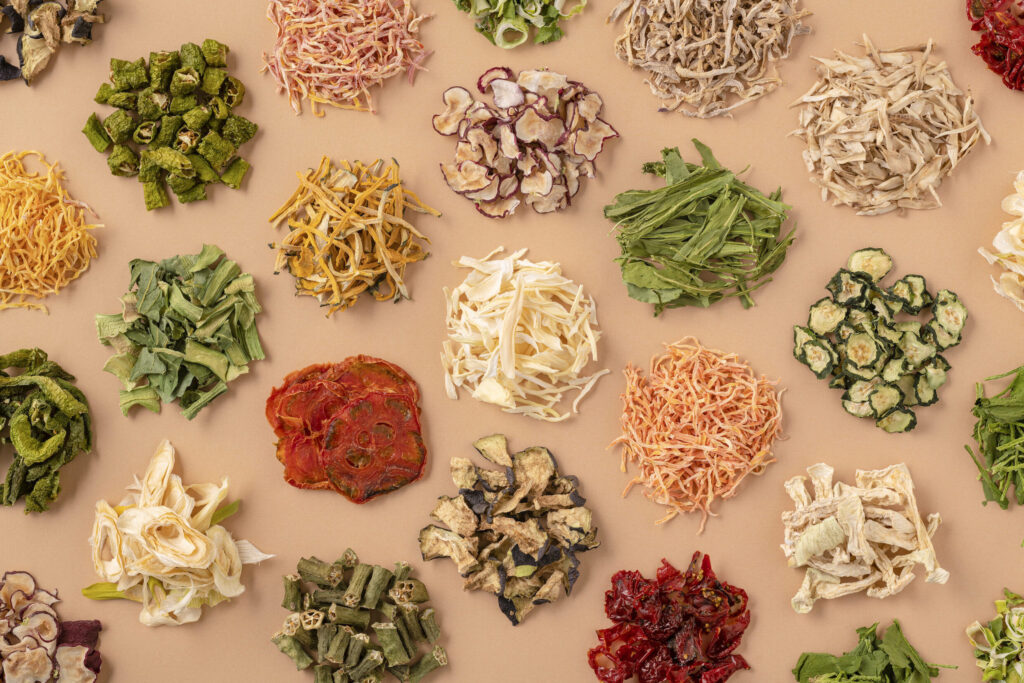
- Sold in small lots from 1 kg
- Handling heirloom vegetables from across Japan
- Dried fruits and herbs also supported
Features of commercial dried bell pepper
Thick-meaty texture and natural sweetness
It has thick flesh like Manganji pepper and is characterized by higher sugar content than ordinary bell peppers. A chewy texture remains even after drying, and rehydrated, it becomes an ingredient with fleshy body.
Vivid red-and-green coloring
The red is characterized by full-ripe sweetness and vivid red, letting you create coloring close to paprika. The green, with a refreshing flavor and vivid green, becomes a visual accent for dishes and packaging.
A domestic material as a paprika alternative
There is demand from food makers looking for a domestic color material as an alternative to imported paprika. It is a material that becomes a differentiating point in developing premium products that highlight domestic raw material.
Year-round supply with room-temperature storage
Bell pepper's season is concentrated in summer, but the dried product stores at room temperature for about 6 months, enabling stable year-round supply. It can lighten the inventory-management burden as a commercial raw material.
Additive-free, domestic ingredients
We finish it with only bell pepper, using no colorants, preservatives, or flavorings. A specification with good affinity with clean-label-oriented product design that wants to keep the ingredient list simple.
Powder development also accommodated
"Bell pepper powder," made by pulverizing dried bell pepper, is also available. Red powder can be used as a natural coloring material, and green powder can be used for kneading into doughs.
Product specifications (commercial)
Item | Details |
|---|---|
Raw material | Bell pepper (domestically grown, red or green) |
Shape | Slice / dice cut / julienne (selectable by application) |
Production method | Low-temperature hot-air drying |
Best-before date | About 6 months from the shipping date |
Processing plant | Our own processing plant within Kyoto Prefecture |
Shipping unit | 100g〜 |
Minimum-lot OEM | Prototype from 1kg / full production from 10kg |
Customization support
Item | Available | Details |
|---|---|---|
Cut form changes | ◎ | Choose from slice, dice, and julienne |
Powdering | ◎ | Fine-powder processing as bell pepper powder supported |
Color specification | ◎ | Deliverable in red or green single-color or mixed |
Small-lot OEM prototyping | ◎ | Prototyping available from 1kg |
Mixed materials and blends | ◎ | Blending with other dried vegetables is available |
Packaging changes | ◎ | Both commercial and small-portion individual packaging are available |
POWDER
A powder type is also available
We also offer "bell pepper powder," made by further fine-milling dried bell pepper. Red powder suits use as a natural coloring material, and green powder suits kneading into doughs and use as a soup-base raw material.
Commitments to variety, grower, and growing region
The raw material used for our dried bell pepper is large-variety bell peppers sourced directly from domestic partner farmers. Thicker-fleshed than ordinary bell peppers, they are characterized by a satisfying, chewy texture and sweetness close to Manganji pepper. The red is matured on the plant until fully ripe, combining vivid red and high sugar content through the accumulation of carotenoid pigments.
BRAND
Variety: Bell pepper (genus Capsicum, family Solanaceae). A variety larger and thicker-fleshed than ordinary bell peppers, with no pungency and strong sweetness. The red is fully ripe fruit, the green unripe fruit, each with a different flavor and color.
PRODUCER
Producer: In partnership with domestic partner farmers, we have a system for them to harvest at the size and ripeness suited to processing. Because for the red, judging the full-ripe timing directly affects quality, we conduct close information sharing with growers.
REGION
Growing region: Uses bell peppers grown in warm domestic regions centered on Kyoto. Because sunlight conditions and temperature differences affect the accumulation of sugar and pigment, we pay attention to origin selection as well.
CULTIVATION
Cultivation method: Under managed cultivation with reduced pesticide use, we have arranged a record-keeping system that can also meet the raw-material origin certification food manufacturers require.
Low-temperature drying technology and quality control
Because bell peppers hold much moisture in their thick flesh, they are a material that takes time to dry. Drying rapidly at high heat turns the sweetness into a scorched-like nuance and browns the red carotenoid pigments and the green chlorophyll. At Agriture, we use a low-temperature hot-air method with finely controlled temperature and airflow, running a drying program that maintains the thick flesh's sweetness and vivid color.
Manufacturing is managed in an integrated way at our own processing facility in Kyoto Prefecture, securing traceability from raw-material receiving to shipment. We have standardized the process of packing after a foreign-matter removal step, and we also accommodate the issuance of analysis reports and raw-material origin certificates required for OEM projects.
TIPS | Bell pepper drying trivia
Red and green bell peppers finish differently after drying. Because the red is high in sugar, it takes time to dry, but the finished color is vivid and the sweetness is concentrated. The green dries in a relatively short time and retains a refreshing flavor and vivid green. At Agriture, we use drying profiles optimized separately for red and green.
Use cases and adoption examples
As a color ingredient for pizza and pasta
Using red and green dried bell pepper as ingredients for pizza and pasta makes a dish look gorgeous with vivid two-color coloring. Because the thick-meaty texture remains even after heating, there is demand for it as a paprika-alternative material in Italian-type commercial foods.
As an ingredient for soups and simmered dishes
Adding dried bell pepper to simmered dishes such as minestrone and ratatouille lets the thick-fleshy body and sweetness dissolve into the soup. The red shows up well in color, also playing a role in enriching the soup's coloring.
Material for dried-vegetable mixes and salad kits
As one material in colorful mixes and salad kits combined with other dried vegetables, red and green bell peppers become a visual accent. A field we get many inquiries for in developing premium mixes assembled from domestic raw materials.
As a material for nibbles and snacks
Dried bell pepper chips are sweet even eaten as-is, and can be used as a vegetable-chip or nibble material. Red chips are strongly sweet, green ones have a refreshing flavor, and mixing them raises a product's appeal with a colorful look.
Use as a natural coloring material
Dried red bell pepper and its powder are getting attention as a natural material for adding red coloring to dishes and packaging without artificial colorants. Kneaded into pasta or bread dough, it adds a faintly reddish tint and sweetness.
Blend development with other dried vegetables
We also handle ratatouille-style mixes combined with dried tomato, dried zucchini, dried eggplant, and the like, and blend designs for colorful-vegetable sets. List of dried vegetables We can propose combinations with other ingredients from .
Commercial usage and rehydration
Dried bell pepper rehydrates in about 10 to 15 minutes soaked in room-temperature water, keeping its thick-meaty texture. When used in soups or stews, it can also be added directly and rehydrated while heating. When eaten as chips as-is, rehydration is unnecessary, and you can enjoy a crisp texture and concentrated sweetness.
For storage, sealed storage away from heat and humidity is best. Because the red in particular is high in sugar and absorbs moisture easily, using it up promptly after opening, or reducing air contact with a zip-lock bag, preserves quality longer.
Related cases and articles
- Bell-pepper powder (powder-version product page)
- List of dried-vegetable and herb products
- For consultations on dried vegetable and powder OEM here
Product catalog showing the items we handle
Flexible support from small lots to large lots
- Sold in small lots from 1 kg
- Handling heirloom vegetables from across Japan
- Dried fruits and herbs also supported
Frequently asked questions
Q. What is the minimum lot and prototype handling?
A. Prototypes are accepted from 1kg and full production from 10kg. Prototyping in red, green, or a mix is also possible. We can even ship samples with different cut shapes in parallel, so if you send us a concept sheet, we will propose the fastest route to sample shipment.
Q. What is the difference from paprika?
A. Bell pepper is in the same genus Capsicum as paprika, but it is a variety with thick flesh and a Japanese-style sweetness close to Manganji pepper. While much paprika is imported, bell pepper is available as a domestic raw material, becoming a differentiating point in product design with domestic appeal.
Q. What is the lead time?
A. Stock items can be shipped 1 to 2 weeks after order. For new processing of customized specifications, prototyping takes 1 to 2 weeks and full production about 3 to 4 weeks as a guide. Moving it earlier to coincide with the summer harvest season can also be discussed.
Q. Can you issue a raw-material origin certificate?
A. We can issue a raw-material origin certificate proving it is domestically grown bell pepper. Microbiological test certificates are also issued after case-by-case consultation.
Q. Can you deliver a red-and-green mix?
A. Beyond single-color delivery of red or green, we also handle mixed delivery in a ratio you specify. Because the visual impression changes greatly with the ratio, we recommend confirming the actual product at the prototype stage.
Q. Can it be blended with other dried vegetables?
A. We handle pre-blending with dried tomato, dried zucchini, dried eggplant, and the like. Consultations on blend designs combining multiple materials, such as ratatouille-style mixes and colorful-vegetable sets, are possible.
Q. Please tell me the OEM consultation flow
A. The flow is: consult us via the inquiry form → concept interview → sample delivery → paid prototyping → specification finalization → full production. We respond with a setup where color selection of red and green and cut-shape adjustment can be refined at the prototype stage.
Recommended reading
- Bell-pepper powder (details of the powder version)
- List of dried-vegetable and herb products
- For consultations on dried vegetable and powder OEM here
- We Prototyped "Dried Piman (Bell Pepper)" Using Domestically Grown Piman
Download the product catalog
We will send the materials to your email address based on the information you provide.