
Prototyping– category –
-

We Made a Prototype of Dried Sudachi Slices Using Japanese-Grown Sudachi
Agriture has made a prototype of dried sudachi slices using Japanese-grown sudachi as the raw material. Sudachi is an aromatic citrus distributed mainly from Tokushima Prefecture and is generally used by squeezing its juice, but when sliced into rounds with the peel on and dried, it brings out its aroma in a different way from the juice... -
We Produced 1 cm Cut Kujo Green Onions
Agriture has produced 1 cm cut Kujo green onions. Dried green onions are generally distributed finely chopped, mainly serving to add color and aroma floating in soups. This time we took the opposite approach, deliberately cutting them into larger 1 cm pieces so that when you bite into them, the green onion itself... -
We Made a Prototype of Black Tea Using Sweet Potatoes
Agriture has made a prototype of black tea blended with sweet potato. Requests to use dried vegetables and dried fruit as raw materials for blend teas are increasing year by year, but ingredients clearly divide into those whose flavor comes through when mixed with tea leaves and those that come through less than expected. This... -
We Made a Prototype of Dried Blueberry Leaf Using Japanese-Grown Blueberry Leaves
Agriture has made a prototype of dried blueberry leaf using Japanese-grown blueberry leaves as the raw material. Blueberries (genus Vaccinium, family Ericaceae) are fruit trees grown for their berries, but pruning to shape the trees and post-harvest maintenance generate leafy branches every year... -
We Made a Prototype of Green Pepper Powder Using Japanese-Grown Green Peppers
Agriture has made a prototype of green pepper powder using Japanese-grown green peppers as the raw material. When we previously carried out a prototype of dried green peppers, we mentioned the possibility of powdering in addition to the chip-style finish, and this time, as a continuation, actually through the grinding process... -
We produced a prototype of dried cactus made from domestic cactus (nopal)
Agriture has produced a prototype of dried cactus made from domestically grown prickly pear cactus (nopal). Prickly pear cactus (scientific name: Opuntia ficus-indica and others) has long been eaten as nopalitos, a staple-level vegetable, mainly in Mexico, and in Japan too, in warm... -
We Produced a Prototype of "Dried Sweet Potato Dice" Made from Domestic Sweet Potatoes
Agriture recently produced a prototype of "dried sweet potato dice" made from domestically grown sweet potatoes. Raw sweet potatoes have a high moisture content, and when blended directly into baked goods or cereals, moisture migration tends to affect texture and shelf life, but by dicing and dry... -
We prototyped “dried maca” using domestic maca
Agriture recently prototyped "dried maca" using domestically grown maca as raw material. Maca (scientific name: Lepidium meyenii) is a plant in the mustard family, known as native to the high Andes of Peru, but its cultivation has now spread domestically as well, and the root is finished as julienne and pow... -
We prototyped “dried natsumikan peel” using domestic natsumikan peel
Agriture prototyped "dried natsumikan peel" using the peel of natsumikan. We finished two shapes—dice (fine cubes) and slice (fine strips)—making it an ingredient that can be rolled out for a wide range of uses such as marmalade raw material, tea, furikake, and cocktail sub-ingredients. The points of the prototype... -
We began handling “dried moringa” and “moringa powder” using Kagoshima-grown moringa
Agriture has begun handling "dried moringa" and "moringa powder" using Kagoshima-grown moringa. Moringa (Moringa oleifera) is a plant in the horseradish-tree family, and because it's rich in vitamins, minerals, and amino acids, it's also called the "miracle tree"... -
We prototyped “dried garland chrysanthemum” using domestic garland chrysanthemum
Agriture recently prototyped "dried shungiku" using domestically grown shungiku. Shungiku is a leafy vegetable in the daisy family, an ingredient prized for its distinctive bitterness and aroma. It's widely enjoyed as an ingredient for hot pot, dressed dishes, and tempura. By drying at low temperature, shungiku's distinctive aroma is tightly... -
We prototyped “dried kiwi” using domestic kiwi
Agriture recently prototyped "dried kiwi" using domestically grown kiwi. Kiwifruit is a fruit with a good balance of acidity and sweetness, also known for being rich in vitamin C and dietary fiber. When we carefully dried sliced domestically grown kiwi at low temperature... -
We prototyped “dried kale” using domestic kale
Agriture recently prototyped "dried kale" using domestically grown kale. Kale is a leafy vegetable in the mustard family and a superfood also widely known as a raw material for green juice. It's rich in vitamin K, vitamin C, beta-carotene, and dietary fiber. Slowly at low temperature... -
We Prototyped "Dried Turnip" Using Domestically Grown Turnip
Agriture recently prototyped "dried turnip" using domestically grown turnip. Turnip is a root vegetable prized for its gentle sweetness and smooth texture, used in a wide range of dishes both Japanese and Western—simmered dishes, pickles, soups, and more. When we dried it sliced at low temperature, the turnip's white color... -
We Prototyped "Mugwort Powder" Using Domestically Grown Mugwort
Agriture recently prototyped "mugwort powder" using domestically grown mugwort. Mugwort is a Japanese herb long beloved as an ingredient for kusamochi and yakuzen tea, prized for its distinctive refreshing aroma. At Agriture, for OEM manufacturing of dried vegetables and powder and as commercial raw material... -
We Prototyped "Dried Shimonita Negi" Using Domestically Grown Shimonita Negi
Agriture recently prototyped "dried Shimonita negi" using domestically grown Shimonita negi. Shimonita negi is a brand negi cultivated centered on Shimonita Town, Gunma Prefecture, prized for its thick white root and strong sweetness when heated. The prototyped dried Shimonita negi turned out with quite a good aroma... -
We Prototyped "Dried Lemon Slices" Using Domestically Grown Lemons
Agriture recently prototyped "dried lemon slices" using domestically grown lemons. So they can be used as a garnish for cocktails and drinks, they are dried thinly sliced. While the lemon peel tends to retain its yellow even after drying, the flesh portion... -
We Prototyped "Dried Piman (Bell Pepper)" Using Domestically Grown Piman
Agriture recently prototyped "dried piman (bell pepper)" using domestically grown piman. This is a variety thicker-fleshed than ordinary piman, with little bitterness and some sweetness. As with the Manganji togarashi we prototyped before, piman also finished with a thick-fleshed texture firmly retained after drying... -
We Began Full Production of Lotus Root Powder
Agriture recently began full production of lotus root powder. A full-scale mass-production system has started, handling everything in-house consistently—processing 100kg of lotus root into powder and filling it into small pouches. Lotus root powder has so far been centered on prototyping-stage provision, but from multiple food manufacturers... -
We Prototyped "Dried Wakegi and Wakegi Powder" Using Domestically Grown Wakegi
Agriture recently prototyped "dried wakegi" using domestically grown wakegi. Wakegi is a cross between negi and onion, a vegetable prized for a softer, milder flavor than ordinary negi. Wakegi's distinctive gentle aroma remains even when dried, and because it has little pungency... -
We Prototyped "Dried Beet" Using Domestically Grown Beet
Agriture recently prototyped "dried beet" using domestically grown beet. Beet is a root vegetable prized for its vivid purple color, an ingredient used in a variety of dishes such as salads, soups, and smoothies. In this prototype, we finished the drying with beet's distinctive purple color firmly retained... -
We Prototyped "Asparagus Stem Powder" Using the Stems of Domestically Grown Asparagus
Agriture recently prototyped "asparagus stem powder" using the stems of domestically grown asparagus. Following the dried asparagus we prototyped last time, this time we extracted just the stem portion and processed it into powder. The hard stem portion is a part usually often discarded... -
We Prototyped "Dried Garlic Sprouts" Using Domestically Grown Garlic Sprouts
Agriture recently prototyped "dried garlic sprouts" using domestically grown garlic sprouts. Garlic sprouts are the young shoots grown from garlic seed bulbs, an ingredient prized for a milder flavor than garlic itself. This time, at the client's request, the root... -

We Prototyped "Basil Powder" Using Domestically Grown Sweet Basil
Agriture recently prototyped "sweet basil powder" using domestically grown sweet basil. Sweet basil is a herb with a refreshing aroma and faint sweetness, known as a versatile ingredient that elevates the flavor of a whole dish. The freshness distinctive of the fresh leaf... -
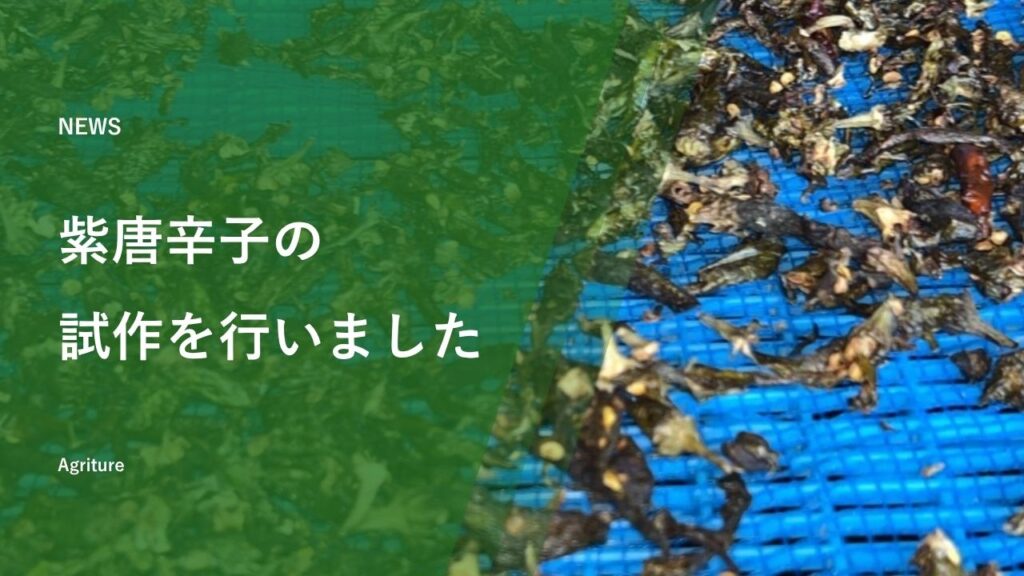
We Prototyped "Purple Chili Powder" Using Domestically Grown Purple Chili
Agriture recently prototyped "purple chili powder" using domestically grown purple chili. Purple chili is a variety rich in anthocyanin, prized for its beautiful purple color and fruity aroma. It has a deep richness within its heat, and gives color and flavor to dishes, sweets, drinks, and more... -
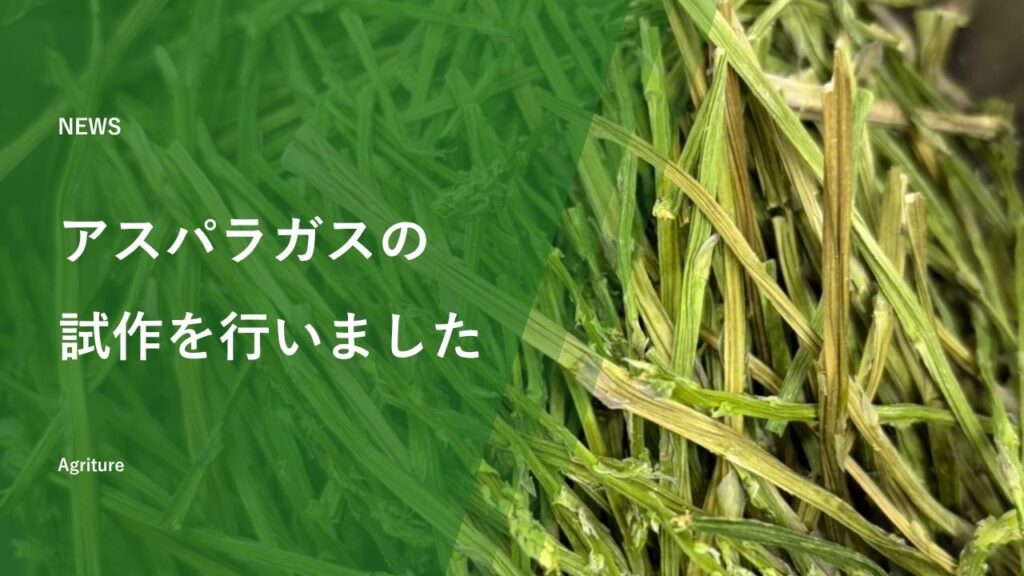
We Prototyped "Asparagus Powder" Using Domestically Grown Asparagus
Agriture recently prototyped "asparagus powder" using domestically grown asparagus. Asparagus is a vegetable that comes into season from spring into early summer, prized for its juicy sweetness and aroma. It's rich in amino acids including aspartic acid and B vitamins, and health... -

We Prototyped "Green Papaya Powder" Using Domestically Grown Green Papaya
Agriture recently prototyped "green papaya powder" using domestically grown green papaya. Green papaya is papaya harvested before full ripeness, and because it's rich in enzymes and dietary fiber, it draws attention as "papaya as a vegetable." The enzyme papain in particular... -

We Prototyped "Chestnut Skin Powder" Using Domestically Grown Chestnut Skins
Agriture recently prototyped "chestnut skin powder" making use of domestically grown chestnut skins. Chestnut skins have so far been a by-product often discarded in the food-processing process, but they draw attention as a sustainable ingredient. In particular, chestnut's inner and outer skins contain polyphenols and tannins... -

We Prototyped "Dried Banana" Using Domestically Grown Bananas
Domestically grown bananas are high in sugar, fruit prized for a rich, creamy sweetness. By drying fully ripe bananas, you can concentrate the ingredient's own aroma and sweetness, enjoying a natural flavor without using sugar or additives. Unlike imported bananas, a fresh aroma distinctive of domestic... -

We Prototyped "Dried Enoki" Using Domestically Grown Enoki
Enoki is one of the most-produced mushrooms in Japan, prized for its mild flavor and crisp texture. Applying drying processing enables long-term storage and further deepens umami and aroma. Grinding it into powder also allows use in developing dashi ingredients and health foods... -

We Prototyped "Dried Nameko" Using Domestically Grown Nameko
Nameko is a mushroom prized for its distinctive sliminess and rich umami, widely enjoyed in miso soup, dressed dishes, and more. Drying concentrates the umami components and raises shelf life, so it can be used in a form suited to commercial and processing uses. Because nameko's texture and flavor remain firmly even after rehydration... -

A Notice About the Rose Prototype
The rose is known as an aromatic, gorgeous flower, and because it contains relaxing aromatic compounds beyond just visual beauty, it's also used for food and herbal tea. Edible rose is an ingredient that can add aroma and color just by adding a small amount to sweets, beverages, seasonings, and more... -

We Prototyped Lotus Root Powder
Agriture recently prototyped "lotus root powder" using domestically grown lotus root. Lotus root is widely cultivated throughout Japan, a vegetable prized for its crisp texture and gentle sweetness. It's used in a variety of dishes—simmered, stir-fried, deep-fried—and is rich in dietary fiber and vitamin... -
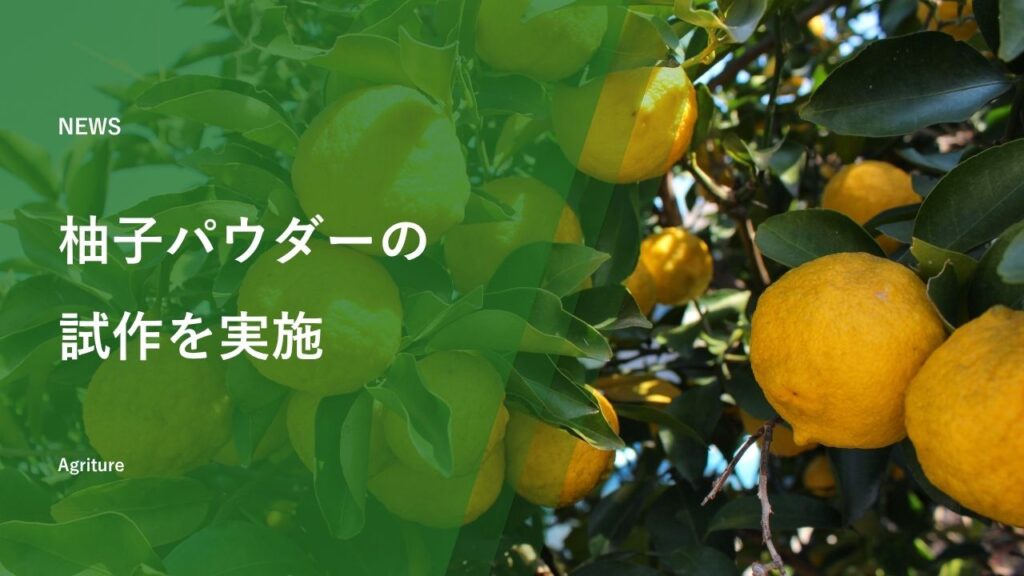
京都産の柚子を皮ごと乾燥させ、柚子パウダーの試作を始めました
このたび、Agritureでは、京都市右京区で収穫された柚子を使った「柚子パウダー」の試作を行いました。 京都市右京区の山あいでは柚子の栽培が続いています。寒暖差のある土地で育った柚子は皮に厚みがあり、香りがよく立ちます。加工の原料としても扱いや...
1