
京都産の柚子を皮ごと乾燥させ、柚子パウダーの試作を始めました

Summary of this article
京都市右京区で収穫された柚子を使い、柚子パウダーの試作を行いました。皮を丁寧に乾燥させて粉にしています。調味料・製菓・飲料・お茶への応用を想定し、試作の最小ロットや製造スペックもあわせて掲載しています。
このたび、Agritureでは、京都市右京区で収穫された柚子を使った「柚子パウダー」の試作を行いました。
京都市右京区の山あいでは柚子の栽培が続いています。寒暖差のある土地で育った柚子は皮に厚みがあり、香りがよく立ちます。加工の原料としても扱いやすい柚子です。

今回の試作では、この京都産の柚子の香りと風味をそのまま閉じ込めるよう、皮を丁寧に乾燥させ、柚子の皮だけを粉にしました。食品、飲料、調味料、菓子などへの応用を想定しています。
Going forward, we'll continue building up prototypes toward OEM manufacturing and provision as a commercial raw material. If your company is interested in product-making that draws on the value of domestic materials, please feel free to inquire.
Features of Kyoto-grown yuzu powder and growing-region insights
京都市右京区の山あいは寒暖差があり、皮に厚みのある柚子が育ちます。Agritureではこの京都産の柚子を丁寧に乾燥し、皮の香りをそのまま閉じ込めたパウダーに仕上げています。京都産という産地を、商品の表示や説明にそのまま使えます。Yuzu powder product specifications here.
Comparing yuzu applications by form
Yuzu is a citrus with many usable parts—peel, juice, and seeds—and the suitable applications differ by form (figures are guidelines and vary with storage conditions).
| Item | Dried yuzu (slice) | yuzu powder |
|---|---|---|
| Main use | Tea, hotpot, simmered dishes, toppings | Dressings, confectionery, beverages, seasonings |
| Storage period guide | About 6 months at room temperature | About 6 months from the shipping date |
| Dispersibility | Fair (suited to floating/sinking uses) | Excellent (blends evenly) |
| How the aroma comes through | Wafts gently with heating | Fragrant right from opening |
Agriture also handles Dried yuzu (slice). Using powder and slices differently by application broadens a product's range of expression.
You can check the details of turnip's powder form on the
京都産の柚子は収穫量が限られるため、加工用としてまとまった量を安定的に仕入れるには早めのご相談が大切です。Agritureでは収穫前シーズン(7〜9月)に原料確保の計画を立てており、年間計画のある案件は前倒しでのご連絡をおすすめしています。
.
Seasonings and dressings
A use we frequently field inquiries about—as a base material for yuzu ponzu, yuzu salt, and yuzu kosho. Being a powder, it disperses evenly into liquid seasonings, designed to leave few residual grains.
- Suitable products: yuzu ponzu, yuzu salt, yuzu dressing, yuzu kosho
- Blending guide: 0.5–3% of the total product
- Points to note in development: tartness strength varies by lot, so check the balance in a prototype
Confectionery / bakery
It can be used to add aroma to citrus sweets such as yuzu madeleines, yuzu pound cakes, and yuzu macarons. An advantage of the powder type is that the aroma tends to remain even after baking.
- Suitable products: yuzu madeleines, yuzu cookies, yuzu pound cakes
- Blending guide: 3–8 g per 1 kg of flour
- Points to note in development: pairs well with sugar. In oil-based dough, dissolving it into the oil first makes it even
Beverages, craft drinks
A use where it can serve as a flavor material for citrus beverages such as yuzu cider, yuzu highball, and yuzu latte. Dissolving it into syrup in advance before blending produces a stable aroma.
- Suitable products: yuzu cider, yuzu latte, yuzu highball syrup
- Blending guide: 0.1–0.5% of the liquid volume
- Points to note in development: it doesn't fully dissolve, so a settling design needs to be considered
Tea / blended tea
A use where you can consult us on adding yuzu aroma as an accent by blending with hojicha, sencha, or herbal tea for a season-limited tea, or as a material for medicinal-herb tea. Dried yuzu (slice) Visual-focused blends combining it with are also possible.
- Suitable products: yuzu hojicha, yuzu herbal tea, medicinal-herb-tea blends
- Blending guide: 3–10% of the total tea leaves
- Points to note in development: powder alone sinks, so using it together with slices is recommended
A base raw material for vegetable bouillon and dashi powder
A vegetable base powder for baby food
| Item | Agriture's manufacturing specs and OEM support |
|---|---|
| Raw materials | 柚子(京都産、皮を使用) |
| Processing step | Washing → peeling → low-temperature drying → grinding → filling |
| Storage period | About 6 months from the shipping date |
| Processing shape | From 1 kg of raw fruit |
| Main production lot | From 10 kg of raw fruit |
Customization support
- Blending: pre-blending available with other powders, salt, and tea leaves
- Specification sheet, certificate of raw material origin, microbiological test report
- Growing-region specification: Kyoto-grown only, or blending with other domestic yuzu available
Blending: pre-blend support with other dried vegetables
- dried vegetable / powder OEM inquiry form Contact us with the prototyping content, application, and desired specifications via
- We ship prototype samples in units of 1 kg of raw fruit (usually 2–3 weeks)
- We finalize specifications based on prototype-evaluation feedback
- Full production (from 10 kg of raw fruit). We support issuing required documents and lot quality inspection.
Product catalog showing the items we handle
Flexible support from small lots to large lots
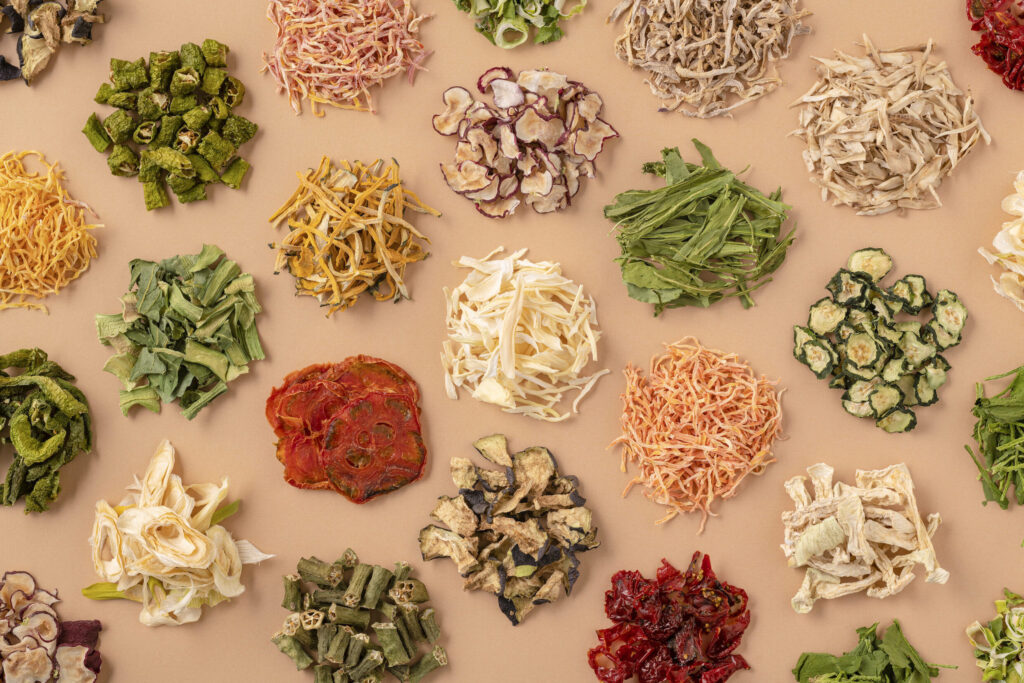
- Sold in small lots from 1 kg
- Handling heirloom vegetables from across Japan
- Dried fruits and herbs also supported
FOR BUSINESS
乾燥ゆずを、原料としてお探しですか
国産のゆずを乾燥・粉砕してお出ししています。カット形状や粒度の指定、継続してのお取引もご相談ください。規格は Dried yuzu・Yuzu powder に掲載しています。
少量でのご購入は、姉妹ブランドの通販サイト OYAOYA で承っています。
Frequently asked questions
Q. Can it be limited to Kyoto-grown?
A. Yes. However, since Kyoto-grown yuzu is limited in harvest volume, for projects with large annual requirements, consulting us by the pre-harvest season (July–September) makes stable securing easier.
Q. Can it be blended with other citrus powders?
A. Yes. We can propose blend designs with citrus powders such as lemon, mikan, and shikuwasa, or with other materials from Vegetable powder list.
Q. Can you issue a raw-material origin certificate?
A. We issue both a certificate of origin proving the material is Kyoto-grown yuzu and a microbiological test report, in consultation on a per-project basis.
Q. What's the lead time?
A. When in stock, shipment is possible in 2–3 weeks. Kyoto-grown involves preparation timed to the November–December harvest, so please plan large lots half a year in advance.
Q. Can it be blended with other dried vegetables?
A. 原果1kgから試作を承っています。本製造は原果10kg〜です。
Related pages and further reading
- The initiatives of the dried-vegetable brand "OYAOYA" were introduced on KYOTOVEGAN
- [Media coverage] CEO Kojima interviewed as a social entrepreneur taking on business challenges
Author of this article
Related articles
-
 We released a free news release posting service on our operated “Food OEM Directory”
 -
 We Prototyped "Chestnut Skin Powder" Using Domestically Grown Chestnut Skins
 -
 A Notice About the Rose Prototype
 -
 Products from OYAOYA, A Letter from a Pear, and Agriture featured on "Urelio"
 -
 Launched the employee-benefit service “Office Yaoya (OFFICE YAOYA)”
 -
 OYAOYA, a dried-vegetable brand using Kyoto vegetables, announces it will become a consolidated subsidiary of global cutlery maker Kai through M&A
 -
 We Published the Dried Vegetable Projects Page
 -
 Is There Demand for Dried Vegetables in Dubai?