
Food OEM– category –
-
When Repackaging Imported Dried Fruit in Japan, How Do You Label the Country of Origin and Processor?
You want to divide dried berries purchased from overseas into small bags in Japan and sell them. You have no filling equipment, so you want to hand off just the bagging. We receive inquiries like this about repackaging imported dried fruit. When outsourcing repackaging, the bag label is easy to overlook... -
If You Dry and Sell Your Lettuce, How Much Do You Get from 10kg?
Can the lettuce from our field be dried and turned into a product? Yes, we can dry it. But the first thing to know is that leafy vegetables become surprisingly light once dried: 10 kg fresh can end up as around 500 g finished. In this article, based on what we actually offer as OEM and contract processing... -
How to Outsource Only the Filling of Your Home-Roasted Drip Bags
You roast beans in your own shop and sell them as drip bags, but hand-filling can no longer keep up, so you want to hand off just the bagging. Agriture receives inquiries like this, asking for filling only. In this article, based on what we actually offer through our small-bag filling OEM service... -
How to Turn Your Homegrown Molokhia into Powder and Sell It
When you want to turn molokhia you have grown into powder and sell it, the first hurdle is preparing the raw material. Some parts of the molokhia plant must not go into the raw material, so you cannot simply send the leaves you have picked. At Agriture, we take in raw materials from growers and process leafy vegetables... -
What to Decide Before Outsourcing Small Rice Packs
You want to divide rice you have grown into 1 go or 2 go bags, seal them tightly and sell them. Agriture receives inquiries about this kind of repackaging too. But besides the work of filling, many people get stuck deciding whether to vacuum-pack or add an oxygen absorber, and what to write on the bag... -
Commercial and OEM Shiso Powder (Ooba and Red Shiso): Manufacturing Methods, How to Choose, and Small-Lot Production Explained
Shiso powder, made by drying and grinding shiso (ooba, red shiso), is a commercial ingredient that lets you add aroma and color without moisture. It is used widely for flavoring processed foods—furikake, ochazuke mix, Japanese-style snacks, and dough for baking and noodle-making. This article covers shiso powder... -
Cookies from the "Leaves" of Nijisseiki Pears—Tottori University Students Take 2 Years to Commercialize Them as a Measure Against Abandoned Farmland
"Yuri," a student group at Tottori University, spent two years commercializing cookies made from pear leaves. Focusing on abandoned pear orchards that no longer bear fruit, they make use of pesticide-free leaves—we introduce this initiative from Tottori, the home of pears. -
Yakuzen Food OEM and Development: Dashi, Furikake, and Powder in Small Lots
When it comes to yakuzen, many people may picture yakuzen tea, but there are many foods beyond tea that can draw on yakuzen thinking—dashi, soup, furikake, powder, and more. For staff at companies thinking "I want to develop a yakuzen product, but where do I start?", we cover, beyond tea... -
What is sansho powder? Its production method, how to choose commercial grade, and OEM and small-lot production explained
That fragrant powder sprinkled over grilled eel is sansho powder (powdered sansho). Because it lets you easily add a refreshing aroma and a lingering tongue tingle without adding moisture, inquiries such as "I want to use domestic sansho powder in small lots" and "I'm looking for a powder with a pronounced aroma" are increasing... -
Edible flower OEM | Commercial and wholesale, product development, and development into tea
Edible flowers that gorgeously decorate dishes and sweets. Their use in café desserts, gifts, drinks, and tea is expanding, and consultations about incorporating them into one's own products are increasing. Meanwhile, questions arise, such as "In what form should we source them?" "How do they differ from ornamental flowers?" "Can we make products at small lots?"... -
What Is Chili Powder? Manufacturing Methods, How to Choose for Commercial Use, and OEM and Small-Lot Production Explained
Chili powder, made by drying and grinding chili peppers, is a handy ingredient that lets you add heat, color, and aroma without moisture. Its uses are wide—flavoring ichimi, kimchi, soup, and snacks—and inquiries such as "I want to use domestic chili powder in small lots" and "I'm looking for a powder with stable heat and color" are... -
Commercial mushroom OEM and drying & powdering processing guide | Domestically grown, small-lot support
Wanting to make your own brand product using mushrooms, or to source dried mushrooms for restaurant use in bulk. What you can use in such cases is commercial mushroom wholesale and OEM (contract manufacturing). That said, without knowing "what forms they can be processed into" or "whether small lots are accepted," the first step... -
What Is Citrus Powder? Manufacturing Methods, Uses, How to Choose for Commercial Use, and OEM Explained
Citrus powder, made by powdering the peel of yuzu, sudachi, or natsumikan, is a handy ingredient that lets you add aroma and acidity without moisture. In confectionery, beverage, and seasoning development, inquiries such as "I want to use domestic citrus powder in small lots" and "I'm looking for a powder with a pronounced aroma" are increasing. This page... -
What is spice OEM? Development of original mixed spices made with dried vegetables and small-lot manufacturing
Wanting to make your own brand of mixed spice, or to make an original seasoning matched to a dish into a product. What you can use in such cases is spice OEM (contract manufacturing). That said, without knowing "what blends can be made" or "whether small lots are accepted," many staff hesitate at the first step... -
How to start a shichimi OEM | A dried-vegetable maker explains domestic chili peppers and local shichimi
Wanting to make your own brand of shichimi togarashi, or to make a local shichimi that leverages regional ingredients into a product. What you can use in such cases is shichimi OEM (contract manufacturing). That said, without knowing "what blends can be made" or "whether small lots are accepted," not a few staff hesitate at the first step... -
What is seasoning OEM? A dried-vegetable maker explains small-lot development
Wanting to make an original seasoning to use on snacks, deli sides, popcorn, and the like. What you can use in such cases is seasoning OEM (contract manufacturing). That said, without knowing "what tastes can be made" or "whether small lots are accepted," not a few staff hesitate at the first step... -
How to start a dashi OEM | A dried-vegetable maker explains vegetable dashi and dashi packs
Wanting to have your own brand of dashi, or to make an original dashi pack to use in a restaurant. What you can use in such cases is dashi OEM (contract manufacturing). That said, without knowing "what dashi can be made" or "how much the minimum lot and cost are," not a few staff... -
What is furikake OEM? A dried-vegetable maker explains small-lot, vegetable-furikake manufacturing
Wanting to make your own brand of furikake. Wanting to try an original product that leverages regional vegetables at small lots. What you can use in such cases is furikake OEM (contract manufacturing). That said, without knowing "where to request it" or "how much the minimum lot and cost are," you stop at the first step... -
How to Start a Herbal Tea OEM in Small Lots: Ingredients, Formats, and the Ordering Flow
You want to make a herbal tea under your own brand, but ordering a large quantity all at once is worrying—that's when a small-lot-capable herbal tea OEM comes in handy. Because you can prototype and manufacture from small quantities, you can bring an original blend into the world while keeping inventory risk low. This article covers... -
What Is a Tea Bag OEM? How to Choose the Shape, Material, and Contents, and the Small-Lot Ordering Flow
When you want to make a tea under your own brand, making it into tea bags rather than selling loose leaves gives the ease of brewing just by pouring hot water, making it easier to turn into a product for gifts and everyday use. Outsourcing tea bag manufacturing to a specialist manufacturer is a tea bag OEM. The shape, contents... -
What Is Small-Lot Package Printing? Methods, Costs, and Tips for Submitting Data in Small Quantities
In new-product prototyping, test sales, and novelties, there are many scenes where you want to make just a small amount of original packaging. Previously, printing required a large lot, but with the spread of on-demand printing, it has become possible to make original packaging even at small lots. This article... -
What Is Sustainable Packaging? Types of Materials, Benefits, and Tips for Small-Lot Adoption
As calls for environmental consideration rise, moves to switch packaging to sustainable ones are spreading even among food makers. That said, with many options such as paper conversion and biomass materials, there are not a few scenes where you agonize over the balance with cost and protecting the contents. In this article, sustainable... -
What Are the Types of Food Packaging? From Bag Shape and Film Material to Function and How to Choose Explained
Food packaging has several options—shape differences such as three-side seal, stand pouch, and pillow bag, plus material differences such as PET, aluminum, and nylon, and even differences in the function to block oxygen and light. Even with the same contents, the chosen packaging changes the shelf life, appearance, and cost, so the types... -
VegProject brings 12 companies together at “VEG FOOD EXPO 2026”—April 15–17 at Tokyo Big Sight, with a new vegan selection area and over 50,000 visitors expected
The NPO VegProject Japan will hold VEG FOOD EXPO at Tokyo Big Sight from April 15–17, 2026. Twelve vegan-certified companies will gather, a special area will be newly set up, and over 50,000 visitors are expected. -
A Complete Guide to Choosing Commercial Fruit Powder: Manufacturing Methods, Particle Size, Lot, and Procurement Practice
Commercial fruit powder is a commercial raw material made by powdering fruit, used across a wide range—confectionery, beverages, smoothies, dairy products, snacks, and health foods. Unlike fresh fruit, it can be stored at room temperature, and because it can be added little by little with color, aroma, and nutrition concentrated, it's used from the prototyping stage of product development through mass production... -
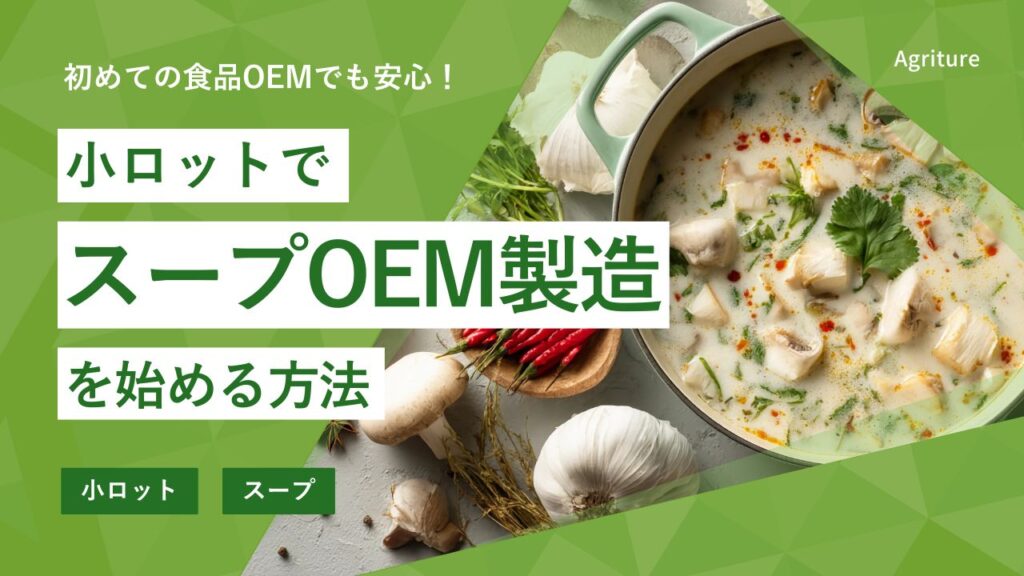
How to start soup OEM manufacturing | Original product development starting from small lots
"We want to make our own brand of soup," "We want to try it from a small quantity"—such voices are rapidly increasing in the food industry. In fact, soup OEM manufacturing is now an era where you can start even from small lots. The era when mass production was essential is over, and even individual shops and small operators can... an original... -
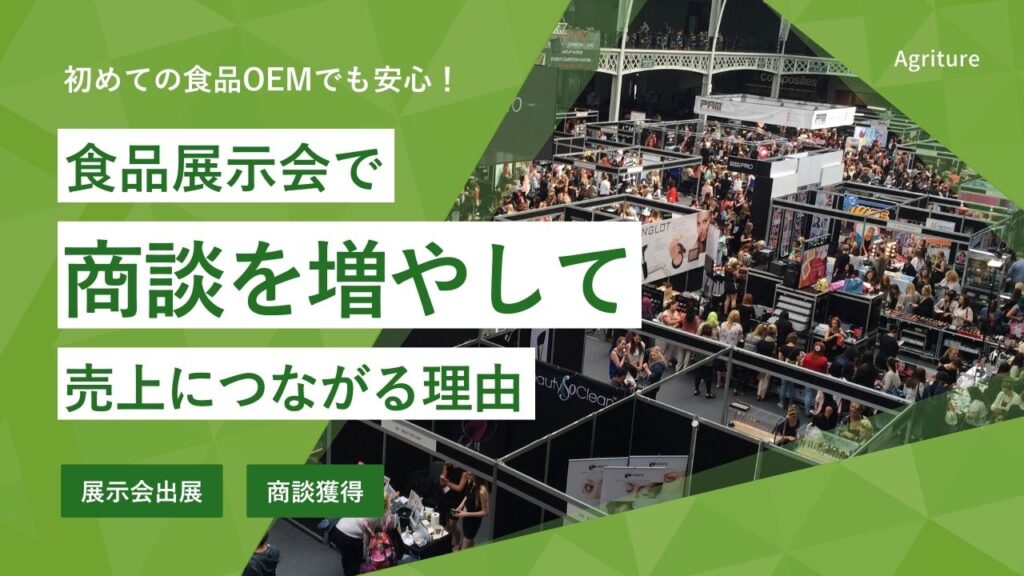
What are the benefits of exhibiting at a food trade show? 7 reasons it drives sales growth
For companies operating in the food industry, exhibiting at trade shows is an important business strategy. However, because exhibiting involves costs and human resources, some may question its effectiveness. In fact, exhibiting at a food trade show offers many benefits that directly drive sales growth... -
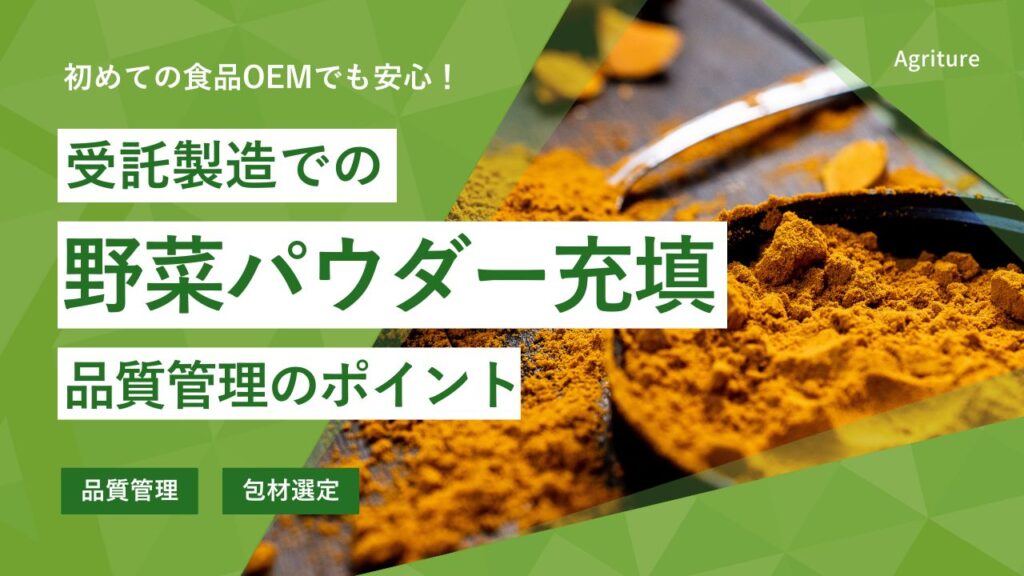
Contract Manufacturing Guide for Vegetable Powder Filling | Quality Control and Optimal Package Selection
The filling and packaging of vegetable powder is a process that greatly influences the final product's quality and cost. Because powder carries risks of static electricity, moisture absorption, clumping, measurement accuracy, and foreign-matter contamination, it requires "filling-specialist know-how" separate from raw material processing. When making a differentiated product for commercial use, the filling maker's equipment and... -
A complete explanation of how to request a filling quote | Necessary information and a comparison checklist
For a filling OEM quote request, whether you can convey the necessary information without excess or deficiency greatly changes the accuracy and speed of the quote you get back. If you organize the raw material, capacity, form, lot, delivery time, and quality requirements, plus filling conditions by powder/liquid/paste and the requirements for changeover cleaning, then multiple makers... -
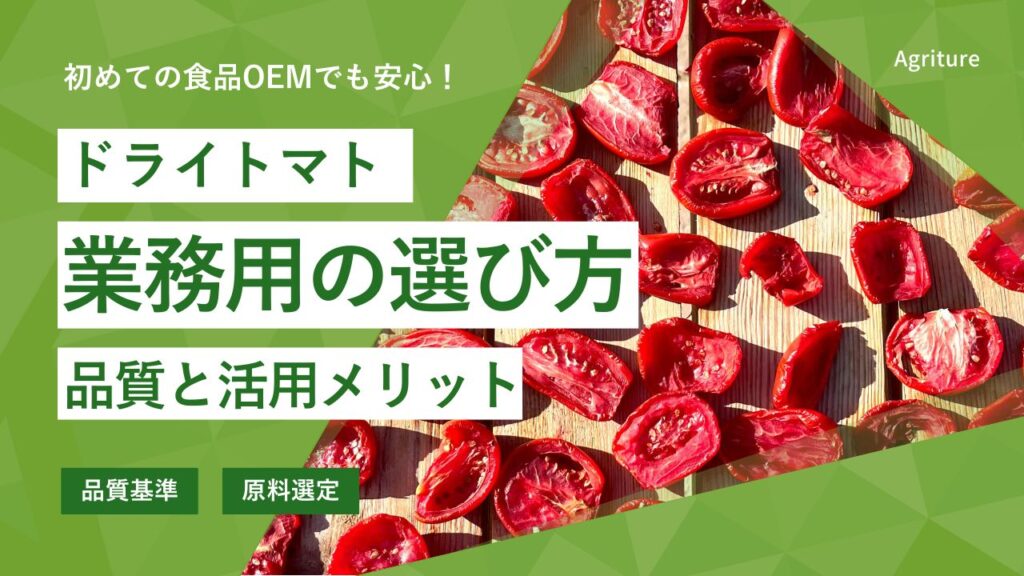
How to choose commercial dried tomatoes | Quality and OEM case studies
When sourcing commercial dried tomatoes, organizing the comparison along five axes—growing region, variety, processing type, lot capacity, and supply system—is fundamental. The options are wide, from Italian sun-dried products to domestic makers' low-temperature-dried products, and for restaurant pasta sauces, bakery ingredients... -
How to Achieve Stand Pouch Filling in Small Lots | Tips for Cost Reduction and Quality Control
Stand-pouch filling is a packaging format often adopted for small-lot D2C, gifts, and novelties of food. With a self-standing shape that is easy to display, resealable with a zipper, and a wide range of choices from transparent to aluminum to custom design, it suits food operators wanting to launch a branded product from small quantities... -
Original coffee marketing strategy | Ways to grow sales
The coffee market is now facing a major turning point. Consumer preferences have diversified, and it has become an era of seeking not just "coffee" but story and experiential value. To succeed with an original coffee marketing strategy, everything from product development to promotion consistently... -
How to Make an Original Tea OEM: Points of Differentiation and the Planning Process
An original tea is a unique tea designed to match your brand concept, rather than an off-the-shelf tea leaf. By combining five elements—selecting the base tea leaf, blending ingredients, blend ratios, packaging, and story—you pack a "brand story" into a single cup. Rather than simply... -
Tea OEM Price Ranges: 5 Ways to Keep Costs Down and 7 Points for Quotes
Tea OEM price ranges are determined by five factors: product type, lot, ingredient grade, packaging, and certification requirements. Tea bags run from tens to hundreds of yen per unit, and for leaf tea the unit price moves greatly depending on tea-leaf grade, while vegetable tea and foods with function claims add further prototyping and testing costs... -
How to Request Tea OEM Manufacturing: A Complete Guide to the Industry's 5 Types and a Cost Breakdown
You want to launch your own original tea brand. For you who harbor this wish, there is the option of a tea OEM. OEM is short for "Original Equipment Manufacturer," a system for outsourcing the manufacture of your own brand's products to another manufacturer. In the tea industry, from raw material procurement... -
Tea Gift OEM: 10 Points for Making Products That Get Chosen and an Ordering Guide
Tea gift OEM is an approach that lets you plan and sell original tea gift products without owning your own manufacturing equipment. You can design products to match the gift occasion and price range—chugen, seibo, celebratory return gifts, corporate novelties—across a wide range from green tea, black tea, and tea bags to premium blends and vegetable tea... -
A complete explanation of the coffee OEM flow! All steps from order to delivery
Coffee OEM is a system in which you outsource the production of original coffee under your own brand to a specialist manufacturer. Cafes and restaurants turn their house flavor into retail products, companies prepare original drip bags as novelties or commemorative gifts, and tourist facilities create local souven... -
How to choose a coffee OEM vendor | 5 vendor categories and a quote check
How to choose a coffee OEM vendor is the single most important decision that influences a brand's taste, cost, and speed. Vendors come in five types—self-roasting specialists, major subcontractors, drip-bag specialists, roaster-operated shops, and regional roasteries—and each has different areas of strength, minimum lots, and prototyping flexibility. ... -
How to start coffee OEM at small lots | 3 formats and 7 ordering points
Small-lot coffee OEM ordering is a way to bring a unique-brand coffee to market with reduced risk. For each of the three formats—beans, drip bags, and RTD (PET bottle / can)—the minimum lot, unit price, and equipment differ. With a small-lot-support maker, prototyping and mass production from 50–500 units... -
6 Practical Techniques to Cut the Initial Costs of OEM Filling | Start Smart with Small-Lot Support
Wanting to launch your own brand of food or health food. But the investment in manufacturing equipment is too heavy a burden. For small and medium-sized companies and startups with such worries, OEM filling is a powerful option. But have you ever been surprised looking at the initial-cost quote? In fact, with ingenuity... -
How to choose stick-filling OEM food | 8 points to avoid failure with small-lot support
Stick-filling OEM is a filling format suited to providing single-use, small-capacity products (supplements, soup base, smoothie, protein, coffee, etc.) in small individual packs. Pre-measured and easy to open, with high portability, it is used for office stocking, subscription boxes, and promotional novelties... -
5 Points for Selecting Packaging Materials | The Best Fit for Your Filling Method and Product Characteristics
Selecting packaging materials is a process that simultaneously influences the shelf life of the contents, the cost, and brand value. Unless you choose the optimal material to match the contents' characteristics (powder, liquid, granular, paste), the filling method, the distribution route, and the sales channel, unexpected quality degradation, unit-cost overruns, and machine-compatibility problems occur... -
The complete guide to succeeding at PB development with vegetable powder | Small lots supported
Vegetable powder is an ingredient made by drying and powdering vegetables, combining shelf stability with concentrated nutrition. This characteristic is a strong weapon for food manufacturers, retailers, and D2C operators who want to launch private brand (PB) products from small lots. Fresh vegetables have waste loss and purchasing fluctuation... -
How to use commercial vegetable powder | Uses at restaurants and storage
Commercial vegetable powder is a raw material for handling the color, flavor, and nutrition of vegetables at room temperature—used by restaurants, cafés, hotels, school-meal businesses, and food makers. Compared with fresh vegetables, it excels in shelf life, work efficiency, and yield, and can reduce sourcing variation and disposal loss, making it a standard material in commercial kitchens and workshops... -
Flavored coffee OEM | Design guide for beans and adding aroma
Flavored coffee OEM is a format for contract-manufacturing an original coffee with aromas—vanilla, hazelnut, caramel, chocolate, yuzu, Japanese ingredients, and the like—entrusted to a roaster or coffee specialist maker. From label changes based on off-the-shelf products to bean selection, roast level, and flavor... -
Flavored Tea Development: Differentiating Aroma with 3 Elements × 4 Axes
Flavored tea is a product category that adds the aromas of fruits, herbs, spices, flowers, and the like to a base tea leaf such as black, green, oolong, or white tea. The basic approach is to differentiate through three elements—base tea leaf, flavoring ingredient, and method of imparting aroma—and demand exists for D2C, cafés, gifts, and tourist souvenirs... -
A must-read for e-commerce businesses: how to make a dried vegetable mix through OEM
Dried vegetable mix OEM is contract manufacturing in which several dried vegetables are blended to fit a product concept and sold under your own brand. It is used for products rehydrated with hot or cold water, such as miso soup fillings, soups, cup noodle toppings, mixed rice and emergency food. This article... -
How to start a health tea OEM | How to build a brand chosen for functional beverages
With health consciousness rising now, the functional beverage market continues its rapid expansion. Health tea in particular is supported by many consumers as an easily adopted daily health habit, and the 2024 market for foods with function claims is projected to top 600 billion yen. In such a huge market, one's own... -
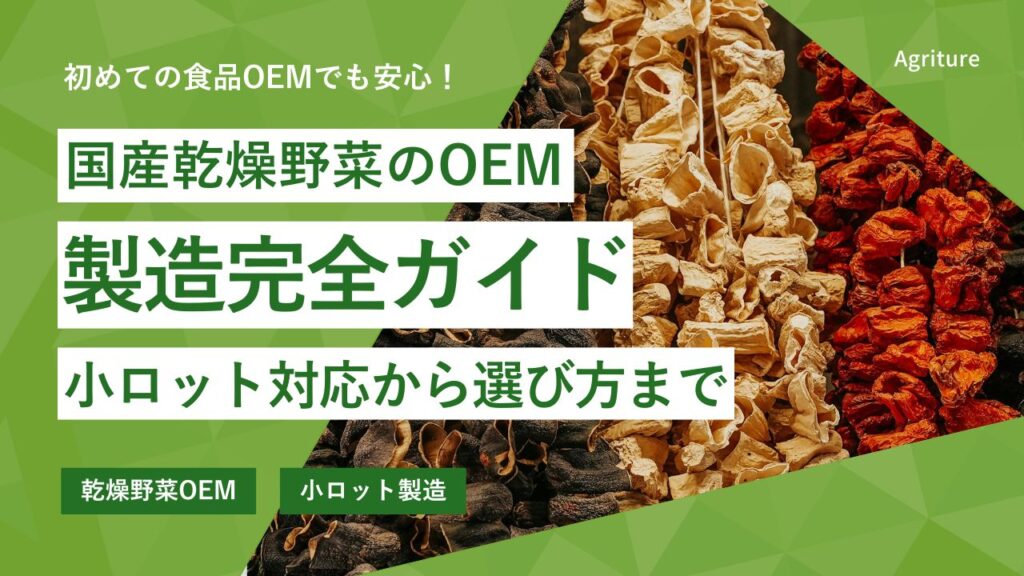
The Complete Guide to OEM Manufacturing of Domestic Dried Vegetables | A Thorough Explanation from Small-Lot Support to How to Choose
As awareness of food safety rises, demand for domestically grown dried vegetables is rapidly expanding. As of 2025 in particular, additive-free products that use no food additives and OEM manufacturing services that can handle small lots are strongly sought by small and medium-sized companies and new entrants. Conventionally, mass production was... -
Choosing a Food OEM Prototyping Partner: 8 Criteria and the Practice of On-Site Auditing
Choosing a food OEM partner is the work of discerning, at the prototyping stage, a manufacturer's areas of strength, quality control systems, know-how, production capacity, and inventory handling. A manufacturer that appears often in rankings is not necessarily the right fit for you, and "how they tailor formulation proposals," "bridging from prototype to mass production," and handling trouble...