
5 Points for Selecting Packaging Materials | The Best Fit for Your Filling Method and Product Characteristics

Summary of this article
This guide organizes packaging material selection by the characteristics of the contents (powder, liquid, granules, paste), compatibility with filling lines, and optimization by sales channel. It covers the features of each material, such as aluminum laminate, stand-up pouches, clear window pouches and jars; measures against moisture absorption, static electricity and fading in powder filling; five selection points (barrier properties, filling compatibility, lot and cost, certified factories, environmental considerations); and practical cases including OYAOYA, a Nippon Paper Crecia novelty and a 500-bag OEM.
Packaging-material selection is a step that simultaneously sways the content's shelf life, cost, and brand value. If you don't choose the best material for the content's characteristics (powder, liquid, granular, paste), filling method, distribution route, and sales channel, unexpected quality degradation, cost overruns, and machine-compatibility problems arise.
This article organizes the points of packaging-material selection premised on food filling, by filling machine, by product characteristic, and by sales channel. We've put the must-have viewpoints in material selection—barrier property, filling temperature, seal conditions, nozzle shape, cost, environmental consideration—into a form usable in the field. For the full picture of Agriture's small-bag filling OEM service, see the Filling OEM service page.

TOC
Basics of selecting packaging materials
The golden rule for packaging materials is to choose them by working backward from the shape and characteristics of the contents. For powders, moisture protection and flowability; for liquids, sealing and strength; for granules, shape retention; for pastes, barrier properties and pourability—these become the key issues. Furthermore, unless you confirm compatibility with the filling line (bag-type filling machine, cup filling machine, bottling machine), you can end up with a material you selected that can’t be used in production.
3 axes to consider in material selection
- Quality protection: barrier properties (light, oxygen, moisture), strength, heat resistance
- Workability: filling-machine compatibility, seal properties, ease of opening
- Design: printing, clear window, brand image
Compatibility check between filling machine and material
| Filling machine | Usable materials | Points to watch for compatibility |
|---|---|---|
| Bag-type filling machine (vertical pillow, horizontal pillow) | Laminate film, three-side seal bag | Seal temperature; a heat-resistant layer is needed |
| Stand-up pouch filling machine | Aluminum laminate, clear-window pouch, nozzle-equipped | Fit of bag gusset and nozzle shape |
| Cup filling machine | PP cup + seal lid | Heat-seal-compatible lid material |
| Bottling machine | PET bottle, glass bottle | Cap shape, net-content tolerance |
| Stick filling machine | Stick film (PET/nylon composite) | Width, length, seal strength |
Even with the same aluminum-laminate film, there are cases where the seal layer’s heat-resistant temperature differs between vertical-pillow and horizontal-pillow use. Sending material samples to the maker before prototyping and confirming machine compatibility prevents trouble.
Optimal materials by product characteristic
Depending on the form of the contents, the material properties to prioritize and the standard options change.
Compatibility table by contents
| Contents | Priority property | Standard material |
|---|---|---|
| Powder (vegetable powder, etc.) | Moisture protection, barrier properties | Aluminum-laminate film, three-side seal bag, stand-up pouch (aluminum) |
| Granules | Shape retention, anti-blocking | Aluminum laminate, nylon, three-side seal bag |
| Liquid (sauce, dressing) | Sealing, strength | PET bottle, stand-up pouch (nozzle-equipped), retort pouch |
| Paste, jam | Barrier properties, pourability | Bottle, tube, stand-up pouch |
| Dried slices, chips | Crush resistance, visibility | Transparent PET + nylon, aluminum-vapor-deposited clear-window pouch |
| Portioned (stick, sachet) | Portability, individual packaging | Three-side seal small bag, stick packaging |
| Gift | Design, premium feel | Bottle, can, decorative box + inner pouch |
Points to watch especially for powder filling
- The more additive-free and fine the powder, the more readily it absorbs moisture → block light, oxygen, and moisture with an aluminum laminate
- Static electricity making powder stick to the seal causes leaks → antistatic-treated material, static removal on the filling-machine side
- Pigments (beetroot, purple pepper, etc.) fade under light → highly light-blocking material
- Powder catching in the seal readily causes sealing defects → secure a wider seal width, blow-off dust-removal mechanism
- The self-standing nature of stand-up pouches stabilizes storage and display
Points to watch for liquid and paste filling
- Matching nozzle shape to viscosity (higher viscosity = larger-bore nozzle)
- If retort sterilization is needed, specify retort-compatible film
- For strongly acidic or strongly alkaline contents, confirm the barrier layer’s chemical resistance
- For products served warmed in a hot-water bath, heat-resistant film is essential
5 perspectives on material selection
Here we organize five perspectives to keep in mind when choosing materials. For each, we make clear what specifically to confirm.
① Assessing barrier performance
- Resistance to light, oxygen, and moisture directly affects best-before date and product quality
- Aluminum-vapor-deposited film: transparent yet high barrier, adopted for gifts and high-value-added foods
- Pure aluminum laminate: top-class light and oxygen blocking, chosen for long-shelf-life foods and powders
- Transparent PET + nylon: EC and gift use where content visibility matters
② Machine compatibility with the filling machine
- Whether the material’s thickness, material layers, and seal temperature fall within the filling machine’s processing range
- Seal width (around 10 mm is standard; 15 mm or more is also worth considering for powders)
- Matching nozzle shape to bag-mouth diameter
- Whether retort sterilization is possible (a layer structure that won’t melt under high-temperature heating)
③ Balance of lot quantity and cost
- Original-print pouches require a minimum packaging-material lot of 3,000–5,000 sheets
- Ready-made pouch + seal label allows small lots from 10 to 500 sheets
- Staged ordering: validate with ready-made products initially, then switch to original printing after sales results
- Risk of packaging-material inventory (degradation from long-term storage, concerns about spec changes)
④ Legal labeling and standards compliance
- Compliance with the Food Sanitation Act’s food-contact-material standards
- Securing display space for ingredients, allergens, and nutritional components
- Print space for best-before date and lot number
- For exports, also confirm the destination’s standards (FDA, EU, etc.)
⑤ Environmental consideration, biomass compatibility
- Biomass-plastic-blended film (sustainability appeal)
- Easy-to-recycle design through single-material construction
- Substitution with paper materials (unsuited to powders but adopted for solid products)
- The unit price runs roughly 1.5–2 times that of ordinary petroleum-based film
We have prepared materials that explain small-pouch filling
Agriture, flexibly handling everything from small lots to large lots
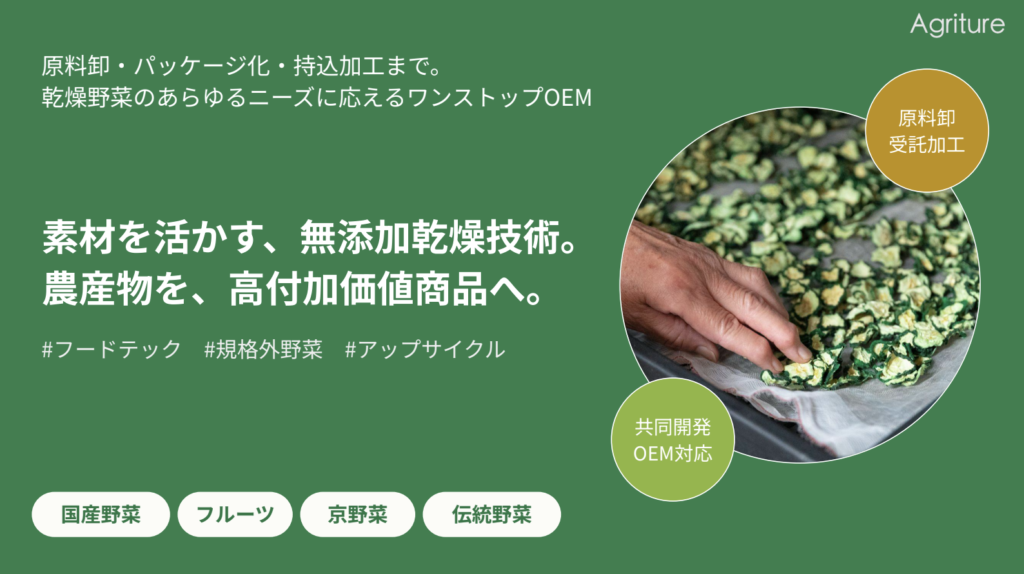
- Small-bag filling from 500 bags
- Tea and coffee also supported
- Sealing carried out in a single seamless flow
Material design by sales channel
Because the point of contact with consumers differs by sales channel, the materials required also change.
Material mapping by sales channel
| Sales channel | Suited material | Point |
|---|---|---|
| D2C (EC, subscription) | Stand-up pouch (zippered), three-side seal small bag | The outer form stays neat during shipping, and the opening experience is good |
| Supermarkets, mass retail | Stand-up pouch (clear window), bottle | Shelf visibility, display efficiency |
| Department stores, specialty shops | Bottle, can, decorative box + inner packaging | Premium feel, brand appeal |
| Hometown-tax gifts, presents | Decorative box + individual packaging, ribbon specification | Gift-worthiness, completeness of the wrapping |
| Novelties and promotions | Stick, three-side seal small bag | Distribution efficiency, cost control |
| Commercial use, wholesalers | Aluminum-laminate large bag, cardboard packing | Large capacity, transport efficiency |
Learning from real cases
We introduce three material-selection patterns from projects Agriture was involved in. Use them as a reference for choosing materials by working backward from product characteristics and sales channel.
Case ①: OYAOYA’s 8-variety dried-vegetable set
- Contents: dried vegetables (sliced and cut, additive-free)
- Material: aluminum-vapor-deposited clear-window pouch + seal label
- Sales channel: own EC OYAOYA, overseas expansion
- Reason for selection: combines content visibility and light-blocking barrier, with a common material + swappable label that makes it easy to increase SKUs
Case ②: Nippon Paper Crecia prize novelty set
- Contents: 8 varieties of OYAOYA dried vegetables, individually packaged
- Material: small-bag pouch individual packaging + decorative outer box
- Sales channel: prize for the “Action for Smile” campaign
- Reason for selection: a configuration that can express gift-worthiness, the opening experience, and the campaign’s story
Case 3: Small-lot OEM starting from 500 bags
- Contents: vegetable powder, dried fruit, etc.
- Material: ready-made aluminum-laminate pouch + seal label
- Sales channel: D2C test sales, crowdfunding rewards
- Reason for selection: Small-bag filling from 500 bags to accommodate this, using ready-made products compresses initial costs
We have prepared materials that explain small-pouch filling
Agriture, flexibly handling everything from small lots to large lots
- Small-bag filling from 500 bags
- Tea and coffee also supported
- Sealing carried out in a single seamless flow
FAQ
Which material is best for powder products?
A stand-up pouch (zippered) of aluminum-laminate film is the standard. It has high barrier against light, oxygen, and moisture, and can curb moisture uptake and clumping even for additive-free fine powders. When you want to show the contents, an aluminum-vapor-deposited clear-window pouch is also an option.
What’s the minimum lot for original printing?
3,000–5,000 sheets is common. When launching in small lots, combining a ready-made pouch + seal label keeps initial costs down. A staged approach—placing the full order once you have sales results—is realistic.
How do we confirm compatibility between the filling machine and the material?
Send material samples to the maker before prototyping and confirm the fit of seal temperature, thickness, and bag gusset. Since usable materials differ among vertical pillow, horizontal pillow, stand-up pouch filling machines, and stick filling machines, the safe order is to choose the material after the filling form is decided.
What material is used for products that are retort-sterilized?
A retort-compatible film (a multi-layer structure with a heat-resistant layer) is needed. It’s a layer structure that withstands heat sterilization around 120°C, and there are retort-compatible stand-up pouches as well. Whether to use a ready-made pouch or a custom design is decided by the best-before date and sales channel.
What if we want to use eco-conscious materials?
Options include biomass-plastic-blended film, easy-to-recycle design through single-material construction, and substitution with paper materials. Since the unit price is often roughly 1.5–2 times that of ordinary petroleum-based film, you need to design around both product price and brand story.
Summary
Selecting packaging materials basically means working backward along three axes: “characteristics of the contents,” “compatibility with the filling machine,” and “sales channel.” Choose the material to match the contents—aluminum laminate for powders, bottles or nozzle-equipped pouches for liquids, bottle/can + decorative box for gifts—and make the final decision from five perspectives: barrier properties, filling-machine compatibility, lot and cost, legal labeling, and environmental consideration.
Agriture's Small-bag filling OEM service supports packaging design matched to the scale of your product, from 500 bags using stock pouches to full-scale mass production with original printing. For inquiries, Agriture's page on Food OEM no Madoguchi feel free to reach out.
Recommended reading
- How to choose stick-filling OEM foods
- How to realize stand-pouch filling in small lots
- Vegetable powder list
Download the small-pouch filling materials
We will send the materials to your email address based on the information you provide.
If you are considering product development with off-spec or your own farm's vegetables:From planning to processing, materials, package printing and novelties, you can consult us through a single point of contact. → Learn more about one-stop product development
- How to choose stick-filling OEM food | 8 points to avoid failure with small-lot support
- A complete explanation of how to request a filling quote | Necessary information and a comparison checklist
Author of this article
Related articles
-
 Original coffee marketing strategy | Ways to grow sales
 -
 ベジタリアンとは?国の規格が分けている4つの区分と食べられないもの
 -
 長ねぎと白ねぎは同じもの?ねぎの種類と呼び名を国の資料で確かめる
 -
 柚子の種類は何種類あるのか、公の資料で名前が残る系統を数えた
 -
 ゆずの時期は年に二度、青ゆずは7月から黄ゆずは10月から
 -
 ゆずの産地は高知が半分を占め、二位は徳島から愛媛に変わった
 -
 Preventing Food OEM Failures: Common Failure Cases and Countermeasures for Success
 -
 How to find a food OEM | How to efficiently find the best manufacturing partner