Let's cultivate "delicious!" around the world. What Is Fair Trade?
Fair trade refers to a system that conducts fair trade between producers and consumers, supporting producers' improved livelihoods and sustainable production. Small-scale farmers and workers in developing countries in particular are the focus, emphasizing guarantees of fair prices, improved labor conditions, and returns to local communities. For example, coffee, cacao, and bananas are representative traded items, and while protecting agriculture rooted in the natural conditions and culture of each production area, it also leads to reducing environmental impact. Fair trade is not merely a transaction but is spreading worldwide as a "connected economy" in which producers and consumers build the future together.
About Our Overseas Initiatives
Developing suppliers
We develop producers and production areas centered on the Asian region. We propose partnership methods according to the purpose, such as importing to Japan or manufacturing locally.
Wholesale / retail sales
We conduct sales within Japan. In addition to wholesale as raw material, retail sales as packaged food are also possible.
Media conveying overseas agriculture
We are preparing to operate media that conveys the world's agriculture. From introducing production areas to interviewing producers, we broadcast information toward sustainable agriculture.
The first is coconut from Vietnam
Vietnam / Sokfarm
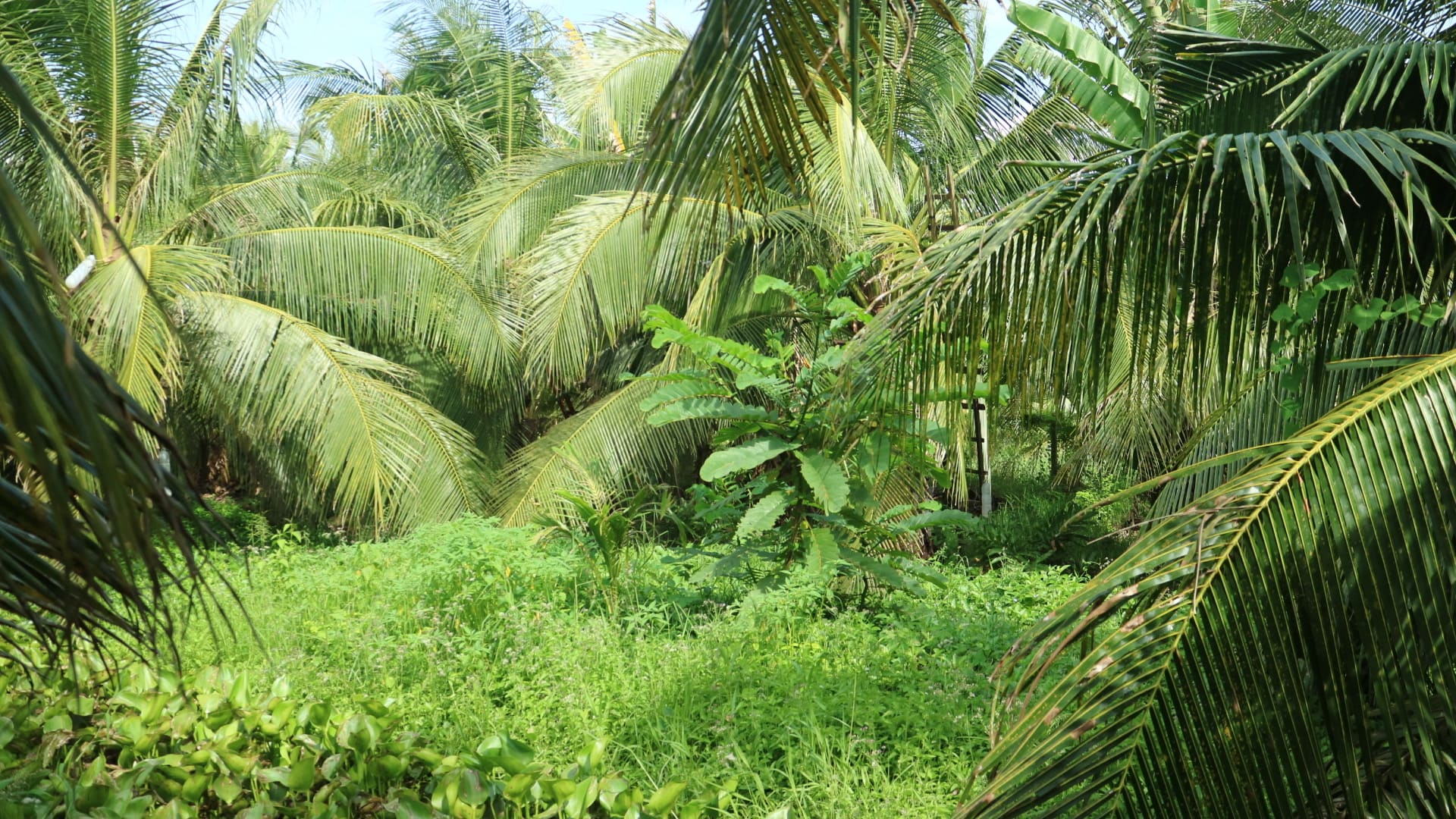
Vietnam, with its long, narrow territory running north to south. In the former Tra Vinh Province, located in the Mekong Delta in the south, we handle the products of Sokfarm, which works to raise incomes using sustainable coconut.
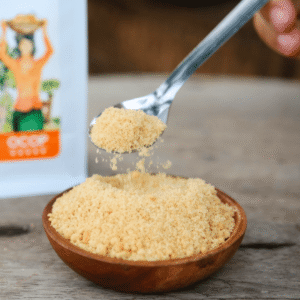
The fertile Mekong Delta basin in southern Vietnam, blessed with a warm climate and rich soil, is known as a producing area of high-quality coconut. "Coconut sugar," made by slowly simmering the nectar taken from the coconut trees grown here, is characterized by a gentle sweetness and a faint caramel-like flavor. We also handle the freshly extracted nectar itself, whose nutrient-rich, mellow sweetness pairs well with drinks and desserts.
Coconut sugar
Coconut Flower Sugar (Vietnam-Grown) | Commercial Raw Material Wholesale. A natural sweetener using 100% organic coconut nectar grown in Vietnam's Mekong Delta. Rich in minerals, amino acids…
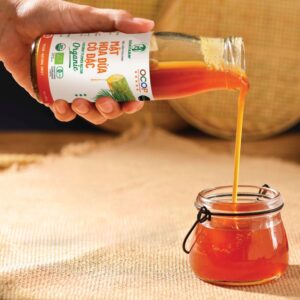
The fertile Mekong Delta basin in southern Vietnam, blessed with a warm climate and nutrient-rich soil, is known as a producing area of fine coconut. "Coconut nectar," taken from the flowers of the coconut trees grown here, is characterized by a gentle sweetness and a faint toastiness. Because it's processed right after collection, it's rich in flavor and contains minerals and vitamins. It works not only as a sweetener for drinks and desserts but also as a seasoning that adds richness to dishes.
Coconut Flower Nectar (Vietnam-Grown) | Commercial Natural Sweetener Wholesale. Using 100% organic coconut nectar grown in Vietnam's Mekong Delta, processed with vacuum concentration technology (low-temperature concentration at 55–60°C)…
Related articles
Coconut nectarYield declines continue due to climate change and salt damage
Challenges We Address
The Crisis of Mekong Delta Agriculture The Mekong Delta region, where harvest volumes have fallen greatly due to the effects of climate change and salt damage, leaving farmers' incomes unstable. In response to that challenge, Sokfarm built a new revenue model making use of coconut nectar. Nectar, which can be collected daily without felling the trees, is less affected by climate change and becomes a stable income source year-round. By handling everything from collection to processing and sales in partnership with farmers, it supports the sustainable development of the local economy while curbing environmental impact.
Climate change
In the Mekong Delta, especially in Trà Vinh, saltwater intrusion has caused situations where coconut yields fall 30–70%.
Diversifying farmer income
To cope with yield declines from salt damage and secure stable year-round income, we employ farmers and manufacture and sell processed products making use of coconut nectar.
Reducing environmental impact
Nectar collection doesn't fell trees and can make use of existing coconut groves, leading to curbing land development and deforestation.
Nectar collection doesn't fell trees and can make use of existing coconut groves, leading to curbing land development and deforestation.
Sokfarm
We got to know Sokfarm, which addresses the challenge of yield decline from climate change and salt damage in the Mekong Delta region, in 2023. Building a new revenue model making use of coconut nectar, using as raw material nectar that can be harvested daily without felling trees, it carries out everything through processing and sales with organic cultivation and circular production. It contributes to building a sustainable local economy that curbs environmental impact while securing stable income for farmers.
Sokfarm's Initiatives
Organic cultivation and circular production
We cultivate based on international organic standards, maintaining the health of soil and water. In the production process, we prioritize surface water and reuse the water obtained in the distillation step, achieving effective use of resources and reduced environmental impact.
Coconut's environmental adaptability
Coconut trees play the roles of maintaining the groundwater table, preventing erosion, and serving as windbreaks, and mature trees absorb a large amount of CO₂ per year. Trees over 10 years old in particular have resistance to salt damage and strong-wind damage, contributing to sustainable agriculture in regions where warming is advancing.
Product making that protects health
Nectar products are low-GI and high in nutritional value, and because they're made without using chemicals, they protect both employee safety and consumer health. Answering rising health and organic consciousness, we provide products of value to society and the local community.
Why Coconut
This is Kojima, CEO of Agriture. In 2022, I had the chance to visit organic farmers in Vietnam, and it was then that I met Sokfarm CEO Mr. Ngai. Southern Vietnam is a beautiful, nature-rich region lush with coconut trees. But I heard about the current situation, in which in recent years the effects of climate change have driven saltwater far inland, greatly reducing yields. I also learned that many coconut farmers have income sources limited to selling the fruit, leaving their livelihoods unstable due to fluctuations in market prices.
Amid this, Sokfarm made use of coconut nectar to build a new revenue model less affected by salt damage. While securing stable income for farmers, it was achieving sustainable development for the region. This encounter became a major catalyst for me to deeply understand the local challenges and possibilities.
Furthermore, Mr. Ngai devotes himself to sustainable community-building rooted in agriculture, such as providing free fertilizer and English education in the region. That stance deeply overlaps with the background of why I founded Agriture. That's exactly why, along with the wish to spread his products in Japan, I wanted to properly convey the story behind them, and so I created this page.