[2025 Latest] 3 Fair Trade Brands and Points for Choosing Them

Summary of this article
As the latest 2025 fair-trade brands, we introduce three: Japan's People Tree, Kyoto's Bean to Bar brand Dari K, and Ghana-owned MAAHA CHOCOLATE. We also explain five points for choosing—checking the international fair-trade certification label, being mindful of the country of origin, combining with organic certification, the product's backstory, and fit with your own lifestyle—plus ways to start close to home.
Have you ever heard the term fair trade? Translated literally, it means "fair trade." It's an initiative that pays producers in developing countries a fair price and supports their improved livelihoods and sustainable farming practices.
The items covered by fair trade are wide-ranging—coffee, cacao, tea leaves, spices, fruit, cotton, and more. By buying these products, you can support the lives of producers in far-off countries.
But it's easy to get lost over which brand to choose.
Recommended reading
TOC
Five points for choosing fair-trade products
When choosing fair-trade products, it helps to keep a few points in mind. Here are the selection criteria I value in my daily work.
1. Check the international fair-trade certification label
When choosing a fair-trade product, first check for the "international fair-trade certification label." A product with this label shows it meets globally shared fair-trade standards, such as a minimum price guarantee and safe working conditions.
2. Be mindful of the country or region you want to support
Fair-trade products state their country of origin. If you want to support a particular country or region, choose one produced there.
For example, Ethiopia or Guatemala for coffee, Ghana or Cote d'Ivoire for chocolate—knowing the challenges and characteristics each country faces lets you consume more consciously.
3. Check for a combination with organic certification
A product holding both fair-trade and organic certification is a choice considerate of producers' health and the environment. Limiting the use of pesticides and chemical fertilizers and promoting organic farming also helps conserve soil and water sources and maintain biodiversity.
4. Know the story behind the product
Knowing the story behind a product—who makes it and how—matters too. Products where you can see the producer's face let you choose with more of a sense of connection.
For example, projects supporting women producers, or efforts contributing to a specific community's development—each brand has its own mission.
5. Choose products that fit your lifestyle
Finally, we recommend starting with products easy to bring into your life. Switching things you consume routinely—your daily coffee or tea, chocolate you often eat—to fair-trade products lets you continue without strain.

10 selected fair-trade brands
Here we introduce popular fair-trade brands available in Japan as of 2025. All are noted brands rated highly not only for high quality but also for their producer-support efforts.
People Tree

A pioneer among Japan's fair-trade specialty brands. It offers a wide range of products, from organic-cotton clothing to chocolate. Its chocolate, made by traditional Swiss methods, holds both fair-trade and organic certification, with a high-quality taste. In 2025, high-design items such as the "Miffy 80th Anniversary T-shirt" are also a talking point.
Dari K

A Kyoto-born Bean to Bar chocolate brand. It deals directly with cacao farmers on Sulawesi Island, Indonesia, supporting quality improvement through guidance in fermentation and drying techniques. While contributing to producers' higher incomes and community self-reliance, it's a brand that combines "quality and social value," also carried by hotels and department stores in Japan.
MAAHA CHOCOLATE

A Bean to Bar chocolate brand based in Ghana that handles everything from production through manufacturing and sales. By connecting directly with farmers and thoroughly trading at fair prices, it contributes to improving producers' livelihoods. Its chocolate, drawing out the appeal of Ghanaian cacao to the fullest, is drawing attention from ethical-consumption-minded consumers in Japan too.
Tips for bringing fair-trade products into daily life
Choosing fair-trade products is a wonderful act that not only supports producers in far-off countries but also contributes to environmental conservation. But how can you bring it into daily life?
1. Start with things close to home
First, start with familiar foods you use daily—coffee, tea, chocolate. Switching things you consume routinely, not something special, to fair-trade products leads to continuous support.
2. Use them as gifts
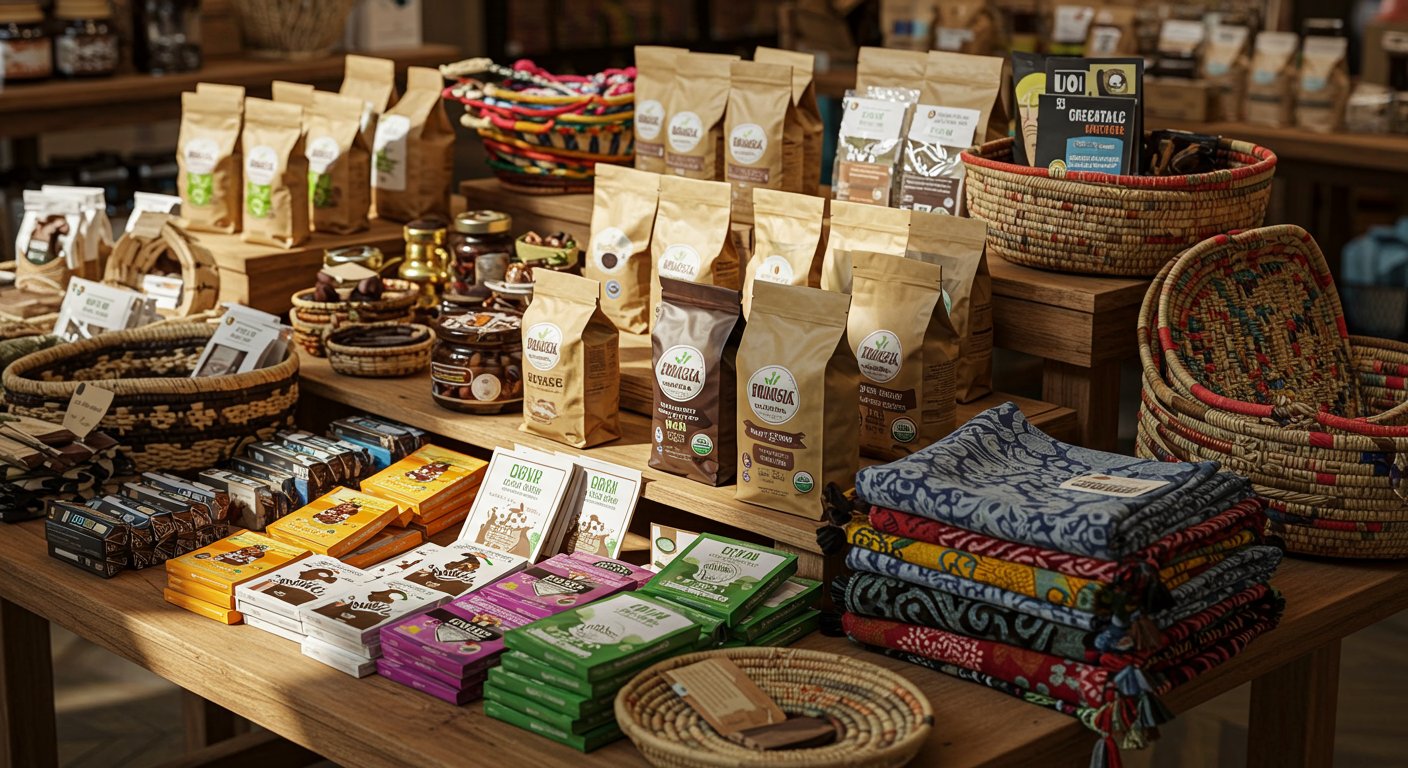
Fair-trade products are also ideal as gifts. There's a lineup of happy-to-receive items—chocolate in stylish packaging, handmade goods, and more.
Choosing fair-trade products as gifts also spreads the fair-trade philosophy to the recipient. For events like Valentine's Day and Christmas, do consider fair-trade chocolate.
3. Learn the certification marks
Being mindful of certification marks when shopping makes fair-trade products easier to find. The international fair-trade certification label is increasingly seen at supermarkets and cafes too.
Learning related certification marks such as organic certification and Rainforest Alliance broadens your options further.
4. Make use of Fair Trade Month
Every May is Fair Trade Month, and the second Saturday of May is World Fair Trade Day. During this period, many companies and organizations run events and campaigns—a great chance to encounter fair-trade products.
Fair-trade-related events are planned around the country in 2025 too, so do check them out.
Summary: choose to connect with the world through fair trade
Choosing fair-trade products is not mere shopping but a choice to connect with the world's producers. Trading at fair prices supports producers' improved livelihoods and promotes sustainable agriculture.
In 2025 in particular, even amid concerns over soaring cacao prices and rising costs, the fair-trade market keeps expanding. Interest in fair trade is rising in Japan too, and appealing products from diverse brands are appearing.
Check the international fair-trade certification label, be mindful of combining it with organic certification, and choose products that fit your lifestyle. It matters to start with a small step and gradually bring it into daily life.

Reference:
International Fair Trade certified products | Fairtrade Japan
International Labour Organization
Related articles
What is Fair Trade? The latest 2025 trends and future outlook
About Fair Trade certification marks