How to make yomogi mochi with dried mugwort | Ingredients, amounts, and foolproof tips explained

Summary of this article
We introduce a basic recipe for yomogi mochi made with dried yomogi — ingredients and amounts, how to rehydrate, foolproof tips, variations, and storage. Even without fresh yomogi, you can make it regardless of season with domestic dried yomogi.
A springtime wagashi standard, yomogi mochi (kusa mochi). Fresh yomogi is limited to spring, but with dried yomogi you can make yomogi mochi easily anytime, year-round. Since the prep and harshness-removal are done, it's as simple as rehydrating and mixing it into the dough.
In this article, Agriture, which handles dried-vegetable processing in Kyoto, introduces a basic recipe for yomogi mochi made with dried yomogi — ingredients and amounts, how to rehydrate, foolproof tips, variations like anko, and storage. Even with dried yomogi, you can make yomogi mochi with an aroma and color that hold their own against fresh.
TOC
What is yomogi mochi (kusa mochi)? The appeal of making it with dried yomogi
Yomogi mochi is a chewy wagashi with yomogi kneaded in, also called kusa mochi. Its appeal is the young-grass aroma that says spring and its vivid green, and it's popular eaten wrapping tsubu-an or coated in kinako. Long beloved as a springtime wagashi and made by hand at home too, it goes well with tea.
With dried yomogi you can make it year-round
Fresh yomogi is only available in the short spring season and takes effort to de-harshen after picking. Dried yomogi is pre-prepped and keeps well, so the big advantage is being able to enjoy yomogi mochi regardless of season. For the basic use of dried yomogi, How to Use Dried Mugwort.
FOR BUSINESS
乾燥よもぎを、原料としてお探しですか
国産のよもぎを乾燥・粉砕してお出ししています。カット形状や粒度の指定、継続してのお取引もご相談ください。規格は Dried mugwort・Mugwort powder に掲載しています。
少量でのご購入は、姉妹ブランドの通販サイト OYAOYA で承っています。
A basic recipe for yomogi mochi made with dried yomogi
First we introduce the basic yomogi mochi recipe. No special tools are needed; you can make it with a bowl and a steamer. Dried yomogi works in either leaf or powder form.
Ingredients and amounts needed (easy-to-make amount)
| Ingredient | Guideline amount |
|---|---|
| Shiratama flour | 100g |
| Joshinko | 100g |
| Sugar | 2–3 tablespoons |
| Dried yomogi (leaf) / or yomogi powder | 2–3 tablespoons of rehydrated leaf / 1–2 tablespoons of powder |
| Lukewarm water | About 180 ml (adjust to the firmness) |
| Tsubu-an | As needed |
The steps for making it
- Rehydrate dried yomogi (leaf) in water or warm water for 15–30 minutes, wring out the moisture, and chop finely (use powder as is)
- In a bowl put shiratama flour, joshinko, and sugar, add warm water little by little, and mix
- Add the yomogi and knead until it reaches a firmness like an earlobe
- Divide the dough into equal portions, roll them round, and steam for about 15–20 minutes in a steamer
- Once the heat has eased, wrap in tsubu-an and shape it to finish
The steamed dough is easier to handle and roll while it's still hot. Coated in kinako or eaten as is, it's also delicious.
There's also a way to make it from mochi rice with a mochi-pounding machine, which finishes chewier. Adjust the sweetness by the amount of sugar to taste, and go easy on the filling — tweak it to your household's preference. More shiratama flour makes it softer and more mochi-like; more joshinko gives a firmer, cleaner bite. If the dough is loose, add joshinko; if firm, add warm water little by little to adjust.
A product catalog that shows around 100 items we handle
Agriture, flexibly handling everything from small lots to large lots
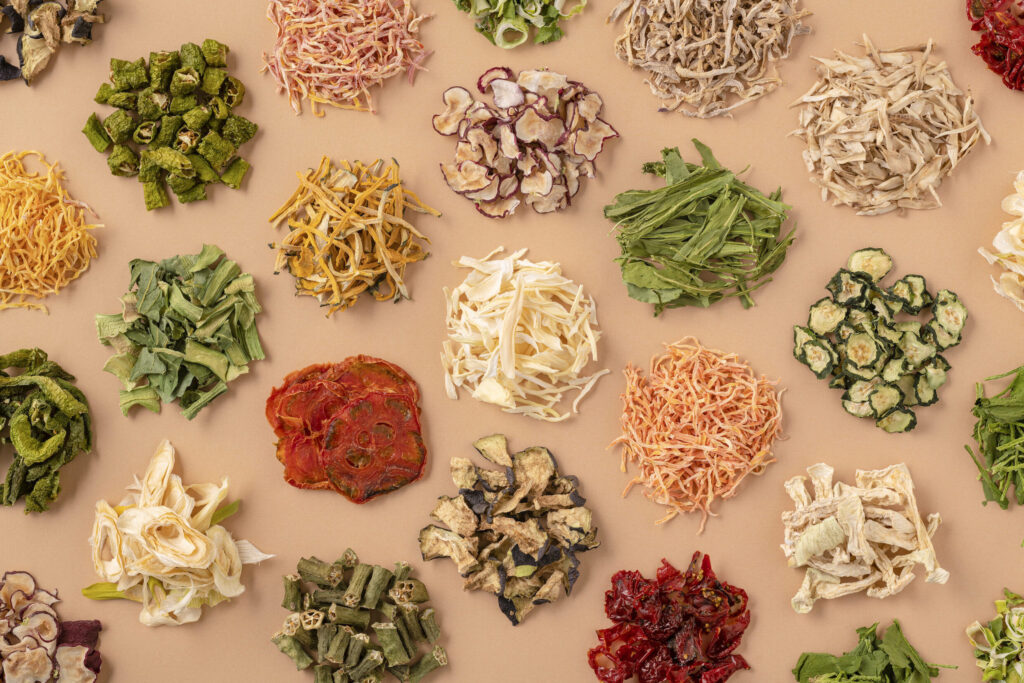
- Available for purchase in small lots from 1 kg
- We handle heirloom vegetables from across Japan
- Dried fruit and herbs also supported
Foolproof tips and how to rehydrate dried yomogi
To make yomogi mochi cleanly, handling the dried yomogi is the point. Cover the rehydrating and amounts and both color and aroma finish cleanly.
Using leaf versus powder, and how to rehydrate
Leaf-type dried yomogi mixes into the dough more readily if you rehydrate and chop it, or blend it into a paste, before adding. If you prioritize ease, the Mugwort powder you can mix in without rehydrating is convenient. Since powder colors firmly even in a small amount, not overdoing it is the point.
- Leaf: rehydrating and chopping leaves a grainy feel and finishes with a rustic flavor
- Powder: color comes out evenly and it finishes with a smooth mouthfeel
- Watch over-rehydrating: soaking in water too long tends to blur the aroma
Tips for bringing out clean green and aroma
- Wring out the moisture from rehydrated yomogi thoroughly so the dough doesn't get watery
- To deepen the color, increase the amount little by little and adjust while tasting
- Choose vivid-green dried yomogi with good aroma and color
If the fibers of the rehydrated yomogi bother you, blending it finely into a paste makes the mouthfeel smooth. Increasing the amount kneaded into the dough little by little while adjusting to your preferred color and aroma makes it less likely to fail.
The finished color and aroma depend on the quality of the dried yomogi you use. Agriture's dried mugwort is a raw material made by low-temperature drying of domestic yomogi centered on Mie Prefecture, retaining aroma and color. Since high-temperature drying tends to drive off aroma, low-temperature-dried yomogi has good aroma and color when rehydrated, which shows directly in the finished yomogi mochi. When you need a large amount for commercial use, such as at a wagashi shop, Commercial and OEM dried mugwort is available too.
Variations and ways to eat yomogi mochi
Once you're used to the basic yomogi mochi, you can enjoy variations too. Combinations other than anko, developing it into wagashi and sweets, and small dishes are popular too. Try various ways to eat it to match your household's preference.
- Coat with kinako or kuromitsu for a yomogi dango feel
- Wrap tsubu-an or koshian for a daifuku feel
- Grill it and put it in oshiruko, or make isobeyaki
- Roll it small and use it as a topping for Japanese sweets
There are uses for yomogi other than yomogi mochi too, like yomogi-mushi and yomogi tea. For ways to work yomogi into your life, How to do yomogi steam at home.
How to store yomogi mochi
Yomogi mochi tends to harden over time, so knowing storage methods lets you enjoy it deliciously to the last. The trick is to store what you can't finish that day promptly, before it hardens. Homemade yomogi mochi doesn't keep like store-bought, so making just what you'll eat, or using the freezer well, avoids waste.
- Same day: store at room temperature and finish it that day
- Next day onward: wrap each one in plastic wrap and freeze, then heat to restore when eating
- When hardened: grilling, steaming, or making it into oshiruko lets you enjoy it soft
A product catalog that shows around 100 items we handle
Agriture, flexibly handling everything from small lots to large lots
- Available for purchase in small lots from 1 kg
- We handle heirloom vegetables from across Japan
- Dried fruit and herbs also supported
FOR BUSINESS
乾燥よもぎを、原料としてお探しですか
国産のよもぎを乾燥・粉砕してお出ししています。カット形状や粒度の指定、継続してのお取引もご相談ください。規格は Dried mugwort・Mugwort powder に掲載しています。
少量でのご購入は、姉妹ブランドの通販サイト OYAOYA で承っています。
Summary
With dried yomogi you can make yomogi mochi regardless of season, without minding the season. Mix rehydrated yomogi (or powder) into shiratama flour and joshinko, knead, steam, and wrap in tsubu-an — the method is very simple. Wringing out the moisture thoroughly and choosing dried yomogi with good aroma and color are the tricks to a clean finish. Enjoy making spring-like yomogi mochi with domestic dried yomogi.
Frequently asked questions
Recommended reading
- Complete guide to using dried mugwort | From rehydrating to popular recipes and storage tips
- Dried mugwort (product page)
- Mugwort powder
Download the product catalog
We will send the materials to your email address based on the information you provide.