
What Is Sustainable Packaging? Types of Materials, Benefits, and Tips for Small-Lot Adoption

Summary of this article
From the basics of what a sustainable package is, through the four material types — paper conversion, biomass plastic, biodegradable plastic, and recycled materials — the benefits and challenges of adoption, how to choose by category of contents, and a phased, manageable approach to starting in small lots: this article organizes it all for food manufacturers.
As calls for environmental consideration grow, the move to switch packaging to sustainable options is spreading among food manufacturers too. That said, with many options such as paper conversion and biomass materials, there are plenty of moments when you're torn over the balance between cost and protecting the contents.
This article organizes it all — from the basics of what a sustainable package is, through the material types, the benefits and challenges of adoption, and how to get started in small lots without overreaching. As for choosing environmentally conscious options when filling small bags with dried vegetables or powder in small lots, Small-pouch filling OEM service page you can also consult us at.
TOC
What is a sustainable package?
A sustainable package refers to packaging that curbs the environmental burden while also fulfilling packaging's inherent functions such as protecting the contents and enabling distribution. It's the collective term for packaging that incorporates ideas for using resources sustainably — reducing the amount of plastic used, using renewable resources, making it easier to recycle, and so on.
The background behind the attention
Behind it lie rising interest in the marine-plastic problem and decarbonization. The disposal of single-use packaging has come to be seen as a factor in environmental burden, and after the plastic-bag charge and the enforcement of the Act on Promotion of Resource Circulation for Plastics, companies have come to be asked to rethink their packaging. Consumer environmental awareness has risen too, and sustainable efforts have become one reason products are chosen. It's an effort tied to SDGs Goal 12 (responsible consumption and production) and Goal 14 (life below water).
For food manufacturers, packaging is an indispensable element that protects product quality, and at the same time a part that is discarded in large volumes. That's precisely why how to reduce the environmental burden while maintaining function is being asked. Rethinking packaging becomes not only a contribution to the environment but also an opportunity to convey a brand's stance to consumers.
The main types of sustainable packaging
Depending on the direction of environmental consideration, the materials used divide broadly into four. Since each has different features and costs, choose to match the contents and sales channel.
| Type | Features | Main use |
|---|---|---|
| Paper conversion (paper packaging) | Can reduce the amount of plastic used. A barrier layer is combined to supplement function | Outer boxes, paper pouches, individual packaging |
| Biomass plastic | Uses some plant-derived raw material, curbing the use of fossil resources | Bags, films, trays |
| Biodegradable plastic | Decomposes under certain conditions. PLA and the like are representative | Disposable containers, cutlery |
| Recycled materials | Reuses used PET bottles and the like. Recycled PET is representative | Bottles, trays, films |
Paper conversion is a method of replacing some or most of the plastic with paper. It's easy to adopt in outer boxes, paper pouches, and the like, and being easy to convey environmental consideration by appearance is another advantage. Biomass plastic uses some plant-derived raw material — sugarcane, corn, and the like — to curb the use of fossil resources. Its appearance and function are close to conventional plastic, so the hurdle to switching is said to be relatively low. However, since the environmental effect changes depending on the blend ratio and processing method, it's reassuring to check the details when adopting it. Biodegradable plastic is a material that decomposes through the action of microbes and the like, with PLA and others being well known. Recycled materials reuse used PET bottles and such, with recycled PET as a representative example.
What's spreading with an eye to the near future is mono-material conversion, making packages from a single material rather than laminating multiple materials together. Conventional packaging layers different films by function, making it hard to sort and hindering recycling. Making it a single material makes it easier to recycle, though securing barrier properties requires design ingenuity. In paper conversion, combining a barrier layer with paper lets you block oxygen and moisture while reducing the amount of plastic used. There's also the method of making the stance of environmental consideration visible by using FSC-Certified Materials that is mindful of forest-resource management.
FOR BUSINESS
乾燥野菜のOEM・受託加工を承ります
国産の野菜・果物の乾燥、100メッシュ相当までの粉砕、10g以上の小袋充填までをお受けしています。小ロットの試作から量産までご相談ください。寄せられた相談の実例は OEM・卸のご相談 に掲載しています。
乾燥品の賞味期限は、出荷日から6ヶ月程度を目安にご案内しています。
The benefits and challenges of adoption
Adopting sustainable packaging is realistic when advanced while watching the balance with brand value and protecting the contents. We've organized the benefits and challenges.
Main benefits
- Demonstrates an environmentally conscious corporate stance, leading to improved brand image and ESG ratings
- Becomes easier to be chosen by environmentally conscious consumers
- Can get ahead of responding to plastic regulations
Challenges to watch for
- Costs tend to run higher than conventional packaging
- Paper conversion and mono-material conversion require design ingenuity to secure barrier properties
- Depending on the material, constraints may arise on the freedom of printing and design
There are situations where balancing environmental consideration with protecting the contents is difficult. Especially with food, choosing materials within a range that doesn't compromise shelf life or hygiene is the premise. Rather than switching everything at once, setting priorities and advancing in stages keeps it manageable.
We have prepared materials that explain small-pouch filling
Agriture, flexibly handling everything from small lots to large lots
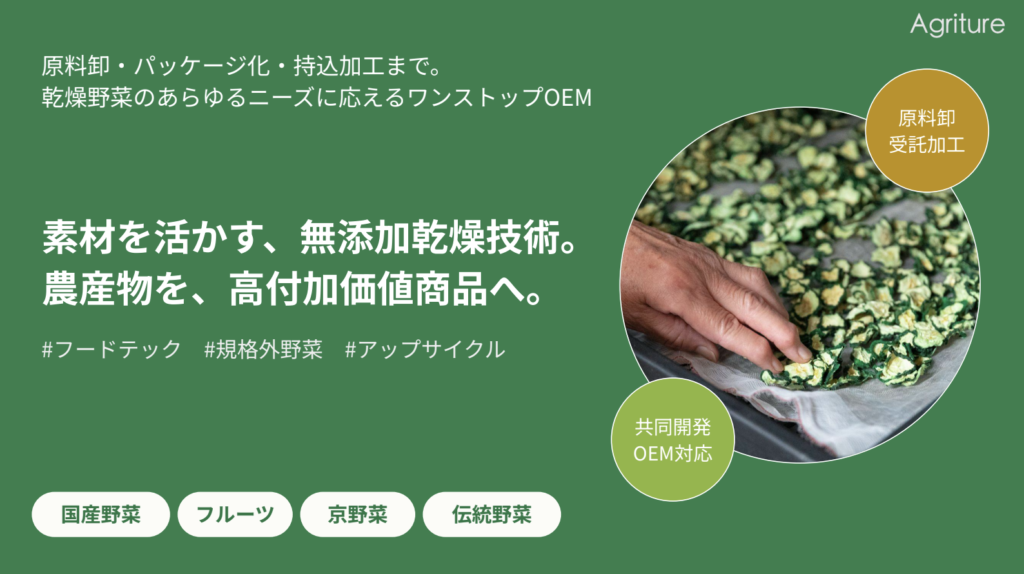
- Small-bag filling from 500 bags
- Tea and coffee also supported
- Sealing carried out in a single seamless flow
How to choose environmentally conscious materials to match the contents
Even when advancing environmental consideration, function suited to the characteristics of the contents can't be sacrificed. Dried vegetables and powder in particular are vulnerable to moisture absorption and fading, so even when converting to paper, combining it with a barrier layer is the premise. We've organized the functions to prioritize and the suited directions by category of contents.
| Category of contents | Function to emphasize | Suited direction of environmental consideration | Points to note |
|---|---|---|---|
| Dried vegetables and powder | Moisture resistance, light blocking | Paper + barrier layer / starting with paper conversion of the outer box | Prioritize moisture-absorption countermeasures for the inner bag |
| Tea leaves, herbs | Light shielding, aroma retention | Paper pouch (with barrier layer) | Watch for aroma transfer and oxidation |
| Baked goods and dried foods | Moisture-proofing and oxidation prevention | Biomass material / mono-material | Contents high in oil content require verification |
| Gift and brand products | Design appeal and marketing power | FSC-certified paper / recycled-material outer packaging | Conveying environmental consideration correctly on the label |
With dried vegetables and powder, a method that's easy to adopt is to consider paper conversion starting with the outer box and individual packaging, while maintaining the performance to block moisture and light. Because the inner bag that touches the contents directly is the key to quality preservation, switching the outer components first and reviewing the inner bag in stages while confirming function reduces the risk of failure. For contents where you want to preserve aroma, such as tea and herbs, a paper pouch combining paper with a barrier layer becomes an option. For products where showing the contents isn't a priority, you can also consider the direction of raising recyclability with a mono-material film.
Since environmentally conscious materials tend to cost more than conventional products, judging whether they suit the volume and sales channel is essential too. Adopting them first from products where environmental consideration is easily conveyed as value — such as gift and brand products — makes it easier to tie the cost increase to appeal. For the overall picture of packaging forms and materials, see Kinds of food packaging; for details on material selection, 5 points for selecting packaging materials.
How to get started in small lots without overreaching
Sustainable packaging can be adopted in stages, starting from where you can, without switching everything from the outset. Advancing while testing in small lots keeps cost and risk in check.
The order for switching in stages
First switching parts not directly involved in protecting the contents — such as the outer box and backing card — to paper conversion or recycled materials lets you signal environmental consideration while minimizing the impact on quality. Next considering mono-material conversion of the inner bag or the adoption of biomass materials, in that order, keeps it manageable. Rather than changing everything at once, expanding the scope while confirming the effects and impact is realistic. This kind of accumulation also becomes a step toward a recycling-oriented society that uses resources over and over.
When switching, it's also important to correctly convey the environmentally conscious materials used on the package and promotional materials. Using labels such as the Biomass Mark and FSC certification makes the effort easier to convey to consumers. Avoiding excessive environmental claims that differ from the facts, and showing the materials actually adopted and what was reduced together with the grounds, makes for messaging that leads to trust.
Compatibility with small lots and digital printing
When testing environmentally conscious materials, small-lot small-bag filling is a well-matched approach. Because it can be manufactured from small quantities, you can run a test sale before fully adopting a new material, keeping inventory risk down too. Using digital printing, which requires no plates, also makes it possible to test many product types little by little. At Agriture, we fill just the needed amount of powders, granules, dried ingredients, and the like into small bags, and can support you from the proposal of packaging materials such as paper and mono-material. Efforts that lead to food-waste reduction — such as commercializing upcycling using off-spec vegetables — can also be discussed together. For the way of thinking about sustainability, see the glossary explanation of "sustainable"please also refer to.
We have prepared materials that explain small-pouch filling
Agriture, flexibly handling everything from small lots to large lots
- Small-bag filling from 500 bags
- Tea and coffee also supported
- Sealing carried out in a single seamless flow
FOR BUSINESS
乾燥野菜のOEM・受託加工を承ります
国産の野菜・果物の乾燥、100メッシュ相当までの粉砕、10g以上の小袋充填までをお受けしています。小ロットの試作から量産までご相談ください。寄せられた相談の実例は OEM・卸のご相談 に掲載しています。
乾燥品の賞味期限は、出荷日から6ヶ月程度を目安にご案内しています。
FAQ
Summary
A sustainable package is an effort that balances environmental consideration with packaging's inherent function. The materials center on four types — paper conversion, biomass plastic, biodegradable plastic, and recycled materials or mono-material — chosen to match the contents and sales channel. Adoption leads to improved brand value, while caution is needed regarding the balance with cost and barrier properties. For dried vegetables and powder, starting paper conversion from the outer box and individual packaging while maintaining the function to block moisture and light is easy to adopt, and advancing in stages while testing with small-lot small-bag filling keeps it manageable.
Recommended reading
- What Are the Types of Food Packaging? From Bag Shape and Film Material to Function and How to Choose Explained
- 5 Points for Selecting Packaging Materials | The Best Fit for Your Filling Method and Product Characteristics
- How to Put Off-Spec Vegetables to Use in Business | Clearly Explained with Upcycling Cases
- What are FSC-certified materials|glossary
- What is sustainable|glossary
Download the small-pouch filling materials
We will send the materials to your email address based on the information you provide.
If you are considering product development with off-spec or your own farm's vegetables:From planning to processing, materials, package printing and novelties, you can consult us through a single point of contact. → Learn more about one-stop product development
- What Are the Types of Food Packaging? From Bag Shape and Film Material to Function and How to Choose Explained
- What Is Small-Lot Package Printing? Methods, Costs, and Tips for Submitting Data in Small Quantities
Author of this article
Related articles
-
 Original coffee marketing strategy | Ways to grow sales
 -
 ベジタリアンとは?国の規格が分けている4つの区分と食べられないもの
 -
 長ねぎと白ねぎは同じもの?ねぎの種類と呼び名を国の資料で確かめる
 -
 柚子の種類は何種類あるのか、公の資料で名前が残る系統を数えた
 -
 ゆずの時期は年に二度、青ゆずは7月から黄ゆずは10月から
 -
 ゆずの産地は高知が半分を占め、二位は徳島から愛媛に変わった
 -
 Preventing Food OEM Failures: Common Failure Cases and Countermeasures for Success
 -
 How to find a food OEM | How to efficiently find the best manufacturing partner