
Commercial and OEM Shiso Powder (Ooba and Red Shiso): Manufacturing Methods, How to Choose, and Small-Lot Production Explained

Summary of this article
For shiso powder (green shiso / red shiso), a dried-vegetable maker explains the commercial and OEM side—the production method that retains aroma and color, how to choose based on particle size, spec sheet, and raw-material origin, uses in food processing such as furikake and bread-making, the difference between domestic and imported products, and how to proceed with small-lot production.
Shiso powder, made by drying shiso (green shiso / red shiso) into powder, is a commercial ingredient that adds aroma and color without moisture. It's used widely for flavoring processed foods—furikake and ochazuke bases, Japanese-style snacks, and bread and noodle dough.
This article explains, from a dried-vegetable maker's perspective, the production method of shiso powder and the tricks for retaining aroma and color, checkpoints when choosing a commercial product, uses in food processing, the difference between domestic and imported products, and how to proceed with OEM and small-lot production.
TOC
What is shiso powder (green shiso / red shiso)
Shiso powder is a food ingredient made by drying green shiso (oba) or red shiso leaves and processing them into powder. Unlike fresh shiso or dried leaves, it's easy to measure and stable in quality, making it easy to handle as a processed-food ingredient. Fresh shiso doesn't keep long and tends to involve chopping labor and waste, whereas powder stores long at room temperature and blends in directly with no rehydration needed.
The difference between oba powder (green shiso) and red shiso powder
Even the same shiso differs in both color and flavor between green and red shiso. Choose to match the product concept.
- Oba powder (green shiso): green with a refreshing aroma. Used for a herb-like flavor, coloring, and kneading into bread and noodle dough
- Red shiso powder: red-purple. Used for rice dishes, furikake, and coloring. Because it contains no plum vinegar, the acidity is mild
- The ease of handling of blending directly into products with no rehydration needed
Using dried leaves and chips differently
Dried shiso comes as whole leaves, cut chips, and powder. Leaves or chips suit dashi packs and decoction uses, while powder suits kneading into dough and surface seasoning. Choosing the form to match how the product is made keeps processing smooth.
The difference in the names oba and green shiso is explained in "the difference between oba and green shiso."Home uses and recommended recipes are in How to use shiso powder as well.
The production method of shiso powder | drying and grinding tricks to retain aroma and color
Because shiso's aroma and green color are heat-sensitive, the finished quality varies greatly by production method. Making a fragrant, vividly colored powder requires care in the drying and grinding processes.
Protect aroma and color with low-temperature drying
Drying at high temperature loses the aroma components (shiso essential oil) to volatilization, and the green pigment (chlorophyll) also alters and fades easily. Drying slowly at low temperature retains shiso's inherent aroma and color. Because aroma and color drop over time after harvest, getting into the drying process as soon as possible after cutting also affects quality.
Grinding to a uniform particle size
When grinding the dried leaves, match the particle size (fineness of powder) to the use. Uniform particle size eliminates unevenness when mixed into products and stabilizes the appearance.
- Fine powder: suited to kneading into dough, dressings, and blending into seasonings
- Medium to coarse powder: suited to furikake, toppings, and coloring
FOR BUSINESS
乾燥赤しそを、原料としてお探しですか
国産の赤しそを乾燥・粉砕してお出ししています。カット形状や粒度の指定、継続してのお取引もご相談ください。規格は dried red shiso・Red shiso powder に掲載しています。
少量でのご購入は、姉妹ブランドの通販サイト OYAOYA で承っています。
Checkpoints when choosing commercial shiso powder
To adopt it commercially, confirm 4 points: raw material, particle size, additives, and lot. Choosing a spec suited to the product's use stabilizes the quality after processing.
| Check item | Points to confirm |
|---|---|
| Raw material / origin | Whether it's domestic or imported, the type of green or red shiso, and whether the origin is stated |
| Particle size | Fine powder suited to kneading, or coarse powder suited to furikake |
| Additives | Whether it's additive-free, and the presence of preservatives, anti-caking agents, acidulants, and the like |
| Spec sheet / labeling support | Whether a spec sheet can be issued, best-before date and storage conditions, allergen information, raw-material origin |
| Lot | Whether small lots are supported, the content volume, and whether stable supply is possible |
For food manufacturers in particular, raw-material safety (a testing system for pesticide residues, microbial standards, and the like) and supply stability are important. Choosing a raw material with clear origin and production-process information also makes it easier to handle your own product's labeling and quality control.
What to confirm for spec sheets and labeling support
In business-to-business transactions, you receive raw-material information via the spec sheet and reflect it in your own product's labeling. Confirming the following before ordering makes commercialization smooth.
- Whether a spec sheet (components, production process, microbial standards, etc.) is issued
- Best-before date and storage conditions (room temperature, cool and dark, etc.)
- Allergen information. Shiso itself doesn't fall under the specified raw materials, etc. (8 mandatory / 20 recommended items), but confirm whether wheat, milk, and the like are handled on the same production line
- Support for raw-material-origin labeling (whether the origin is clear)
Confirm aroma, color, and dissolution with a sample
Rather than judging by the spec-sheet figures alone, actually requesting a sample to check is reliable. The strength of the aroma, the green or red-purple color development, and the dispersibility when mixed into dishes or dough are parts you only understand from a sample. Whether you can buy a small amount and whether there's prototype-sample support are also factors in choosing a supplier.
Uses of shiso powder | how it's used in food processing
Because shiso powder can be used for any purpose—aroma, color, or flavoring—it's adopted in a wide range of processed foods. We organize the representative uses.
| Category | How it's used |
|---|---|
| Furikake / ochazuke | Green- and red-shiso flavor and coloring. Also for yukari-style red-shiso furikake |
| Snacks / rice crackers | Adhered to the surface as seasoning, or blended into the dough |
| Bread-making / noodle-making | Kneaded into dough for an aroma and green-color accent |
| Seasonings / sauces | Blended into dressings, Japanese-style sauces, shiso salt, and the like |
| Deli / retort | Flavoring dressed dishes and processed rice products |
For furikake contract manufacturing overall, Furikake OEM; for vegetable-powder filling and contract processing, Contract manufacturing of vegetable powder filling we explain in detail.
Guidelines for blend amount and timing of use
Because shiso powder has a strong aroma, the basic approach is to start small and adjust the blend amount. Adding too much produces bitterness or harshness, or makes the green too intense. Add a small amount relative to the whole product, and decide the blend amount while checking the aroma and color balance in a prototype.
Because oba's green fades easily with heat, for products where you want to retain a vivid color, a design that adds it after the heating process fits. When you want a strong aroma too, blending it in at the final heating stage or as a finish holds down loss.
The difference between domestic and imported shiso
Shiso powder comes in domestic and imported raw materials, with differences in aroma strength and ease of quality control. It's important to choose to match the product concept.
| Item | Domestic shiso | Imported |
|---|---|---|
| Aroma / flavor | Clear origin, with aroma and flavor that stay stable | Variation tends to arise by variety and origin |
| Price | Higher than imported | Relatively inexpensive |
| Quality control | Easy to confirm origin and process information | Confirmation can be labor-intensive at times |
| Suitable products | Products promoting domestic and traceability | Cost-focused products |
If you're going to promote "domestic ingredients" as product value, powder made with domestic shiso fits. When the raw material's origin is clear, traceability and raw-material-origin labeling are easier to handle, tying into product-concept appeal.
Choose by balancing cost and quality
For cost-focused mass-market products, imported; for products emphasizing brand value or domestic appeal, domestic—choosing this way meshes product concept with raw material. Because switching raw materials changes the flavor and thus the product's impression, securing a supply source that can deliver stably is also essential.
Agriture's shiso powder (green shiso / red shiso)
Agriture is a food maker whose core is the dry processing of domestic vegetables. Through making use of off-spec vegetables and dry processing, we've worked on reducing food loss and supplying raw materials.
For shiso powder, we handle products using domestic raw material Ooba Powder and Red shiso powder. We retain aroma and color with low-temperature drying and can supply at particle sizes matched to the use. From prototype to mass production, we respond to food manufacturers' product development.
- Domestic raw material with clear origin, easy to handle for raw-material labeling and quality control
- Particle size and spec can be adjusted to the use
- Can be sourced together with vegetable powders and dried vegetables other than shiso
A product catalog that shows around 100 items we handle
Agriture, flexibly handling everything from small lots to large lots
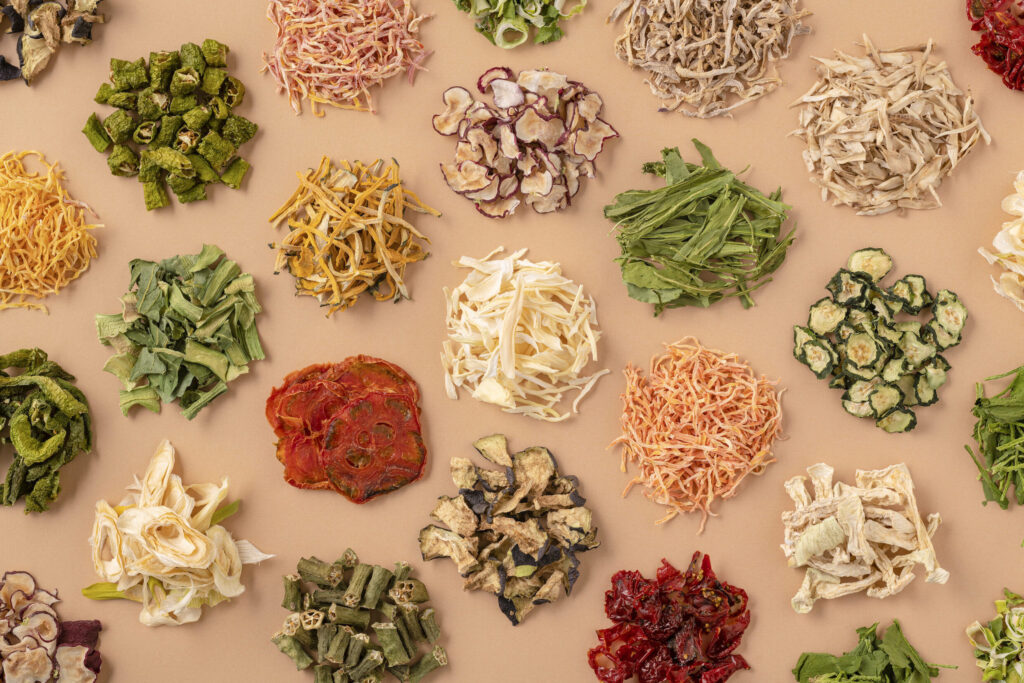
- Available for purchase in small lots from 1 kg
- We handle heirloom vegetables from across Japan
- Dried fruit and herbs also supported
How to make shiso powder via OEM or small lots
If you want to make an original shiso product, you can start from small lots with OEM (contract manufacturing). Organizing the use and spec before ordering makes quoting and prototyping smooth.
The OEM ordering flow
- Organize the use (furikake, bread-making, seasoning, etc.) and desired spec
- Consult on the raw-material type (green shiso / red shiso), particle size, and lot
- Confirm aroma, color, and usability with a prototype
- Finalize the spec, then proceed to mass production and delivery
The merits of starting with small lots and prototypes
Rather than ordering a large volume at once, starting with a prototype lot of a few kg and advancing to mass production holds down risk. You can nail down the spec while checking the aroma strength, particle size, and blend amount in the actual product. OEM for dried vegetables and vegetable powders in general can be consulted alongside ingredients other than shiso.
We have materials available to help you understand dried processing OEM
Agriture OEM, flexibly handling everything from small lots to large lots
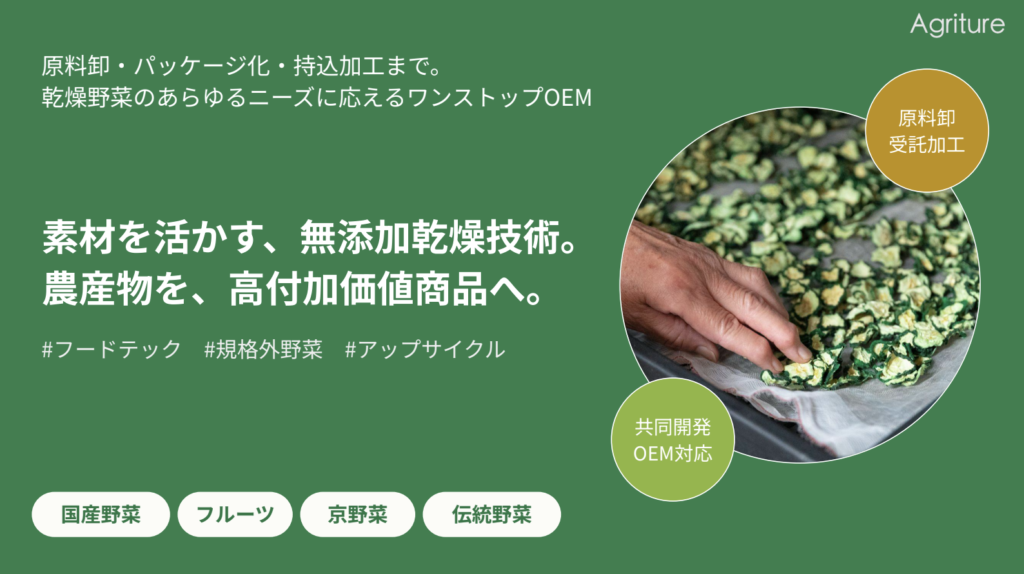
- OEM available from small lots of 10 kg
- Drying of brought-in raw materials also possible
- Support from processing to filling in one place
Summary: choose shiso powder by particle size and raw material
Shiso powder is a commercial ingredient that adds oba's refreshing aroma and red shiso's color stably, without moisture. Uses are wide—from furikake to bread-making and seasonings—and when choosing, the key is to confirm 4 points: raw material, particle size, additives, and lot.
If you're promoting domestic and traceability, domestic shiso fits. Original products can be started from prototypes with OEM and small lots, so organize the use and spec and consult us.
FOR BUSINESS
乾燥赤しそを、原料としてお探しですか
国産の赤しそを乾燥・粉砕してお出ししています。カット形状や粒度の指定、継続してのお取引もご相談ください。規格は dried red shiso・Red shiso powder に掲載しています。
少量でのご購入は、姉妹ブランドの通販サイト OYAOYA で承っています。
Frequently asked questions
Recommended reading
- What is furikake OEM? A dried-vegetable maker explains small-lot, vegetable-furikake manufacturing
- A contract-manufacturing guide to vegetable-powder filling
- Oba powder | domestic, commercial green-shiso powder
- Red shiso powder | domestic, commercial red-shiso powder
Download the OEM contract processing materials
We will send the materials to your email address based on the information you provide.
Download the product catalog
We will send the materials to your email address based on the information you provide.
If you are considering product development with off-spec or your own farm's vegetables:From planning to processing, materials, package printing and novelties, you can consult us through a single point of contact. → Learn more about one-stop product development
- Freeze-Dried Baby Food OEM: Manufacturing Standards, Safety Criteria, and How to Choose a Contract Partner
- What to Decide Before Outsourcing Small Rice Packs
Author of this article
Related articles
-
 Original coffee marketing strategy | Ways to grow sales
 -
 ベジタリアンとは?国の規格が分けている4つの区分と食べられないもの
 -
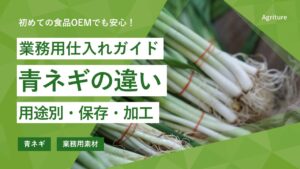 長ねぎと白ねぎは同じもの?ねぎの種類と呼び名を国の資料で確かめる
 -
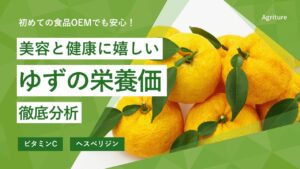 柚子の種類は何種類あるのか、公の資料で名前が残る系統を数えた
 -
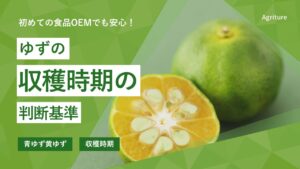 ゆずの時期は年に二度、青ゆずは7月から黄ゆずは10月から
 -
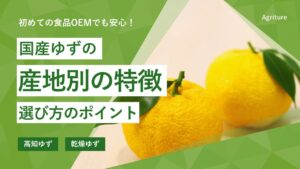 ゆずの産地は高知が半分を占め、二位は徳島から愛媛に変わった
 -
 Preventing Food OEM Failures: Common Failure Cases and Countermeasures for Success
 -
 How to find a food OEM | How to efficiently find the best manufacturing partner