Are Ooba and Green Shiso Different? Actually the Same? Explaining the Difference from Red Shiso, Types, and Uses

Summary of this article
Oba and green shiso are leaves of the same plant—just different names. From how to tell it apart from red shiso, which differs in color and use, to shiso types such as chirimen-jiso and me-jiso, using green shiso and red shiso differently, and the origin of the name "shiso," we explain it from the perspective of a dried-vegetable manufacturer.
"Oba" and "green shiso" are lined up separately at the supermarket and you wonder which to buy—have you ever had that experience? To get straight to the point, oba and green shiso are leaves of the same plant. On the other hand, the red shiso used for umeboshi is a relative of the same shiso, but its color and use change.
This article organizes the differences between oba, green shiso, and red shiso, and explains the features and different uses of each shiso type. From a quick-reference table to the origin of the name and uses that make use of the aroma, we have compiled it from the perspective of a dried-vegetable manufacturer.
TOC
Conclusion: are oba and green shiso the same? Organizing the difference
Many people think "oba" and "green shiso" are different ingredients, but as a plant they are the same thing. First, let's organize the difference in names.
Oba = the leaf of green shiso, just a different name
Green shiso is the name of the plant, and "oba" is the product name when its leaf is sold as an ingredient. In other words, it is merely a difference of whether the same leaf is called as a plant or as a food.
- Green shiso: the name as a plant. A type of shiso with green leaves
- Oba: the product name when green shiso leaves are bundled and sold as food
- Origin: to distinguish sprouts from leaves, the leafy version began to be sold under the name "oba"
Even if a recipe says "10 sheets of green shiso," buying "oba" at the supermarket is the same thing. Whichever you choose, it makes no difference to the dish.
Red shiso differs in both color and use
Even as a relative of the same shiso, red shiso is used differently from green shiso. Its leaves are a reddish-purple, and rather than being used raw as a condiment, it is used to transfer color and flavor.
- Green shiso (oba): green. Used raw as a condiment, in tempura, and in salads
- Red shiso: reddish-purple. Used to color umeboshi, and in yukari and red-shiso juice
By pickling it together with umeboshi, red shiso produces that vivid red color. Because green shiso cannot be used as a substitute for red shiso as is, choosing by use will keep you from going wrong.
Types and features of shiso | the name changes by leaf, sprout, and flower spike
Beyond green shiso and red shiso, shiso has types whose names change by leaf shape and the part used. We organize the main shiso seen in cooking in a list.
Shiso used for leaves | green shiso, red shiso, chirimen-jiso
Shiso whose leaves are eaten differs by color and leaf shape. Chirimen-jiso is a type with crinkled leaves; the green ao-chirimen-jiso is a line of green shiso, and the reddish-purple aka-chirimen-jiso is a line of red shiso.
| Type | Color | Leaf features | Main use |
|---|---|---|---|
| Green shiso (oba) | Green | Flat, with a refreshing aroma | Condiment, tempura, salad, bento |
| Red shiso | Reddish-purple | Flat, with a strong aroma | Umeboshi, yukari, juice |
| Ao-chirimen-jiso | Green | Crinkled leaves | Sashimi garnish, condiment |
| Aka-chirimen-jiso | Reddish-purple | Crinkled leaves | Umeboshi, coloring |
Shiso used for sprouts and flower spikes | me-jiso, hana-ho-jiso, ho-jiso
Not only shiso's leaves but also its sprouts and flowers are used as ingredients. The small sprouts and spikes served with sashimi change names by shiso's growth stage.
- Me-jiso: the just-sprouted cotyledons. There are ao-me (green) and murasaki-me (reddish-purple), used as a sashimi garnish
- Hana-ho-jiso: a spike with the flowers about half open. Added to sashimi as color
- Ho-jiso: a spike with seeds attached. Stripped off and used for soy-sauce pickling or as a condiment
A feature of shiso is that even within the same plant, the name and use change by leaf, sprout, and flower spike. Knowing that the small green and purple leaves in a sashimi pack are also relatives of shiso changes how you look at a dish.
FOR BUSINESS
乾燥大葉を、原料としてお探しですか
国産の大葉を乾燥・粉砕してお出ししています。カット形状や粒度の指定、継続してのお取引もご相談ください。規格は Dried Ooba・Ooba Powder に掲載しています。
大葉の少量販売は姉妹ブランドの OYAOYA では取り扱いがありません。ほかの品目はカタログをご覧ください。
Using green shiso (oba) and red shiso differently
Green shiso and red shiso differ in how their aroma is used. Choosing to match the dish brings out shiso's inherent deliciousness.
Dishes that suit green shiso (oba)
Green shiso's refreshing aroma shines most in dishes that use it raw. Its light flavor goes well with the summer table and with fatty dishes.
- Chopped as a condiment for chilled tofu, somen, and natto
- Wrapped around meat or fish and grilled or fried
- Cut into fine strips for color in salads, pasta, and bento
Dishes that suit red shiso
Red shiso suits preserved foods and drinks that make use of its color and its distinctive red-shiso flavor. Heating or salt-massaging makes the color stand out.
- Pickled together with umeboshi to add color and flavor
- Salt-massaged and dried to make yukari (a rice seasoning)
- Simmered with sugar and vinegar to make red-shiso juice
Using dried and powder forms differently
Fresh shiso has an exceptional aroma, but its short shelf life is a drawback. When you want to keep it on hand, using dried products and powder differently avoids waste. Agriture handles Dried Ooba using green shiso, and, easy to fold into dishes, Ooba Powder. For red-shiso fans, there is dried red shiso and Red shiso powder that goes well with rice balls and ume dishes.
Green shiso as a refreshing condiment, red shiso for coloring and flavoring—even in dried form, you can use them differently to make the most of each one's character.
Recommended ways to eat shiso
Now that you know the differences, we introduce recommended ways to eat it that are easy to bring into everyday cooking. The basic rule is to use green shiso raw and red shiso processed.
- Top rice or tofu with a quick condiment sauce of oba mixed with sesame oil and salt
- Mix finely shredded green shiso into a tomato and cucumber salad for a light finish
- Sprinkle red-shiso powder over rice balls or bento rice to add color and flavor
When you want the aroma to rise within a dish, the trick is to add green shiso at the very end. Keeping dried products and powder on hand lets you easily supplement the flavor even when fresh shiso is out of season.
Tips for using oba and shiso deliciously, and storage
To make the most of that aroma, there are tricks to selection and handling. Let's cover the points from buying to using it up.
Season and how to choose fresh shiso
Green shiso (oba) is greenhouse-grown mainly in places like Toyohashi in Aichi Prefecture and is available year-round. Its aroma is strongest from early summer into summer, when the open-field product appears. When buying, check the following points.
- The leaf's green (reddish-purple for red shiso) is deep and the whole leaf is firm
- The cut end is not darkened and is fresh and moist
- The aroma is strong and you can sense the refreshing quality distinctive to shiso
Cutting and using it to make the most of the aroma
Shiso's aroma components rise from the cut surface. Chopping it just before use lets you make the most of the aroma in a dish without letting it escape.
When using it as a condiment, cut it into fine strips and then briefly soak it in water once to remove harshness and brighten the color. When using it in heated dishes, the aroma escapes easily, so the trick is to add it at the finish.
For long-term use, storage and drying
Because oba has a short shelf life, when you cannot use it up, get creative with storage methods. For the shelf life and steps of refrigeration, freezing, and drying, see How to store oba, where we explain in detail. Dried, it keeps for a long time at room temperature and can be used as a condiment or seasoning.
Why is it called "oba"? The origin of the name and trivia
Why do the same leaves have two names, "green shiso" and "oba"? Knowing the background of the names changes how they appear at the store.
A name born to distinguish sprouts from leaves
Shiso circulates with various parts as ingredients—sprouts, leaves, and flower spikes. To distinguish it from "me-jiso," sold in the sprout state, the version bundled as a leafy product came to be sold under the name "oba."
The naming also differs by region and store; in Kansai it tends to be called "oba," while in home gardens it is often called "green shiso." What does not change is that both refer to the same leaf.
The origin of the kanji "shiso"
Written in kanji, shiso is "紫蘇." This is said to come from an anecdote in which a famous physician of China's Later Han dynasty had someone who had fallen ill drink a decoction of shiso leaves, and they recovered; because a person revived with the purple leaves, the characters "紫蘇" (purple revival) are said to have been applied.
Originally the characters referred to the reddish-purple red shiso, but today green shiso and red shiso are collectively called "shiso." Knowing the background of the name shows that it is an ingredient that has long been valued, not only as a condiment.
Shiso is an aromatic vegetable rooted in Japanese food culture
Shiso is an aromatic vegetable that has long been used at the Japanese table. In the world of yakuzen it is regarded as an ingredient that circulates ki through aroma, and it has been used in a wide range of ways—condiments, pickles, and coloring for sashimi.
Green shiso as a light condiment, red shiso as coloring for preserved foods—each one's character has become indispensable to Japanese cuisine. It is an ingredient that has added a sense of season to the Japanese table through aroma and color.
A product catalog that shows around 100 items we handle
Agriture, flexibly handling everything from small lots to large lots
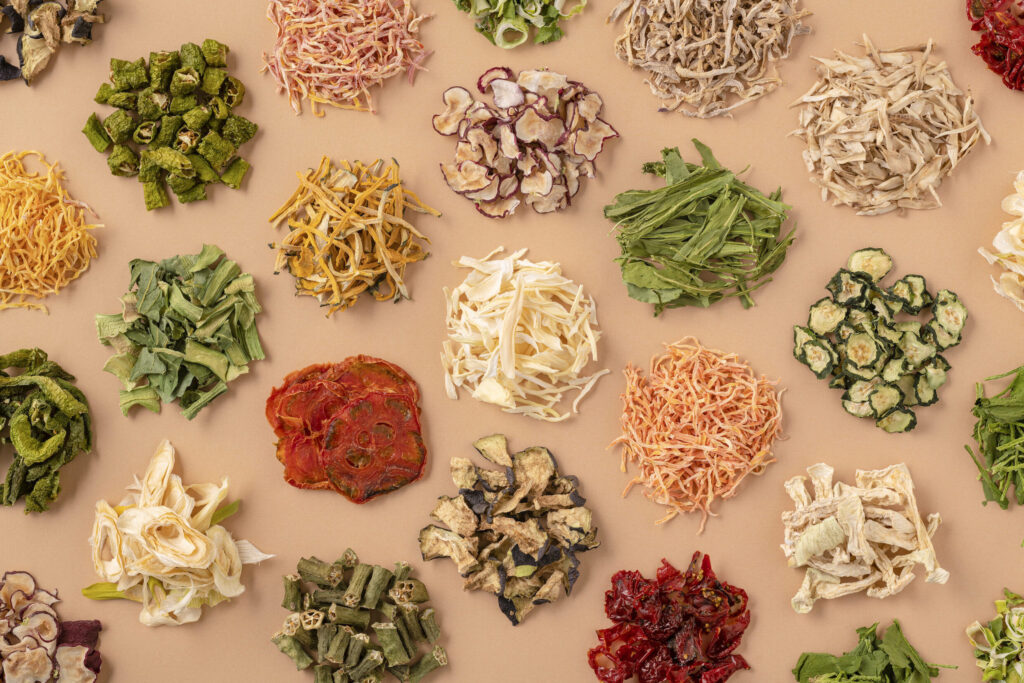
- Available for purchase in small lots from 1 kg
- We handle heirloom vegetables from across Japan
- Dried fruit and herbs also supported
Summary
Oba and green shiso are leaves of the same plant—just different names. Whichever notation you see in a recipe, using the same thing is no problem. On the other hand, red shiso, though a relative, differs in both color and use, and it plays an active role in coloring uses such as umeboshi and yukari.
Green shiso, red shiso, chirimen-jiso, me-jiso—shiso is divided into types by part and color, each with dishes it suits. Know the differences and different uses, and make the most of shiso's refreshing aroma in your everyday cooking.
FOR BUSINESS
乾燥大葉を、原料としてお探しですか
国産の大葉を乾燥・粉砕してお出ししています。カット形状や粒度の指定、継続してのお取引もご相談ください。規格は Dried Ooba・Ooba Powder に掲載しています。
大葉の少量販売は姉妹ブランドの OYAOYA では取り扱いがありません。ほかの品目はカタログをご覧ください。
FAQ
Recommended reading
- How to store oba | tips for keeping it long by refrigeration, freezing, and drying
- Dried oba (green shiso) | domestic dried oba for commercial and OEM use
- Oba powder | green shiso powder that can be used for folding in and as a seasoning
- Dried red shiso | cut red shiso that can be used for ume dishes and rice balls
Download the product catalog
We will send the materials to your email address based on the information you provide.