
Freeze-Dried Baby Food OEM: Manufacturing Standards, Safety Criteria, and How to Choose a Contract Partner

Summary of this article
OEM of freeze-dried baby food rests on a foundation of safety frameworks: infant-food standards, allergen labeling, and hygiene management. We have organized everything from powder, flake, and cube formats and texture design by age in months, to minimum lots and costs, and how to choose a manufacturer that can meet the safety standards.
Freeze-dried baby food, which becomes a dish just by dissolving in hot water or cooled boiled water, is seeing rising demand driven by the time-saving needs of busy parenting and by portability. Consultations from companies wanting to launch their own brand via OEM are also increasing, but because baby food goes into an infant's mouth, you cannot even sell it if you get the safety management and labeling rules wrong. Considering both manufacturing design and standards is essential.
This article is for those considering OEM (contract manufacturing) of freeze-dried baby food, covering product formats and design by age in months, the safety standards and labeling obligations to observe, minimum lots and costs, and the conditions to prioritize when choosing a manufacturer. Drawing on Agriture's experience with dried vegetables and powder processing, it also digs into how to differentiate through ingredients.
The basics of whether freeze-drying or hot-air drying suits your product are explained in The difference between freeze-drying and dried vegetables. This article goes a step further, focusing on design and standards for baby food as a product.
TOC
Product formats for freeze-dried baby food OEM
Freeze-dried baby food is mainly rehydrated with hot water or cooled boiled water. Formats include powder, flake, and cube, and the smoothness or thickness is designed to match the age in months. The basic approach is to shift gradually from a paste to a form with some texture as the months progress.
Choosing between powder, flake, and cube
Powder is easy to use as a base for stock or paste and allows fine adjustment of the amount. Flakes develop a moderate mouthfeel when rehydrated and mix easily into porridge or soup. Cubes portion out a single serving and suit carrying out or single use. Choosing the format by working backward from where the product will be used keeps the design consistent.
Texture design by age in months
Design the mouthfeel and firmness in stages to match how weaning progresses. Start with a smooth paste, then move to a firmness that can be crushed with the tongue, then one that can be crushed with the gums. With freeze-drying, the degree of rehydration is easy to adjust by the amount of water, making it easy to create a texture suited to the age in months even with the same ingredient.
| Stage | Target mouthfeel | Design pointers |
|---|---|---|
| Early stage | Smooth paste | Uniform with no grains left, easy to swallow with thickening |
| Middle stage | Soft enough to crush with the tongue | Light graininess, an easily rehydrated format |
| Later stage | Firm enough to crush with the gums | Presence of ingredients, how they break apart after rehydration |
*For actual age brackets and how to progress, commercialize only after checking with experts and official guidelines alongside the design for the target age in months.
Essential safety standards and labeling for baby food OEM
Baby food and weaning food require higher safety management than ordinary food, along with labeling that complies with the law. Understanding the framework of standards and labeling before finalizing the manufacturing method prevents backtracking.
The framework of foods subject to infant-food standards
Some foods sold for infants are managed under stricter standards than ordinary food as foods subject to infant-food standards. Because the applicable approach changes depending on which age and use you target, it's important to work through the necessary standards and testing with the manufacturer at the stage of deciding the product's target.
Labeling obligation for specified raw materials
As specified raw materials that easily trigger allergies, labeling is mandatory for shrimp, crab, wheat, buckwheat, egg, milk, and peanut. Because baby food is a product where allergy consideration is especially important, choosing a factory with proper raw-material management, labeling, and contamination (unintended mixing) countermeasures is a prerequisite.
Labeling must follow the latest laws and regulations, and the mandatory scope and its operation may be revised. When commercializing, it's safe to proceed while checking with a manufacturer or expert who has specialized knowledge of labeling.
- Labeling of the 7 specified raw materials (shrimp, crab, wheat, buckwheat, egg, milk, peanut)
- Countermeasures against unintended mixing (contamination)
- Checking labeling against the latest laws and regulations
- Raw material origin and lot management
Additive-free design and raw-material management in practice
For baby food, a design that avoids preservatives, colorants, and flavorings tends to be chosen, and because freeze-drying removes almost all moisture, it pairs well by making it easy to achieve shelf stability without relying on additives. However, when claiming "additive-free," you need to label precisely what is additive-free, and this must be arranged together with raw-material origin management and a testing system.
Factories equipped with hygiene management systems such as HACCP or FSSC 22000 operate on the premise of this kind of rigorous management, giving peace of mind as a partner for baby food OEM.
FOR BUSINESS
乾燥野菜のOEM・受託加工を承ります
国産の野菜・果物の乾燥、100メッシュ相当までの粉砕、10g以上の小袋充填までをお受けしています。小ロットの試作から量産までご相談ください。寄せられた相談の実例は OEM・卸のご相談 に掲載しています。
乾燥品の賞味期限は、出荷日から6ヶ月程度を目安にご案内しています。
Quick reference for design by age-in-months step
Baby food is designed in stages for mouthfeel and firmness to match how the months progress. Freeze-drying is easy to adjust by the amount of rehydrating water, a method that fits each step well.
| Stage (approximate age in months) | How to eat | Target firmness | Freeze-dry design points |
|---|---|---|---|
| Gokkun stage (5-6 months) | Swallow smoothly | Potage-like | Fine powder with no grains left, easy to swallow with thickening |
| Mogumogu stage (7-8 months) | Crush with the tongue | About the firmness of tofu | Fine flakes, easy to rehydrate |
| Kamikami stage (9-11 months) | Crush with the gums | About the firmness of a ripe banana | Smaller pieces, light graininess |
| Pakupaku stage (12-18 months) | Bite with the front teeth | About the firmness of a meatball | Presence of ingredients, works for finger food too |
Ages in months are only a guide, and progress varies from child to child. In actual product design, decide the firmness and format for the target age in months based on official guidelines and expert confirmation. Making the same ingredient in different versions by age lets you develop a series from the early to the completion stage.
Differences between freeze-dried baby food and other types
Besides freeze-dried, commercial baby food comes in retort (jar/pouch) types and dried powder/flake types. Since ease of preparation, portion adjustment, portability, and shelf stability vary by product category, organizing why you would make it freeze-dried helps set the axis of your plan.
| Type | Ease of use | Storage and features | Suitable situations |
|---|---|---|---|
| Freeze-dried | Easy to adjust the amount by rehydrating with cooled boiled water | Lightweight and easy to carry | Going out, using small amounts, adding to homemade food |
| Retort type | Open and use as is | Contains water and adds weight | When you want to feed right away |
| Powder / flake | Easy to mix in a little at a time | Lightweight, easy to portion | Adding to porridge or soup |
When freeze-drying is chosen
Freeze-drying is light, easy to carry, and easy to adjust the amount by rehydrating with cooled boiled water. It pairs well with using just a small amount when out, or adding a little to homemade baby food, and because the process removes almost all moisture, it's a category that also fits designs that don't rely on preservatives.
Choose by the situation of use
Retort when you want to open and feed right away, powder or flake when you want to mix in a little at a time—the best category shifts with the usage scene. When portability, portion adjustment, and adding to homemade food matter, freeze-drying's strengths come into play.
Minimum lot, cost, and how to proceed with development
The first things to check in freeze-dried baby food OEM are how many servings you can make from, and whether the manufacturer can meet safety standards. Minimum lots vary with the manufacturer's equipment scale—prototypes from small quantities, main production on the order of several thousand to tens of thousands of servings.
| Stage | Approximate quantity | Notes |
|---|---|---|
| Prototype lot | Small quantity and up | Checking texture, thickening, and safety requirements |
| Small-lot main production | Several hundred to several thousand servings | Consult a small-lot-capable manufacturer |
| Standard lot | Several thousand to tens of thousands of servings | Varies with format and packaging |
Since baby food requires a factory that can meet safety requirements, the realistic approach is to first confirm whether it can handle the standards, then compare lots and unit prices. For cost benchmarks and how to choose a factory, see the Food OEM Portal's complete guide to freeze-dry OEM, which also covers this.
Flow from prototype to main production
The basic flow is meeting → design and prototyping → sample confirmation → various inspections and standards checks → quotation → main production. Because baby food adds safety-requirement checks and inspections, allowing extra time in the development period compared with ordinary food gives peace of mind. Identifying the required inspection items and labeling checks early makes the schedule easier to read.
| Step | Details |
|---|---|
| 1. Meeting | Share the concept, target age in months, and target lot |
| 2. Design and prototyping | Prototype the format, texture, and ingredients |
| 3. Sample confirmation | Check the degree of rehydration and mouthfeel |
| 4. Inspections and standards check | Confirm infant-food standards, allergens, and labeling |
| 5. Quotation | Finalize lot, unit price, and packaging |
| 6. Main production | Allow extra time for safety-requirement checks |
Manufacturer conditions to prioritize for baby food OEM
For baby food, alongside freeze-drying technology, having systems for hygiene management, raw-material management, and labeling in place is the axis of selection. From the freeze-dry manufacturers listed on the Food OEM Portal, we have organized companies that can handle safety standards and small-lot prototyping. Confirm each company's ability to handle baby food and the required standards before proceeding.
- Can they handle foods subject to infant-food standards?
- Can they handle management and labeling of specified raw materials?
- Hygiene management systems such as HACCP and FSSC 22000
- Do the production lines prevent allergen contamination?
- Does the minimum lot match the target quantity?
- Availability and conditions for prototyping and testing
| Maker | Location | Strengths and areas of expertise |
|---|---|---|
| Asuzac Foods | Nagano Prefecture | Large-scale contract freeze-dry facilities and a quality-assurance system based on FSSC 22000 |
| Blankenese | Osaka, Okayama | Freeze-dry processing plus one-stop support from planning to packaging |
| Serecon Foods | Osaka, Kyoto | Small-lot prototyping of freeze-dried vegetables and a rigorous quality-management system |
| Tsujiko | Shiga Prefecture | Drying and powdering of ingredients, small-lot prototyping, and support starting from raw materials |
Each company's equipment and supported formats can be the Food OEM Portal's list of freeze-dry companies compared from. Convey your ability to handle infant-food standards and your testing system, then consult and compare several companies to find a factory that meets the safety demanded of baby food.
We have materials available to help you understand dried processing OEM
Agriture OEM, flexibly handling everything from small lots to large lots
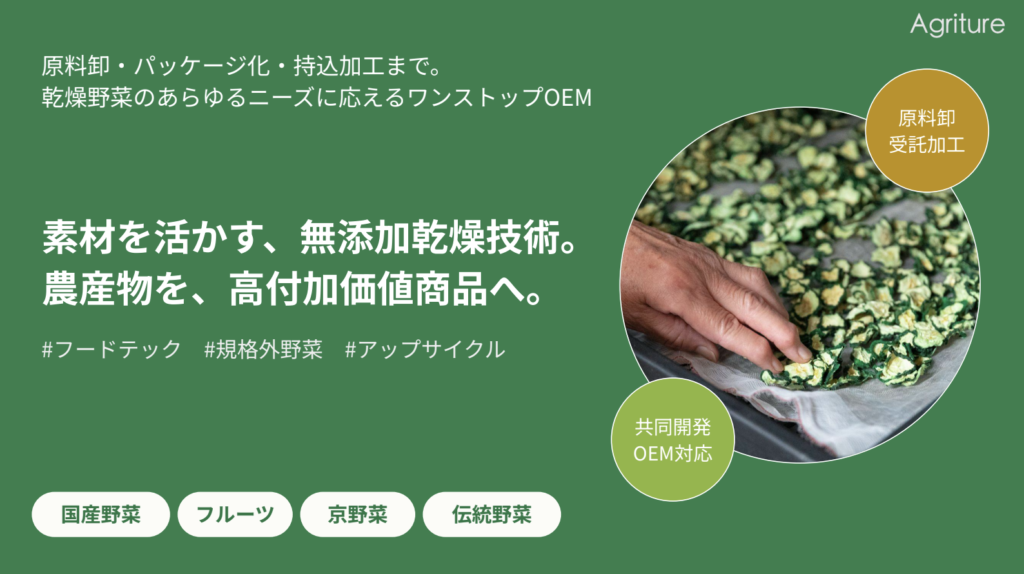
- OEM available from small lots of 10 kg
- Drying of brought-in raw materials also possible
- Support from processing to filling in one place
Making baby food that stands out through ingredients
For baby food, on the premise that safety comes first, you can express individuality through ingredient selection and mouthfeel design. Partnering with a factory that has raw-material expertise lets you differentiate on smoothness and thickness.
Making the most of ingredients that add thickness easily
At Agriture, we partnered with Sakura Renkon Co., Ltd. in Sakura, Chiba, to carry out OEM processing that powders lotus root grown without chemical fertilizer (using only organic fertilizer) Lotus root. This lotus root powder has the property of adding thickness when dissolved in water, and we see strong potential for applications that call for smoothness and thickness, such as porridge, baby food, and nursing-care food.
Making the most of ingredient-derived thickness broadens the range of mouthfeel design. Because we can handle everything in-house from raw-material selection through drying, milling, and fine powdering, we can create powders tailored to each application. For detailed background, see the Sakura Renkon powdering OEM case.
Creating vegetable smoothness through drying design
Even the same vegetable changes in mouthfeel depending on drying temperature and time. At Agriture, we dry Kyotango-grown spring new Onion at low temperature over about two days, producing a soft texture when rehydrated. For baby food, a drying design that finishes smooth with no grains left when rehydrated is useful in making products for the early months.
Partnering with a factory that can design from the raw material makes it easier to prepare vegetable pastes and flakes in versions tailored to the age in months, and easier to develop a series.
Design tailored to packaging format and sales channel
For freeze-dried baby food, the optimal format and capacity change with the situation of use. Locking down packaging and sales channel early, in parallel with a design that meets safety requirements, keeps lot and unit-price estimates from wavering.
Choosing between individual packaging, portioning, and portability
Single-serving individual packaging and cubes make it easy to adjust the amount used and are hygienic to handle. The portability of rehydrating with cooled boiled water when out is a strength unique to freeze-dried baby food. Flakes and powders can be mixed a little at a time into porridge or soup, so they can also be proposed for adding to homemade food.
Capacity and packaging change the minimum lot and unit price. Choosing the format after concretely picturing the usage scene—everyday use at home, carrying out, or gifting—keeps the design free of strain.
Product design that changes by sales channel
Drugstores and baby-goods stores value labeling that conveys clarity about age in months and reassurance. In e-commerce and subscriptions, tasting sets tailored to age in months and easy-to-continue capacities and prices drive repeat purchases. For gift demand such as baby-shower presents, assortment sets combining multiple ingredients are chosen.
In any channel, safety consideration and accurate labeling are the foundation of trust. Deciding the channel first, then designing the format, capacity, packaging, and labeling, gives the plan consistency. Making the same ingredient in different versions by age makes it easy to develop a series from the early to the later stage.
We have materials available to help you understand dried processing OEM
Agriture OEM, flexibly handling everything from small lots to large lots
- OEM available from small lots of 10 kg
- Drying of brought-in raw materials also possible
- Support from processing to filling in one place
Summary: baby food OEM runs on both safety standards and ingredient design
OEM of freeze-dried baby food rests on the premise of meeting the safety framework—infant-food standards, labeling of specified raw materials, and hygiene management. On top of that, you bring out individuality through the choice of powder, flake, or cube format, texture design by age in months, and touches with thickness and ingredients. Comparing several manufacturers that can handle the safety standards and refining a design suited to the target age in months is the shortcut to success.
At Agriture, we take consultations on ingredients useful for making baby food, such as powdering ingredients that add thickness easily and designing dried vegetables that finish smooth. If you want to create a distinctive product while valuing safety, feel free to reach out from the planning stage.
FOR BUSINESS
乾燥野菜のOEM・受託加工を承ります
国産の野菜・果物の乾燥、100メッシュ相当までの粉砕、10g以上の小袋充填までをお受けしています。小ロットの試作から量産までご相談ください。寄せられた相談の実例は OEM・卸のご相談 に掲載しています。
乾燥品の賞味期限は、出荷日から6ヶ月程度を目安にご案内しています。
FAQ
We have compiled the questions we often receive about freeze-dried baby food OEM.
Recommended reading
- Freeze-dried vs. dried vegetables: how to choose by application, price, and lot
- Freeze-Dried Zosui OEM: Production Lots, Cooked-Rice Processing, and Contract Manufacturers Explained
- Freeze-Dried Soup OEM: A Guide to Small-Lot Manufacturing, Costs, and Manufacturer Comparison
Download the OEM contract processing materials
We will send the materials to your email address based on the information you provide.
If you are considering product development with off-spec or your own farm's vegetables:From planning to processing, materials, package printing and novelties, you can consult us through a single point of contact. → Learn more about one-stop product development
- Freeze-Dried Zosui OEM: Production Lots, Cooked-Rice Processing, and Contract Manufacturers Explained
- Commercial and OEM Shiso Powder (Ooba and Red Shiso): Manufacturing Methods, How to Choose, and Small-Lot Production Explained
Author of this article
Related articles
-
 Freeze-Drying Processing Costs | Price Ranges by Product and Lot
 -
 Freeze-Drying Minimum Lots: Small-Lot Ordering and Choosing a Manufacturer
 -
 Freeze-Dried Material Ranking | Popularity and How to Choose by Use
 -
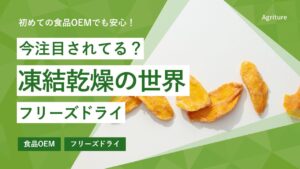 What is freeze-dried? A gentle explanation of the drying technology spreading to miso soup, vegetables, and strawberries
 -
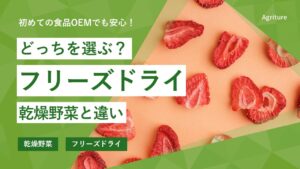 Freeze-Dried vs. Dried Vegetables: A Guide to Choosing a Drying Method by Flavor, Lot Size and Cost
 -
 Freeze-Dried Miso Soup OEM: The Key Points of Minimum Lots, Manufacturing Methods, and Choosing a Manufacturer
 -
Freeze-Dried Soup OEM: A Guide to Small-Lot Manufacturing, Costs, and Manufacturer Comparison
-
Freeze-Dried Zosui OEM: Production Lots, Cooked-Rice Processing, and Contract Manufacturers Explained