
Commercial mushroom OEM and drying & powdering processing guide | Domestically grown, small-lot support

Summary of this article
A dried vegetable manufacturer explains commercial mushroom OEM and drying/powder processing. We have summarized the manufacturing of dried mushrooms and mushroom powder, the umami demand spreading overseas, domestic small-lot contract work, and the ordering flow.
You want to make your own brand’s product using mushrooms, or you want to source dried mushrooms for use at a restaurant in bulk. What can be used at such times is commercial wholesale and OEM (contract manufacturing) of mushrooms. That said, there are not a few staff who get lost at the first step, unsure “what forms it can be processed into” or “whether it can be ordered even in small lots.”
On this page, from the standpoint of a manufacturer that produces dried vegetables, we organize the basics of commercial and OEM mushrooms, the processing forms we can handle, the spreading demand for mushroom powder, and how to choose and the ordering flow, from a practical viewpoint.
TOC
What is commercial and OEM mushrooms
OEM refers to manufacturing products sold under another company’s brand. With mushroom OEM, you can entrust the manufacturer with everything from drying the raw material, pulverizing, blending, filling into small pouches, and packaging, letting your company concentrate on planning and sales. Commercial wholesale is the form in which restaurants and food manufacturers source a bulk quantity.
The scope you can entrust with OEM
What you can commission with mushroom OEM is not only the manufacturing process. From drying processing of the raw material, pulverizing and powdering, blending of multiple mushrooms, filling into small pouches, to package design—you can commission the processes needed for commercialization all together. Another advantage is that you can start with almost no equipment investment.
- Drying and slicing processing of mushrooms
- Pulverizing and powdering, adjustment of grain size
- Mix and blend design of multiple mushrooms
- Filling into small pouches and commercial large bags
- Package design and printing
Cases where commercial and OEM are suitable
It suits companies that want to have their own brand of mushroom products, businesses that want to source dried mushrooms for use at restaurants in bulk, and food manufacturers that want to develop seasonings making use of mushroom umami. It is also used in cases of rolling out as a private brand (PB).
FOR BUSINESS
乾燥野菜のOEM・受託加工を承ります
国産の野菜・果物の乾燥、100メッシュ相当までの粉砕、10g以上の小袋充填までをお受けしています。小ロットの試作から量産までご相談ください。寄せられた相談の実例は OEM・卸のご相談 に掲載しています。
乾燥品の賞味期限は、出荷日から6ヶ月程度を目安にご案内しています。
Processing forms that can be handled
For mushrooms, the way of use and the suitable product change with the processing form. Choosing the form to match the product you’re aiming for lets the planning proceed smoothly.
Drying, slicing, powder
Whole or sliced dried mushrooms are used for restaurants and retail as ingredients to rehydrate and use. Powder is a versatile form easy to mix into soups, seasonings, confectionery, and the like. Adjusting the grain size lets you change how it blends into dishes and how the flavor comes out.
| Form | Features | Suitable products |
|---|---|---|
| Drying, slicing | Rehydrate and use, texture remains | Commercial ingredients, retail packs |
| Powder | Easy to mix in | Soups, seasonings, confectionery |
| Mix | Multiple kinds of umami in one bag | Mixed-rice and soup base |
Designing by mushroom type
shiitake has thick umami and suits dashi; maitake has aroma; enoki and shimeji are characterized by ease of use. Kikurage (wood-ear) can make use of texture. Combining multiple lets you design a product with a deep, layered taste. Powdered dried kikurage can be deployed as kikurage powder, and powdered maitake as Maitake powder can be deployed.
We have materials available to help you understand dried processing OEM
Agriture OEM, flexibly handling everything from small lots to large lots
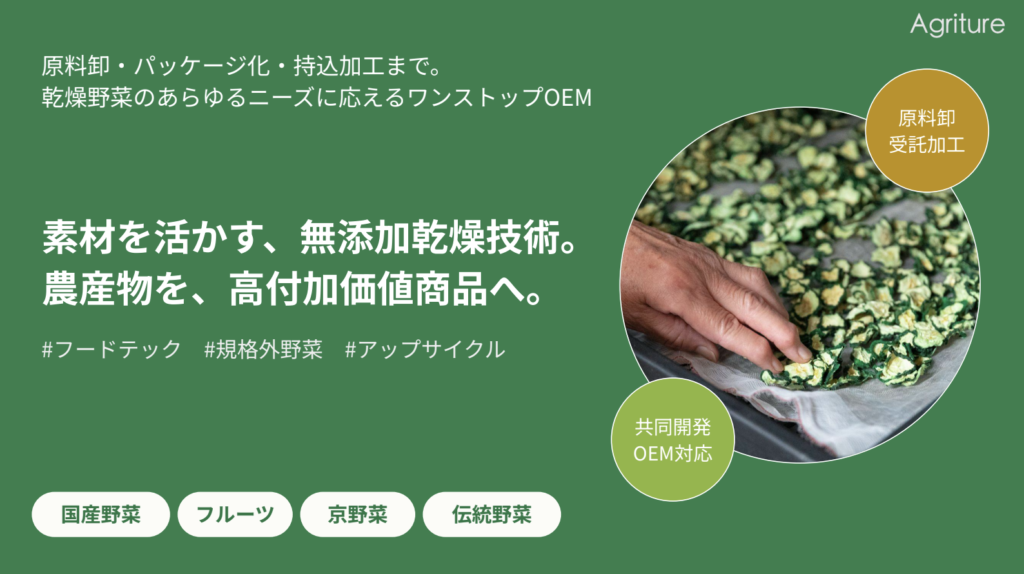
- OEM available from small lots of 10 kg
- Drying of brought-in raw materials also possible
- Support from processing to filling in one place
The spreading demand for mushroom powder
Powder that makes use of mushroom umami is drawing attention at home and abroad, along with the spread of health orientation and plant-based diets. It is a movement worth keeping in mind as a hook for product development.
The “umami” demand advancing overseas
Overseas, the word “umami” has taken hold, and mushroom powder such as shiitake is gaining popularity as a material for natural umami that doesn’t rely on chemical seasonings. Products riding the clean-label and plant-based currents are spreading, with major supermarkets selling umami seasonings using mushroom powder. The use of sprinkling it on meat to add umami is also known.
- In the U.S., “umami” has permeated, treated as natural umami that doesn’t rely on MSG
- Major supermarkets roll out umami seasonings of mushroom powder
- Uses such as sprinkling on red meat and using in plant-based dashi
- Easy to adopt in clean-label products with simple ingredients
Can be used in flavor-making that doesn’t rely on salt or additives
Using mushroom umami makes it easier to create flavor without over-relying on salt or chemical seasonings. Adding it to the seasoning of soups, snacks, and prepared dishes lets you bring out a natural richness. We increasingly receive consultations for it as a raw material for products that fit the times, such as plant-based dashi and soup bases.
Points to choose by for commercial and OEM
The finish and smoothness change with the choice of company you commission. The point is to compare not only price but also the scope of support and quality together.
Choose by domestic, small-lot, integrated support
Confirm the raw material’s growing region, whether they can handle small lots, and whether you can entrust everything from drying to pulverizing and filling in an integrated way. If you want to try small and grow, a company flexible with small lots and prototyping is suitable. We introduce our dried vegetable contract processing setup at Dried vegetable OEM and contract processing.
- The raw material’s growing region (whether domestic)
- Whether they can handle small lots and prototyping
- Whether you can entrust drying, pulverizing, and filling in an integrated way
- Support for hygiene management and labeling
Confirming quality control and labeling
As long as it’s a food, confirming hygiene management, ingredient labeling, and allergen information is essential. Depending on the sales channel, certification or inspection may also be required. Confirming the following points before commissioning manufacturing gives peace of mind. For the basics of dried goods in general, see What are dried goods.
- The hygiene-management setup and whether inspections are done
- Whether they can handle ingredient and allergen labeling
- Whether it meets the certifications and standards required by the sales channel
- Setting of best-before dates and support for storage tests
The flow from order to delivery
Knowing the flow when you actually commission mushroom OEM brings into view what you should prepare. Broadly, it proceeds in the flow of consultation, prototyping, mass production, and delivery.
Things to decide before consulting
To advance the consultation smoothly, organizing your requirements in advance helps. The clearer your requirements, the more concrete the manufacturer’s proposals become and the faster development proceeds.
- The kind and form of mushroom you want to use (drying, powder, etc.)
- The assumed sales channel (commercial, retail, PB)
- The desired lot and budget guide
- The delivery-date guide
Make use of consumer-facing information too
In product planning, keeping in mind the interest of the consumers who use it also helps. For how to rehydrate and use dried mushrooms, Dried mushroom usage guide, and for kikurage, Dried kikurage guide—we organize consumer-perspective information there.
We have materials available to help you understand dried processing OEM
Agriture OEM, flexibly handling everything from small lots to large lots
- OEM available from small lots of 10 kg
- Drying of brought-in raw materials also possible
- Support from processing to filling in one place
FOR BUSINESS
乾燥野菜のOEM・受託加工を承ります
国産の野菜・果物の乾燥、100メッシュ相当までの粉砕、10g以上の小袋充填までをお受けしています。小ロットの試作から量産までご相談ください。寄せられた相談の実例は OEM・卸のご相談 に掲載しています。
乾燥品の賞味期限は、出荷日から6ヶ月程度を目安にご案内しています。
Frequently asked questions
Summary: commercializing with commercial mushroom OEM
Commercial and OEM mushrooms are a means to plan and sell dried mushroom and mushroom powder products even without owning equipment yourself. Deciding the form and kind and growing it from small-lot prototyping lets you advance commercialization while holding down risk.
Especially powder that makes use of mushroom umami rides easily on overseas umami demand and the plant-based current, and it is an area where the strength of a manufacturer that can make it in an integrated way from the raw material comes alive. Those considering commercialization, please first organize the mushroom and form you want to use and consult with us.
Download the OEM contract processing materials
We will send the materials to your email address based on the information you provide.
If you are considering product development with off-spec or your own farm's vegetables:From planning to processing, materials, package printing and novelties, you can consult us through a single point of contact. → Learn more about one-stop product development
- What Is Citrus Powder? Manufacturing Methods, Uses, How to Choose for Commercial Use, and OEM Explained
- What Is Chili Powder? Manufacturing Methods, How to Choose for Commercial Use, and OEM and Small-Lot Production Explained
Author of this article
Related articles
-
 Original coffee marketing strategy | Ways to grow sales
 -
 ベジタリアンとは?国の規格が分けている4つの区分と食べられないもの
 -
 長ねぎと白ねぎは同じもの?ねぎの種類と呼び名を国の資料で確かめる
 -
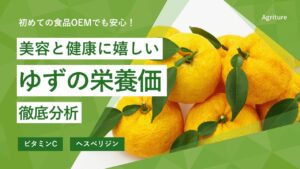 柚子の種類は何種類あるのか、公の資料で名前が残る系統を数えた
 -
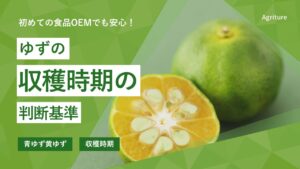 ゆずの時期は年に二度、青ゆずは7月から黄ゆずは10月から
 -
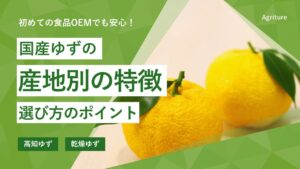 ゆずの産地は高知が半分を占め、二位は徳島から愛媛に変わった
 -
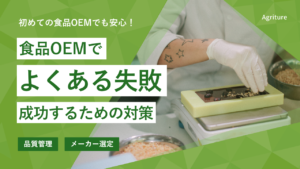 Preventing Food OEM Failures: Common Failure Cases and Countermeasures for Success
 -
 How to find a food OEM | How to efficiently find the best manufacturing partner