
What Are Dried Goods? The Secret of Their Nutritional Value and Uses in the Modern Diet

Summary of this article
Dried goods are preserved foods that remove moisture to enable long-term storage while concentrating umami and nutrients. This article explains rehydration rates by type—seaweeds, vegetables, mushrooms, beans, and more (cut wakame 12×, kiriboshi daikon 4×, etc.)—how to make up the shortfall against the 18–20g dietary-fiber intake target for Japanese people, the 2:1 balance of soluble and insoluble fiber, and how to use them as make-ahead side dishes and as emergency food / rolling stock.
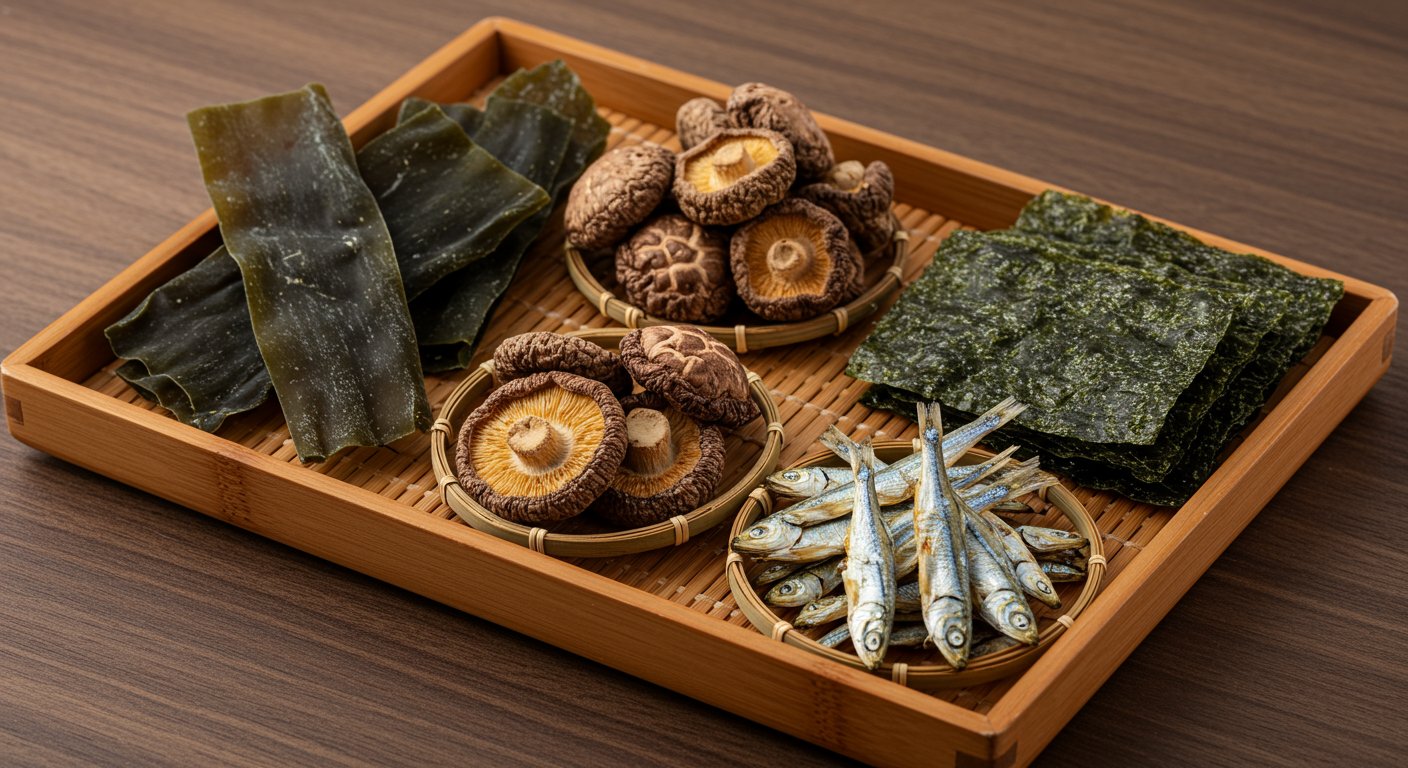
Dried goods are foods dried for long-term storage. Removing the moisture concentrates umami and nutrients. In Japanese food culture, dried goods have long held an important place.
Their appeal lies in the convenience of superior shelf life and easy use anytime, along with distinctive flavor and texture. Even in today's busy lifestyles, dried goods bring a variety of possibilities to our tables.
TOC
The basics and types of dried goods: preserved foods rooted in Japanese food culture
Dried goods can be broadly divided into seaweeds, vegetables, mushrooms, beans and bean products, noodles, and more. The rehydration method and rate (the factor by which weight increases when rehydrated with water) differ by type.
Seaweed and sea-vegetable products
Seaweeds such as wakame, kombu, and hijiki are rich in minerals and vitamins. Kombu in particular contains a lot of glutamic acid, an umami compound, and is prized as a material for dashi. Salted wakame rehydrates to 1.5×, cut wakame to 12×, kombu to 3×, and hijiki to 8–10×.
Dried seaweeds contain a lot of soluble dietary fiber and can be expected to help regulate the gut environment. Their work in helping excrete cholesterol and curbing rises in blood sugar is also drawing attention.
Vegetables and mushrooms
Kiriboshi daikon, kanpyo, and Dried shiitake concentrate their umami through drying, letting you enjoy a distinctive texture and flavor. Kiriboshi daikon rehydrates to 4×, kanpyo to 7×, and dried shiitake to 4×.
Dried shiitake is rich in vitamin D, which has the characteristic of increasing further when dried in sunlight. Kikurage rehydrates to 7× and is rich in dietary fiber and minerals. However, with machine hot-air drying and the like, vitamins can be lost, so it varies with the drying method.
The nutritional value of dried goods: health power concentrated by drying
The biggest feature of dried goods is that removing moisture concentrates the nutrients. The nutritional value becomes higher than in the fresh state.
What deserves special attention is the abundance of dietary fiber in dried goods. In modern Japanese diets, dietary-fiber intake tends to run short, especially among younger generations. According to the Ministry of Health, Labour and Welfare's "Dietary Reference Intakes for Japanese" also recommends actively consuming dietary fiber.
Why Dried Vegetables Now? 5 Benefits Beyond Just Convenient and Nutrient-Concentrated
Change the Start of Your Day! The Relationship Between Dried Vegetables and Dietary Fiber
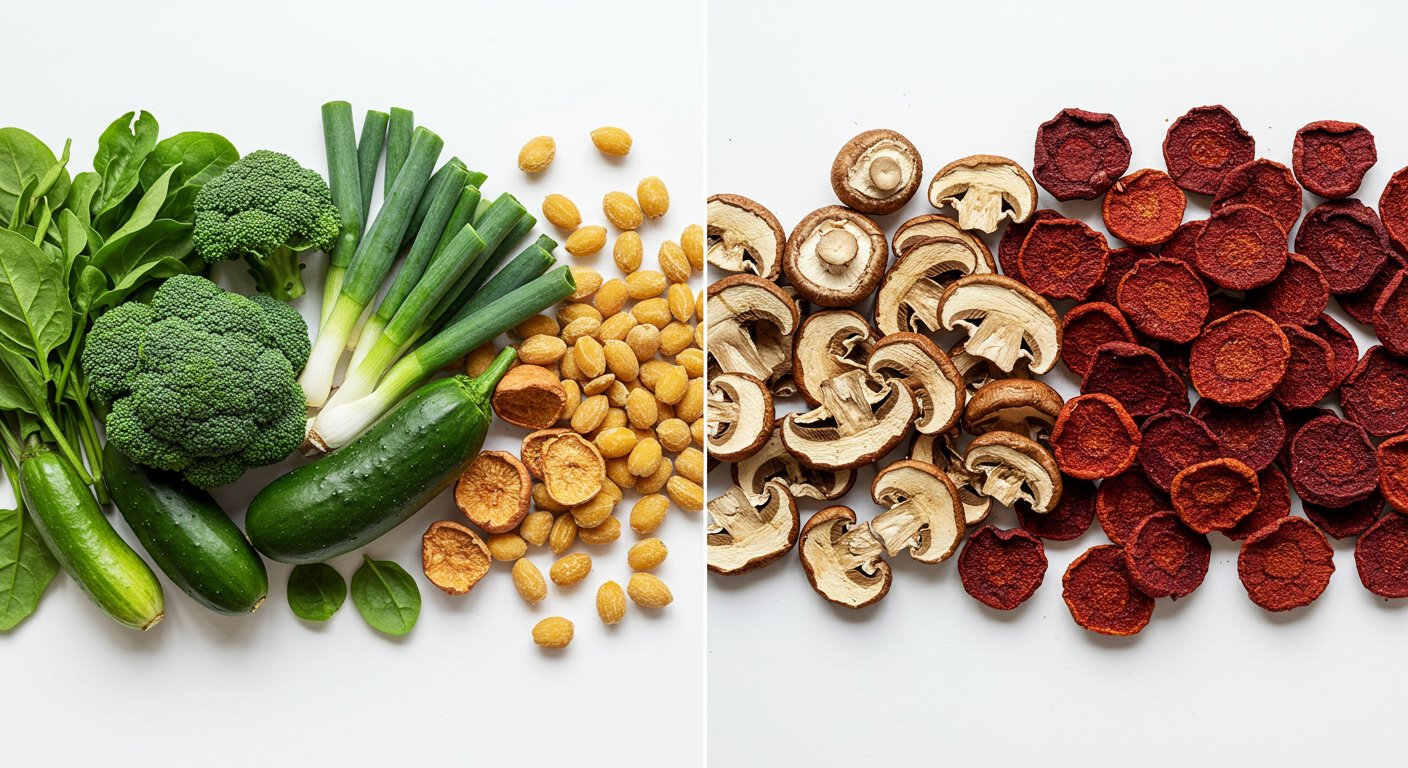
But there are also survey reports that recently, on average, only about 14g is being consumed. By incorporating dried goods into daily life, you can make up this shortfall.
Soluble and insoluble dietary fiber
Dietary fiber There is "soluble dietary fiber" and "insoluble dietary fiber." Insoluble dietary fiber is abundant in vegetables, beans, mushrooms, fruits, and grains, and it stimulates the intestines by absorbing water and swelling, promoting bowel movements.
Soluble dietary fiber, on the other hand, has the property of dissolving in water—examples include pectin, abundant in mandarins, strawberries, and walnuts; glucomannan, contained in konjac; fucoidan, abundant in seaweeds; and barley β-glucan, abundant in barley. Beyond softening stool, these can also be expected to keep you feeling full longer, help excrete cholesterol, and curb rises in blood sugar.
Ideally, insoluble and soluble dietary fiber are consumed in a 2:1 balance, but modern diets tend to lean toward around 3:1. Dried goods, especially seaweeds, are rich in soluble dietary fiber and help improve the balance.
How to rehydrate dried goods and cooking tips
To eat dried goods deliciously, it's important to know the proper way to rehydrate them. The rehydration rate (how many times the weight increases when rehydrated) differs by ingredient, so referring to the rates in the table is helpful.
The rehydration rate can differ even for the same ingredient depending on the type, so it's handy to remember them as rough guides.
How to rehydrate seaweeds
For salted wakame, rinse it quickly to remove the salt and soak it in water for 10 minutes. Cut wakame just needs 5 minutes soaking in water. Soak kombu in water for 15 minutes, and hijiki in water for 20 minutes.
Seaweeds can leach out nutrients if over-rehydrated, so the key is to rehydrate them for the appropriate time according to the package instructions or the ingredient.
Ingredient | Rehydration rate (guideline) |
|---|---|
Salted wakame | 1.5× |
Cut wakame | 12× |
Kombu | 3× |
Hijiki | 8–10× |
How to rehydrate vegetables and mushrooms
For kiriboshi daikon, rinse it in water 2–3 times and soak it in plenty of water for 15 minutes. For kanpyo, rub-wash it with salt, put it in water, bring to a boil, and simmer for 15 minutes.
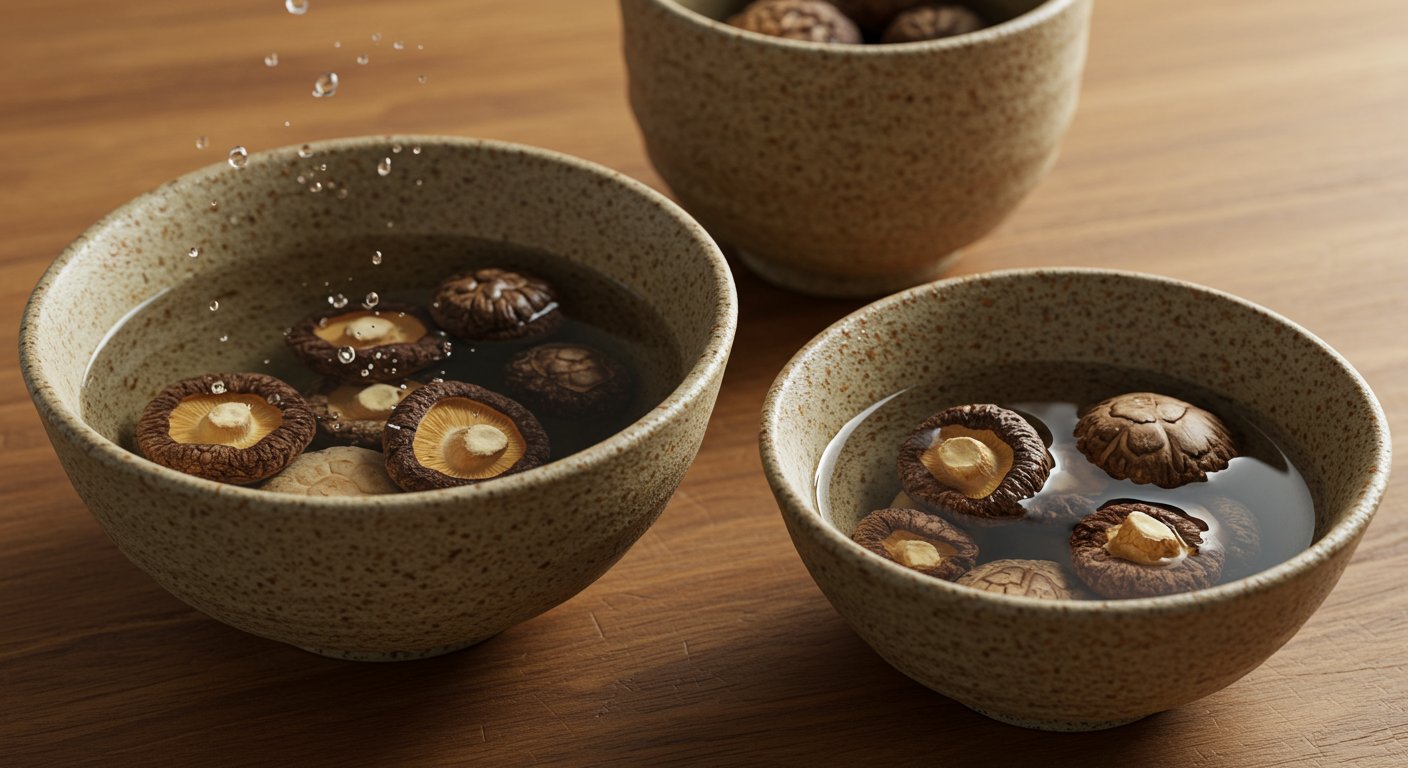
For dried shiitake, wash well to remove debris and soak in water in the refrigerator for 3 hours to half a day. Kikurage rehydrates with just 20 minutes soaking in water. The rehydrating liquid has umami compounds dissolved into it, so the pro's trick is to use it in cooking rather than discard it.
Dried vegetables vary in condition by place and environment, so we recommend checking the actual item once and washing it as needed.
Ingredient | Rehydration rate (guideline) |
|---|---|
Kiriboshi daikon | 4× |
Kanpyo | 7× |
Dried shiitake | 4× |
Kikurage | 7× |
How to rehydrate beans and bean products
For azuki and soybeans, wash them several times in a bowl of water and soak them in 4–5 times their volume of water for 6 hours or more. For koya-dofu, soak it in 50°C water for 10 minutes; once it's fully rehydrated through, press-rinse until the cloudy white water stops coming out, and gently press to squeeze.
For harusame, boil in 5 times its volume of boiling water for 1 minute, then cover and let it steam for 5 minutes for just the right texture.
Ingredient | Rehydration rate (guideline) |
|---|---|
Azuki / soybeans | Soak in 4–5× the volume of water |
Koya-dofu (freeze-dried tofu) | About 5× (rehydrate in 50°C water) |
Harusame | 1 minute in 5× the volume of boiling water, plus steaming |
Making use of dried goods in modern diets
In the diets of busy modern people, dried goods are more convenient than you might expect. They keep well, so there's the reassurance of always having them on hand.
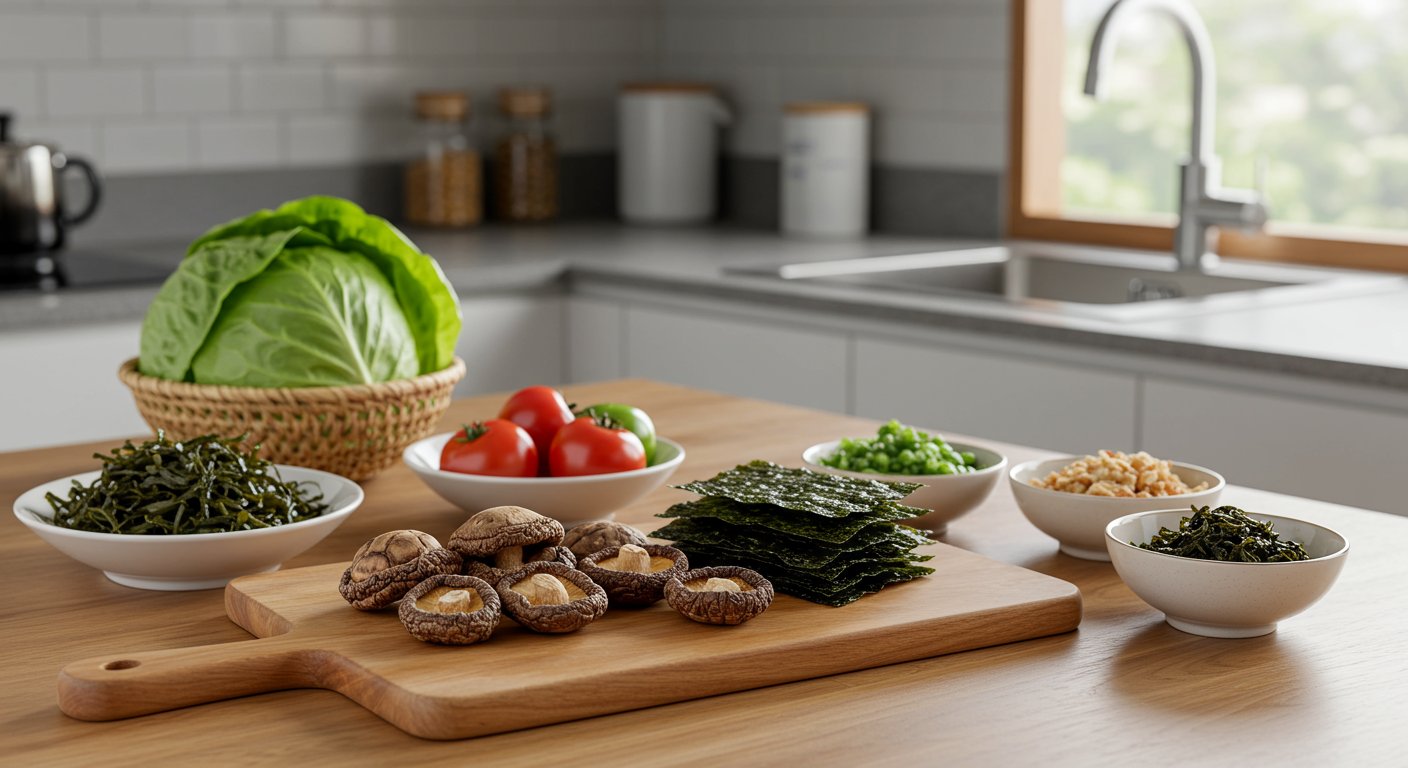
What deserves special attention is quick cooking using dried goods. If you rehydrate them ahead of time, you can greatly shorten cooking time. For example, if you soak dried shiitake in water in the morning, it'll be rehydrated by dinnertime and ready to use in cooking right away.
Using them as make-ahead side dishes
Make-ahead side dishes like simmered kiriboshi daikon and simmered hijiki are a strong ally on busy weekdays. They keep in the refrigerator for 3–4 days, so you can use them a little at a time across several dishes.
Make-ahead side dishes using dried goods are high in nutritional value and satisfying even in small amounts, making them recommended for those who want to lead a healthy diet.
Their value as emergency food
As disaster preparedness too, dried goods are an excellent food. Long-term storability, compactness, and high nutritional value—these qualities meet all the conditions required of emergency food.
In particular, Dried vegetables and dried fruit can also be eaten as is, so nutritional replenishment is possible even without cooking facilities. If you make a habit of using dried goods a little at a time in everyday life, you can also use them Rolling stock as.
Contributing to a sustainable diet
Dried goods also play a part in food loss reduction. off-spec vegetables and fruit, too, can be stored long-term by drying, reducing waste.
At our company, through drying and processing out-of-spec produce, we contribute to reducing food loss and building a sustainable society. It may look imperfect, but the nutritional value is unchanged. Efforts to find new value in such ingredients will grow ever more important in the times ahead.
A healthy meal plan that incorporates dried goods
What kind of meal plan is effective for incorporating dried goods into daily life? Here we introduce an example of a day's meals incorporating dried goods.
For breakfast, miso soup with cut wakame and rolled omelet mixed with hijiki are recommended. For lunch, a kiriboshi daikon salad or a soup with dried shiitake is easy. For dinner, you can make use of dried goods in the main dish—simmered koya-dofu, or a stir-fry using dried kikurage.
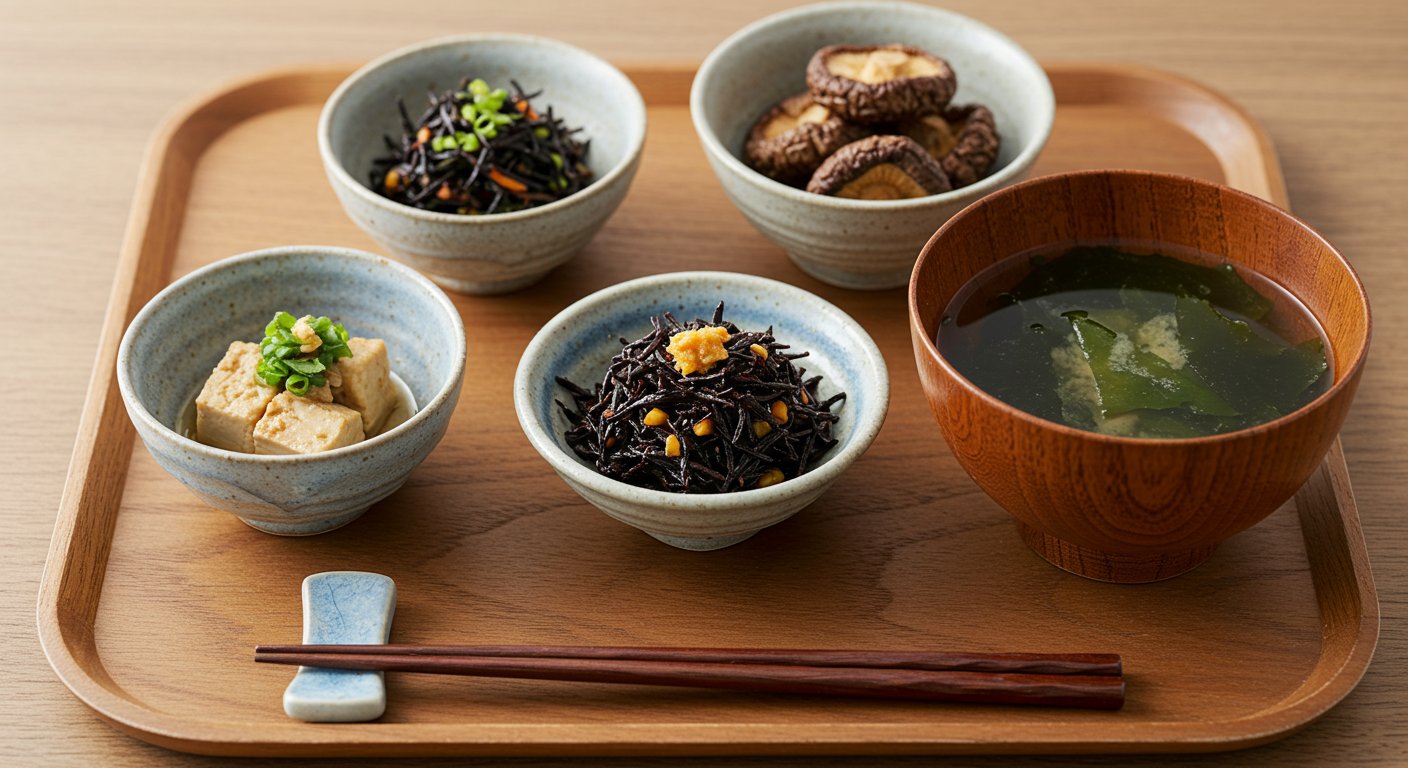
How to use dried goods to get 20g of dietary fiber a day
To efficiently get the 20g of dietary fiber you need daily from dried goods, the trick is to combine several. For example, incorporating seaweeds at breakfast, dried vegetables at lunch, and mushrooms and bean products at dinner lets you take in dietary fiber in a good balance.
Dried goods are high in nutritional value even in small amounts, so just adding a little to your usual cooking greatly improves your nutritional balance. For example, just adding a little hijiki to a salad or putting dried vegetables in a soup is enough.
Ingredients with good affinity for dried goods
Dried goods pair well with a variety of ingredients, and combining them further improves nutritional balance. For example, taking seaweeds together with vegetables containing vitamin C raises the absorption rate of iron.
Combining dried shiitake with soy products not only increases umami but also raises nutritional value through the synergy of protein and vitamin D. Simmered kiriboshi daikon and abura-age is a combination with a good balance of dietary fiber and protein.
Incorporating dried goods into a modern diet is by no means difficult. With a little creativity, you can achieve a nutritionally balanced, sustainable diet.
Summary: The healthy, sustainable food future that dried goods open up
Dried goods are a traditional ingredient with a long history, yet they bring many benefits to modern diets too. As a material with superior shelf life, high nutritional value, and a broadened range of cooking, their value will only rise going forward.
What deserves special attention is the abundant dietary fiber and concentrated nutrients that dried goods hold. That they let you efficiently take in nutrients modern people tend to lack is a great appeal in a health-conscious society.
Also, from a sustainability angle too—such as reducing food loss by using out-of-spec produce—dried goods play a big role. Under the vision of "making dried goods more familiar and more valuable," carrying dried goods, a traditional ingredient, into the future in a new form is, we believe, the mission of those of us involved with food.
Why not achieve a healthy, balanced diet by incorporating dried goods into your daily meals? With a little creativity, your table should become richer—and healthier.
A Complete Guide to the Pros and Cons of Dried Goods: Uses Explained Too
Learning the secrets to success and market strategy from overseas-expansion cases of dried goods

If you are considering product development with off-spec or your own farm's vegetables:From planning to processing, materials, package printing and novelties, you can consult us through a single point of contact. → Learn more about one-stop product development
- What is freeze-dried? A gentle explanation of the drying technology spreading to miso soup, vegetables, and strawberries
- Why high-priced domestic dried fruit is scarce, and its potential in pet and confectionery development
Author of this article
Related articles
-
 Original coffee marketing strategy | Ways to grow sales
 -
 ベジタリアンとは?国の規格が分けている4つの区分と食べられないもの
 -
 長ねぎと白ねぎは同じもの?ねぎの種類と呼び名を国の資料で確かめる
 -
 柚子の種類は何種類あるのか、公の資料で名前が残る系統を数えた
 -
 柚子の皮の使い道は干すと広がる、果汁と種まで使い切る手順
 -
 ゆずの時期は年に二度、青ゆずは7月から黄ゆずは10月から
 -
 ゆずの産地は高知が半分を占め、二位は徳島から愛媛に変わった
 -
 Preventing Food OEM Failures: Common Failure Cases and Countermeasures for Success