Dietary fiber

Recommended reading
TOC
What Is Dietary Fiber?
Dietary fiber is a collective term for components that human digestive enzymes cannot digest, and it is abundant in vegetables, fruits, beans, grains, and seaweed. It is known as a component that promotes bowel movement, but recently many functions have drawn attention, such as improving the gut environment and curbing blood-sugar rises.
In the food industry, dietary fiber is classified into "water-soluble" and "insoluble," each playing a different role. Today, in nutrient-function foods and foods with function claims as well, containing dietary fiber is positioned as a major value.
Characteristics and Background of Dietary Fiber
Dietary fiber was once regarded as "something unnecessary," but since the 1970s its functions have drawn attention, and today it is valued as the "sixth nutrient."
The characteristics and background include the following points:
A function that balances the gut flora
In Japan it is subject to nutrient labeling, and the daily reference intake is clearly established
As trends, it draws high attention in fields such as gut health, Fasting, and low-carb dieting, and its market value as a "component people want to take in" rises year by year.
Examples of Dietary Fiber Use at Agriture
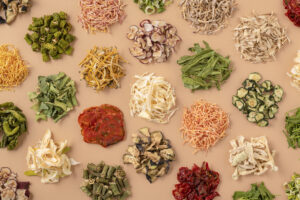
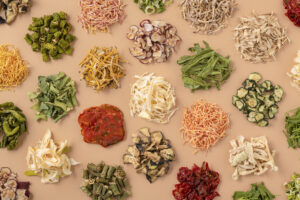
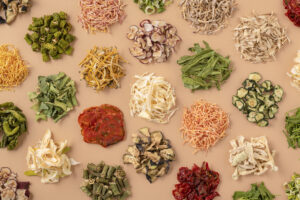
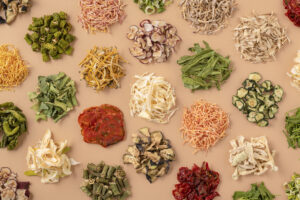
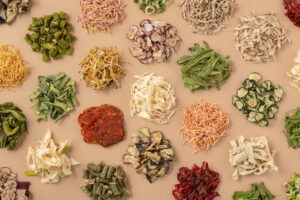
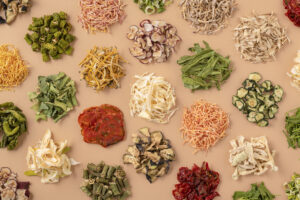
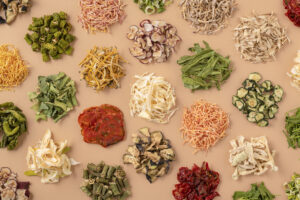
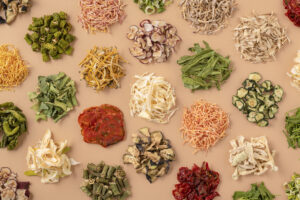
At Agriture, we handle many dried vegetables and powder raw materials rich in dietary fiber. In particular, they are used in the following forms:
Dried gobo and dried mushrooms and other ingredients rich in insoluble dietary fiber
As raw material for green juice and functional smoothies, kabocha OEM support for powder
Proposing ingredients for dietary supplements mindful of dietary fiber
Our strength is a technology that, by drying and grinding raw materials as-is without processing, preserves functionality without losing nutrition.
Related keywords
Water-soluble dietary fiber
Insoluble dietary fiber
Gut environment
Bowel-regulating action
Post-meal blood sugar
Related articles
Change the Start of Your Day! The Relationship Between Dried Vegetables and Dietary Fiber
A Ranking of Vegetables High in Dietary Fiber
FAQ
Q1. How much dietary fiber should I take per day?
A. Adequate intake levels are set in the Dietary Reference Intakes for Japanese and differ by sex and age. It's important to include it in a balanced way in your daily diet.
Q2. Does dietary fiber's effect change when heated?
A. Some water-soluble dietary fiber can break down with heat, but much of it is heat-resistant and is said to retain its function even after heating. Low-temperature processing such as drying is especially effective.
Q3. What vegetables contain a lot of dietary fiber?
A. Gobo, lotus root, sweet potato,、broccoli, molokheiya, kiriboshi daikon, and the like are representative. Agriture also offers many dried and powder products using these.