Dried burdock (sasagaki)


TOC
Product overview of dried burdock
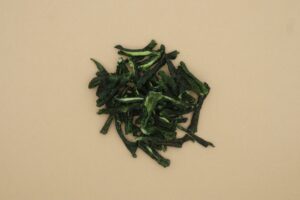
Using salad burdock — a burdock tender enough to eat as a salad — grown by a partner farmer in Kyoto Prefecture, processed into a julienne type that needs no de-astringency and can be used as is. Keeping intact the toastiness and natural flavor that evoke soil-covered burdock, by drying slowly at low temperature we finish it into a taste that draws out only burdock's inherent umami.
While keeping a fresh aroma, it's easy to handle, added straight into cooking as an ingredient for kinpira, stir-fries, mixed rice, and the like. A labor-intensive root vegetable can be used in commercial settings without waste and with stability.
Three points of pride in dried burdock
01 Selecting salad burdock that needs no de-astringency
Ordinary burdock tends to develop bitterness and astringency unless de-astringed, but Agriture uses a variety mild enough in flavor to eat as a salad. Needing no de-astringency, it greatly reduces the labor in the cooking workplace.
02 Low-temperature drying that curbs off-flavors
Burdock's off-flavor and astringency can be adjusted in the drying process. By drying slowly at low temperature, we curb off-flavors and concentrate only the umami and toastiness. A point is that the fresh aroma evoking soil-covered burdock remains just as it is.
03 Julienne / shaved shapes, ready-to-use forms
Because it's cut into a shaved (sasagaki) shape, it can be added straight into kinpira and mixed rice. It's designed so a root vegetable that takes effort to prep can be used without waste on-site.
Product catalog showing the items we handle
Flexible support from small lots to large lots
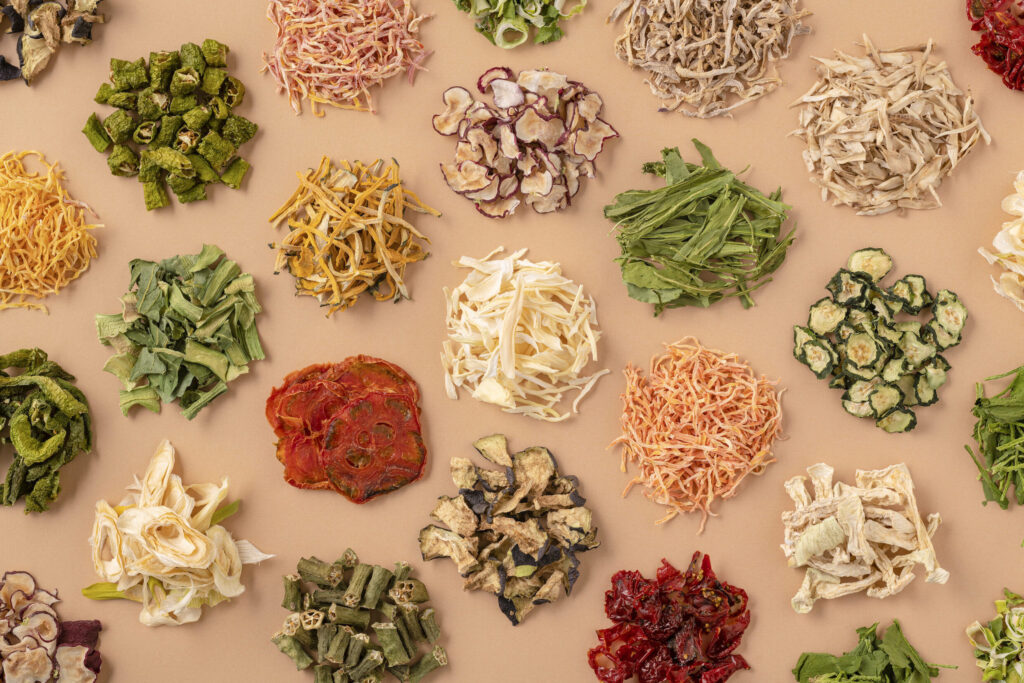
- Sold in small lots from 1 kg
- Handling heirloom vegetables from across Japan
- Dried fruits and herbs also supported
Features
Grown in Kyotango, Kyoto Prefecture
Carefully selected use of aromatic, umami-rich salad burdock. Grown carefully by a partner farmer.
Crisp texture
A sense of fiber remains even after drying, and after water rehydration you can enjoy a crisp bite. The physical properties don't spoil the bite of kinpira.
No de-astringency needed
Dried burdock has little off-flavor and can be used straight in cooking. It can greatly cut prep time in the commercial workplace.
No glucose added
A specification of the ingredient simply dried. No sugar-liquid treatment or the like is done at all.
Rich in dietary fiber
Burdock is a root vegetable rich in insoluble dietary fiber. It's also effective as a raw material for products that want to appeal to dietary fiber.
Usable for root-vegetable dashi too
An ingredient usable as a base for Japanese-style dashi and soups. It can also be used for variations of plant-based dashi combined with shiitake.
Main use
It can be used for mixed rice and combined rice (adding aroma and umami), as an ingredient for kinpira and stir-fries (julienne-cut for use as is), as a flavor ingredient for Japanese-style soups and soup dishes (usable as root-vegetable dashi too), and as an OEM product raw material (dried root-vegetable mixes, freeze-dried ingredients, and the like).
Product specifications
Item | Details |
|---|---|
Raw material growing region | Kyoto Prefecture (partner farm) |
Specification | Shaved (sasagaki) |
Storage method | Room temperature (store away from high heat and humidity) |
Best-before date | 6 months from the shipping date |
Minimum lot | From 10 bags / 100 g |
Powder | Available |
Manufacturing period | July |
Customization support
Custom size support (cut-thickness change, shape adjustment): can be discussed for orders of 10kg and up. OEM support: available. Large-lot production: available (consultation required 3 months before the production period). Past initiative case studies are here。
POWDER
We also offer burdock powder
We also carry a powdered raw material that captures burdock's toastiness in powder form. Use it for powder-form development such as tea, soup bases, baked goods, and nutritional supplement foods.
Variety, grower, origin
BRAND
Cultivar:Salad burdock. A variety mild enough in flavor to eat as a salad if prepped, even raw, and though short, rich in flavor.
PRODUCER
Producer:Partner farmers in Kyotango, Kyoto. Aiming for agriculture kind to the environment and people, they grow their crops using homemade compost.
REGION
Production area:Kyotango City, Kyoto Prefecture. Salad burdock, which can be harvested in summer, is known as a flavorful root vegetable distinctive to this region.
CULTIVATION
Cultivation method:Cyclical cultivation using self-made compost. Harvest is centered on July.
*Reference: OYAOYA product page
Low-temperature drying that retains burdock's aroma
Burdock is a root vegetable whose aroma remains strong when stored with the soil on, but if the aroma is driven off in the drying process, its appeal is halved. Agriture dries it slowly at low temperature, processing it while retaining the fresh, just-dug aroma.
💡 TIPS | Drying-processing trivia
Burdock's aroma components include components evoking the smell of soil (geosmins) and wood-like phenols. Because these are vulnerable to heat, high-temperature drying tends to weaken the aroma. The slower and lower the temperature of drying, the more it finishes into a burdock that retains a root-vegetable-like earthy toastiness.
Use cases
Kinpira and stir-fries
A product with a track record of adoption for kinpira and burdock-salad uses at prepared-food factories and boxed-lunch chains. Fresh burdock takes prep labor — soil removal, peeling, and de-astringency — and variability in yield is also an on-site challenge, but a shaved dried product can be stored in bulk at room temperature and finishes into a uniform texture by just rehydrating in hot water for a set time. We can also handle prototyping from small lots, so please use it for new-menu development and consideration of ingredients for limited-edition prepared foods.
Base for Japanese-style soups and soup dishes
Shaved dried burdock suits adoption by prepared-food makers, school-lunch operations, and foodservice chains that need root-vegetable dashi. Fresh burdock has many prep steps — soil removal, de-astringency, and cutting — and an unstable yield, but a dried product can be stored in bulk at room temperature and supply a uniform flavor stably by rehydration or direct addition. It's also easy to deploy across multiple menus such as miso soup, tonjiru, and mixed rice, and we can handle prototyping from small lots.
Ingredient for standing side dishes and make-ahead dishes
Cases of prepared-food chains and deli makers adopting it for "ingredient sourcing for a standing-side-dish line" are increasing. Fresh burdock takes considerable labor to wash, peel, and de-astringe, and yield variability is a burden on-site, but a shaved dried product can be stored at room temperature and rehydrated only in the amount needed, contributing to stabilizing the prep line. For OEM and commercial uses, cut shape and moisture content can be adjusted to your requirements, so it can also be deployed across multiple SKUs such as kinpira burdock and soup ingredients.
How to use commercial dried burdock
Burdock is a strong root vegetable on both fronts — health appeal centered on dietary fiber, and story appeal as an aromatic ingredient. Please also refer to related cases.
- What Is Horikawa Gobo? A Thorough Explanation of Its Characteristics, Cultivation, How to Eat It, and Nutrition
- Change the Start of Your Day! The Relationship Between Dried Vegetables and Dietary Fiber
- 5 Standing Dishes Made with Dried Vegetables | A New Stocking Habit with Zero Make-Ahead, Rehydrating Only What You Use
Product catalog showing the items we handle
Flexible support from small lots to large lots
- Sold in small lots from 1 kg
- Handling heirloom vegetables from across Japan
- Dried fruits and herbs also supported
Frequently asked questions (FAQ)
Q. About what is the minimum lot?
A. You can try it from 10 bags / 100g. For regular supply, consultations in 1kg and 10kg units are common.
Q. Could you tell me a rough price?
A. It varies by lot and shape. We'll provide a quote together with a sample request.
Q. About how much lead time is needed?
A. Around two weeks for stock items. For planned production timed to the July harvest season, we ask for consultation from three months in advance.
Q. Can you disclose the origin and variety of the raw material?
A. We use salad burdock from a partner farmer in Kyotango City, Kyoto Prefecture. If you'd like documentation, please consult us.
Q. Are you HACCP-compliant?
A. At our own factory, we conduct hygiene management based on HACCP principles.
Q. Can we consult you about OEM of a health food using burdock?
A. We have a track record of consultations for granola, soups, teas, and the like that appeal to dietary fiber. Please consult us from the product-design stage.
RETAIL
For those looking to purchase in small packs
For those who want to try it in small packs for home use, please use the online shop of our sister brand "OYAOYA." It has a lineup from 20 g to 500 g, with sizes perfect for everyday use.
Recommended reading
- What is Horikawa burdock(Kyoto Vegetables)
- The relationship between dried vegetables and dietary fiber(OEM)
- 5 make-ahead dishes to make with dried vegetables(Sustainable)
- Burdock powder
Download the product catalog
We will send the materials to your email address based on the information you provide.