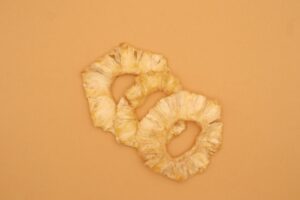
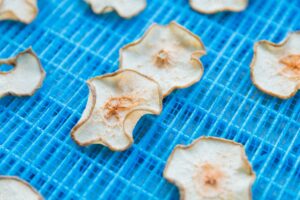
Dried sudachi

Dried sudachi is a commercial citrus ingredient made by carefully drying domestic sudachi—mainly grown in Tokushima Prefecture—with low-temperature hot air. We offer two forms, peel-on slices and peel-only mince, and can flexibly support food development that makes use of sudachi's signature sharp acidity and refreshing feel—as a condiment, in tea, as a topping for hot pot, as a drink garnish, or to finish a cocktail. It is an additive-free product finished with only the flavor of the peel and flesh, with no sugar, glucose, or antioxidants added. We also accommodate small-lot prototypes from 1kg. For dried-vegetable and fruit OEM inquiries, click here and let us know your intended use and desired cut form.
TOC
Three commitments of Agriture's dried sudachi
01 A process design that keeps the peel's essential oils through low-temperature drying
Sudachi's aroma comes mainly from essential-oil components such as limonene and gamma-terpinene, which volatilize quickly under high-temperature drying. Agriture uses low-temperature hot-air drying that keeps the product temperature around 40°C, structuring the process to release only moisture while retaining the essential oils on the peel surface. Even after drying, breaking the peel reveals a rising aroma—a finish that, within our list of dried fruit, is designed with a focus on aromatic freshness.
02 A material design using only additive-free, domestic ingredients
The ingredient is domestic sudachi only, finished with no glucose coating, bleaching, or antioxidants of any kind. It is a specification often requested by additive-free brands that want to complete their ingredient listing with the single word "sudachi," and by makers of craft beverages as a secondary ingredient. The nutritional value and benefits of vegetable powder.
03 Small-lot prototyping from 1kg and form differentiation
We offer two forms as standard—peel-on slices (rounds) and peel-only mince—allowing selective use according to the application. Because we accommodate prototyping in 1kg units, it can also be used for test marketing before mass production and for trial sales of limited products. For prototype inquiries, OEM inquiry page feel free to reach out.
Product catalog showing the items we handle
Flexible support from small lots to large lots
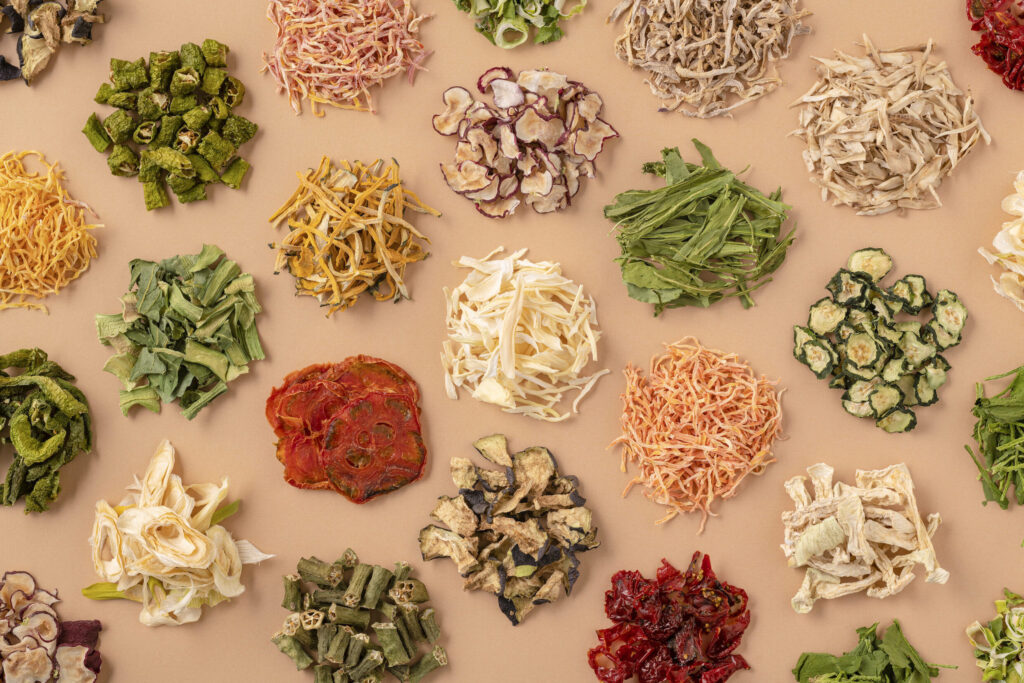
- Sold in small lots from 1 kg
- Handling heirloom vegetables from across Japan
- Dried fruits and herbs also supported
Features of commercial dried sudachi
Sharp acidity and a refreshing feel
It has a crisp acidity distinct from yuzu and a refreshing feel as its hallmark. Because the peel's essential oils remain after drying, the aroma rises the moment it is added to hot water or a drink. It is a material often requested as a condiment in Japanese cuisine and to finish craft drinks.
Made with 100% domestic sudachi
Made using only domestic sudachi, mainly from Tokushima Prefecture. Because the cultivar, lot, and harvest timing can be traced, it is a specification that can be built directly into product designs involving raw-material origin certification or origin appeals.
Two-form differentiation support
Peel-on slices (rounds) suit tea, hot pot, and drink garnishes, while peel-only mince suits blending into condiments and seasonings. Because you can choose the form to match your product concept, it is a material that makes ingredient design by use easy.
Long-term inventory possible with room-temperature storage
Because it is finished with low water activity, unopened storage of roughly 6 months from the shipping date is possible. Unbound by the season of fresh sudachi (August–October), a strength as a commercial ingredient is being able to plan stable inventory year-round.
Zero additives, no coloring
Glucose, dextrin, antioxidants, and colorants are all unused. It is a design compatible with the PB development of additive-free brands that want to keep the ingredient listing simple.
Flexible support for blending and formulation
We also accommodate pre-blending with other dried citrus materials such as yuzu, kabosu, and lemon, as well as dried vegetables and herbs. We can discuss PB-oriented blend designs such as Japanese-citrus mixes and original condiment blends.
Product specifications (commercial)
Item | Details |
|---|---|
Raw material | Sudachi (domestic, mainly from Tokushima Prefecture) |
Shape | Choose from slices (peel-on rounds) / peel-only (mince) |
Production method | Low-temperature hot-air drying (product temperature around 40°C) |
Best-before date | About 6 months from the shipping date |
Processing plant | Our own processing plant within Kyoto Prefecture |
Shipping unit | From 100g (commercial bag) |
Minimum-lot OEM | Prototype from 1kg / full production from 10kg |
Customization support
Item | Available | Details |
|---|---|---|
Cut form changes | ◎ | Slice thickness and peel-mince width can be adjusted to the application |
Powdering | ◎ | Powder processing is also available (Sudachi powder listed on a separate page as) |
Small-lot OEM prototyping | ◎ | Available from 1kg |
Mixed materials and blends | ◎ | Blending with other citrus, dried vegetables, and herbs is available |
Packaging changes | ◎ | Both commercial bags and individual packaging are available |
Quality document issuance | ◯ | Specification sheet, raw-material origin certification, microbiological test report (discussed per project) |
POWDER
We also offer sudachi powder
We also carry a fine-powder type made by drying and grinding sudachi peel. For uses where you want even dispersion into liquids or dough—ponzu, dressings, confectionery, beverages, seasonings—powder is the better fit.
Commitments to variety, grower, and growing region
The ingredient used for our dried sudachi is sourced directly from domestic sudachi growing regions, centered on Tokushima Prefecture. About 98% of national sudachi production is concentrated in Tokushima Prefecture, so cooperation with the growing region directly links to ingredient quality. Agriture secures fruit harvested at the time best suited for processing and shortens the lead time from harvest to drying, structuring the process to minimize loss of essential oils.
BRAND
Variety: "Sudachi" (Citrus sudachi), a Japanese native citrus of the citrus family. Compared with yuzu and kabosu, the fruit is smaller, the peel is thinner, and the essential-oil content is higher. As a citrus whose peel-derived aroma remains readily even after drying, it is well suited as a commercial ingredient.
PRODUCER
Producer: Sourced directly from partner farms in Tokushima Prefecture. By having them ship at the harvest timing best suited for processing, we secure ingredients with a balanced peel essential oil and juice acidity.
REGION
Growing region: Procured from growing regions centered on Tokushima Prefecture (Kamiyama, Sanagochi, Kamikatsu, and others). The temperature swings of the mountainous areas raise the peel's essential-oil content, directly linking to aroma after drying.
CULTIVATION
Cultivation method: We use sudachi grown under managed cultivation with reduced pesticide use.
Low-temperature drying technology and quality control
Sudachi's aroma components—limonene and gamma-terpinene—are highly volatile, and most are lost in a short time under hot air of 60°C or higher. Agriture uses low-temperature hot-air drying that keeps the product temperature around 40°C, designed to release only moisture and minimize the outflow of essential oils. Our quality standard is that breaking a dried slice leaves a fresh, rising aroma close to that of fresh fruit.
Manufacturing is done at our own processing facility in Kyoto Prefecture, with integrated management from raw-material receiving inspection through shipment. After passing through a foreign-matter removal process, it is filled hygienically, and for OEM projects we issue documents such as specification sheets, raw-material origin certifications, and microbiological test reports, discussed per project.
💡 TIPS | Using sudachi and yuzu differently
Even among Japanese citrus, yuzu has a sweet, rounded aroma, while sudachi's hallmark is sharp acidity and a refreshing feel. In restaurant-oriented PB and seasoning OEM, positioning yuzu as "the mellow type" and sudachi as "the crisp type" and using them differently is becoming more common. Agriture also handles dried yuzu, so you can order samples of both and compare them.
Use cases and adoption examples
As a condiment and hot-pot topping
Dried sudachi slices are a commercial material that can substitute for fresh sudachi as a condiment floated on grilled fish, matsutake dobinmushi, udon, and hot pot. Because it can be supplied stably even outside the season (August–October), it is often requested for introduction into year-round menus.
A citrus accent for tea and blended teas
Dried sudachi slices and peel mince are increasingly requested as blend ingredients that add a citrus accent to green tea, hojicha, and Japanese black tea. The refreshing aroma that rises the moment hot water is poured becomes a sharp accent distinct from a yuzu blend. See details of our tea OEM service here
A garnish for craft drinks and cocktails
As demand grows for sudachi-flavored drinks such as sudachi sour, sudachi highball, and craft cider, use as a garnish—floating dried sudachi slices in the glass—is expanding. Unlike fresh fruit, there is no inventory loss and it saves prep effort, so it is increasingly requested in the drink-menu development of dining chains.
A flavoring material for ponzu and dressings
The peel-mince type can be blended directly as a flavoring material for ponzu and dressings. Soaking it, still dried, in vinegar or oil dissolves out the essential oils, spreading sudachi's signature crisp acidity throughout the seasoning. It is often requested in product development aiming to differentiate from yuzu ponzu.
A material to fold into confectionery and baked goods
Folding the peel mince into madeleines, financiers, and pound cakes leaves sudachi's aroma even after baking, helping differentiate citrus sweets. There is also a way of adding slices as a topping to sudachi sherbet or gelato, making it a material that can be developed in both Western and Japanese confectionery.
A flavored-coffee, citrus-blend ingredient
By enclosing dried sudachi slices in a drip bag, or blending peel mince into coffee beans, you can plan an original sudachi-flavored coffee. Citrus coffee is often requested for summer-only products and gifts. See details of our coffee OEM service here
Points on commercial use and storage
Dried sudachi slices can be used as they are, floated on tea, hot pot, or drinks. When using them as a condiment, soak them in lukewarm water for 1–2 minutes for a half-rehydration, which softens the flesh and makes it easy to mince and add to dishes. The peel-mince type needs no rehydration and can be blended directly into seasonings and seasoning mixes.
For storage, sealed storage away from light, heat, and humidity is best. After opening, use it up promptly or reduce air contact with a resealable bag to keep the essential-oil-derived aroma and the peel's color for longer. Avoid storage in hot, humid environments, as it causes browning and aroma loss.
Related cases and articles
- List of dried fruit and dried vegetables
- Sudachi powder
- Tea OEM service
- Inquiries about dried-vegetable and powder OEM
Product catalog showing the items we handle
Flexible support from small lots to large lots
- Sold in small lots from 1 kg
- Handling heirloom vegetables from across Japan
- Dried fruits and herbs also supported
Frequently asked questions
Q. What is the minimum lot and prototype handling?
A. As a guide, prototypes are ordered from 1kg and full production from 10kg. You can also prototype both slices (rounds) and peel-only mince as samples at once, narrowing down the form that fits your product concept in a short time. If you share your concept at the inquiry stage, we will propose the optimal form and cut specification.
Q. What is the price guideline?
A. Because domestic sudachi is harvested intensively during its season (August–October), the unit price fluctuates with harvest volume and timing. It also varies by cut specification, packaging form, and lot size, so please consult us via the inquiry form for an accurate quote.
Q. What is the lead time?
A. For stock items, shipment is possible 1–2 weeks after order. For new customized specifications, please plan on 1–2 weeks for prototyping and 3–4 weeks for full production as a guide. We can also accommodate advance procurement timed to the sudachi season (August–October), so for projects with a visible annual usage, please consult us early.
Q. What is the difference from yuzu and kabosu?
A. Compared with yuzu and kabosu, sudachi has smaller fruit, and because the peel is thinner, the concentration of essential oils is higher. Its aroma is a type where sharp acidity and a refreshing feel come to the fore—a profile distinct from yuzu's sweet fragrance or kabosu's mellow acidity. Agriture also handles dried yuzu and kabosu, so you can compare all three.
Q. Can you issue a certificate of raw material origin and an analysis table?
A. We proceed with issuing both a raw-material origin certificate showing that it is domestic sudachi and a microbiological test report, discussed per project. We can also meet quality requirements for mass-retail, mail-order, and gift products.
Q. How do I use it differently from sudachi powder?
A. Slices and mince suit "visual presentation" and "floating uses in tea and drinks," while powder suits "even dispersion into dough or sauces" and "blending into seasonings." For restaurant-oriented PB, slices are often the choice, while for food manufacturers, powder tends to be requested.
Q. Please tell me the flow of an OEM consultation
A. It proceeds as follows: inquiry via the form → concept hearing → sample delivery → paid prototype (from 1kg) → specification confirmation → full production. We can also propose comparative prototyping of sudachi, yuzu, and kabosu, and blend designs with other dried materials—hands-on development support.
Recommended reading
- Sudachi powder
- List of dried fruit and dried vegetables
- For consultations on dried vegetable and powder OEM here
Download the product catalog
We will send the materials to your email address based on the information you provide.