We explain minimum lots for food OEM from the perspective of Agriture, which has experience both commissioning and accepting OEM work. Small lots let you test with low upfront costs, but they have drawbacks too: fewer manufacturers to choose from, higher packaging material unit costs, no access to items with large production lots such as retort curry or yokan, and extra cost and time to redo production when the business scales. We also cover our own example of drying from 1 kg of raw material, 5 points for choosing a factory, and two ways to search: by genre and through matching sites.
When considering food OEM, the first question is usually, "I want to make about this many, but how many bags will this factory accept at minimum?" Many people also want to start with a small lot of around 100 bags and proceed by testing in small steps.
We understand that instinct well.Agriture has commissioned OEM production to develop products for its own brands, and at the same time accepts OEM work as a contract drying manufacturer.In this article, we share what small lots really look like, as seen by someone who knows both the commissioning side and the manufacturing side.
What you will learn from this article
The benefits of small lots, from both the commissioning and the manufacturing side
5 easily overlooked drawbacks, and the costs that catch up with you later
Agriture's actual minimum lot: drying from 1 kg of raw material
5 points for choosing a factory that handles small lots, and 2 ways to find one
If you want to know examples of products suited to small lots, refer to the article below.
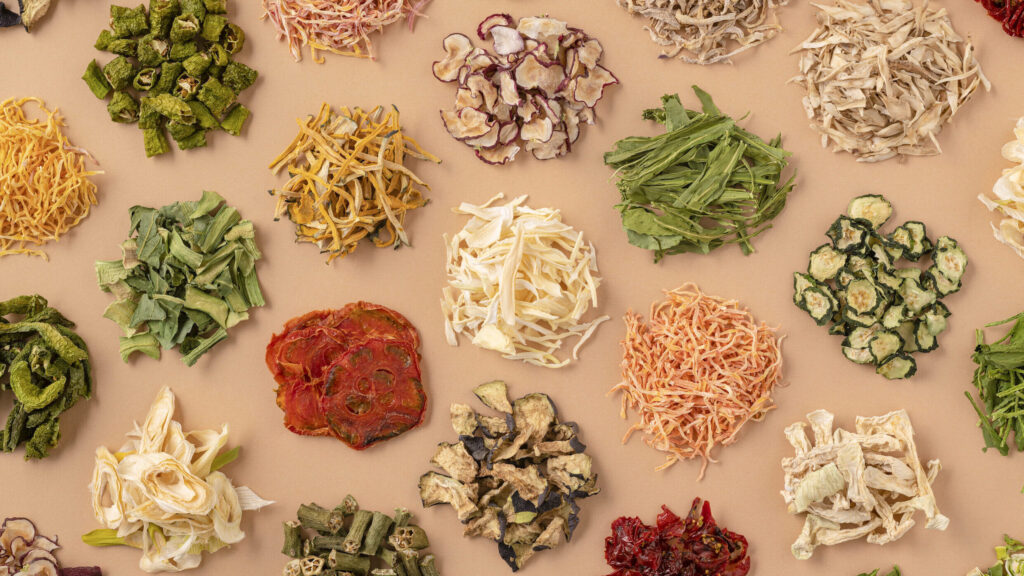
Specialist manufacturer of domestic dried vegetables | Corp.…
The minimum lot in a food OEM refers to the smallest production quantity a food factory can accept.
In typical food OEM, manufacturers often require orders above a certain quantity for reasons of production efficiency and cost, which is a barrier to entry for small businesses. On the other hand, a growing number of food factories are expanding small-lot services to meet demand from people who "don't want to carry inventory risk" or "want to start with test sales."
The merits of small-lot support
The advantages of small lots aren't only about cost. Looked at from the commissioning side and the manufacturing side, they can be summarized as follows.
Position
What small lots give you
Commissioning side
Test the market's response while keeping upfront costs down
Commissioning side
Quickly revise the recipe or packaging, with improvement built into the plan
Manufacturing side
Easier to meet factories that are strong in prototyping and product planning
Keep upfront costs down and test first
The biggest benefit of small lots is that you can "test first" while keeping initial costs down.
When developing a product through OEM, almost every client wants to "improve this part" after test-selling the first batch with the first recipe. If you make a large quantity from the start, inventory becomes a burden every time you make an improvement. Keeping the first run small is a very sensible way to develop a product on the assumption that it will be improved.
Factories that handle small lots are strong in prototyping and planning
From the perspective of the contract food manufacturer, there are also advantages for people who want small lots. Factories built around large lots, because of equipment operating units and production planning, generally find it hard to take on small-lot requests. In our experience on the contract manufacturing side, however, the factories that handle small lots are the ones that routinely work on prototyping and product planning itself.
In other words, it isn't true that "nobody will take a small lot." Food manufacturers that excel at product planning and recipe development are the best suited to small-lot product development.
The demerits of small-lot support
For the commissioning side, the drawbacks of small lots are even more important to understand in advance than the benefits. To start with the big picture, they come down to these 5 points.
Cons
What happens
Fewer manufacturers to choose from
Fewer factories can take the job, and quotes tend to come in at a higher unit price
Constraints on flavor and design
Some formulations possible with large lots can't be achieved
Reworking production when you scale
Once sales take off, redoing recipe development costs money and time
Higher packaging material unit costs
The smaller the lot, the less the unit price of seals and packaging comes down
Fewer product types and raw materials to choose from
Items with large production lots and niche raw materials unsuited to mass production aren't available
1. Fewer companies you can commission
Many OEM manufacturers assume orders above a certain lot size for production efficiency, so small-lot requests may be hard for them to accept or may come back with higher unit prices. In terms of unit price alone, bigger lots are cheaper, but budgets are a factor too, so if you're going with a small lot, you need to understand this before you commission the work.
2. Constraints on flavor and design
Some formulations that work with large lots can't be achieved with small ones. While small lots let you make distinctive products, there are cases where, once sales take off, you can't scale up with the same design and have to redo recipe development.
3. Scaling up costs time and money
What we consider the biggest drawback of small lots is this: "when the business scales, extra costs, time and lost opportunities arise."Behind the ease of starting small, the cost of reworking production once you grow can weigh on you later.
4. Higher unit costs for materials and packaging
It's often overlooked, but material unit costs go up too. Seals, packaging and other materials don't come down in unit price unless the lot is large. With small lots, this part is relatively expensive. If you treat it as a test marketing cost, though, it's usually within an acceptable range.
5. Fewer products you can make and raw materials you can use
To begin with, the range of products you can make narrows. For items whose production lots are inherently large, the options are quite limited if you try to develop them in small lots.
Examples of items that are hard to develop in small lots
Retort curry
Yokan
Freeze-dried products
If you build a business plan on the assumption of small lots without knowing this, you may find you can't make what you really want to make. Look ahead to how far you want to grow the business; if you want to compete with curry, for example, you need to be prepared to take on a reasonably sized lot from the first run.
The same applies to raw materials. Small lots let you experiment with niche ingredients, but the cost of those ingredients tends to be high. When you expand to large lots, the niche ingredient may become unavailable or too expensive for mass production to be profitable. Aside from marketing and development costs, keep in mind that the range of usable raw materials narrows.
The going rate for minimum lots
Minimum lots vary greatly by type of food. Agriture Inc. accepts contract drying of vegetables and fruit with the following minimum lots.
are as follows.
Minimum lots for dry processing (for Agriture)
Dry processing with supplied raw material: from 1kg of raw material
When using our in-house stock of raw material: from 100g
Agriture's drying services, flexibly available from 10 kg
Minimum lots for products other than dried vegetables are roughly as follows. The units change by item, "kg," "bottles" or "pieces," because filling machines, tablet presses and other equipment each run differently. Rather than the numbers themselves, it's easier to compare if you understand which unit each type of production is counted in.
The minimum lots for foods other than dried vegetables are roughly as follows.
Example minimum lots Protein
: for original products, some factories accept from 100kg, but 500kg and up is common Beverages
: depending on the product and container, production from 1,000 bottles is possible in some cases Supplements
To be honest, we think OEM projects that take on proper risk at a medium lot size have more factories to choose from and are less likely to incur extra costs later.
Still, there are situations where the nature of the business makes it necessary to start small. In that case, it's important to find a factory that genuinely handles small lots. Next, we explain what to look for.
: depending on the dosage form, production from a minimum lot of 500 units is possible in some cases
When choosing a food factory, it's tempting to put minimum lot size first, but there are other points to check, such as track record and communication.
Looking at the following 5 points together will help you find a partner that keeps small-lot tests moving. Here is a list of what to check first.
Point to look at
What to check when inquiring
By evaluating the following 5 comprehensively, you can find a partner with whom you can build a long-term partnership.
What they're strong at and which categories they have experience in
2. Communication
How many days until a quote, and how quickly they reply
3. Lot size and price
Unit price by quantity, and whether the product suits small lots
Even if small lots are supported, if the per-unit price is too high, setting the selling price becomes difficult. It's important to get quotes from several companies and compare on equal conditions.
Time from prototype to full production, and machine operating units
5. Packaging and materials
The range of containers and materials available for small lots
By evaluating the following 5 comprehensively, you can find a partner with whom you can build a long-term partnership.
In small-lot product development, it's essential to first check what the factory is strong at and which categories it has experience in. Factories used to small lots are strong in prototyping and planning, and have clear specialties such as powder processing, filling or freezing. The better the product you want to make matches the factory's strengths, the more smoothly development goes.
Checking their quality control system, such as HACCP, also gives you an objective way to judge the reliability of the manufacturing process.
Do they have manufacturing experience in a category close to the product you want to make?
What processing methods are they good at (powder, filling, freezing, etc.)?
What quality control system do they have, such as HACCP?
Quality-control systems such as HACCP certification, Organic JAS certification, and FSSC acquisition are also important judgment materials. These certifications serve as objective indicators of the reliability of the production process.
The point of going with small lots is to run test marketing as quickly as possible. That's why the speed and care of communication are what separate one factory from another.
If it takes a month to get a quote or internal approvals take a long time, much of the value of testing quickly with small lots is lost. We recommend stating your requirements specifically through the inquiry form and choosing a company that responds quickly and smoothly.
How many days did it take to reply to your first inquiry?
How long does it take to receive a quote?
Will they discuss formulation changes and prototypes?
Flexibility on formulation changes and prototypes, and whether they have proposal ability, are also points to check. What's required is whether they function as a product-development partner, not merely take on production.
A smaller minimum lot isn't always better. Small lots tend to raise the cost per unit, which feeds straight into the selling price.
What matters is working out in advance whether your product suits small lots in the first place, or whether it will sell even at a somewhat higher price. Proceeding without settling this can waste both time and money. Get quotes from several companies under the same conditions and compare the balance of unit price and quantity.
How does the unit price change as the quantity changes?
Does the expected selling price work at that unit price?
Did you request quotes from several companies under the same conditions?
Even if small lots are supported, if the per-unit price is too high, setting the selling price becomes difficult. It's important to get quotes from several companies and compare on equal conditions.
Even with a small lot, if setup and cleaning take as much work as a large lot, you can't expect to save time by reducing the quantity.
The manufacturing machines an OEM manufacturer owns have a set cost per run and a set quantity they can process. So with small lots, the machines may not be able to perform at full capacity. Before commissioning, check the lead time from prototype to full production and this kind of production efficiency.
How long does it take from prototype to full production?
What is the unit for running the machine once?
Does the delivery time change with busy seasons or raw material availability?
5. How to think about packaging and materials
Packaging is easy to overlook. With small lots, the choice of materials and packaging really does narrow.
Keep the container and design simple at first, and gauge the market's response to the flavor of the product itself. This kind of pragmatism pays off in small-lot testing. Including how much of the packaging, labels, inspection and other ancillary services you can hand over, it's not too late to get particular once you've seen a good response and can increase the quantity.
How many types of containers and bags can you choose from for small lots?
What is the minimum order quantity for labels and seals?
Can design and inspection be handled as a one-stop service?
When using our in-house stock of raw material: from 100g
Agriture's drying services, flexibly available from 10 kg
2 ways to find an OEM partner that handles small lots
Once you've decided on your criteria, the next step is how to actually search. There are two main ways: search on your own, oruse a food OEM matching site.
Searching for "(genre) OEM" brings up a number of manufacturers. From there, you open each company's website and look at their specialties and track record. It takes effort, but you can verify each company's strengths from first-hand information.
Is there something close to the product you want to make on their case study page?
Is the minimum lot stated clearly?
Are their equipment and processing methods described specifically?
2. Use a matching site
Matching sites let you narrow your search by specific conditions such as "small lot," "powder processing" or "domestic ingredients."
Agriture also runs Shokuhin OEM no Madoguchi, an OEM matching and comparison site. Each company's features and lot sizes are organized by genre, so you can efficiently find factories that meet your conditions. Other advantages are that you can compare across regions and industries, and access the information any time, 24 hours a day.
Narrow down candidates by genre and minimum lot
Compare side by side across regions and industries
If searching is difficult, you can consult a staff member
If searching is difficult, consult a professional
If it's hard to search on your own, you can also consult the matching site directly. When you use a food matching service, a professional acts as the go-between with the factory, which helps move things forward. Shokuhin OEM no Madoguchi also offers this kind of OEM support.
Also, the speed of the initial response to inquiries is an important evaluation point. A prompt, careful response is an indicator you can expect for the subsequent project progress too. The "Food OEM Desk" operated by Agriture Inc.
Whichever way you search, it's essential to clearly communicate the lot size you want and what kind of product you want to make. If this stays vague, miscommunication is likely. Sorting out the following items before you inquire makes the quotes you get back more accurate.
The type of food you want to manufacture, and the flavor or specifications you're aiming for
Your preferred first lot size, and the quantities you expect after that
Expected selling price and budget
Preferred delivery date and timing of test sales
Required certifications, labeling and packaging preferences
Summary: Weigh the strengths and weaknesses of small lots to bring your product to market
Today, with e-commerce and more, it has become very easy to have your own product.
On the other hand, setting up your own factory means facing labor shortages in rural areas and rising labor costs. Partly for this reason, among the inquiries we receive, many businesses choose the "fabless" model of making products without owning a factory.
from small lots
Medium lot or larger
Initial cost
Kept low
Requires substantial funds
Factories you can commission
Limited
Wide choice
Cost per unit
Tends to be high
Easier to reduce
Extra costs when scaling
Likely
Unlikely
Small lots have both a strength, "you can test on a small scale," and a weakness, "scaling up tends to cost time and money." With an eye on how far you want to grow the business, we recommend checking information on matching sites and company websites, and actually talking to manufacturers.
Having experienced both commissioning and accepting OEM work, Agriture supports small-lot product development. If you're struggling with making a product, consider OEM as one of your options.
Download the OEM contract processing materials
We will send the materials to your email address based on the information you provide.
If you are considering product development with off-spec or your own farm's vegetables:From planning to processing, materials, package printing and novelties, you can consult us through a single point of contact. → Learn more about one-stop product development
CEO of Agriture Inc. Runs a contract processing and OEM business centered on dried vegetables and dried fruit. In partnership with farmers within Kyoto Prefecture, he pursues “sustainable food distribution” through the use of non-standard vegetables and support for sixth-industrialization. Drawing on extensive hands-on experience at manufacturing sites, he provides support that walks alongside every business considering OEM—from product planning and prototyping to small-lot handling, packaging design, and sales-channel development.




 Original coffee marketing strategy | Ways to grow sales
 ベジタリアンとは?国の規格が分けている4つの区分と食べられないもの
 長ねぎと白ねぎは同じもの?ねぎの種類と呼び名を国の資料で確かめる
 柚子の種類は何種類あるのか、公の資料で名前が残る系統を数えた
 ゆずの時期は年に二度、青ゆずは7月から黄ゆずは10月から
 ゆずの産地は高知が半分を占め、二位は徳島から愛媛に変わった
 Preventing Food OEM Failures: Common Failure Cases and Countermeasures for Success
 How to find a food OEM | How to efficiently find the best manufacturing partner