
from small lots– tag –
-
How to Outsource Only the Filling of Your Home-Roasted Drip Bags
You roast beans in your own shop and sell them as drip bags, but hand-filling can no longer keep up, so you want to hand off just the bagging. Agriture receives inquiries like this, asking for filling only. In this article, based on what we actually offer through our small-bag filling OEM service... -
Yakuzen Food OEM and Development: Dashi, Furikake, and Powder in Small Lots
When it comes to yakuzen, many people may picture yakuzen tea, but there are many foods beyond tea that can draw on yakuzen thinking—dashi, soup, furikake, powder, and more. For staff at companies thinking "I want to develop a yakuzen product, but where do I start?", we cover, beyond tea... -
What is sansho powder? Its production method, how to choose commercial grade, and OEM and small-lot production explained
That fragrant powder sprinkled over grilled eel is sansho powder (powdered sansho). Because it lets you easily add a refreshing aroma and a lingering tongue tingle without adding moisture, inquiries such as "I want to use domestic sansho powder in small lots" and "I'm looking for a powder with a pronounced aroma" are increasing... -
Edible flower OEM | Commercial and wholesale, product development, and development into tea
Edible flowers that gorgeously decorate dishes and sweets. Their use in café desserts, gifts, drinks, and tea is expanding, and consultations about incorporating them into one's own products are increasing. Meanwhile, questions arise, such as "In what form should we source them?" "How do they differ from ornamental flowers?" "Can we make products at small lots?"... -
What Is Chili Powder? Manufacturing Methods, How to Choose for Commercial Use, and OEM and Small-Lot Production Explained
Chili powder, made by drying and grinding chili peppers, is a handy ingredient that lets you add heat, color, and aroma without moisture. Its uses are wide—flavoring ichimi, kimchi, soup, and snacks—and inquiries such as "I want to use domestic chili powder in small lots" and "I'm looking for a powder with stable heat and color" are... -
Commercial mushroom OEM and drying & powdering processing guide | Domestically grown, small-lot support
Wanting to make your own brand product using mushrooms, or to source dried mushrooms for restaurant use in bulk. What you can use in such cases is commercial mushroom wholesale and OEM (contract manufacturing). That said, without knowing "what forms they can be processed into" or "whether small lots are accepted," the first step... -
What is spice OEM? Development of original mixed spices made with dried vegetables and small-lot manufacturing
Wanting to make your own brand of mixed spice, or to make an original seasoning matched to a dish into a product. What you can use in such cases is spice OEM (contract manufacturing). That said, without knowing "what blends can be made" or "whether small lots are accepted," many staff hesitate at the first step... -
How to start a shichimi OEM | A dried-vegetable maker explains domestic chili peppers and local shichimi
Wanting to make your own brand of shichimi togarashi, or to make a local shichimi that leverages regional ingredients into a product. What you can use in such cases is shichimi OEM (contract manufacturing). That said, without knowing "what blends can be made" or "whether small lots are accepted," not a few staff hesitate at the first step... -
What is seasoning OEM? A dried-vegetable maker explains small-lot development
Wanting to make an original seasoning to use on snacks, deli sides, popcorn, and the like. What you can use in such cases is seasoning OEM (contract manufacturing). That said, without knowing "what tastes can be made" or "whether small lots are accepted," not a few staff hesitate at the first step... -
How to start a dashi OEM | A dried-vegetable maker explains vegetable dashi and dashi packs
Wanting to have your own brand of dashi, or to make an original dashi pack to use in a restaurant. What you can use in such cases is dashi OEM (contract manufacturing). That said, without knowing "what dashi can be made" or "how much the minimum lot and cost are," not a few staff... -
What is furikake OEM? A dried-vegetable maker explains small-lot, vegetable-furikake manufacturing
Wanting to make your own brand of furikake. Wanting to try an original product that leverages regional vegetables at small lots. What you can use in such cases is furikake OEM (contract manufacturing). That said, without knowing "where to request it" or "how much the minimum lot and cost are," you stop at the first step... -
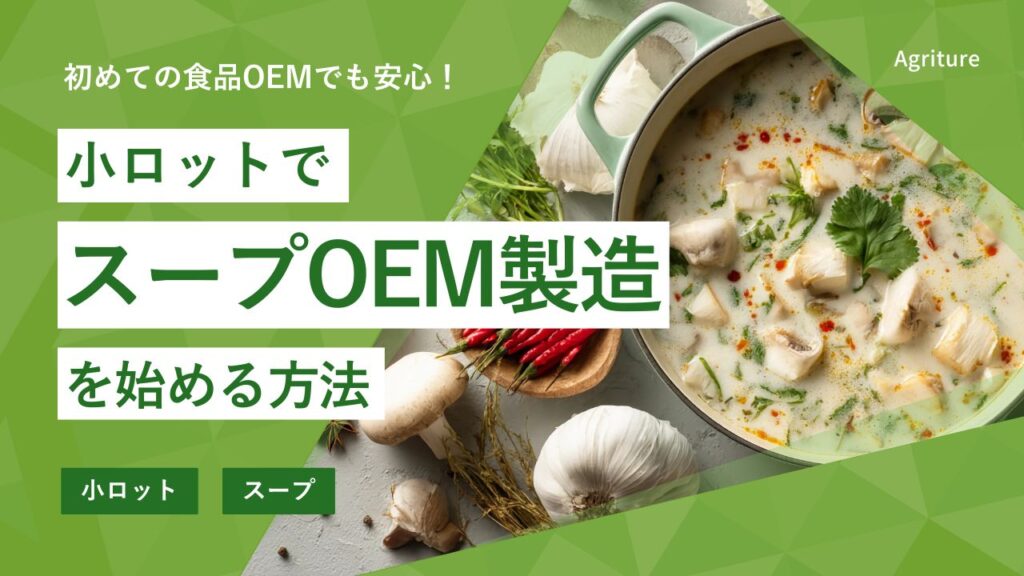
How to start soup OEM manufacturing | Original product development starting from small lots
"We want to make our own brand of soup," "We want to try it from a small quantity"—such voices are rapidly increasing in the food industry. In fact, soup OEM manufacturing is now an era where you can start even from small lots. The era when mass production was essential is over, and even individual shops and small operators can... an original... -
6 Practical Techniques to Cut the Initial Costs of OEM Filling | Start Smart with Small-Lot Support
Wanting to launch your own brand of food or health food. But the investment in manufacturing equipment is too heavy a burden. For small and medium-sized companies and startups with such worries, OEM filling is a powerful option. But have you ever been surprised looking at the initial-cost quote? In fact, with ingenuity... -
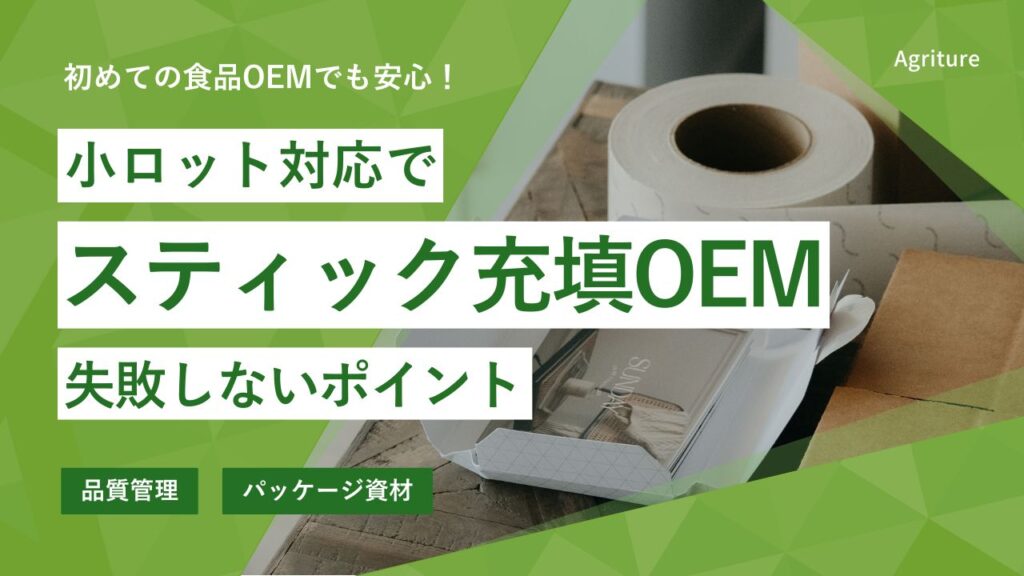
How to choose stick-filling OEM food | 8 points to avoid failure with small-lot support
Stick-filling OEM is a filling format suited to providing single-use, small-capacity products (supplements, soup base, smoothie, protein, coffee, etc.) in small individual packs. Pre-measured and easy to open, with high portability, it is used for office stocking, subscription boxes, and promotional novelties... -
How to Achieve Stand Pouch Filling in Small Lots | Tips for Cost Reduction and Quality Control
Stand-pouch filling is a packaging format often adopted for small-lot D2C, gifts, and novelties of food. With a self-standing shape that is easy to display, resealable with a zipper, and a wide range of choices from transparent to aluminum to custom design, it suits food operators wanting to launch a branded product from small quantities... -
How to start coffee OEM at small lots | 3 formats and 7 ordering points
Small-lot coffee OEM ordering is a way to bring a unique-brand coffee to market with reduced risk. For each of the three formats—beans, drip bags, and RTD (PET bottle / can)—the minimum lot, unit price, and equipment differ. With a small-lot-support maker, prototyping and mass production from 50–500 units... -
The Complete Guide to OEM Manufacturing of Domestic Dried Vegetables | A Thorough Explanation from Small-Lot Support to How to Choose
As awareness of food safety rises, demand for domestically grown dried vegetables is rapidly expanding. As of 2025 in particular, additive-free products that use no food additives and OEM manufacturing services that can handle small lots are strongly sought by small and medium-sized companies and new entrants. Conventionally, mass production was... -
The complete guide to succeeding at PB development with vegetable powder | Small lots supported
Vegetable powder is an ingredient made by drying and powdering vegetables, combining shelf stability with concentrated nutrition. This characteristic is a strong weapon for food manufacturers, retailers, and D2C operators who want to launch private brand (PB) products from small lots. Fresh vegetables have waste loss and purchasing fluctuation... -
Why dried vegetables and dried fruit suit OEM for sole proprietors: introducing small-lot cases and points of success
For sole proprietors who want to sell their own original products through EC and SNS, food OEM is an effective means. For those taking on OEM for the first time, small-lot dried vegetables and dried fruit are a recommended category, as they let you develop the market while keeping inventory risk low. ... -
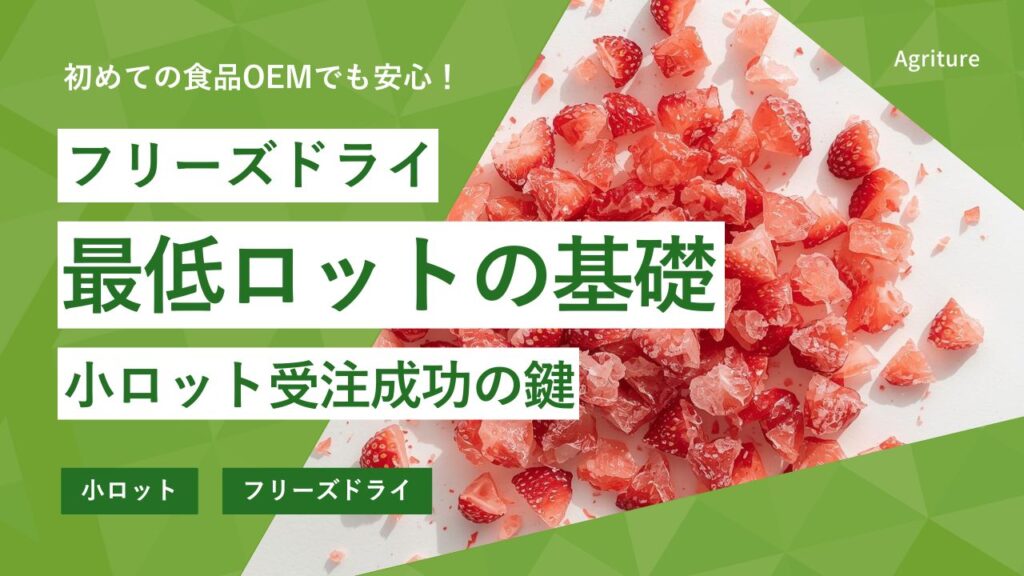
Freeze-Drying Minimum Lots: Small-Lot Ordering and Choosing a Manufacturer
The first snag in placing an OEM order for freeze-drying processing is the minimum-lot wall. For fruits such as strawberry and mango, it's common to require an order of around 500kg of fresh raw material, which becomes a major hurdle for prototyping-stage small D2C and SME manufacturers. This article covers, for material... -
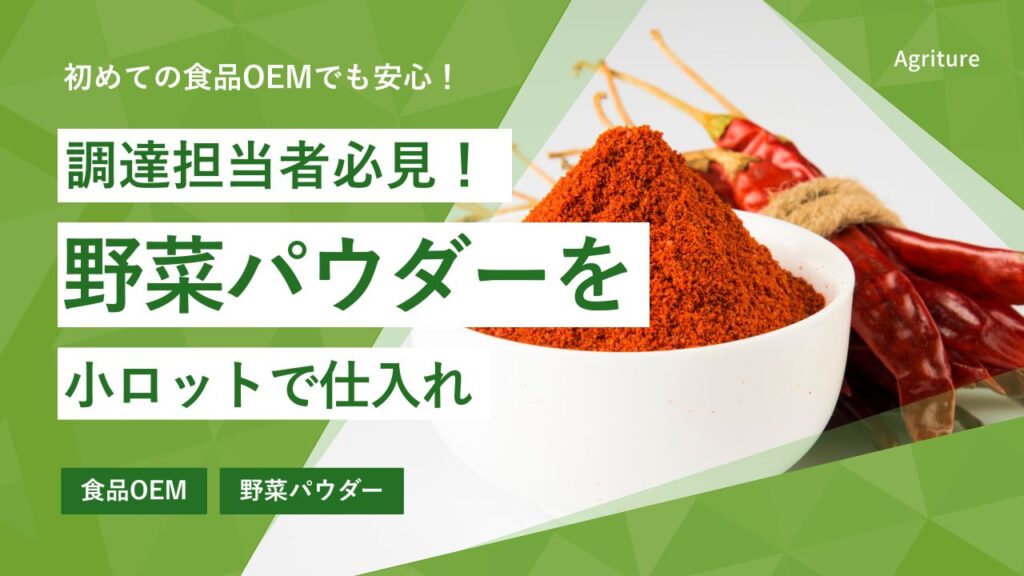
How to source commercial vegetable powder in small lots, and how to use it
Wanting to source commercial vegetable powder in small lots—this is a challenge common to a wide range of businesses: restaurants, food manufacturers, EC operators, confectionery workshops, and more. The unit-price benefit of bulk sourcing is appealing, but considering inventory risk, loss at the prototyping stage, and cash flow, “first, at a scale of about 5–50 kg... -
What Is the Minimum Lot for a Food OEM? How to Choose a Small-Lot-Capable Food Factory Explained
When considering food OEM, the first question is usually, "I want to make about this many, but how many bags will this factory accept at minimum?" Many people also want to start with a small lot of around 100 bags and proceed by testing in small steps. That instinct... -
Food OEM Market Trends 2026: A Growth Strategy Seen Through Small-Lot and Domestic-Ingredient Needs
The food OEM market is at a turning point. Not only major companies but also retailers, restaurants, and startups—entrants from other industries are surging. Voices saying "we want to make our own brand product" and "we want to try prototyping from small quantities" are rising like never before. Behind this...
1