
Yakuzen Food OEM and Development: Dashi, Furikake, and Powder in Small Lots

Summary of this article
OEM and product development of medicinal (yakuzen) foods can extend beyond yakuzen tea to food in general—dashi, soup, furikake, powder, and more. A dried vegetable manufacturer that operates the yakuzen media "Yasai Yakuzen" explains, with small-lot support, format-specific design, differentiation that leverages domestic ingredients, the OEM process, and points to note under the Pharmaceutical and Medical Device Act.
When you say yakuzen, many people picture yakuzen tea, but there are many foods beyond tea that can make use of yakuzen thinking—dashi, soup, furikake, powder, and more. For company representatives wondering "I want to develop a yakuzen product, but where do I start?", we organize how to approach OEM and product development of yakuzen foods other than tea.
This page summarizes what formats can be developed as yakuzen foods, product-making that leverages domestic ingredients, the OEM development process, and points to watch. From the standpoint of handling domestic dried vegetables and operating the yakuzen media "Yasai Yakuzen", we share a perspective that connects yakuzen knowledge with manufacturing to commercialize products from small lots. Note that yakuzen foods hold the status of food and cannot claim efficacy against specific illnesses. This article is written on that premise.
TOC
What Is OEM and Product Development of Yakuzen Foods
First, let's clarify what yakuzen food OEM is. OEM is a method of outsourcing the manufacture of a product you've planned to a manufacturer, allowing you to sell yakuzen-concept products without owning production equipment yourself.
Food Development with Yakuzen as the Concept
Developing yakuzen food means product-making with the ideas of Eastern medicine and combinations of ingredients as its concept. Yakuzen is the idea of "choosing ingredients to match the season and the nature of the ingredients," so it's a theme that pairs well with product design centered on seasonality and ingredient pairings. For health-conscious consumers, the yakuzen angle helps build a product's worldview.
Yakuzen Foods That Expand Beyond Tea
Yakuzen tea is the representative yakuzen food, but it isn't the only food that can make use of yakuzen thinking. It can extend to foods easy to incorporate into daily meals, such as dashi and soup bases, furikake, vegetable powder, and blend ingredients. Beyond drinking as tea, yakuzen foods added to cooking have wide-ranging occasions of use, making them products that lend themselves to repeat purchase.
The Difference from Yakuzen Tea OEM
For yakuzen tea OEM, we cover ingredient selection and blend design in detail on the yakuzen tea OEM page. This page focuses on OEM for yakuzen foods other than tea—that is, food in general such as dashi, furikake, and powder. That's because the required processing and use differ between yakuzen tea as a beverage and yakuzen foods used in cooking.
FOR BUSINESS
乾燥野菜のOEM・受託加工を承ります
国産の野菜・果物の乾燥、100メッシュ相当までの粉砕、10g以上の小袋充填までをお受けしています。小ロットの試作から量産までご相談ください。寄せられた相談の実例は OEM・卸のご相談 に掲載しています。
乾燥品の賞味期限は、出荷日から6ヶ月程度を目安にご案内しています。
Food Formats That Can Be Developed with a Yakuzen Concept
For yakuzen-concept foods, the suitable ingredients and uses change by format. We've organized the representative formats.
| Form | Features | Examples of suitable ingredients |
|---|---|---|
| Dashi and soup bases | Easy to use by dissolving into soups | Dried vegetables, mushrooms, kombu |
| Furikake and toppings | Sprinkled over rice and dishes | Dried vegetables, sesame, seaweed |
| Vegetable powder | Mixed into dishes and drinks | Domestic vegetables, ginger |
| Blend ingredients | Combining multiple ingredients for use in cooking | Dried vegetables, ancient grains, domestic herbs |
Dashi and soup bases
Dashi and soup bases combining dried vegetables, mushrooms, kombu, and the like are an easy entry-point format for yakuzen foods. The axis of the design is combining dashi ingredients. Layering the umami of mushrooms or kombu with aromatic domestic vegetables like ginger and green onion achieves both a flavor backbone and a yakuzen worldview. Being usable simply by dissolving into soups—making it easy to incorporate into daily meals—is also an advantage that leads to repeat purchase. Combining ingredients with warming and cooling properties in mind makes it easy to develop seasonal series as well.
Furikake and toppings
Furikake and toppings using dried vegetables, sesame, seaweed, and the like are also foods that can be developed in a yakuzen context. What pairs well is combining ingredients with different textures. Pairing the crumbly texture of crushed dried vegetables with the fragrance of sesame or the saltiness of seaweed makes a dish that pairs well with rice. It's usable simply by sprinkling, without adding cooking effort. Because it combines multiple ingredients, it's also a format where yakuzen-style pairings are easy to set as the concept.
Powder and Blend Ingredients
Powder made by drying and grinding domestic vegetables and Ginger and the like is easy to mix into dishes and drinks, a versatile format with wide-ranging uses. In commercial use in particular, being able to add an ingredient's flavor and color in small amounts is valued. Uses such as mixing into soups, sauces, or dough let you add yakuzen elements without greatly changing the recipe. You can also design products that expand from a powder base into dashi packs and blend ingredients.
Making Yakuzen Foods That Leverage Domestic Ingredients
In differentiating yakuzen foods, ingredient selection is a major axis. Leveraging domestic ingredients lets you layer the story of a growing region onto the product.
Domestic Dried Vegetables and Ingredients Are Available
Yakuzen foods can be built from domestic dried vegetables, ancient grains, and herbs without using imported crude drugs. For yakuzen ingredients available domestically, the page on domestic yakuzen ingredients also provides an overview. Using domestic ingredients lets you display the growing region and connect the traceability of the ingredients to a sense of reassurance about the product.
Seasonality as an Angle
In yakuzen thinking, ingredients are chosen to match the season and the nature of the ingredients. This angle can be leveraged in product lineup design. For example, seasonal series using in-season ingredients, or sets composed around warming and cooling properties—you can translate a uniquely yakuzen worldview into products. For the basic ideas of yakuzen, the page explaining what yakuzen is.
Leveraging the Knowledge of Yakuzen Media
Our group operates the yakuzen media "Yasai Yakuzen," sharing yakuzen-style explanations of vegetables and ideas about body constitution. Our dried vegetable D2C brand "OYAOYA" manufactures Kyoto-grown dried vegetables. Having both yakuzen knowledge and domestic dried vegetable production is a strength that comes alive in the product development of yakuzen foods.
The Process of Developing Yakuzen Foods Through OEM
Let's organize the general process for developing yakuzen foods through OEM. Since prototyping from small lots is possible, you can start with just a consultation.
Firm Up the Concept Through Consultation and Planning
First, discuss what kind of yakuzen food you want to create and firm up the concept. This is the stage of aligning the format (dashi, furikake, powder, etc.), the intended sales channel, and the target, and deciding the product's direction. Since we can propose ingredient pairings from a knowledgeable yakuzen standpoint, at this stage we can also organize together product-making aimed at health-conscious consumers and sales plans tailored to a company's brand. Firming up how to present the theme first makes the later ingredient selection go smoothly.
Ingredient Selection and Prototyping in Small Lots
Once the concept is firm, we select ingredients and move on to prototyping. In line with yakuzen thinking, we combine ingredients and confirm the taste and usability. Being able to prototype in small lots lets you raise the product's completeness before moving to full production, rather than jumping straight to mass production. We select ingredients centered on domestic materials, checking origin and quality.
Design the Packaging and Brand
Once the product's contents are decided, we design the packaging and brand. Because worldview-building matters for a yakuzen theme, we consider design and naming that convey the concept as well. Labeling follows the rules for food, avoiding expressions that assert efficacy, and is designed to convey appeal through concept and the charm of the ingredients.
Points to Watch in Yakuzen Food OEM
Developing yakuzen foods involves points to watch specific to food. Grasping them in advance makes it less likely you'll stumble in product design.
You Cannot Claim Efficacy
Because yakuzen foods are food, you cannot use expressions that assert efficacy such as "cures this ailment" or "works on this symptom." The basic approach is to introduce the workings of yakuzen ingredients in the form "in Eastern medicine it is said to be ~." Yakuzen and Chinese herbal medicine are separate things, so it's reassuring to keep them clear and not confuse them (see The difference between yakuzen and kampo). Rather than selling on efficacy, a design that conveys appeal through ingredient pairings, seasonality, and the domestic concept is the way to approach yakuzen foods.
Differentiate with the Story of Domestic Origin
For yakuzen foods, the origin of the ingredients and the story of the makers become points of differentiation. Using domestic dried vegetables and being able to clearly indicate the growing region lends persuasiveness to the product's worldview. Being able to tell where and what you use supports the added value of yakuzen.
Start with Prototyping in Small Lots
For a first attempt at making yakuzen food, it's reassuring to start with small-lot prototyping rather than producing large volumes right away. An approach of confirming taste and usability through prototypes and nurturing the product while watching the market's response keeps inventory risk down. Partnering with a manufacturer that can handle small lots makes it easier to get started with yakuzen food development.
We have materials available to help you understand dried processing OEM
Agriture OEM, flexibly handling everything from small lots to large lots
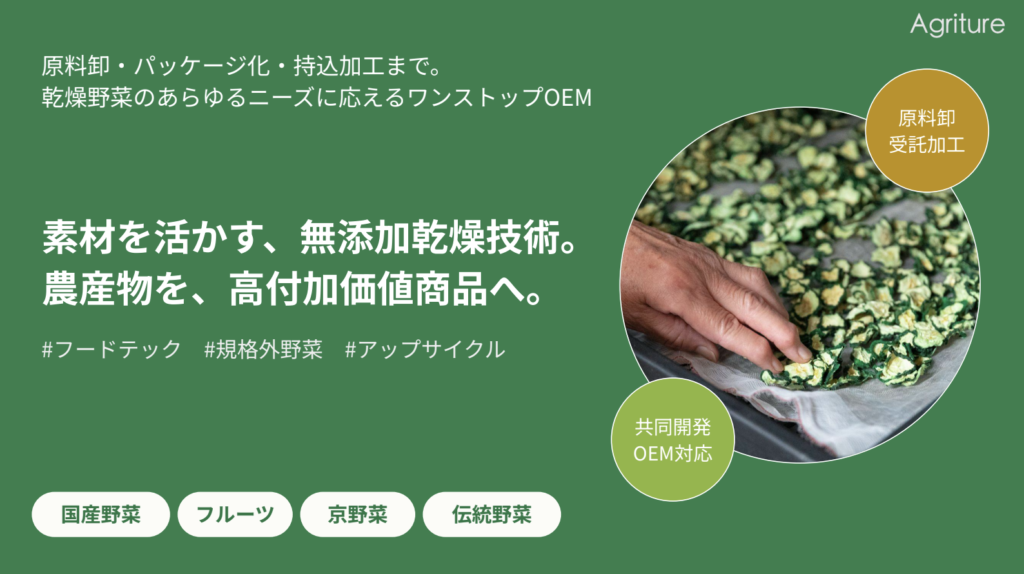
- OEM available from small lots of 10 kg
- Drying of brought-in raw materials also possible
- Support from processing to filling in one place
FOR BUSINESS
乾燥野菜のOEM・受託加工を承ります
国産の野菜・果物の乾燥、100メッシュ相当までの粉砕、10g以上の小袋充填までをお受けしています。小ロットの試作から量産までご相談ください。寄せられた相談の実例は OEM・卸のご相談 に掲載しています。
乾燥品の賞味期限は、出荷日から6ヶ月程度を目安にご案内しています。
Frequently asked questions
Download the OEM contract processing materials
We will send the materials to your email address based on the information you provide.
Summary: Yakuzen Foods Can Extend Beyond Tea
OEM and product development of yakuzen foods can extend to foods easy to incorporate into cooking, such as dashi and soup bases, furikake, and powder. Yakuzen is the idea of "choosing ingredients to match the season and the nature of the ingredients," so it's a theme that pairs well with product design centered on seasonality and ingredient pairings. You can also build a yakuzen line across food as a whole, together with yakuzen tea to drink.
As food, you can't claim efficacy, but you can design to convey appeal through domestic ingredients, the story of the growing region, and a yakuzen worldview. Why not leverage domestic dried vegetables and yakuzen knowledge and start making yakuzen foods from small-lot prototyping? We welcome your product-development inquiries.
If you are considering product development with off-spec or your own farm's vegetables:From planning to processing, materials, package printing and novelties, you can consult us through a single point of contact. → Learn more about one-stop product development
- What is sansho powder? Its production method, how to choose commercial grade, and OEM and small-lot production explained
- Freeze-Dried Miso Soup OEM: The Key Points of Minimum Lots, Manufacturing Methods, and Choosing a Manufacturer
Author of this article
Related articles
-
 Original coffee marketing strategy | Ways to grow sales
 -
 ベジタリアンとは?国の規格が分けている4つの区分と食べられないもの
 -
 長ねぎと白ねぎは同じもの?ねぎの種類と呼び名を国の資料で確かめる
 -
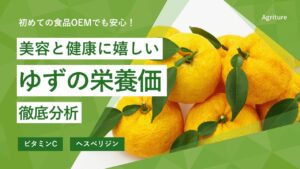 柚子の種類は何種類あるのか、公の資料で名前が残る系統を数えた
 -
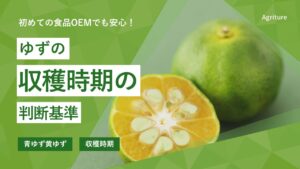 ゆずの時期は年に二度、青ゆずは7月から黄ゆずは10月から
 -
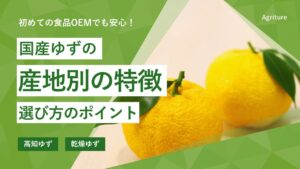 ゆずの産地は高知が半分を占め、二位は徳島から愛媛に変わった
 -
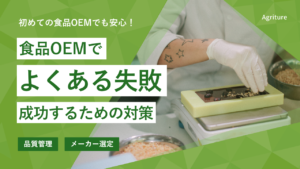 Preventing Food OEM Failures: Common Failure Cases and Countermeasures for Success
 -
 How to find a food OEM | How to efficiently find the best manufacturing partner