A Guide to Using and Rehydrating Dried Mushrooms: Characteristics by Type and Recipes Using Mixes

Summary of this article
We explain how to use and rehydrate dried mushrooms, covering the characteristics of each type such as shiitake, maitake, and enoki, when to rehydrate in water versus simmer them directly, uses in miso soup and takikomi gohan, and storage methods.
Dried mushrooms add umami to miso soup, soups, and mixed rice. They keep longer than fresh mushrooms and can be used a little at a time, which makes them ideal to keep on hand. Even so, many people hesitate over "how do I rehydrate them?", "can I use them as is?", or "which kind should I choose?"
This page covers the types and characteristics of dried mushrooms, how to rehydrate and use them, popular uses such as miso soup and soups, and how to store them. It also introduces points for each variety, such as shiitake, maitake, and enoki, and how to make the most of mixes.
TOC
What are dried mushrooms?
Dried mushrooms are mushrooms that have been dried. As the moisture leaves, the umami and aroma concentrate, giving a deeper flavor than fresh mushrooms. Sometimes called "dried mushrooms" in various forms, they keep well, and their appeal lies in the ease of taking out just as much as you want.
Drying boosts umami and aroma
Drying mushrooms draws out their umami and aroma compounds. Dried shiitake in particular transfers umami into the soaking liquid, so it can be used as a stock. That deep flavor, impossible to achieve with fresh mushrooms, is the strength unique to dried mushrooms.
Single types and mixes
Dried mushrooms come as single types like shiitake or enoki, and as mixes that combine several kinds. A mix lets you enjoy the umami and texture of multiple mushrooms in one bag, and works easily in soups and mixed rice. Choose to suit your use.
FOR BUSINESS
乾燥野菜のミックスを、まとめてお探しですか
用途に合わせて複数の品目を配合した乾燥野菜ミックスをお作りしています。法人の備蓄やローリングストックのご相談も承っています。配合の考え方は 法人向けローリングストック に掲載しています。
少量でのご購入は、姉妹ブランドの通販サイト OYAOYA で承っています。
Types and characteristics of dried mushrooms
Mushrooms vary in the strength of their umami and their texture by type. Choosing to match the dish improves the result. Here are the characteristics of the main dried mushrooms.
Shiitake, maitake, enoki, and more
Dried shiitake has strong umami and suits simmered dishes and stock. Maitake is rich in aroma and adds depth to rice and soups. Enoki is easy to use in small pieces and blends into soups and miso soup. Shimeji has no strong quirk and pairs easily with any dish.
| Dried mushroom | Features | Suited dishes |
|---|---|---|
| shiitake | Strong umami, yields stock | Simmered dishes, stock, mixed rice |
| Maitake | Rich in aroma and depth | Rice, soups, stir-fries |
| enoki | Thin and easy to use | Soups, miso soup |
| Shimeji | No strong quirk, versatile | All kinds of cooking |
Kikurage is also commonly dried
Kikurage (wood ear), with its crunchy texture, is also commonly sold dried. A distinctive point is that it must always be rehydrated and cooked before use, and it shines in stir-fries and soups. For detailed instructions on rehydrating and using kikurage, see Guide to rehydrating and eating dried kikurage.
How to rehydrate and use dried mushrooms
Dried mushrooms can be rehydrated in water before use, or simmered as is without rehydrating. Choosing between the two based on the dish and your time is handy.
Rehydrate in water before use
Soak in plenty of water and rehydrate slowly in the refrigerator to draw out the umami while returning them plump. Dried shiitake releases umami into the soaking liquid too, so it can be used as a stock in cooking. For the basics of rehydrating, see A guide to rehydrating dried vegetables is also a helpful reference.
Simmer as is without rehydrating
For miso soup, soups, or mixed rice, you can add them straight in and simmer without rehydrating. They rehydrate as they cook while their umami dissolves into the liquid. Fine enoki and mixes are appealing for the ease of using them as is. This also works well for saving time when you're busy.
- For dishes where you want to make the most of the stock, rehydrate in water and use the soaking liquid too
- For soups and mixed rice, add them as is and simmer
- They swell to several times their size when rehydrated, so use a smaller amount as a guide
- Use up what you've rehydrated soon
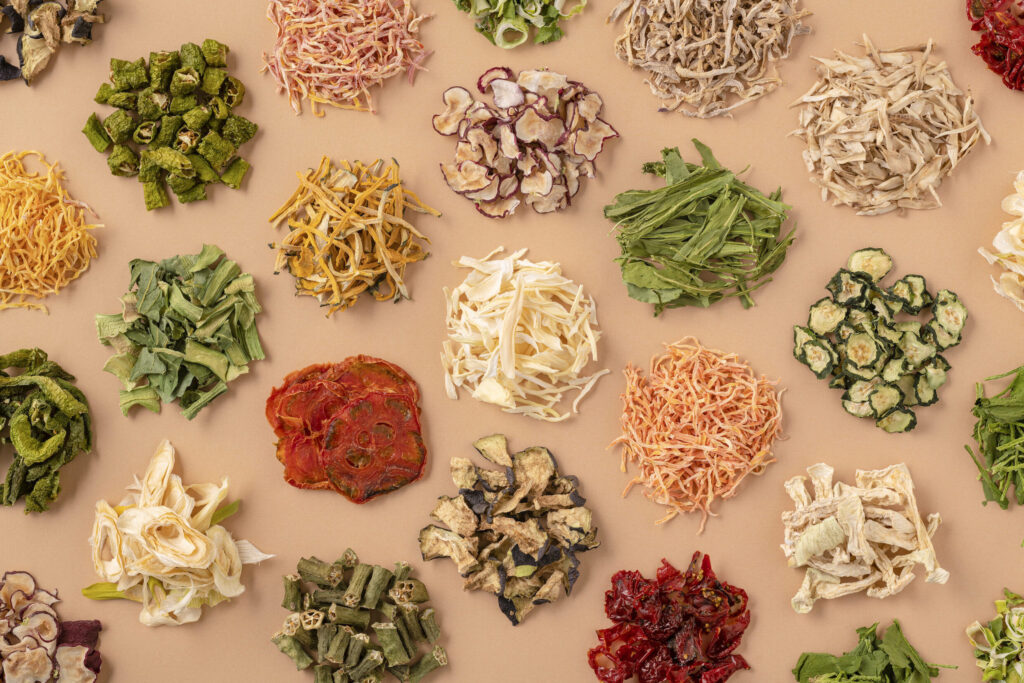
A product catalog that shows around 100 items we handle
Agriture, flexibly handling everything from small lots to large lots
- Available for purchase in small lots from 1 kg
- We handle heirloom vegetables from across Japan
- Dried fruit and herbs also supported
Popular ways to use dried mushrooms and recipes
Dried mushrooms show their strength in dishes that make the most of umami. Knowing the standard uses makes them easy to work into everyday meals.
Miso soup / soup
Add dried mushrooms to miso soup or soups and the mushroom umami gives a rich flavor with no need for extra stock. Just drop them in and simmer, so there's no fuss. Using several kinds of mushroom adds depth to the taste.
- For watery soups, just drop them in and simmer
- Dried shiitake, which yields soaking liquid, can stand in for stock
- Combining several kinds gives the umami more dimension
Mixed rice and pasta
Mixed rice is a popular use where the umami of dried mushrooms soaks into the grains. Cooking with the soaking liquid included gives an even richer flavor. Adding them to pasta or stir-fries also lets the mushroom flavor lift the dish. For recipes that combine them with other dried vegetables, see 10 selected dried vegetable recipes is also a helpful reference.
| Dish | How to use | Point |
|---|---|---|
| Miso soup / soup | Add as is and simmer | Umami with no need for stock |
| Takikomi gohan (seasoned rice) | Cook with the soaking liquid | Umami soaks into the grains |
| Pasta, stir-fries | Rehydrate and add | Adds flavor and depth |
| Hot pots and simmered dishes | Simmer as is | Layer umami with several kinds |
How to store dried mushrooms and best-before date
Dried mushrooms keep well, but how you store them changes how long the flavor lasts. Guarding against moisture is the key point.
Store away from moisture
Unopened, they can be stored at room temperature away from moisture and direct sunlight. After opening, close the bag or move them to an airtight container, keep them away from moisture, and use them up soon. Since flavor drops when they take on moisture, storing them with a desiccant is also effective. For detailed tips, see how to store dried vegetables and their best-before date.
Use soon after rehydrating
Once rehydrated in water, dried mushrooms should not be left long at room temperature; the rule is to use them up the same day. Put any you won't use right away in the refrigerator and cook them soon. If you've rehydrated too much, using it all at once in soups or stir-fries works well.
Using them commercially or in your own products
There are times you'll want to use dried mushrooms beyond the home scale, such as using large amounts at a restaurant or turning them into your own branded product. In that case, commercial supply and contract processing are options.
Buy in bulk for commercial use
If you use large amounts at a restaurant or facility, buying commercial-grade in bulk is efficient. The characteristics and uses of dried goods are also What are dried goods explained. It becomes easier to use mushroom mixes or single types to suit your needs.
Turn them into an original product
When you want to make your own branded product using mushrooms, contract processing that handles everything from drying to milling the raw material is convenient. Contract processing of dried vegetables is Dried vegetable OEM and contract processing introduced here. Domestic raw materials can be discussed from small lots of 100g.
A product catalog that shows around 100 items we handle
Agriture, flexibly handling everything from small lots to large lots
- Available for purchase in small lots from 1 kg
- We handle heirloom vegetables from across Japan
- Dried fruit and herbs also supported
FOR BUSINESS
乾燥野菜のミックスを、まとめてお探しですか
用途に合わせて複数の品目を配合した乾燥野菜ミックスをお作りしています。法人の備蓄やローリングストックのご相談も承っています。配合の考え方は 法人向けローリングストック に掲載しています。
少量でのご購入は、姉妹ブランドの通販サイト OYAOYA で承っています。
Frequently asked questions
Summary: Easy umami with dried mushrooms
Dried mushrooms are a handy ingredient with concentrated umami and aroma. For dishes that make the most of stock, rehydrate in water; for soups and mixed rice, simmer them as is, and you can enjoy deep flavor with ease. The trick is to choose by variety and dish, whether shiitake, maitake, or enoki.
Kept on hand, they help with that extra dish or with making stock. If you want to use them commercially at a restaurant or as an ingredient for your own products, consider contract processing of domestic raw materials as well.
Download the product catalog
We will send the materials to your email address based on the information you provide.