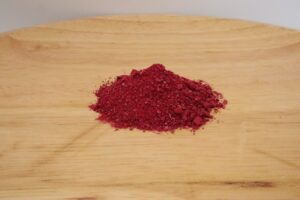
Kikurage powder

Kikurage powder is a raw material made by drying and finely powdering domestic kikurage, aiming to evenly deliver kikurage-derived dietary fiber and vitamin D into Chinese-style soups, yakuzen dishes, health foods, and functional powders. Kikurage's crunchy texture is lost through powdering, but in exchange it can be used as a functional material that doesn't rely on texture—as an ingredient for Chinese-style soup powders, yakuzen powders, and supplement blends. At Agriture, Dried wood ear mushroom (a type that keeps the shape) — we powder it from the same raw material with an added fine-milling step.
It suits uses where you want to deliver kikurage's nutrients regardless of texture—Chinese-style soup mixes, yakuzen teas, functional powders, health foods, and more. We accept prototypes from 1kg of raw material.
TOC
Three points of pride in Agriture's kikurage powder
Kikurage powder's quality is determined by ease of grinding and mildness of flavor. At Agriture, we manage everything from drying to grinding and packaging at our own facility, aiming for a finish easy to use as a functional powder material. It's designed so that the nutrients that form the basis of the functional appeal aren't easily lost even after powdering.
3. Yakuzen and Chinese-style powder blend design
Because Agriture handles wakan and yakuzen-type materials on the same line, you can design yakuzen powders and Chinese-style soup bases centered on kikurage from a single ingredient supplier. Yasai Yakuzen We can also consult on formulation design linked to the site's recipes.
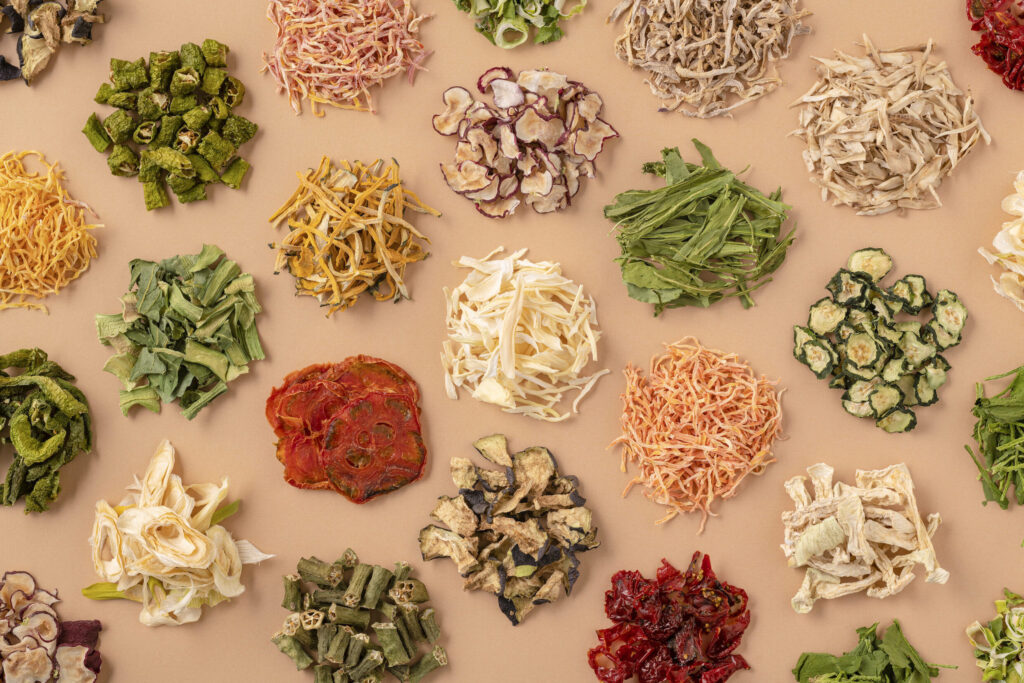
Product catalog showing the items we handle
Flexible support from small lots to large lots
- Sold in small lots from 1 kg
- Handling heirloom vegetables from across Japan
- Dried fruits and herbs also supported
Features of commercial kikurage powder
rich in dietary fiber.
Kikurage has a high amount of dietary fiber even among mushrooms, and by powdering it, it can be used as a material for adding dietary fiber to beverages and powdered foods. It becomes an axis for functional appeal.
Contains vitamin D
It contains vitamin D produced through sun-drying, which can be highlighted as a selling point when used as an ingredient in supplements and health foods.
Mild flavor
Because kikurage's aroma and taste are weak, it doesn't interfere even when combined with other materials. It's a property that makes it easy to use as a base material for Chinese-style soups, yakuzen teas, and functional drinks.
Yakuzen and functional powder blends
It suits pre-blending with jujube, goji berry, and other mushroom powders, and can be designed as a complex powder for yakuzen powders and functional soup bases.
Use together with the ingredient-shape version
For uses where you want to retain the crunchy texture, dried kikurage; for uses where you want to spread the nutrients uniformly, powder—you can use them for different purposes.
Product specifications (commercial)
The basic specifications at the prototype stage are as follows. Procurement lots, delivery dates, and packaging forms for mass production and OEM are settled through individual consultation.
| Item | Details |
|---|---|
| Product name | Kikurage powder |
| Raw material | Kikurage (domestically grown) |
| Shape | Fine powder (dried and ground) |
| Appearance | A dark-brown to black-brown fine powder |
| Aroma | The mild aroma characteristic of mushrooms; weak in assertiveness |
| Net content | Individual quote according to use and lot |
| Best-before date | About 6 months from the shipping date |
| Storage method | Avoid high temperature, high humidity, and direct sunlight; after opening, seal and store in a cool, dark place |
| Processing plant | Our own processing plant within Kyoto Prefecture |
| Minimum prototype lot | From 1 kg of raw material |
Customization support
| Item | What we support |
|---|---|
| Type specification | Black kikurage / white kikurage (silver ear) / a blend of both types |
| Blend design | Pre-blend prototyping with jujube, goji berry, shiitake powder, and other mushroom powders |
| Packaging form | Commercial bulk, sticks and small bags, spice jars, canisters, and more |
| OEM productization | Consistent handling from Chinese-style soups, yakuzen teas, and functional powders to supplements |
| Raw material supply | Besides our own raw material, we also support contract drying and grinding at a specified growing region |
For those who want to make use of texture (raw material shape version)
As an ingredient in Chinese dishes, sunomono, stir-fries, soup ingredients, and the like, uses that make the most of kikurage's crunchy texture are best served by dried kikurage (a type that retains the shape). The texture and presence unique to kikurage, which powder can't provide, come alive.
Commitments to variety, grower, and growing region
Kikurage is a mushroom of the genus Auricularia in the Auriculariaceae family, also written as "wood ear." There is black kikurage and white kikurage (silver ear), both long used as yakuzen ingredients in Chinese and Japanese cuisine.
Main growing region
| Growing region | Features |
|---|---|
| Kumamoto Prefecture | A major domestic kikurage-producing region. Centered on black kikurage |
| Hokkaido | Grows fleshy in a cold climate. A rich flavor |
| Tottori and Shimane Prefectures | San'in log-grown kikurage. Traditional sawdust-bed cultivation |
| Kyoto Prefecture | Handles small-scale specialty raw materials |
Using the types for different purposes
Black kikurage is high in vitamin D and dietary fiber content, suited to functional appeal. White kikurage (silver ear) is for yakuzen sweets and beauty-type functional foods, with a faint sweetness and a soft, distinctive texture. Prototyping with a specified type according to the product concept is possible.
Powdering technology and quality control
Kikurage powder's quality is determined by the grindability of the fibrous matter and the retention of nutrients. At Agriture, we manage everything from drying to grinding and packaging consistently.
Grinding technology for fibrous matter
Retention of vitamin D and dietary fiber
To preserve the vitamin D and dietary fiber that form the axis of the functional appeal, we operate the drying and grinding steps in a low-temperature range. From the raw-material pre-treatment stage, we combine sun-drying and low-temperature drying, preparing it under conditions where nutrients aren't easily lost.
Packaging and moisture-proofing management
Kikurage powder readily absorbs moisture, and when it does, it clumps and dispersibility drops. For commercial bulk we use moisture-proof, light-blocking aluminum bags, and for small bags and sticks we use moisture-proof film, proposing specs that maintain quality during storage.
TIPS: Formulations that make the most of kikurage powder
In Chinese-style soup powder, allocating kikurage to 10–15% of the total, combined with salt and dashi powder, spreads dietary fiber and a mild mushroom flavor through the whole soup. In yakuzen-tea blends, combined with jujube and goji berry, a kikurage allocation of 20–30% is standard. In functional powder mixes, as a dietary-fiber and vitamin-D promotion material, blending 1–3g to match a daily intake design is often adopted. Sprinkled into congee or zosui, it finishes with a natural flavor while adding nutrition.
Use cases and adoption examples
Powder disperses uniformly in liquids and powders and can deliver kikurage's nutrients regardless of texture, so its uses extend to those that shapes can't reach. We organize the applications we get many inquiries about. We handle everything consistently at a specified ratio—yakuzen powders, Chinese-style soup bases, functional mixes, and more—from mixing to bagging.
Related articles and other yakuzen ingredients
Yakuzen, vegetable-powder, and related raw materials handled at Agriture. Please use them in your blend design with kikurage.
- Dried wood ear mushroom: A type that keeps the shape
- Okra powder: rich in soluble dietary fiber
- Broccoli powder: a functional green powder
- Yasai Yakuzen: a yakuzen recipe medium
- Food OEM Directory: A consultation window for OEM projects
Product catalog showing the items we handle
Flexible support from small lots to large lots
- Sold in small lots from 1 kg
- Handling heirloom vegetables from across Japan
- Dried fruits and herbs also supported
Frequently asked questions
What's the difference between dried kikurage (with shape) and powder?
Dried kikurage is a type that retains the shape, suited to uses that make the most of the crunchy texture and appearance—as an ingredient in Chinese dishes, sunomono, stir-fries, soup ingredients, and the like. Powder, being a fine powder, suits uses where you want to deliver the nutrients regardless of texture—Chinese-style soup powders, yakuzen teas, functional powders, supplement blends, and the like.
How much dietary fiber and vitamin D does it contain?
Kikurage has a high amount of dietary fiber even among mushrooms, and it's a raw material that also contains vitamin D through sun-drying. Even after powdering, the low-temperature processing yields a finish that retains the nutrients. Concrete content figures for the nutrients cited as the axis of the functional appeal are handled by analysis per lot.
Can black kikurage and white kikurage be powdered separately?
Yes. Black kikurage suits functional appeal, white kikurage (silver ear) suits yakuzen sweets and beauty-type functional foods—prototyping with a specified type according to the application is possible. We also accommodate a blend of both.
Can it be pre-blended with other yakuzen materials and delivered?
Yes. We accommodate pre-blending with jujube, goji berry, shiitake powder, and other mushroom powders. If you share the formulation you're aiming for in the final product—yakuzen teas, Chinese-style soup materials, functional powder mixes, and the like—we'll mix and bag it at that ratio.
What is the minimum prototype lot?
We accept prototypes from 1kg of raw material. For mass production and OEM, we'll propose an individual quote and lead time. You can consult us on consistent commercialization all the way to the final product—Chinese-style soups, yakuzen teas, functional powders, supplements, and more.
Please tell me the best-before date and how to store it.
The best-before date is about 6 months from the shipping date. Because it absorbs humidity easily, before opening store it in a cool, dark place at room temperature away from high heat, humidity, and direct sunlight. After opening, transfer to an airtight container and use it up within a guideline of 1–2 months.
What applications are you consulted about often?
We get many inquiries for Chinese-style soup powder, yakuzen tea, functional powders and supplements, health foods, and nursing-care and weaning food. Thanks to the functional appeal of dietary fiber and vitamin D and its ease of blending due to the mild flavor, it's chosen as a base material for the health-food category.