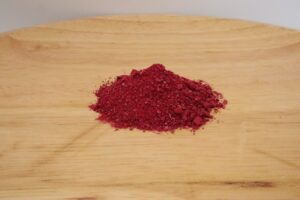
Zucchini powder

Zucchini powder is a raw material made by drying and finely powdering domestic zucchini, aimed at spreading a mild vegetable flavor and green coloring evenly into pasta sauce, pizza dough, Italian-style menus, and vegetable soups. Because it has no strong aroma or assertiveness, it doesn't interfere with other ingredients and can be used to add "vegetable feel," "natural green color," and "dietary fiber." At Agriture, Dried zucchini (a type that keeps the slice shape), we powder it by adding a fine-powdering process.
It's an ingredient easy to use in developing powdered seasonings for Italian- and Western-style cuisine—kneading into pasta sauce or pizza dough, risotto bases, Western soup mixes. Prototyping is supported from 1kg of raw material.
TOC
Three points of care in Agriture's zucchini powder
For zucchini powder, how well the pale green color and mild flavor are preserved determines quality. At Agriture, we manage drying, grinding, and packaging at our own processing facility, aiming for a finish easy to use as a base ingredient.
1. Low-temperature drying that preserves the pale green color
Because the chlorophyll in zucchini's skin fades easily with heat, we finish it in a low-temperature range from the drying stage and run conditions that also curb heat generation during grinding. Powder including the skin finishes light green, and powder of the flesh only finishes cream-colored, so you can choose to match your product's color design.
2. Flavor design that doesn't over-assert
Zucchini has weak aroma and flavor assertiveness even among vegetables, so even powdered it doesn't interfere with other ingredients. As a base ingredient for sauces, dough, and soups, it suits a supporting role that highlights star ingredients like tomato, cheese, and herbs. Pre-treatment curbs grassy notes, finishing with a faintly perceptible vegetable sweetness.
3. Italian-style blend design
At Agriture, we handle other vegetable powders—broccoli, Swiss chard, okra—on the same line, so you can design an Italian-style vegetable-powder mix based on zucchini from a single raw material supplier. We also support pre-blended delivery of multiple vegetables as vegetable formulations for pasta sauce, risotto, and pizza dough.
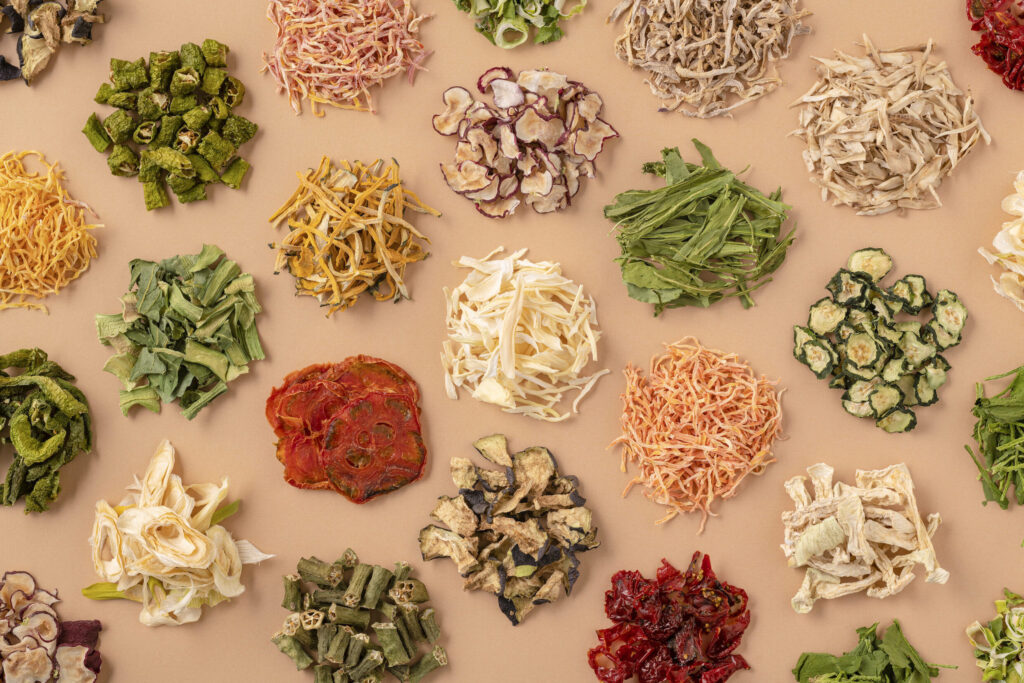
Product catalog showing the items we handle
Flexible support from small lots to large lots
- Sold in small lots from 1 kg
- Handling heirloom vegetables from across Japan
- Dried fruits and herbs also supported
Characteristics of commercial zucchini powder
A mild, non-assertive flavor
With weak aroma and flavor assertiveness, it's easy to use as a base for other ingredients. It adds "vegetable feel" to sauces, dough, and soups while not interfering with star ingredients' flavor.
Pale green coloring
Powder including the skin finishes light green, and flesh-only finishes cream-colored—you can design the color to match your product concept. Suited to coloring natural-oriented foods.
Dispersibility in liquids and powders
Disperses evenly into pasta sauce, soups, and dough. Enables a use—"adding vegetables into the base as if dissolving them in"—that's hard with slice shapes.
An Italian-style blend ingredient
Suited to pre-blending with broccoli, herbs, and cheese powder, it can be designed as a composite powder ingredient for pasta sauce, pizza dough, and risotto.
Use together with the ingredient-shape version
Dried zucchini for uses where you want to keep texture; powder for uses where you want to spread flavor and color evenly—used per purpose.
Product specifications (commercial)
The basic specifications at the prototype stage are as follows. Procurement lots, delivery dates, and packaging forms for mass production and OEM are settled through individual consultation.
| Item | Details |
|---|---|
| Product name | Zucchini powder |
| Raw material | Zucchini (domestic) |
| Shape | Fine powder (dried and ground) |
| Aroma | Mild vegetable sweetness, faint green-leaf aroma with little assertiveness |
| Net content | Individual quote according to use and lot |
| Best-before date | About 6 months from the shipping date |
| Storage method | Avoid high temperature, high humidity, and direct sunlight; after opening, seal and store in a cool, dark place |
| Processing plant | Our own processing plant within Kyoto Prefecture |
| Minimum prototype lot | From 1 kg of raw material |
Customization support
| Item | What we support |
|---|---|
| Part specification | Skin-included (light green) / flesh-only (cream) / balanced skin-and-flesh type |
| Blend design | Pre-blend prototyping with tomato powder, cheese powder, basil powder, and other vegetable powders |
| Packaging form | Commercial bulk, sticks and small bags, spice jars, canisters, and more |
| OEM productization | Consistent support from pasta sauce, pizza dough, and risotto to soup mixes |
| Raw material supply | Besides our own raw material, we also support contract drying and grinding at a specified growing region |
For those who want to make use of texture (raw material shape version)
For pasta-sauce ingredients, ratatouille, pizza toppings, and the like, applications that make use of the texture and appearance of slices we recommend dried zucchini (a type that keeps the slice shape). The zucchini's presence, which powder can't deliver, comes alive.
Commitments to variety, grower, and growing region
Zucchini is a vegetable of the genus Cucurbita in the Cucurbitaceae family; it looks like a cucumber but is a relative of pumpkin. There's a cultivar group—green zucchini, yellow zucchini, round zucchini—differing in skin color and texture.
Main growing region
| Growing region | Features |
|---|---|
| Nagano Prefecture | A main producing area for summer-autumn zucchini. Deep skin color |
| Miyazaki Prefecture | A producing area for winter-spring zucchini. Contributes to year-round supply |
| Chiba Prefecture | A producing area for commercial zucchini. Stable supply |
| Kyoto Prefecture | Supports Kyoto-vegetable-type small-lot raw material |
Using varieties differently
Green zucchini suits light-green powder leveraging the skin's green; yellow zucchini suits yellow-toned cream powder; round zucchini, with a high flesh ratio, suits flavor-focused uses. Prototyping with cultivar designation is possible to match your product's color design.
Powdering technology and quality control
For zucchini powder, color retention and flavor mildness determine quality. At Agriture, we manage drying, grinding, and packaging consistently.
Retaining chlorophyll
The skin's green color is chlorophyll-derived and prone to fading with heat. By adjusting the drying temperature range and time and running conditions that also curb frictional heat during grinding, it finishes as a powder retaining the light green color.
TIPS: formulations that make the most of zucchini powder
In pasta sauce, 3–5g of zucchini powder per 400g can of tomatoes adds vegetable depth. In pizza dough, kneading in 2–3% of the flour brings a faint green and vegetable feel to the dough. In risotto-base powder, allocating 20–30% zucchini together with cheese powder and basil powder lets you design an Italian-style vegetable base. In Western soup mixes, combined with onion powder and celery powder, it can also serve as an "adjusting ingredient" that adds vegetable depth.
Use cases and adoption examples
Because the powder disperses evenly into liquids and powders and can be used as a base ingredient with a flavor that doesn't over-assert, it extends to uses that slice shapes can't reach. Here we organize frequently consulted uses. From Italian-style pasta-sauce ingredients to vegetable mixes for pizza dough, we handle mixing at specified ratios through bagging consistently.
Related articles and other vegetable raw materials
Vegetable powders and related raw materials handled at Agriture. Use them in your zucchini blend design.
- Dried zucchini: A type that keeps the slice shape
- Broccoli powder: Green powder
- Swiss chard powder: Colorful vegetable powder
- Okra powder: a vegetable powder that leverages thickening
- Food OEM Directory: A consultation window for OEM projects
Product catalog showing the items we handle
Flexible support from small lots to large lots
- Sold in small lots from 1 kg
- Handling heirloom vegetables from across Japan
- Dried fruits and herbs also supported
Frequently asked questions
What's the difference between dried zucchini (slice shape) and powder?
Dried zucchini is a type that keeps the slice shape, suited to uses that leverage texture and appearance—pasta-sauce ingredients, ratatouille, pizza toppings. Powder, being finely ground, suits uses where you want to spread flavor and color evenly as a base ingredient for sauces, dough, and soups.
How much color comes out?
Powder including the skin finishes light green, and flesh-only powder finishes cream-colored. Depending on your product's concept (wanting to show vegetable-ness visually / wanting a white-toned base),
Is the flavor strong?
Zucchini has a mild aroma and flavor assertiveness even among vegetables, and even powdered it finishes without interfering with other ingredients. A trait easy to use as a base ingredient that highlights star ingredients like tomato, cheese, and herbs.
Can you deliver it pre-blended with other ingredients?
Yes. We support pre-blending with tomato powder, cheese powder, basil powder, and other vegetable powders. For Italian-style pasta-sauce ingredients, vegetable mixes for pizza dough, and the like, if you share the formulation you're targeting in the final product, we'll mix at that ratio through bagging.
What is the minimum prototype lot?
Prototyping is accepted from 1kg of raw material. For mass production and OEM, we propose quotes and lead times individually. You can consult us consistently through to final products such as pasta sauce, pizza dough, risotto, and soup mixes.
Please tell me the best-before date and how to store it.
The best-before date is about 6 months from the shipping date. Because it absorbs humidity easily, before opening store it in a cool, dark place at room temperature away from high heat, humidity, and direct sunlight. After opening, transfer to an airtight container and use it up within a guideline of 1–2 months.
What applications are you consulted about often?
We're frequently consulted about bases for pasta and pizza sauces, kneading into pizza and bread dough, risotto and potage bases, Western soup mixes, and the like. As a vegetable ingredient that doesn't over-assert, it's used as a foundational raw material in Italian- and Western-style OEM products.