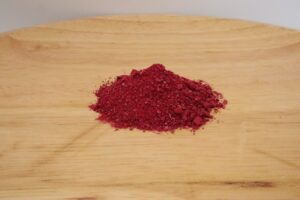
Ashitaba powder

Ashitaba powder is a raw material made by drying ashitaba, a plant of the Apiaceae family, and grinding it into a fine powder. It contains chalcones (polyphenol components characteristic of ashitaba) and can be used as a raw material for aojiru green juice, health drinks, functional foods, smoothies, protein drinks and more. At Agriture, Dried Ashitaba and makes it into powder by adding a pulverizing process.
the same functional material turmeric powder and mustard-greens powder, the depth of a functional powder mix increases. In prototyping aojiru, health drinks, and functional foods, specifications can be finalized starting from small amounts.
TOC
Agriture's ashitaba powder: three commitments
Ashitaba powder's finish is determined by retaining the characteristic components and controlling the grassy note. At Agriture, we manage everything from raw-material pretreatment to grinding and packaging at our own processing facility within Kyoto Prefecture, aiming for a finish with little lot-to-lot difference.
1. A drying design that makes the most of the functional components
Ashitaba is a material containing polyphenols such as chalcone, with the property that its components are readily lost by high-temperature, long-duration heating. At Agriture, we adjust the temperature range and operate the drying conditions using the balance of color, aroma, and components as a guide. We record the conditions from the prototype stage and aim for a finish suited to the design of health foods and functional foods. Because ashitaba alone has a strong grassy note, we can propose formulations that adjust ease of drinking by blending with other materials.
Product catalog showing the items we handle
Flexible support from small lots to large lots
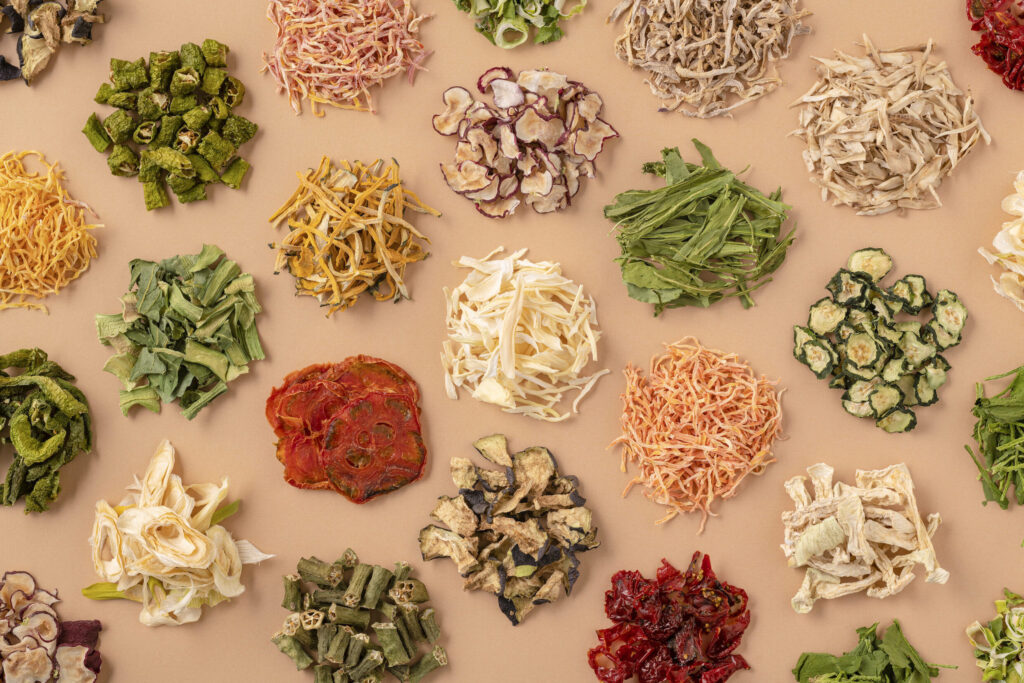
- Sold in small lots from 1 kg
- Handling heirloom vegetables from across Japan
- Dried fruits and herbs also supported
Characteristics of commercial ashitaba powder
Finely powdering it lets you extend into the use areas of "uniform blending into beverages" and "functional powder mixes," which the leaf or stem form cannot reach. We organize the strengths unique to ashitaba powder from six perspectives.
Positioning as a domestically grown superfood
It is a material whose focus is typically the chalcone-type polyphenol components, and it is recognized as a domestically grown functional superfood. Component values vary with conditions, but it is positioned to be easy to use as a main material for functional foods and health drinks.
Blending with functional materials
By pre-blending it with turmeric, mustard greens, broccoli, young-barley-grass alternative materials, and the like, you can design functional powder mixes and aojiru bases from a single raw-material supplier.
Use together with the ingredient-shape version
For herbal-tea and health-tea uses, Dried Ashitaba (a type that keeps the leaf shape); for beverages and powders, powder—you can use them differently. It is also possible to design parallel development of tea-leaf blends and drink mixes by using both together.
Product specifications (commercial)
The basic specifications at the prototype stage are as follows. Procurement lots, delivery dates, and packaging forms for mass production and OEM are settled through individual consultation.
| Item | Details |
|---|---|
| Product name | Ashitaba powder |
| Raw material | Ashitaba (domestically grown, leaves and stems) |
| Shape | Fine powder (leaves and stems dried and ground) |
| Appearance | A deep-green to dark-green fine powder |
| Aroma | A green-leaf aroma and mild bitterness characteristic of the Apiaceae family |
| Net content | Individual quote according to use and lot |
| Best-before date | About 6 months from the shipping date |
| Storage method | Avoid high temperature, high humidity, and direct sunlight; after opening, seal and store in a cool, dark place |
| Processing plant | Our own processing plant within Kyoto Prefecture |
| Minimum prototype lot | From 1 kg of raw material |
| Main production lot | From 10 kg (by consultation) |
Customization support
| Item | Available | Details |
|---|---|---|
| Part specification | Specify from leaves / stems / whole | The leaves have color and aroma; the stems are more fibrous |
| Blend design | Pre-mixing of functional powder | Mixing at a specified ratio with turmeric, mustard greens, broccoli, and the like |
| Packaging form | From commercial bulk to small bags | Light-blocking aluminum bags, sticks and small bags, individual wrapping, and the like |
| OEM productization | End-to-end handling through the final product | Aojiru, health drinks, protein mixes, functional foods, etc. |
| Raw material supply | Own raw materials + contract processing | We also handle contract drying and grinding at a specified growing region |
For those with herbal-tea and health-tea uses (raw-material form version)
For health teas, blended teas, medicinal-cuisine teas, and the like—uses that make the most of the leaf shape dried ashitaba (tea-leaf type) is suited. The extraction feel and appearance of tea leaves, which cannot be obtained with powder, come alive.
Commitments to variety, grower, and growing region
Ashitaba is a perennial of the genus Angelica in the Apiaceae family, with warm coastal areas such as the Izu Islands, the Kii Peninsula, and the Boso Peninsula as its main production areas. It is a lineage so vigorous that it is said "even if you pick it today, new leaves will emerge by tomorrow," and it has drawn attention as a domestically grown functional material.
BRAND
At Agriture, using domestically grown ashitaba as the raw material, we manage everything consistently from drying to grinding and packaging at our own processing facility within Kyoto Prefecture. A finish that combines retention of the functional components and the color is our basic policy.
PRODUCER
In partnership with contract production areas, we accept raw materials after sharing the harvest time, leaf age, and storage conditions. We record the raw-material lots and use this for reproducing color, aroma, and components during mass production.
REGION
The main growing areas are warm coastal regions such as the Izu Islands (including Hachijojima), the Kii Peninsula and the Boso Peninsula. Ashitaba grown in the sea breeze and mild climate has long been a familiar vegetable in these areas.
CULTIVATION
Outdoor cultivation is central, and the leaf age and picking cycle affect the finish. We proceed to washing, drying, and grinding after selecting the raw material, and ensure reproducibility in the powdering step.
Powdering technology and quality control
Ashitaba powder's quality is determined by three points: retention of the functional components, retention of the color, and control of the grassy note. At Agriture, we record the conditions at each step of drying, grinding, and packaging, and have an operation in place to curb variation between lots.
Retaining the functional components and color
Because polyphenols readily degrade with heat, light, and oxygen, we adjust the temperature range at the drying stage and operate under conditions that maintain the balance of color and components. By promptly transferring it to light-blocking packaging after grinding, we aim for a finish that curbs degradation of the deep-green color and functional components.
Controlling the grassy note
By adjusting the raw-material pretreatment conditions and drying temperature range, we can achieve a finish with the grassy note gently curbed. We can change the conditions between wanting to keep it stronger as an aojiru base and wanting to prioritize ease of drinking in a health drink. In smoothies and protein drinks, about 1–2 g per 200 ml is a guide. In functional powder mixes, a combined 10–30% allocation with turmeric and mustard greens is an easy-to-use range. In furikake and greens seasonings, a 5–10% formulation with salt is used in prototyping.
Use cases and adoption examples
Because the powder disperses evenly into liquids and powders, it extends to uses that the leaf form cannot reach. We organize the uses we are often consulted about. We carry out everything through to mixing and bagging at a specified ratio—functional powder mixes, aojiru bases, health-food bases, and the like. We can also propose formulations aiming to combine ease of drinking and functionality.
Related articles and other health materials
These are the vegetable and functional powders handled at Agriture. Please make use of them for blend design with ashitaba.
- Dried Ashitaba: a leaf type for tea leaves and blended teas
- turmeric powder: a functional-material classic
- mustard-greens powder: a partner for aojiru and functional powders
- Yasai Yakuzen: recipe information on medicinal-cuisine and functional materials
- Food OEM Directory: A consultation window for OEM projects
Product catalog showing the items we handle
Flexible support from small lots to large lots
- Sold in small lots from 1 kg
- Handling heirloom vegetables from across Japan
- Dried fruits and herbs also supported
Frequently asked questions
How do I use dried ashitaba (tea-leaf type) and the powder differently?
Dried ashitaba is a tea-leaf type and is suited to uses that make the most of the leaf's extraction feel—health teas, blended teas, medicinal-cuisine teas. Because the powder is a fine powder, it is suited to uses where you want to drink it up as a beverage or powder—aojiru, protein drinks, functional foods, confectionery. There are also cases of developing both in parallel to design a tea brand and a drink brand.
Is the grassy note strong?
Ashitaba is a material with a distinctive green-leaf aroma and mild bitterness. By adjusting the raw-material pretreatment and drying conditions, a gently adjusted finish is possible, and you can also choose a finish that keeps the flavor as a functional material. We can also propose formulations that adjust ease of drinking by blending with other green materials. Leaves-only powder has denser color and functional components and is suited to aojiru and drinks. Powder that also includes stems is more fibrous and also advantageous in cost. Depending on the product concept,
Can it be pre-blended with other functional powders?
It is possible. We accommodate pre-blending with functional and aojiru-type powders such as turmeric, mustard greens, and broccoli. If you share the formulation you are aiming for in the final product—aojiru bases, functional powder mixes, meal-replacement bases—we will carry out mixing and bagging at that ratio.
What is the minimum prototype lot?
We accept prototyping from 1 kg of raw material. For mass production and OEM, we propose quotes and lead times individually. You can consult us consistently through to final products—aojiru, protein drinks, functional foods, health foods, and so on.
Please tell me the best-before date and how to store it.
The best-before date is about 6 months from the shipping date. Because the color and functional components readily degrade with light and moisture, while unopened avoid high temperature, high humidity, and direct sunlight, and store in a cool, dark place at room temperature. After opening, we recommend transferring it to an airtight container and using it up within 1–2 months as a guide.