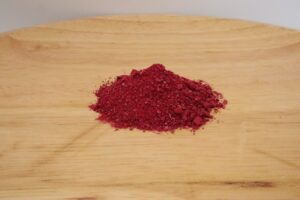
Eggplant powder

Eggplant powder is a raw material made by drying eggplant and then micro-pulverizing it. In uses such as mapo sauce bases, curry, Japanese-style simmered-dish powders, ratatouille, and paste bases, it aims to spread eggplant's distinctive flavor and richness evenly. The nasunin (anthocyanin)-derived color shifts toward brown with drying, and that subdued color tone blends naturally into simmered-type sauces and pastes. At Agriture, Dried eggplant and makes it into powder by adding a pulverizing process.
Combined with the compatible-for-Western-and-simmered-dishes Zucchini powder and Onion powder, you can design the powder blends for ratatouille bases, curry sauces, and mapo sauces all together. Specifications can be finalized from small quantities.
TOC
Agriture's eggplant powder: three points of care
1. A drying design that keeps an eggplant-like flavor
Eggplant has high moisture content, and how the flavor rises changes with the drying conditions. At Agriture we set the temperature range and operate under conditions where eggplant's distinctive richness and faint sweetness remain. The color shifts toward brown with drying and grinding, but it finishes in a subdued color tone that blends naturally into simmered-type sauces and pastes. Blend prototypes that span use-case genres are possible.
Product catalog showing the items we handle
Flexible support from small lots to large lots
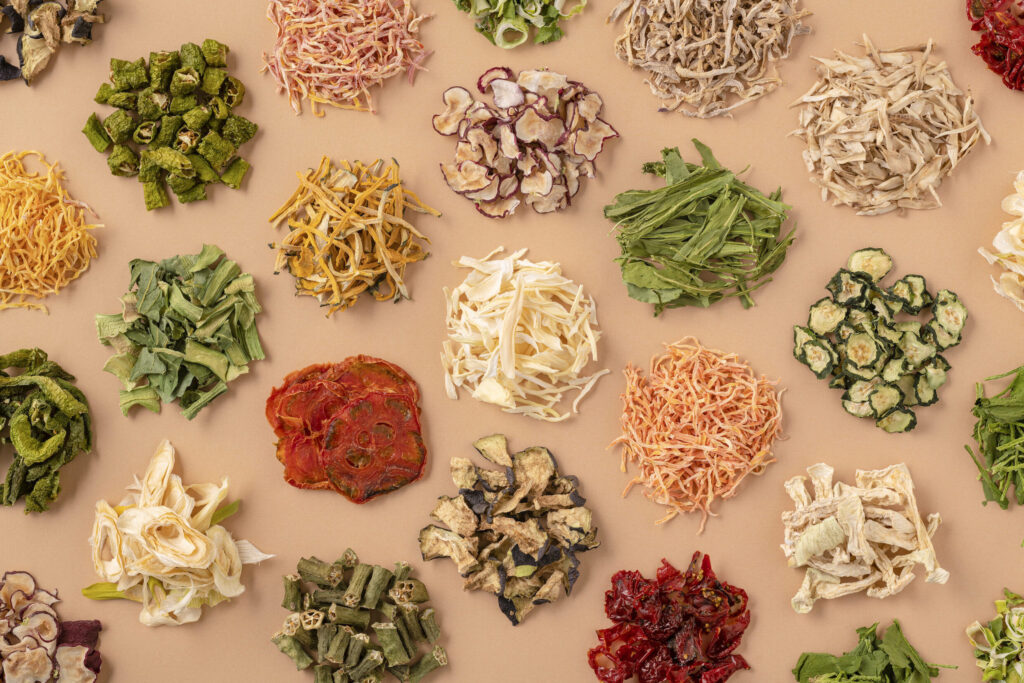
- Sold in small lots from 1 kg
- Handling heirloom vegetables from across Japan
- Dried fruits and herbs also supported
Features of commercial eggplant powder
Micro-pulverizing lets it expand into the use area of "uniform blending into sauces and pastes" that slices or dice can't reach. We organize the strengths unique to eggplant powder from six perspectives.
Concentrates eggplant's distinctive flavor and richness
Concentrates eggplant's richness and faint sweetness in the powder. A small blend adds richness to the foundation of simmered dishes such as mapo sauce, curry, and ratatouille. A material that lets you supplement a simmered dish's "one more step of depth" as a powder.
A design that leverages the color change
Drying and grinding shift the color from the nasunin-derived purple toward brown. Because it blends naturally into the color tone of simmered-type sauces such as curry and mapo, it's a material that makes recipe design premised on the color change easy.
Handles Western, Chinese, and Japanese blends
By pre-blending with zucchini-, onion-, garlic-, and tomato-based powders, you can design ratatouille, curry, mapo sauce, and Japanese-style simmered-dish bases from a single raw-material supplier. Use across genres is possible.
Use together with the ingredient-shape version
For uses where you want to leave texture, Dried eggplant (slices or dice), and for uses that want to spread richness evenly, use powder. You can achieve both an ingredient feel and base depth in the same recipe.
Product specifications (commercial)
The basic specifications at the prototype stage are as follows. Procurement lots, delivery dates, and packaging forms for mass production and OEM are settled through individual consultation.
| Item | Details |
|---|---|
| Product name | Eggplant powder |
| Raw material | Eggplant (domestic) |
| Shape | Micro-powder (skin and flesh dried and ground) |
| Appearance | Brown to slightly purple-tinged micro-powder |
| Aroma | The faint richness and gentle aroma distinctive to eggplant |
| Net content | Individual quote according to use and lot |
| Best-before date | About 6 months from the shipping date |
| Storage method | Avoid high temperature, high humidity, and direct sunlight; after opening, seal and store in a cool, dark place |
| Processing plant | Our own processing plant within Kyoto Prefecture |
| Minimum prototype lot | From 1 kg of raw material |
| Main production lot | From 10 kg (by consultation) |
Customization support
| Item | Available | Details |
|---|---|---|
| Part specification | Specify from skin / flesh / whole | Skin is strong in color and flavor, flesh in richness and fibrousness |
| Blend design | Pre-mixing of vegetable powders | Specified-ratio blending with zucchini-, onion-, garlic-, and tomato-based ingredients |
| Packaging form | From commercial bulk to small bags | Light-blocking aluminum bags, sticks and small bags, individual wrapping, and the like |
| OEM productization | End-to-end handling through the final product | Mapo sauce, curry, ratatouille base, simmered-dish powders, etc. |
| Raw material supply | Own raw materials + contract processing | We also handle contract drying and grinding at a specified growing region |
For those who want to make use of texture and shape (ingredient-shape version)
For simmered-dish, stir-fry, and ratatouille ingredients, and other uses that keep eggplant's texture and appearance, dried eggplant (slices or dice) is suitable. The texture and presence of eggplant that powder can't provide come alive in the recipe.
Commitments to variety, grower, and growing region
Eggplant is a summer vegetable of the Solanum genus in the Solanaceae family. Domestically, diverse lineages are grown—long eggplant, medium-long eggplant, round eggplant, beicha eggplant, and more—with skin thickness, flesh density, and moisture content differing by variety lineage. As a powder raw material, we select by moisture content and the balance of skin and flesh.
BRAND
At Agriture, using domestic eggplant as the raw material, we manage everything from drying through grinding and packaging at our own processing facility within Kyoto Prefecture. Our basic policy is a finish that keeps an eggplant-like flavor and richness.
PRODUCER
Partnering with contract growing regions, we accept raw material after sharing guidelines for variety, harvest timing, and moisture content. We record the raw-material lots and use them to reproduce flavor and color tone in mass production.
REGION
The main growing areas are Kochi, Kumamoto, Fukuoka, and Gunma. We source raw material intensively when a warm climate and the summer-vegetable peak season overlap. Through a growing-region relay, we can also handle stable year-round raw-material supply.
CULTIVATION
We source raw material from both open-field and greenhouse cultivation to prepare for seasonal variation. We accept based on moisture content and skin thickness as guidelines, and ensure reproducibility in the powdering process.
Powdering technology and quality control
Moisture management and flavor retention
Eggplant has high moisture content, a material whose flavor changes easily during the drying process. We set the temperature range and operate under conditions that remove moisture while keeping eggplant's distinctive richness. We also control the frictional heat during grinding, aiming for a finish where the powder doesn't get too hot. For commercial bulk we use light-blocking aluminum bags, and for small bags and sticks moisture-proof, light-blocking film, proposing specifications that assume storage at the store or warehouse.
TIPS: Guidelines for blends that make the most of eggplant powder
For a mapo sauce base, a blend of 2–4% of the sauce weight lets eggplant's richness settle naturally into the base. For curry sauce, an allocation of 3–5% of all powdered seasonings is a guide. For a ratatouille base, allocating 20–30% to eggplant out of the combined amount with zucchini-, onion-, and tomato-based ingredients is a balanced range. For Japanese-style simmered-dish powders, an allocation of 5–10% blended with salt is usable, adding a simmered-eggplant-like depth.
Use cases and adoption examples
Because powder disperses evenly into liquids and powders, it expands into uses slices or dice can't reach. We organize the uses we're most often asked about. We handle ratatouille bases, curry bases, mapo sauce, and more consistently—blending and bagging at your specified ratio. We can also accommodate blends for Japanese uses.
Related articles and other vegetable raw materials
These are the vegetable powders and related raw materials Agriture handles. Use them for blend design with eggplant.
- Dried eggplant: a raw material that leaves the slice and dice shapes
- Zucchini powder: a partner for summer-vegetable and simmered dishes
- Onion powder: richness for sauces and simmered dishes
- Garlic powder: an aromatic base for simmered dishes
- Food OEM Directory: A consultation window for OEM projects
Product catalog showing the items we handle
Flexible support from small lots to large lots
- Sold in small lots from 1 kg
- Handling heirloom vegetables from across Japan
- Dried fruits and herbs also supported
Frequently asked questions
How do you use dried eggplant (with shape) versus the powder?
Dried eggplant is a type that keeps a slice or dice shape, suited to uses that want to leverage texture and appearance, such as simmered-dish, stir-fry, and ratatouille ingredients. The powder, being micro-fine, suits uses that want to spread eggplant's richness and depth evenly, such as mapo sauce, curry, ratatouille bases, and paste bases. Using them together achieves both an ingredient feel and base depth.
What happens to the color?
Eggplant's color comes from nasunin (anthocyanin), but it shifts toward brown in the drying and grinding process. Because it blends naturally into the color tone of simmered-type sauces such as curry and mapo, it's a finish that makes recipe design premised on the color change easy. It's basically not suited to uses that strongly keep the purple color, but suited to uses that leverage richness and depth. Skin-only powder is strong in color and flavor, while powder including the flesh makes it easy to balance richness and fibrousness. Depending on the use, please consult us according to the product concept.
Can it be pre-blended with other vegetable powders?
Yes. We handle pre-blending with vegetable powders compatible with simmered and Western dishes, such as zucchini-, onion-, garlic-, and tomato-based ingredients. Share the blend you're aiming for in the final product—ratatouille bases, curry bases, mapo sauce, and so on—and we'll mix and bag it at that ratio.
What is the minimum prototype lot?
We accept prototypes from 1 kg of raw material. For mass production and OEM, we propose quotes and lead times individually. You can consult us consistently through to finished products such as mapo sauce, curry, ratatouille bases, and Japanese-style simmered-dish powders.
Please tell me the best-before date and how to store it.
The best-before date is roughly six months from the shipping date. Because eggplant powder absorbs moisture easily, before opening store it in a cool, dark place at room temperature, away from high heat, humidity, and direct sunlight. After opening, transfer it to a sealed container and use it up within a guide of 1–2 months.