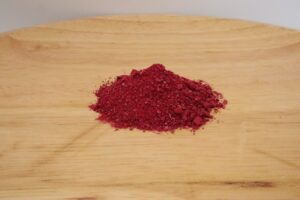
Yuzu powder (Kyoto-grown)

Yuzu powder (produced in Kyoto) is a commercial citrus raw material made by low-temperature drying the peel of yuzu harvested in the Ukyo Ward / Kyoto district of Kyoto City and processing it consistently through to grinding at our own processing plant in Kyoto Prefecture. Without using glucose, colorants, or antioxidants, it retains in the powder the rich aroma and vivid yellow characteristic of Kyoto-produced yuzu. Kyoto has been known as a famous yuzu-producing area since the Heian period, and the valley climate with its temperature swings and clean water grow yuzu of fine peel quality. It is a raw material for which we receive many consultations in food development that makes use of yuzu's aroma and color, such as Japanese cuisine, confectionery, seasonings, and drinks. We also handle prototyping from 1 kg of raw material. For consultations on dried vegetable and powder OEM here Please let us know your intended use and desired specifications from
TOC
Three points of care behind Agriture's yuzu powder (produced in Kyoto)
01 Low-temperature drying design that retains the aroma of Kyoto-produced yuzu
Yuzu's aroma comes from volatile essential-oil components such as limonene and citral, which disperse rapidly as temperature rises. Agriture uses low-temperature hot-air drying that keeps the product temperature around 40°C, designed to retain in the powder the bright, deep aroma unique to Kyoto-produced yuzu. Kyoto-produced yuzu is a material patronized even by Kyoto's ryotei restaurants, distinguished by its fine peel quality. Vegetable & herb powder list You can also consult us about blending with other materials from
02 Ingredient design using only Kyoto / Kyoto-produced raw material, with zero additives
The raw material uses only the peel of yuzu harvested in the Ukyo Ward / Kyoto district of Kyoto City, and it is finished without adding any glucose coating, colorants, or antioxidants. It is a specification well suited to the product design of Japanese confectionery, Japanese cuisine, and premium seasoning brands whose concept is "produced in Kyoto."The nutritional value and benefits of vegetable powder.
03 Small-lot prototyping from 1 kg of raw material and comparison sampling
Agriture accepts yuzu-powder prototyping in units of 1 kg of raw material, for Japanese confectionery (Yuzu powder prototype news.
Product catalog showing the items we handle
Flexible support from small lots to large lots
- Sold in small lots from 1 kg
- Handling heirloom vegetables from across Japan
- Dried fruits and herbs also supported
Features of commercial yuzu powder (produced in Kyoto)
100% Kyoto / Kyoto-produced yuzu peel
It uses yuzu from the Ukyo Ward / Kyoto district of Kyoto City, known as a famous yuzu-producing area since the Heian period. The valley climate with its temperature swings and clean water grow yuzu of fine peel quality.
Retains a bright aroma
Low-temperature drying at a product temperature around 40°C suppresses the volatilization of essential-oil components, retaining in the powder the bright, deep aroma unique to Kyoto-produced yuzu. It is a quality patronized even by Kyoto's ryotei restaurants.
A vivid yellow color
Thanks to low-temperature drying and short-time grinding, the vivid yellow derived from the yuzu peel remains even after powdering. It is a material suited to scenes where you want to convey a "yuzu-like" quality visually in the finish of Japanese confectionery or dishes.
Zero additives, no coloring
Glucose, dextrin, antioxidants, and colorants are all unused. It is a specification well suited to the PB development of additive-free brands that want to keep the ingredient labeling simple.
Bring an origin story into the product
You can build the origin brand "Kyoto" into the product. The story of Kyoto, known as yuzu patronized by ryotei, is effective for differentiating gift products and premium lines.
Product specifications (commercial)
|
Item |
Details |
|---|---|
|
Raw material |
Yuzu peel (Ukyo Ward, Kyoto City / produced in Kyoto) |
|
Best-before date |
About 6 months from the shipping date when unopened (varies with storage conditions) |
|
Processing plant |
Our own processing plant within Kyoto Prefecture |
|
Shipping unit |
Choose from 500 g bag, 1 kg bag, or 5 kg commercial bag |
|
Minimum-lot OEM |
Prototype from 1 kg of raw material / main production from 10 kg of raw material |
* Prototype consultation is possible from 1 kg of raw material.
Customization support
|
Item |
Available |
Details |
|---|---|---|
|
Blend design |
◎ |
Pre-blending with Japanese ingredients such as rock salt, chili pepper, sansho, and matcha is available |
|
OEM small-lot prototyping |
◎ |
Multiple versions can be prototyped in parallel from 1 kg of raw material |
|
Packaging changes |
◎ |
500 g, 1 kg, and 5 kg bags can be sorted out |
|
Quality document issuance |
◯ |
Specification sheet, raw-material origin certification, microbiological test report (discussed per project) |
POWDER
Leave blend development making use of Kyoto ingredients to us
Beyond Kyoto-produced yuzu powder on its own, we also handle the development of "Kyoto blends" combining Japanese ingredients associated with Kyoto, such as sansho, matcha, ginger, and shiso. From more than 60 vegetable, herb, and fruit powders, we propose a raw-material design matched to the product concept.
Commitments to variety, grower, and growing region
The yuzu used in Agriture's yuzu powder is purchased directly from growers in the Ukyo Ward / Kyoto district of Kyoto City. Kyoto has been known as a yuzu-producing area since the Heian period, and it is a historically venerable region as a mountain village where the mausoleum of Emperor Seiwa is located. Located in a valley at about 300 m elevation, the day-night temperature difference and clean water grow thick-peeled, highly aromatic yuzu.
BRAND
Variety: Native Kyoto yuzu. Many are seedlings (trees grown from seed), and compared with grafted trees, although the fruit is smaller, the peel is thick with high essential-oil content. The depth of aroma differs from grafted varieties.
PRODUCER
Producer: Purchased directly from yuzu growers in the Kyoto district. It is yuzu of a quality also wholesaled to Kyoto's ryotei, with an established reputation for peel quality and aroma.
REGION
Growing region: Ukyo Ward, Kyoto City / Kyoto district. In a valley at about 300 m elevation, the day-night temperature difference and the clean water sourced from the mausoleum of Emperor Seiwa create the growing conditions for highly aromatic yuzu.
CULTIVATION
Cultivation method: Cultivation that makes use of the natural environment of the mountainous area. With managed cultivation that keeps pesticide use low, we maintain a record system that can also meet the raw-material origin certifications food manufacturers require.
Low-temperature drying technology and quality control
The essential-oil components that make up yuzu's aroma, such as limonene, citral, and linalool, are highly volatile, and high-temperature drying loses most of the aroma. Agriture uses low-temperature hot-air drying that keeps the product temperature around 40°C, designed to let only moisture escape while retaining the essential-oil components. After drying, grinding is done immediately, and the process is arranged to preserve the aroma and yellow color by shortening the contact time with oxygen.
Manufacturing is done at our own processing plant in Kyoto Prefecture, with integrated management from raw-material acceptance inspection to shipment. It is filled hygienically after passing through a foreign-matter removal process, and for OEM projects we issue necessary documents such as specification sheets, raw-material origin certificates, and microbiological test reports, upon consultation for each project.
💡 TIPS | Trivia about Kyoto-produced yuzu
In the Kyoto district, the culture of the "yuzu bath" still continues, and every winter there is a seasonal custom of local households serving yuzu baths and chicken hot pot. At ryotei, thick-peeled Kyoto-produced yuzu is prized as a garnish topping and condiment, and it is the growing region that supports the "Kyo-yuzu" brand. Agriture proposes this Kyoto-produced yuzu, powdered, as a commercial raw material usable year-round.
Use cases and adoption examples
Yuzu salt, yuzu kosho, Japanese-style seasonings
This is a use for which we receive many consultations, as the lead raw material for yuzu salt or yuzu kosho combined with rock salt or chili pepper. Simply adding the bright aroma of Kyoto-produced yuzu differentiates it from ordinary yuzu seasonings.
- Suitable products: yuzu salt, yuzu kosho, yuzu shichimi. Another benefit is being able to make use of the Kyoto / Kyoto-produced origin story in gift products.
- Suitable products: yuzu mochi, yuzu financier, yuzu madeleine, yuzu chocolate
- Blending guide: 3–10 g per 1 kg of flour
- Points to note in development: because the aroma flies off with heat, adding extra yuzu in the finishing step works well
- Suitable products: yuzu tea, yuzu cider, craft liqueur, yuzu syrup
- Blending guide: 0.3–1% of the liquid volume
- Points to note in development: sedimentation and suspension are assumed. Verify filtration suitability in advance
- Suitable products: yuzu hot-pot broth, yuzu ponzu, yuzu sauce
- Blending guide: 0.5–2% of the total sauce
- Points to note in development: because the aroma tends to fly off when heated, adding it at the finish is preferable
- Suitable products: yuzu candy, yuzu senbei, Kyoto-limited sweets, gift sets
- Blending guide: 1–5% of the material weight
- Points to note in development: an origin certificate can be issued (used for labeling on the product packaging)
- We prototyped a "yuzu powder" using Kyoto / Kyoto-produced yuzu (News)
- Vegetable & herb powder list
- The nutritional value and benefits of vegetable powder
- Sold in small lots from 1 kg
- Handling heirloom vegetables from across Japan
- Dried fruits and herbs also supported
Drinks, syrups, liqueurs
This is a use where it can be used as a raw material for citrus drinks such as yuzu tea, yuzu cider, yuzu syrup, and craft liqueur. Because it is powdered, it is easy to weigh and can be used at consistent quality even in seasons when fresh yuzu is hard to obtain.
Hot-pot broth, ponzu, sauces
This is a use for adding yuzu aroma to hot-pot broth or ponzu. Unlike fresh yuzu, year-round supply is possible, and because the blending amount is easy to manage, it suits stable production on a factory line.
A differentiation material for Kyoto gift and souvenir products
This is a use where, making use of the origin brand "Kyoto / produced in Kyoto," it can be used as a differentiation raw material for Kyoto souvenirs and gift products. For yuzu candy, yuzu senbei, yuzu chocolate, and the like, adding an origin story to the packaging raises the added value.
Points on commercial use and storage
Yuzu powder needs no rehydration and can be used by adding it directly to seasonings, dough, or drinks. If you want to draw out the aroma to the fullest, add it later in the finishing step, or dissolve it in advance into fats or syrup before adding to the main process, and the aroma will spread evenly throughout.
For storage, sealed storage away from light, heat, and humidity is best. Because essential-oil components degrade easily with light and oxygen, after opening we recommend transferring to a light-blocking container or nitrogen-flush handling.
Related cases and articles
Product catalog showing the items we handle
Flexible support from small lots to large lots
Frequently asked questions
Q. What is the minimum lot and prototype handling?
Q. How is Kyoto-produced yuzu different from other regions?
A. Kyoto is a famous yuzu-producing area continuing since the Heian period, and the environment of a valley at about 300 m elevation brings temperature swings and fine water quality. Many trees are seedling-grown, distinguished by thick peel and high essential-oil content. It is a quality patronized even by Kyoto's ryotei, and the depth of aroma differs from generally distributed yuzu.
Q. Is year-round supply possible?
A. We purchase and dry-process in bulk during the yuzu harvest season (autumn to winter) and supply it as powder year-round. For projects where the annual required volume is visible, consulting us the previous year makes it easier to plan a stable supply.
Q. Can you issue a certificate of raw material origin and an analysis table?
A. We proceed with issuance, upon consultation for each project, of either a raw-material origin certificate showing that it is from Ukyo Ward, Kyoto City / produced in Kyoto, or a microbiological test report. They can also be used for "produced in Kyoto" labeling on packaging.
Q. Can it be blended with other Japanese ingredients?
A. Yes. We can propose blend designs combining Japanese ingredients associated with Kyoto, such as sansho, matcha, ginger, shiso, and chili pepper. We also handle formulation development for yuzu kosho and Kyoto blends.
Q. What is the lead time?
A. When stock is available, shipment is possible in about 2–3 weeks after order as a guide. For projects involving new purchasing, please plan a lead time of 4–8 weeks in light of the harvest season (autumn to winter).
Q. Please tell me the flow of an OEM consultation
A. We proceed in the flow of: consult via the inquiry form → concept hearing → sample shipment → paid prototyping (from 1 kg of raw material) → specification finalization → main production. We can also propose product designs that make use of Kyoto's origin story.