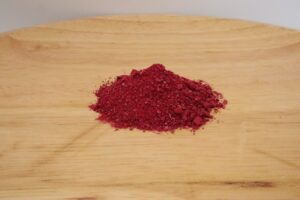
Lotus root powder

Domestic lotus root powder is a commercial vegetable ingredient made from lotus root sourced from contracted domestic growers, dried at low temperature and milled entirely in our own processing facility in Kyoto Prefecture. It contains no glucose, colorants or antioxidants, and the powder keeps the natural flavor and white color of lotus root. It thickens when mixed with water, and we often receive inquiries about it for food product development that makes use of both thickness and nutrition, such as baby food, care food, potage and confectionery. We also have a track record of working with Sakura Renkon Co., Ltd., a domestic growing region. We can produce prototypes from 1 kg of raw material. For consultations on dried vegetable and powder OEM here Please let us know your intended use and desired specifications from
TOC
Agriture's lotus root powder: three points of care
01 A drying design that leverages lotus root's trait of thickening when dissolved in water
Lotus root powder has the trait of naturally thickening when dissolved in water. This property is especially easy to use in foods that call for thickening—baby food, care food, potage, and the like. At Agriture we design it with low-temperature drying that retains this trait while keeping the flavor and color. In collaboration with partner farms too, this process design is the core of flavor retention. Vegetable & herb powder list You can also consult us about blending with other materials from
02 A track record processing lotus root, a zero-additive material design
Sakura Renkon Co., Ltd. (Representative: Yuma Matsumoto), a domestic grower, is an agricultural corporation that cultivates its soil using only organic fertilizers on fields of about 10 hectares. Agriture uses these carefully grown lotus roots as raw material, with no additives whatsoever. Partner-farm collaboration case.
03 Small-lot prototyping from 1 kg of raw material and comparison sampling
At Agriture we accept prototypes of lotus root powder in units from 1 kg of raw material, The nutritional value and benefits of vegetable powder please also check.
Product catalog showing the items we handle
Flexible support from small lots to large lots
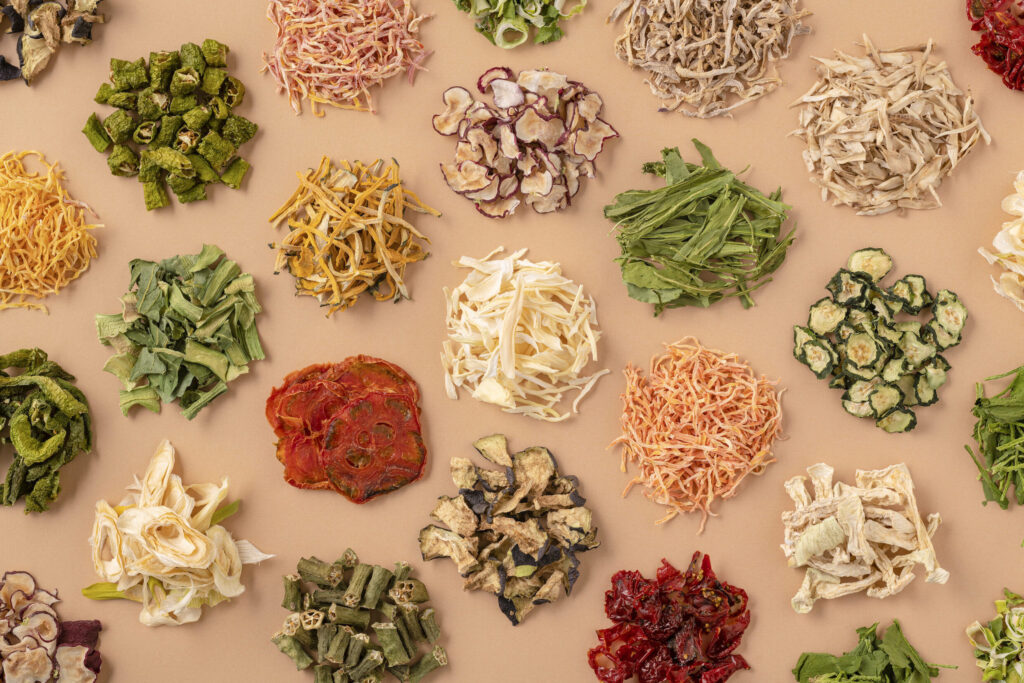
- Sold in small lots from 1 kg
- Handling heirloom vegetables from across Japan
- Dried fruits and herbs also supported
Features of commercial lotus root powder
Natural thickening when dissolved in water
Lotus root powder has the property of naturally thickening when dissolved in water or hot water. A trait easy to use as a raw material for foods that need thickening—baby food, care food, potage, and the like.
A lotus-root processing track record
We have a track record of powdering the lotus root of a partner farm (in a domestic growing region) that uses only organic fertilizer, and can also accommodate the processing of premium raw materials.
Uses 100% domestic lotus root
The raw material is domestic contract-grown lotus root only. Variety, lot, and harvest timing are traceable, making it a specification easy to use in product design accompanied by a raw-material country-of-origin certificate or a growing-region appeal.
Zero additives, no coloring
Glucose, dextrin, antioxidants, and colorants are all unused. It is a specification well suited to the PB development of additive-free brands that want to keep the ingredient labeling simple.
Consistent support from raw-material selection through micro-pulverizing
With a setup that can consistently handle everything from raw-material selection through drying, grinding, and micro-pulverizing, optimal powder-making to match the use is possible.
Product specifications (commercial)
|
Item |
Details |
|---|---|
|
Raw material |
Lotus root (domestically grown, contract-farmed) |
|
Best-before date |
About 6 months from the shipping date when unopened (varies with storage conditions) |
|
Processing plant |
Our own processing plant within Kyoto Prefecture |
|
Shipping unit |
Choose from 500 g bag, 1 kg bag, or 5 kg commercial bag |
|
Minimum-lot OEM |
Prototype from 1 kg of raw material / main production from 10 kg of raw material |
* Prototype consultation is possible from 1 kg of raw material.
Customization support
|
Item |
Available |
Details |
|---|---|---|
|
Blend design |
◎ |
Pre-blending with other vegetable powders, grain flours, and dashi ingredients available |
|
OEM small-lot prototyping |
◎ |
Multiple versions can be prototyped in parallel from 1 kg of raw material |
|
Packaging changes |
◎ |
500 g, 1 kg, and 5 kg bags can be sorted out |
|
Quality document issuance |
◯ |
Specification sheet, raw-material origin certification, microbiological test report (discussed per project) |
POWDER
Leave blend development with other Japanese-ingredient powders to us
Beyond lotus root powder on its own, we also develop "Japanese-style veggie blends" that combine Japanese vegetable powders such as ginger, daikon, burdock, and pumpkin, as well as "domestic vegetable mixes" for baby food. From more than 60 vegetable, herb, and fruit powders, we propose raw-material formulations tailored to your product concept.
Commitments to variety, grower, and growing region
Agriture's lotus root powder uses lotus roots purchased directly from contracted domestic growers. Our main partner, Sakura Renkon Co., Ltd. (a domestic growing region), is an agricultural corporation working on soil building using only organic fertilizers on fields of about 10 hectares. Agriture dries and mills lotus roots grown under the philosophy of its representative, Yuma Matsumoto: "Building lotus roots and the future from the soil."
BRAND
Variety: Made with domestically grown lotus root. Lotus root is high in starch, so when powdered and dissolved in water it develops a natural thickness.
PRODUCER
Producer: Sakura Renkon Co., Ltd. (domestic growing region; Representative: Yuma Matsumoto). We have processed lotus roots grown in fields using only organic fertilizers.
REGION
Growing region: In addition to our domestic partners, we work with major lotus root growing regions such as Ibaraki and Tokushima. By timing purchasing to the harvest season, we maintain a stable supply of domestically grown raw material.
CULTIVATION
Cultivation method: Our partner farms use organic fertilizer only and practice soil building. Other contract farmers also grow under managed cultivation with reduced pesticide use, and maintain record-keeping systems that allow quality documentation to be issued.
Low-temperature drying technology and quality control
Manufacturing takes place at our own processing facility within Kyoto Prefecture, with consistent management from raw-material acceptance inspection through shipment. We fill it hygienically through a foreign-matter-removal step, and for OEM projects issue necessary documents—specification sheets, raw-material country-of-origin certificates, microbial test reports, and so on—after consulting on each project.
💡 TIPS|Lotus Root Powder Know-How
The way lotus root powder "thickens when dissolved in water" comes from its starch content. Because it can be used like potato starch, you can thicken soups and potages without chemical thickeners. For products where safety is paramount — such as baby food and nursing-care food — it can be marketed as "thickening from 100% lotus root," which is a key advantage.
Use cases and adoption examples
Baby-food and infant-food ingredient
Lotus root powder, which develops a natural thickness when dissolved in water, is easy to use as a thickening ingredient for baby food and infant food. Paired with domestic and additive-free messaging, it is a use case we are often consulted about for baby-food brand development.
- Suitable products: Baby-food pouches, infant food, vegetable purées for young children
- Blending guide: 1–5 g per serving
- Points to note in development: Microbiological test documentation can be issued. Thickening derived from real ingredients pairs well with natural-oriented nursing-care food brands.
- Suitable products: Nursing-care potages, dysphagia-friendly jellies — best confirmed through prototyping
- Suitable products: Lotus root potage, Japanese-style root-vegetable soup, freeze-dried soup
- Blending guide: 5–15% of total soup weight
- Points to note in development: To prevent clumping when reconstituting, add a little at a time while stirring
- Suitable products: Lotus root mochi, Japanese-style sweets, amazake with lotus root, okayu
- Blending guide: 20–50 g per 1 kg of flour
- Points to note in development: Because it is high in starch, the amount used changes the texture
- Suitable products: Powdered miso soup, hot-pot broth base, reduced-salt soup
- Blending guide: 0.5–2% of liquid volume
- Points to note in development: Since thickening changes with heat, design the formulation with the finished temperature in mind
- Partner farms × Agriture: lotus root powdering case study
- Vegetable & herb powder list
- The nutritional value and benefits of vegetable powder
- Sold in small lots from 1 kg
- Handling heirloom vegetables from across Japan
- Dried fruits and herbs also supported
Lead ingredient for potages and soups
A use case as a base ingredient for lotus root potage and Japanese-style soups. Its natural thickness and lotus root flavor spread well, making it suitable for developing freeze-dried soups and instant soups.
Dough ingredient for confectionery and Japanese sweets
Adding lotus root powder to the dough of dango, mochi, and manju gives a chewy texture plus the flavor of lotus root. It can also be blended into okayu and amazake, making it suitable for developing Japanese-ingredient healthy sweets.
Hidden thickening for miso soup and hot-pot broth
Adding a small amount of lotus root powder to miso soup or hot-pot broth adds a natural thickness and makes the mouthfeel smoother. As a "vegetable-derived thickener," it is easy to use in the context of salt reduction as well.
Points on commercial use and storage
Lotus root powder needs no rehydration and can be added directly to liquids or dough. When you want to add thickness, knead it into a paste with a little cold water first, then add it to hot water or soup — this gives a smooth, lump-free thickness. For confectionery uses, sift and mix it together with the dry ingredients.
For storage, sealed containers away from light, heat, and moisture are best. Because it contains starch, it absorbs moisture easily, so after opening use it up promptly or seal it in a zip-top bag.
Related cases and articles
Product catalog showing the items we handle
Flexible support from small lots to large lots
Frequently asked questions
Q. How much thickness does lotus root powder produce?
Q. What is the minimum lot and prototype handling?
Q. Can you handle lotus root, too?
A. We have a track record of powdering lotus root grown with organic fertilizer only at our partner farms (domestic region). We can also handle OEM processing of raw material you bring to us.
Q. Can you issue a certificate of raw material origin and an analysis table?
A. Both a raw-material origin certificate showing the lotus root is domestically grown and a microbiological test report can be issued after discussion on a case-by-case basis. We also accommodate quality requirements for baby food and nursing-care food.
Q. Can it be blended with other Japanese vegetable powders?
A. Yes. We can propose blend formulations combining Japanese vegetable powders such as ginger, daikon, burdock, and pumpkin. We also accommodate "domestic vegetable mix" formulations for baby food.
Q. What is the lead time?
A. If stock is available, we can ship within a guide of 2–3 weeks after order. For projects involving new sourcing, please plan a lead time of 4–8 weeks, given the timing of the harvest.
Q. Please tell me the flow of an OEM consultation
A. The process runs from consultation via the inquiry form → concept hearing → sample shipment → paid prototyping (from 1 kg of raw material) → specification finalization → full production. We provide hands-on development support, including formulation proposals that account for the thickening characteristics unique to lotus root powder.