Chestnut skin powder

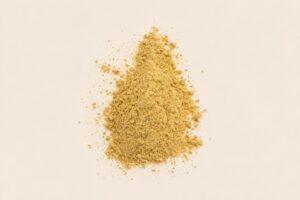
Chestnut-skin powder is a commercial functional raw material made by low-temperature-drying the outer and inner skins that come off during chestnut processing, then handling it through to grinding consistently at our own processing facility within Kyoto Prefecture. It's an "upcycled food material" made by drying and powdering a byproduct that's normally discarded, notable for containing polyphenols, tannins, and fiber. Using no glucose, coloring, or antioxidants, it keeps the skin's inherent astringent flavor and brown color in the powder. It's a raw material we're often asked about in food development that wants to appeal simultaneously to functionality and sustainability—baked goods, bread, tea, health foods, and more. We also accept prototypes from 1 kg of raw material. For consultations on dried vegetable and powder OEM here Please let us know your intended use and desired specifications from
TOC
Agriture's chestnut-skin powder: three points of care
01 An upcycle design that turns a discarded byproduct into a functional material
The outer and inner skins that come off in large amounts during chestnut processing are normally discarded as is. At Agriture we carefully remove moisture from this byproduct with low-temperature drying and grind it, turning it into a functional powder containing polyphenols and tannins. It's a material we're often asked about as a raw material for food brands that put food-loss reduction and upcycling at the heart of their product concept. Vegetable & herb powder list You can also consult us about blending with other materials from
02 The triple play of polyphenols, tannins, and fiber
Chestnut inner skin concentrates polyphenols and tannins and is also rich in fiber. By powdering it while retaining these components through low-temperature drying, we finish it into a material that adds a distinctive astringency and flavor to baked goods and tea. It's a specification that pairs well with health-food and confectionery brands that want to lead with "functionality."The nutritional value and benefits of vegetable powder.
03 Small-lot prototyping from 1 kg of raw material and comparison sampling
At Agriture we accept prototypes of chestnut-skin powder in units from 1 kg of raw material, Sustainable initiatives.
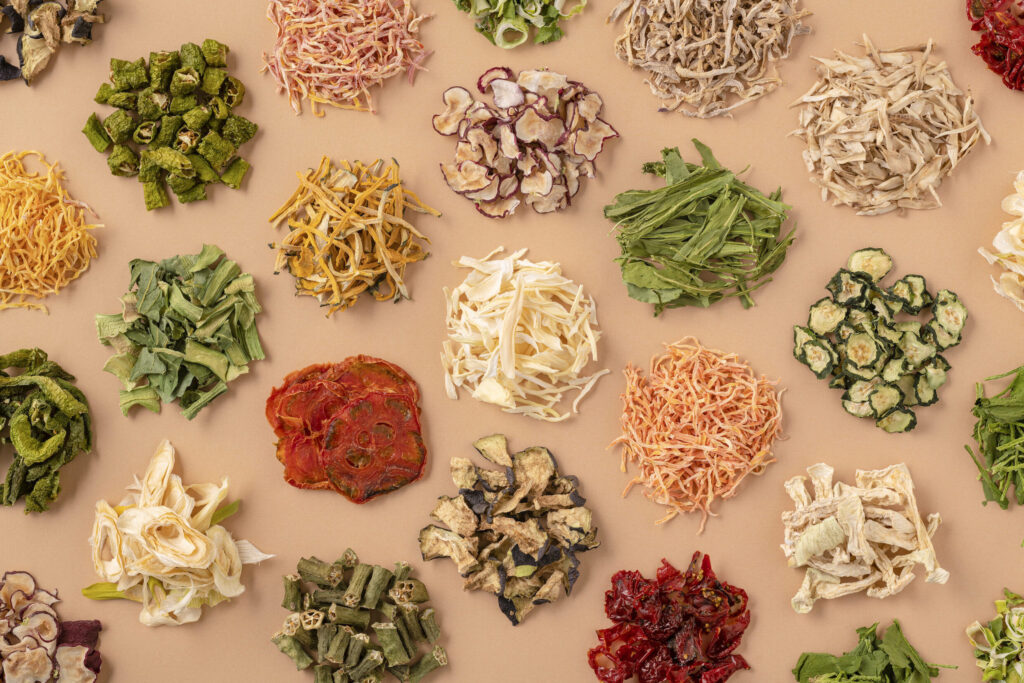
Product catalog showing the items we handle
Flexible support from small lots to large lots
- Sold in small lots from 1 kg
- Handling heirloom vegetables from across Japan
- Dried fruits and herbs also supported
Features of commercial chestnut-skin powder
Upcycled food material
Dries and powders the outer and inner skins discarded during chestnut processing. A raw material that lets you build food-loss reduction and sustainability into your product story.
Contains polyphenols and tannins
Retains, via low-temperature drying, the polyphenols and tannins concentrated in the inner skin. Finished to a specification easy to use for functional appeal in health foods and tea.
rich in dietary fiber.
Chestnut skin is a material rich in fiber. Blended into the dough of health-conscious baked goods and bread, it makes it easy to design products with a fiber appeal added.
A distinctive astringency and brown color
The refined astringency and deep brown color derived from the inner skin add depth to wagashi, baked goods, and tea. A material suited to flavor design that leverages a chestnut flavor.
Zero additives, no coloring
Glucose, dextrin, antioxidants, and colorants are all unused. It is a specification well suited to the PB development of additive-free brands that want to keep the ingredient labeling simple.
Product specifications (commercial)
|
Item |
Details |
|---|---|
|
Raw material |
Chestnut skin (domestic, outer + inner skin) |
|
Best-before date |
About 6 months from the shipping date when unopened (varies with storage conditions) |
|
Processing plant |
Our own processing plant within Kyoto Prefecture |
|
Shipping unit |
Choose from 500 g bag, 1 kg bag, or 5 kg commercial bag |
|
Minimum-lot OEM |
Prototype from 1 kg of raw material / main production from 10 kg of raw material |
* Prototype consultation is possible from 1 kg of raw material.
Customization support
|
Item |
Available |
Details |
|---|---|---|
|
Blend design |
◎ |
Handles pre-blending with tea leaves, grain flours, and other dried materials |
|
OEM small-lot prototyping |
◎ |
Multiple versions can be prototyped in parallel from 1 kg of raw material |
|
Packaging changes |
◎ |
500 g, 1 kg, and 5 kg bags can be sorted out |
|
Quality document issuance |
◯ |
Specification sheet, raw-material origin certification, microbiological test report (discussed per project) |
POWDER
Leave blend development leveraging upcycled materials to us
Beyond chestnut-skin powder alone, we also handle blend design tailored to your product concept—combinations with Japanese ingredients such as hojicha, black soybeans, and burdock, or Western-style blends with cocoa powder and cinnamon. We propose from more than 60 kinds of vegetable, herb, and fruit powders.
Commitments to variety, grower, and growing region
Agriture's chestnut-skin powder uses the outer and inner skins that come off from domestic chestnut processors as its raw material. Focusing on this normally discarded byproduct, we regenerate it into a functional material containing polyphenols and tannins by drying and grinding. Partnering with growing regions where chestnut processing is active, we work toward stable raw-material sourcing.
BRAND
Raw-material part: Chestnut outer and inner skin. Parts that come off as byproducts in the processing step of extracting the chestnut kernel, where polyphenols, tannins, and fiber concentrate.
PRODUCER
Supplier: We source the outer and inner skins that come off as byproducts from domestic chestnut processors. An upcycling initiative that regenerates raw material that had been discarded into a functional material.
REGION
Growing region: We secure raw material from domestic growing regions where chestnut cultivation and processing are active, such as Tamba, Ibaraki, and Kumamoto. We source in bulk during the autumn chestnut season and powder it for year-round supply.
CULTIVATION
Raw-material management: The sourced chestnut skin undergoes an acceptance inspection before entering the washing and drying steps. With a record system that can trace the raw material's origin, we also handle the issuance of quality documents.
Low-temperature drying technology and quality control
The polyphenols and tannins in chestnut skin are components that denature easily when exposed to high heat. At Agriture we use low-temperature hot-air drying that curbs the product temperature, designed to remove moisture while retaining these functional components and the distinctive astringency. We grind it immediately after drying, structuring the process to shorten contact time with oxygen so the brown color and flavor are preserved.
Manufacturing is done at our own processing plant in Kyoto Prefecture, with integrated management from raw-material acceptance inspection to shipment. It is filled hygienically after passing through a foreign-matter removal process, and for OEM projects we issue necessary documents such as specification sheets, raw-material origin certificates, and microbiological test reports, upon consultation for each project.
💡 TIPS | Upcycled-food trivia
In the context of food-loss reduction, attention is growing toward "upcycled foods" that utilize processing byproducts as new food materials. Chestnut-skin powder is a prime example of turning a material that had been discarded into a product by adding the functional value of "contains polyphenols" and "rich in fiber." Please consider adopting it in product development that wants to balance a sustainable brand story with a functional appeal.
Use cases and adoption examples
A material to knead into baked goods and bread
A use we're often asked about, as a material that adds inner-skin-derived astringency and fiber to chestnut-flavored sweets such as marrons glacés and Mont Blanc. Kneaded into dough, it adds a brown coloring, leading to visual differentiation too.
- Suitable products: Chestnut-flavored cookies, muffins, pound cake; testing to confirm is best
: Chestnut-skin tea, chestnut blend tea; you can also add the story of an "upcycled raw material" to the product.
- Suitable products: Protein bars, granola, functional cookies
- Suitable products: 2–8% of the ingredient weight
- Blending guide: If the astringency is too strong, balance it with other sweetening ingredients
- Points to note in development Flavoring chocolate and wagashi
- Suitable products: Dispersing it in fats and oils first helps prevent color unevenness
- Blending guide: 1–5% of the material weight
- Points to note in development A fiber source for pet food and feed
- Suitable products: 1–3% of the total product
- Blending guide: Issuance of documents meeting safety standards for pet food is required
- Points to note in development For storage, sealed storage away from light, heat, and moisture is best. Use it up promptly after opening, or reduce air contact with a zip bag to keep the flavor longer.
- Agriture's sustainable initiatives
- Vegetable & herb powder list
- The nutritional value and benefits of vegetable powder
- Sold in small lots from 1 kg
- Handling heirloom vegetables from across Japan
- Dried fruits and herbs also supported
A use that adds the astringency and polyphenol sense of chestnut skin to chocolate and wagashi. It pairs well with dark chocolate, and we can propose versions blending skin powder into kuri-kinton and kuri-yokan and the like, both Japanese and Western.
: Craft chocolate, kuri-yokan, chestnut-flavored an (bean paste)
A material sometimes considered as a fiber source for pet food, as chestnut-skin powder is rich in fiber. Please consult us if you want to blend naturally derived fiber into pet food.
: Pet food, functional treats, fiber supplements
Points on commercial use and storage
Q. Can the astringency be adjusted?
Related cases and articles
Product catalog showing the items we handle
Flexible support from small lots to large lots
Frequently asked questions
Q. What is the minimum lot and prototype handling?
Q. Can it be promoted as an upcycled raw material?
A. Because it uses a chestnut-processing byproduct (outer and inner skin) as its raw material, it can be built into your product story in the context of food-loss reduction and upcycling. We can also consult on providing information usable in package labeling and press releases.
A. For both a raw-material country-of-origin certificate showing it's domestic chestnut skin and a microbial test report, we proceed with issuance after consulting on each project.
Q. Can you issue a certificate of raw material origin and an analysis table?
Q. Can it be blended with other materials?
A. Yes. We can propose blend designs combining it with Japanese and Western ingredients such as hojicha, black soybeans, burdock, and cocoa powder. We also handle blends for autumn-winter-limited tea bags and confectionery raw materials.
A. If stock is available, we can ship within a guide of 2–3 weeks after order. Because chestnut-skin raw material is sourced in bulk during the autumn season, for large lots, consulting us the prior year makes stable supply easier.
Q. What is the lead time?
A. We proceed in the flow of: consult via the inquiry form → concept hearing → sample delivery → paid prototype (from 1 kg of raw material) → spec confirmation → full production. We can propose blends grounded in the characteristics of an upcycled raw material.
Q. Please tell me the flow of an OEM consultation
Green papaya powder
Recommended reading
- Corn powder is a raw material made by drying sweet corn and then micro-pulverizing it. In uses such as corn soup, cornbread, confectionery dough, beverage blending, and seasonings, it aims to spread corn's inherent sweetness and yellow color evenly. It achieves the "uniform dispersion into liquids and powders" that's hard to manage with fresh or canned corn, thanks to the fine grain size only a powder can offer. At Agriture,
- Lotus root powder