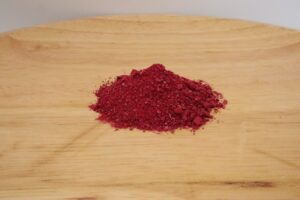
Corn powder is a raw material made by drying sweet corn and then micro-pulverizing it. In uses such as corn soup, cornbread, confectionery dough, beverage blending, and seasonings, it aims to spread corn's inherent sweetness and yellow color evenly. It achieves the "uniform dispersion into liquids and powders" that's hard to manage with fresh or canned corn, thanks to the fine grain size only a powder can offer. At Agriture,

Domestic green papaya powder is a commercial functional raw material made by low- to medium-temperature-drying domestically grown green papaya, then handling it through to grinding consistently at our own processing facility within Kyoto Prefecture. Using no glucose, coloring, or antioxidants, it's finished with a temperature design that retains the papain enzyme contained in green papaya. It's a material we're often asked about in food development that leverages the enzyme's functionality—beauty, health foods, pet supplements, smoothies, and more. We also accept prototypes from 1 kg of raw material. For consultations on dried vegetable and powder OEM here Please let us know your intended use and desired specifications from
TOC
Agriture green papaya powder: three points of care
01 A temperature design that retains the papain enzyme
Papain enzyme, the representative functional component of green papaya, is a protein-degrading enzyme prone to deactivation when exposed to high heat. At Agriture we use a drying profile combining low and medium temperatures, designed to remove moisture while retaining enzyme activity as much as possible. In collaboration with partner farms (growers) in domestic growing regions too, this temperature design underpins the quality of pet-supplement raw material. Vegetable & herb powder list You can also consult us about blending with other materials from
02 A rare domestic raw material, a zero-additive material design
Green papaya is a rare domestic raw material still limited in domestic cultivation volume. At Agriture we use only low-pesticide green papaya sourced directly from contract-growing farms within Japan, finished with no additives whatsoever. It's a specification easy to use in the product design of beauty and health-food brands whose appeal points are "domestic raw material," "additive-free," and "enzyme."The nutritional value and benefits of vegetable powder.
03 Use-specific processing design opens new sales channels
In a collaboration case with a partner farm, we redefined the value of green papaya—which had been hard to find buyers for in general distribution—as a "pet-supplement raw material," adjusting the powder fineness and flavor to match the use. Beyond human beauty supplements and health foods, it's a material deployable as an animal-supplement raw material too. Partner-farm collaboration case.
Product catalog showing the items we handle
Flexible support from small lots to large lots
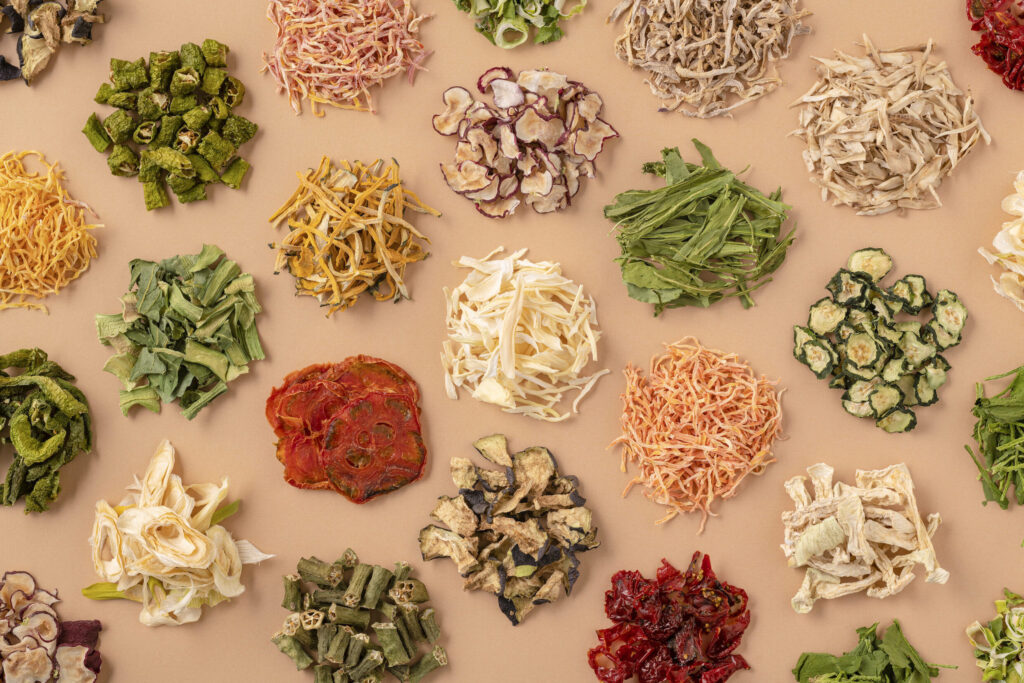
- Sold in small lots from 1 kg
- Handling heirloom vegetables from across Japan
- Dried fruits and herbs also supported
Features of commercial green papaya powder
Retains the papain enzyme
Dried with a temperature design that keeps the activity of the protein-degrading enzyme "papain." A specification easy to use as a raw material for product development that leverages the enzyme's functionality—digestive support, beauty, pet health maintenance, and more.
100% rare domestic raw material
Green papaya, still limited in domestic cultivation volume, sourced directly from contract-growing farms. A raw material suited to the product design of brands that want to lead with "domestic" and "rare material."
A track record with the raw material
We have a processing track record of green papaya grown by partner farms (in domestic growing regions), and can accommodate projects with a strong safety appeal, such as organic-oriented and pet-oriented ones.
Zero additives, no coloring
Glucose, dextrin, antioxidants, and colorants are all unused. It is a specification well suited to the PB development of additive-free brands that want to keep the ingredient labeling simple.
Deployable for both humans and animals
Because it's an additive-free, uncolored specification, it can be handled not only as a food for humans but also as a raw material for pet food and supplements. Its strength is being easy to deploy across multiple product categories with a single raw material.
Product specifications (commercial)
|
Item |
Details |
|---|---|
|
Raw material |
Green papaya (domestic, contract-grown) |
|
Best-before date |
About 6 months from the shipping date when unopened (varies with storage conditions) |
|
Processing plant |
Our own processing plant within Kyoto Prefecture |
|
Shipping unit |
Choose from 500 g bag, 1 kg bag, or 5 kg commercial bag |
|
Minimum-lot OEM |
Prototype from 1 kg of raw material / main production from 10 kg of raw material |
* Prototype consultation is possible from 1 kg of raw material.
Customization support
|
Item |
Available |
Details |
|---|---|---|
|
Blend design |
◎ |
Handles pre-blending with other enzyme-family materials, superfoods, and grain flours |
|
OEM small-lot prototyping |
◎ |
Multiple versions can be prototyped in parallel from 1 kg of raw material |
|
Packaging changes |
◎ |
500 g, 1 kg, and 5 kg bags can be sorted out |
|
Quality document issuance |
◯ |
Specification sheet, raw-material origin certification, microbiological test report (discussed per project) |
POWDER
Leave blend development with other functional-material powders to us
Beyond green papaya powder alone, we also handle the development of "superfood blends" combining it with materials that can appeal to functionality, such as moringa, mulberry, and ginger. From more than 60 kinds of vegetable, herb, and fruit powders, we propose raw-material designs to match your product concept.
Commitments to variety, grower, and growing region
Agriture green papaya powder uses green papaya sourced directly from contract-growing farms within Japan. Green papaya is a fruit-vegetable whose cultivation is spreading in warm regions of Okinawa, Kyushu, and Kanto, but it's unfamiliar in general distribution, and routes for stable supply as a processing raw material are limited. At Agriture we secure raw material through direct partnership with agricultural corporations and carry out processing designs to match the use.
BRAND
Variety: Uses immature fruit (green papaya) rich in papain enzyme as the raw material. Unlike ripe papaya, it's harvested and processed at a stage with a high enzyme content.
PRODUCER
Producer: Sourced directly from domestic contract farms, including partner farms (in domestic growing regions). Partner farms grow green papaya and have a processing track record as a pet-supplement raw material.
REGION
Growing region: Partnering with domestic green papaya growers, centered on domestic growing regions, Okinawa Prefecture, and the Kyushu region. Through sourcing timed to the harvest, we aim for stable supply as a domestic raw material.
CULTIVATION
Cultivation method: Partner farms conduct the cultivation. Through managed cultivation that curbs pesticide use, we secure raw material that can accommodate projects with a strong safety appeal, such as pet-oriented and baby-oriented ones.
Low-temperature drying technology and quality control
The papain enzyme contained in green papaya is an enzyme with a protein-degrading action, deactivating when exposed to high heat. At Agriture we use a drying profile combining low and medium temperatures, with a process design that removes moisture while keeping enzyme activity. In collaboration with partner farms too, this temperature management underpins the quality as a functional raw material.
Manufacturing takes place at our own processing facility within Kyoto Prefecture, with consistent management from raw-material acceptance inspection through shipment. We fill it hygienically through a foreign-matter-removal step, and for OEM projects issue necessary documents—specification sheets, raw-material country-of-origin certificates, microbial test reports, and so on—after consulting on each project.
💡 TIPS | Green-papaya trivia
Because papain enzyme has the power to break down protein, it's a component long used for pre-treating meat too. Powdering it turns it into a form easy to take in as a raw material for smoothies and supplements. Partner farms leverage this trait, using it as a supplement raw material aimed at supporting pets' digestion. It's a prime example of how even ingredients hard to sell in general distribution can have their value redefined by specializing the use.
Use cases and adoption examples
A raw material for beauty and enzyme supplements
- Suitable products: Enzyme supplements, beauty supplements, digestive aids
- Blending guide: 100–300 mg per capsule
- Points to note in development: To retain enzyme activity, a production line that avoids heating steps is preferable
A raw material for pet supplements
A use with a track record in a collaboration case with partner farms (in domestic growing regions). We powder green papaya as a raw material for supplements aimed at supporting the digestion of dogs and cats. We assist with a consistent setup that includes final packaging.
- Suitable products: Digestive supplements for pets, food toppers for dogs and cats
- Blending guide: 0.5–2 g per serving
- Points to note in development For storage, sealed storage away from light, heat, and moisture is best. Use it up promptly after opening, or reduce air contact with a zip bag to keep the flavor longer.
Smoothies / health drinks
A use where it can be used as a differentiation material for smoothies and meal-replacement drinks as an enzyme-containing "superfood." Blended with other green materials or fruit powders, it enables the development of original recipes.
- Suitable products: Enzyme smoothies, meal-replacement drinks, cold-press-style beverages
- Blending guide: 2–5% of the total drink
- Points to note in development: Because it doesn't dissolve completely, a recipe that accounts for dispersion design is needed
Functional tea-leaf blends
- Suitable products: Enzyme herbal teas, functional tea bags, gelato, sherbet, gummies, jellies, and other items where enzyme activity can be retained in a non-heat to low-heat process.
- Suitable products: Tropical gelato, enzyme gummies, papaya jelly
- Blending guide: 1–5% of the material weight
- Points to note in development: Because high-heat cooking deactivates the enzyme, watch the timing of blending
- Partner farm × Agriture green-papaya drying-processing case
- Vegetable & herb powder list
- The nutritional value and benefits of vegetable powder
- Sold in small lots from 1 kg
- Handling heirloom vegetables from across Japan
- Dried fruits and herbs also supported
Points on commercial use and storage
Green papaya powder needs no rehydration and can be used by adding it as is to supplement raw materials, drinks, and dessert materials. If you want to leverage enzyme activity, the point is to avoid heating steps above 60°C, or to set the blending timing at a cooling step after heating.
For storage, sealed storage away from light, heat, and moisture is best. Use it up promptly after opening, or reduce air contact with nitrogen flushing or a zip bag to keep enzyme activity and flavor longer.
Related cases and articles
Product catalog showing the items we handle
Flexible support from small lots to large lots
Frequently asked questions
Q. Does papain enzyme activity remain after drying?
A. At Agriture we use a drying profile combining low and medium temperatures, designed to retain enzyme activity as much as possible. Because post-processing enzyme activity varies with the raw-material state and processing conditions, confirming a sample at the prototype stage is the surest approach.
Q. What is the minimum lot and prototype handling?
Q. Can it be used as a pet-supplement raw material?
A. In a collaboration with partner farms (in domestic growing regions), we have a processing track record as a pet-supplement raw material. We have experience handling projects using green papaya, so please inquire for details.
Q. Can you issue a certificate of raw material origin and an analysis table?
A. For both a raw-material country-of-origin certificate showing it's domestic green papaya and a microbial test report, we proceed with issuance after consulting on each project. We also accommodate documents meeting safety standards for pet food.
Q. Can it be blended with other functional materials?
A. Yes. We can propose blend designs combining it with materials that can appeal to functionality, such as moringa, mulberry, ginger, and young barley grass. We also handle the blend design of superfood mixes and enzyme blends.
Q. What is the lead time?
A. If stock is available, we can ship within a guide of 2–3 weeks after order. For projects involving new sourcing, please plan a lead time of 4–8 weeks, given the timing of the harvest.
Q. Please tell me the flow of an OEM consultation
A. We proceed in the flow of: consult via the inquiry form → concept hearing → sample delivery → paid prototype (from 1 kg of raw material) → spec confirmation → full production. Hands-on development support is available, including a temperature design that emphasizes enzyme activity and use-specific proposals for human and pet applications.