
We Prototyped "Dried Beet" Using Domestically Grown Beet

Agriture prototyped a "dried beet" made from domestically grown beets. The beet is a root vegetable known for its vivid purple color, used in a variety of dishes such as salads, soups, and smoothies.
In this prototype, we were able to finish the drying with the beet's characteristic purple color firmly retained. Drying slowly at low temperature curbs color deterioration while preserving the material's own sweetness. The finish is excellent, with both chip and slice forms coming out vividly colored.
Powdered, dried beet can also serve as a natural coloring material, making it well suited to confectionery, bread, and smoothie-mix development. With its strong visual impact, it's also ideal for product-making mindful of social-media appeal.
Agriture offers OEM manufacturing of dried vegetables and powders and proposals as commercial raw materials. You can consult us about the drying and powdering of beets from the prototype stage.
TOC
Features of dried beet and pigment-retention insights
The beet is a root vegetable of the Amaranthaceae family, and its greatest feature is the vivid purple-red of its cross-section. This color comes from betalain pigments (betacyanins), and the strength of Agriture's dried beet is that the purple firmly remains even after drying. Because it can impart a natural purple-red to products without synthetic coloring, it's drawing growing inquiries in natural-oriented food development. You can check the chip-form specifications on the existing dried beet product page.
Pigment retention and applications by form
Dried beet's color yield and suitability differ by processing form. Here's a guide for when you're considering it as a natural coloring material.
| Shape | Color yield | Rehydration after drying |
|---|---|---|
| Chip (slice) | The cross-section's purple-red remains as is | Salad topping, snacks, gifts |
| Diced | More surface area, so faster color release into cooking liquid | Ingredient for soups, curries, and pickles |
| Powder | Uniform purple-red that can color the entire blend target | Pasta, bread, smoothies, natural coloring |
Beet's betalain pigment is water-soluble and heat-sensitive, but temperature control during drying raises the pigment retention rate. For details on the powder form, see the beet powder product page.
You can check the details of turnip's powder form on the
Beet is a material with good pigment retention after drying. We're seeing more inquiries about using it as a purple natural coloring, and it's well received for producing a vivid purple-red without synthetic coloring simply by blending in the powder. That said, since betalain's color development changes with pH and heating conditions, we recommend confirming compatibility with the blend target at the prototype stage.
.
Dried beet can be used in product design from both the "color" and "nutrient" angles. Here are ideas by application.
Natural coloring, pigment material
As an alternative to synthetic coloring, beet powder can impart a pink to purple-red simply by mixing it into pasta, bread, or confectionery dough. It's a natural pigment suited to "clean label" products.
- Pink pasta, gyoza wrappers, udon dough
- Naturally colored macarons, cookies, cakes
- Coloring for Valentine's chocolates and sweets
Smoothies, drinks
Beet powder adds vivid color and sweetness simply by dissolving into smoothies or protein drinks. Demand is also growing for beet drinks taken before and after training.
- Material for beet smoothies and cold-pressed juices
- Flavor and pigment for protein drinks
- Natural coloring blend for amazake and soy-milk lattes
Soups, prepared dishes
Diced dried beet works as an ingredient for soups and curries, balancing color with sweetness. It can also be used as an ingredient in borscht-style soups or as a steeping material for pickles.
- Ingredient for borscht-style soups and minestrone
- Color accent for curries and stews
- Steeping material for pickles and marinades
Health foods, supplements
It's also used as a health-food material drawing on the nitrates, betaine, and potassium in beets. Vegetable powder list and you can also consider combinations with other superfood materials.
- Sports supplements containing beet
- Blending material for green juice and green smoothies
- Color and nutrients for energy bars and protein bars
FOR BUSINESS
乾燥ビーツを、原料としてお探しですか
国産のビーツを乾燥・粉砕してお出ししています。カット形状や粒度の指定、継続してのお取引もご相談ください。規格は Dried beetroot・Beet powder に掲載しています。
少量でのご購入は、姉妹ブランドの通販サイト OYAOYA で承っています。
A base raw material for vegetable bouillon and dashi powder
Here are the representative specifications for commercial lots of dried beet. We support processing with temperature control that prioritizes pigment retention.
A vegetable base powder for baby food
| Item | Agriture's manufacturing specs and OEM support |
|---|---|
| Raw materials | Domestic beet |
| Manufacturing spec | Chip (slice) / diced / powder |
| Processing plant | Our own processing plant within Kyoto Prefecture |
| Additives | Domestic turnip |
| Best-before date | About 6 months from the shipping date |
| Processing shape | From 1 kg of raw material |
| Main production lot | Slice / dice cut / powder |
| Not used | Minimum prototyping lot |
Customization support
- Form: selectable from three types—chip, diced, or powder
- Blending: pre-blending available with other vegetable powders and fruit powders
- Specification sheet, certificate of raw material origin, microbiological test report
- Shape: slice (for pickles), dice cut (for ingredients), powder
Blending: pre-blend support with other dried vegetables
Because pigment retention is often the core of the application for beet, we recommend a color-development test with the blend target at the prototype stage.
- dried vegetable / powder OEM inquiry form Label: besides unbranded delivery, PB filling under the OEM client's brand supported
- Share the blend target's pH range and heating conditions in a concept hearing (via Zoom or email)
- Ship a prototype sample per 1kg of raw material (usually 2–3 weeks). Comparative prototyping of different forms is possible
- Contact us with the prototyping content, desired shape, and assumed application via
- Share the requirements of the blending destination in a concept hearing (Zoom or email)
Product catalog showing the items we handle
Flexible support from small lots to large lots
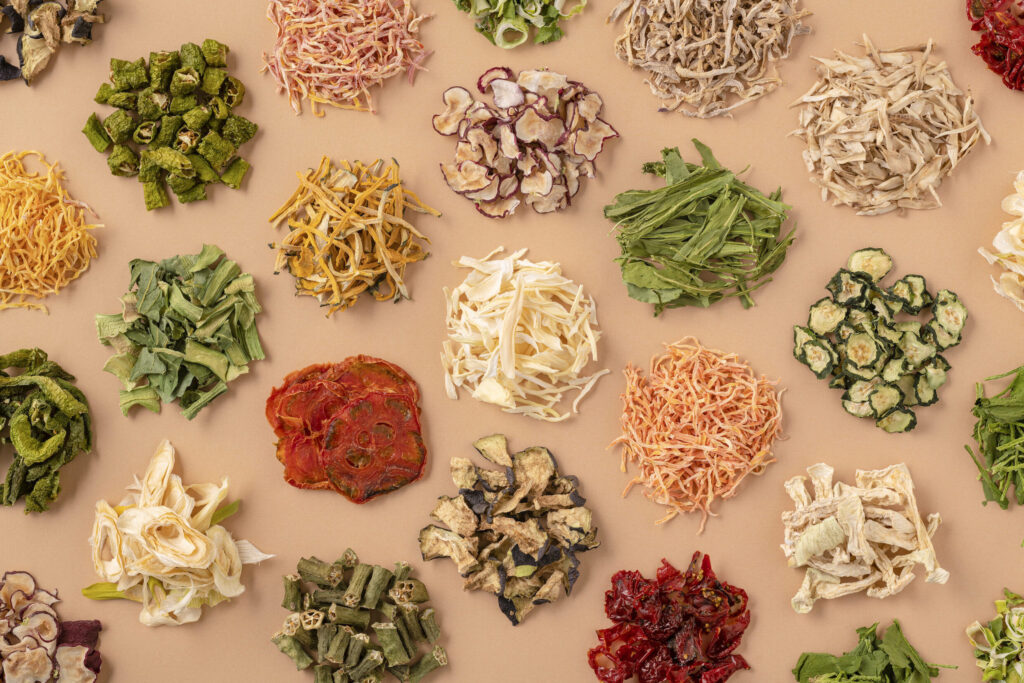
- Sold in small lots from 1 kg
- Handling heirloom vegetables from across Japan
- Dried fruits and herbs also supported
FOR BUSINESS
乾燥ビーツを、原料としてお探しですか
国産のビーツを乾燥・粉砕してお出ししています。カット形状や粒度の指定、継続してのお取引もご相談ください。規格は Dried beetroot・Beet powder に掲載しています。
少量でのご購入は、姉妹ブランドの通販サイト OYAOYA で承っています。
Frequently asked questions
Q. Does the beet's color remain after drying?
A. The purple-red firmly remains. Betalain pigment is water-soluble, but temperature control during drying raises the pigment retention rate. Since color development changes with the blend target's pH and heating conditions, we recommend confirmation in a prototype.
Q. Is beet's earthy smell noticeable?
A. Beet's characteristic earthy flavor (from geosmin) remains, but drying makes it somewhat milder. Blended into smoothies or confectionery dough, it often balances out with the flavors of other materials.
Q. Can it be used in place of natural coloring?
A. Beet powder is a blend as a food raw material, not a food additive (coloring). Because it can be labeled as "ingredient: beet," it suits clean-label product designs.
Q. Can it be blended with other vegetable powders?
A. It can be combined with the 60-plus materials processed at Agriture. Vegetable powder list page Please check the specifications on
Q. Can it be blended with other dried vegetables?
A. It can be combined with the 60-plus dried vegetables handled by Agriture. Please check the items handled on
Related pages and further reading
- We Prototyped "Asparagus Stem Powder" Using the Stems of Domestically Grown Asparagus
- We Prototyped "Dried Wakegi and Wakegi Powder" Using Domestically Grown Wakegi
Author of this article
Related articles
-
 We Prototyped "Chestnut Skin Powder" Using Domestically Grown Chestnut Skins
 -
 A Notice About the Rose Prototype
 -
 We produced a prototype of dried cactus made from domestic cactus (nopal)
 -
We Made a Prototype of Dried Blueberry Leaf Using Japanese-Grown Blueberry Leaves
-
 We Prototyped "Basil Powder" Using Domestically Grown Sweet Basil
 -
 We Prototyped "Purple Chili Powder" Using Domestically Grown Purple Chili
 -
 We Prototyped "Asparagus Powder" Using Domestically Grown Asparagus
 -
 We Prototyped "Green Papaya Powder" Using Domestically Grown Green Papaya