
We Prototyped "Purple Chili Powder" Using Domestically Grown Purple Chili

Summary of this article
Agriture prototyped "purple chili pepper powder" using domestic purple chili peppers. Purple chili peppers, rich in anthocyanin, are slowly dried at low temperature and powdered without glucose and without colorants. The temperature is optimized so as not to spoil the purple coloring, and it can be used in a wide range of product development—seasonings, spice mixes, craft beer, chocolate, and more.
This time, Agriture prototyped "purple chili pepper powder" using domestic purple chili pepper. Purple chili pepper is a variety rich in anthocyanin, distinguished by a beautiful purple color and a fruity aroma. It has a deep richness within its pungency and is drawing attention as a material that adds an accent of color and flavor to dishes, confectionery, drinks, and the like.

In this prototype, we slowly dried domestic purple chili peppers at low temperature and powdered them without glucose and without colorants. Optimizing temperature and time so as not to spoil the purple coloring, we draw out a natural color tone and aroma. While it has the stimulating pungency characteristic of chili peppers, it has the soft aftertaste characteristic of the purple variety, and can be applied widely to both Western and Japanese menus.
Making it into powder has also made it easier to add to seasonings, spice mixes, craft beer, chocolate, and the like. It is also drawing attention from the standpoints of "colorful vegetables" and "functional spices," and has value as a naturally derived pigment raw material.
Agriture supports drying and powder processing using domestic vegetables and regional specialty chili peppers, and small-lot prototyping as OEM or commercial raw material is also possible. Companies interested in new-product development that makes the most of purple chili pepper are welcome to consult us freely.

Characteristics of purple chili pepper powder and points to note about its components
Purple chili pepper is a variety of the genus Capsicum in the Solanaceae family, distinguished by anthocyanin pigment in the fruit skin. Its pungent component, capsaicin, is more restrained than ordinary takanotsume, and consultations for prototyping are increasing as a material that can make use of both a mild pungency and a distinctive color at the same time. Anthocyanin's coloring changes depending on pH—shifting to red-purple in acidic environments, purple in neutral, and blue-purple toward alkaline. Development cases for color-changing drinks and seasonings making use of this property are emerging. Detailed specs can also be checked on the purple chili pepper powder product page.
The difference from ordinary chili pepper powder
For purple chili pepper powder, the direction of design differs from red chili pepper types in color, pungency, and application alike. When comparing at the development stage, use the following table as a guide (figures vary by variety, cultivation environment, and harvest time).
| Item | Purple chili pepper powder | Ichimi togarashi (takanotsume type) |
|---|---|---|
| Main pigment | Anthocyanin (color changes with pH) | Capsanthin (fixed red) |
| Pungency intensity | Mild (about bell pepper to shishito) | Strong |
| Main use | Color-changing drinks, purple seasonings, sweets | Adding pungency, condiment |
| Effect on coloring | Color changes with the pH of the blending destination (a design element) | Stable red |
| Powder color | Dark purple to brown-purple (varies with drying conditions) | Red to orange-red |
Since the anthocyanin in purple chili pepper is water-soluble, it fades if the drying temperature is too high. Agriture uses a process design that dries at low temperature while managing product temperature, raising the retention rate of the pigment.
You can check the details of turnip's powder form on the
Anthocyanin's coloring is affected by both pH and temperature. At the prototyping stage, sharing the pH range of the blending destination lets us simulate the finished color in advance. Since coloring changes greatly between an acidic-leaning citrus drink and a neutral-leaning cream sauce, we recommend 2–3 patterns of blending tests.
.
Purple chili pepper powder suits product development centered on "color" and "a mild sense of spice" rather than pungency. We introduce representative ideas by application.
Color-changing drinks and craft syrups
Adding lemon juice or citric acid lowers the pH and changes the color from purple to red-purple. A material used in prototyping craft sodas, cocktail syrups, and lemonades that make use of this visual presentation. It is compatible with drink products that emphasize being SNS-worthy, and it is also an application we are consulted about often as a PB raw material for restaurants.
- A base pigment for craft cordials and herb sodas
- Cocktail syrups (presenting color change by adding acidity)
- A coloring raw material for flavored tea and herbal tea
Seasonings and seasoning blends
Because the pungency is mild, it suits formulations of "we want to add color but too much pungency is a problem." It is used in prototyping seasonings that can aim for visual differentiation—blending into herb salt, furikake, and miso sauce, and curry powder that makes use of the purple color. The nutritional value and benefits of vegetable powder.
- Purple herb salt and pepper mixes
- A mildly pungent curry powder blend
- Adding color to furikake and miso sauce
Confectionery and sweets
Purple chili pepper's mild sense of spice is compatible with chocolate, and there is a prototyping track record as a raw material for chili-chocolate-type sweets. Since anthocyanin's coloring shifts toward brown after baking, adding it as a pre-baking topping or in the finishing process is recommended.
- A pungency raw material for chili chocolate and bonbon chocolat
- Coloring for spice cookies and biscotti
- A spice accent for gelato and sorbet
Functional foods and health foods
There is also interest as a prototyping raw material for health foods focusing on the combination of anthocyanin and capsaicin. Prototyping from small quantities is possible as a blending material for supplements, aojiru blends, and protein bars. Vegetable powder list page you can also check combinations with other materials on.
- A capsaicin-type supplement raw material
- A functional drink mix containing anthocyanin
- Flavor design for spice-type protein bars
FOR BUSINESS
乾燥紫唐辛子を、原料としてお探しですか
国産の紫唐辛子を乾燥・粉砕してお出ししています。カット形状や粒度の指定、継続してのお取引もご相談ください。規格は Dried purple chili pepper・Purple chili pepper powder に掲載しています。
紫唐辛子の少量販売は姉妹ブランドの OYAOYA では取り扱いがありません。ほかの品目はカタログをご覧ください。
A base raw material for vegetable bouillon and dashi powder
We have compiled representative specifications for Agriture's commercial lots of purple chili pepper powder. We use a low-temperature drying process that emphasizes pigment retention. On the product page, Purple chili pepper powder spec details please refer to together with.
A vegetable base powder for baby food
| Item | Agriture's manufacturing specs and OEM support |
|---|---|
| Raw materials | Domestic purple chili pepper (fruit, contract-cultivated) |
| Processing step | Washing → low-temperature hot-air drying (temperature design emphasizing pigment retention) → grinding → filling |
| Additives | No colorants or antioxidants used |
| Storage period | A guide of about 6 months from the shipping date (varies by storage conditions) |
| Processing shape | From 1 kg of raw material |
| Main production lot | Slice / dice cut / powder |
| Not used | Minimum prototyping lot |
Customization support
- Blending: pre-blend support with other spice powders, herbs, and salt
- Packaging: four types—500 g bag, 1 kg bag, 5 kg commercial bag
- Shape: slice (for pickles), dice cut (for ingredients), powder
- Growing region: multiple domestic contract-cultivation routes prepared
Blending: pre-blend support with other dried vegetables
Since the pigment retention rate of purple chili pepper powder changes with the drying temperature, a prototyping step to confirm the coloring suited to the application is important. The representative way to proceed is as follows.
- dried vegetable / powder OEM inquiry form Contact us with the prototyping content, application, and desired specifications via
- Share the assumed product, the pH range of the blending destination, and the target color in a concept hearing (Zoom or email)
- We ship prototype samples in 1 kg units of raw material (normally 2–3 weeks). Comparative prototyping across different drying temperatures is possible
- Contact us with the prototyping content, desired shape, and assumed application via
- Main manufacturing (from 10 kg of raw material). Issuing necessary documents and lot-by-lot quality inspection supported
Product catalog showing the items we handle
Flexible support from small lots to large lots
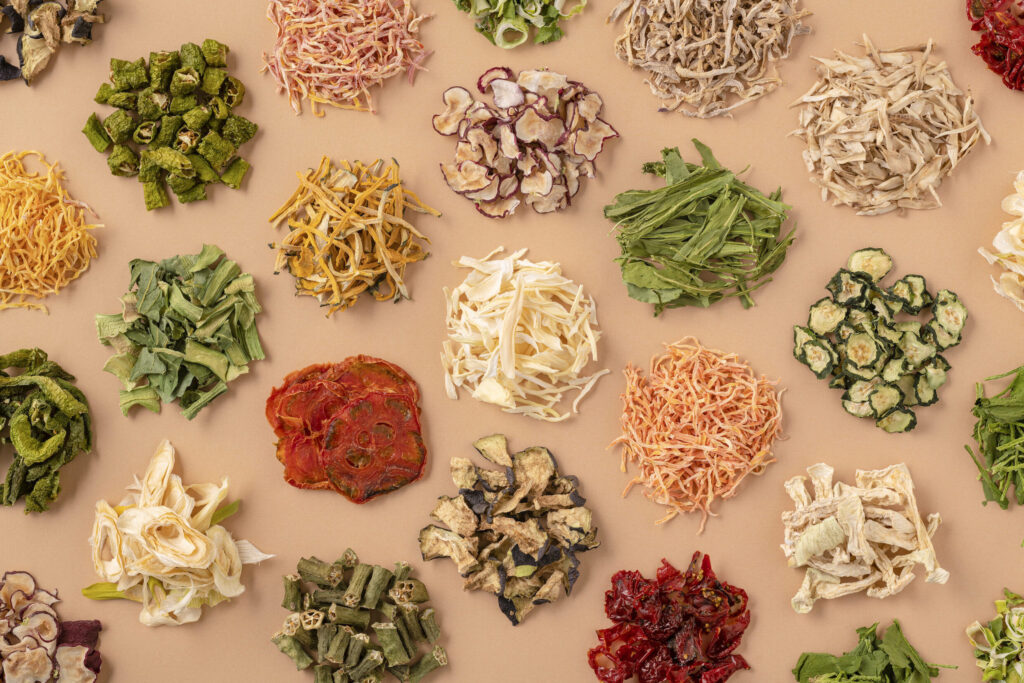
- Sold in small lots from 1 kg
- Handling heirloom vegetables from across Japan
- Dried fruits and herbs also supported
FOR BUSINESS
乾燥紫唐辛子を、原料としてお探しですか
国産の紫唐辛子を乾燥・粉砕してお出ししています。カット形状や粒度の指定、継続してのお取引もご相談ください。規格は Dried purple chili pepper・Purple chili pepper powder に掲載しています。
紫唐辛子の少量販売は姉妹ブランドの OYAOYA では取り扱いがありません。ほかの品目はカタログをご覧ください。
Frequently asked questions
Q. How pungent is purple chili pepper?
A. It depends on the variety, but generally it has a mild pungency close to bell pepper to shishito. It has no strong pungency like takanotsume or habanero, making it a material easy for those who dislike pungency to accept. However, since there is variation in pungency between lots, we recommend sensory evaluation at the prototyping stage.
Q. Does the anthocyanin color remain when heated?
A. Since anthocyanin is a heat-sensitive pigment, it tends to fade with high-temperature, long-duration heating. When using it in baking or simmering, we recommend adding it in the finishing process. It is an application where coloring tends to be stable in non-heated to low-temperature cooking such as drinks and sauces.
Q. Can it be blended with other vegetable powders?
A. Yes. It can be combined with the 60-plus vegetable and herb powders that Agriture dries and processes to design original spice mixes and blended seasonings. Vegetable powder list page Please check the specifications on
Q. Can you issue a certificate of raw material origin and an analysis table?
A. We can issue both a certificate of raw material origin showing that it is domestic raw material and a microbiological test report. We also support the quality requirements for mass retailers, mail order, and gift products.
Q. Can it be blended with other dried vegetables?
Related pages and further reading
- We Prototyped "Basil Powder" Using Domestically Grown Sweet Basil
- We Prototyped "Asparagus Powder" Using Domestically Grown Asparagus
Author of this article
Related articles
-
 We released a free news release posting service on our operated “Food OEM Directory”
 -
 We Prototyped "Chestnut Skin Powder" Using Domestically Grown Chestnut Skins
 -
 A Notice About the Rose Prototype
 -
 Products from OYAOYA, A Letter from a Pear, and Agriture featured on "Urelio"
 -
 Launched the employee-benefit service “Office Yaoya (OFFICE YAOYA)”
 -
 OYAOYA, a dried-vegetable brand using Kyoto vegetables, announces it will become a consolidated subsidiary of global cutlery maker Kai through M&A
 -
 We Published the Dried Vegetable Projects Page
 -
 Is There Demand for Dried Vegetables in Dubai?