
We Prototyped "Asparagus Powder" Using Domestically Grown Asparagus

Summary of this article
At Agriture, we prototyped an "asparagus powder" using domestic asparagus. Fresh domestic asparagus is carefully dried at low temperature and powdered, glucose-free and without coloring. Rich in aspartic acid, amino acids, and vitamins, it can be used in a wide range of processed foods such as soups, dressings, pasta sauces, and smoothies.
This time, Agriture prototyped "purple chili pepper powder" using domestic Asparagus We prototyped an "asparagus powder" using it. Asparagus is a vegetable that comes into season from spring to early summer, characterized by a juicy sweetness and aroma. Rich in amino acids such as aspartic acid, and in vitamins, it is drawing attention along with rising health consciousness.

In this prototype, we carefully dried fresh domestic asparagus at low temperature and powdered it, glucose-free and without coloring. The powder, which makes use of the vegetable's natural sweetness and vivid green color, can be used across a wide range of processed foods such as soups, potages, dressings, pasta sauces, and snacks.
At Agriture, we carry out drying and powder processing centered on domestic vegetables, handling everything from ingredient proposals to OEM manufacturing. Our green-vegetable powder series, including asparagus, can be applied across a wide range of fields such as functional foods, health beverages, and commercial soups. Companies with an interest are welcome to consult us.

Features of asparagus powder and points to note about its components
Asparagus (Asparagus officinalis) is a perennial in the Asparagaceae family, and asparagus powder is a material made by drying and grinding the young stems harvested from spring to early summer. Aspartic acid and other amino acids, B vitamins, folic acid, rutin, and the like are the points of focus in development, but because content varies with variety, growing region, and harvest timing, we recommend checking the flavor lot by lot at the prototype stage. It is notable for finishing into a powder that retains a vivid green, suited to product design that makes use of the color. For spec details, see the asparagus powder product page.
Using fresh, frozen, and powder forms for the right purpose
Asparagus varies greatly in commercial use depending on its form. Use the comparison table below as a guide for choices at the development stage (figures vary with the state of the raw material and the moisture content at harvest).
| Item | Fresh asparagus | Frozen cut | Powder |
|---|---|---|---|
| Main use | Salads, grilling, stir-fries | Soups, stir-fries | Potages, green juice, confectionery, seasonings |
| Storage period guide | Refrigerated 3-5 days | About 6 months frozen | About 6 months from the shipping date |
| Dispersibility | Not suitable | Not suitable | Excellent (blends evenly into soups and drinks) |
| Color | Vivid green | Slight browning | Green can be retained with low-temperature drying |
| Seasonal influence | Limited to spring–early summer | Year-round when frozen | Year-round supply possible as a dried powder |
Because asparagus has a high moisture content, yield varies with the raw material's variety and moisture level. We provide the measured values for each lot, documented in the specification sheet at the prototype stage.
You can check the details of turnip's powder form on the
Asparagus's green color tends to turn brown under high-temperature drying. At Agriture we use a profile that controls product temperature and removes only moisture at low temperature, preserving the finished green. For projects that prioritize a visible green for potages or green juice, we recommend a prototype run comparing drying temperature against the post-grinding color difference.
.
Asparagus powder is used across a wide range of product development, from beverages to confectionery, centered on its beautiful green color and asparagus's distinctive sweetness and green aroma. Here are some representative applications.
Soups and potages
A classic use for asparagus powder is potage soup. It removes the need to sieve fresh asparagus—simply dissolve the powder into milk or bouillon for an even finish. It is also easy to adopt as a raw material for freeze-dried soups and cup soups, and it's a material used in prototypes for spring-limited products.
- Base material for potage soups and vichyssoise
- Blending material for freeze-dried soups and cup soups
- PB development of commercial soup bases for restaurants
Green juice, smoothies, health drinks
It has a sweet flavor distinct from kale or young barley grass, and we handle requests to develop an easy-to-drink green juice. It also has a prototype track record as a blending material for smoothie mixes and protein drinks. The nutritional value and benefits of vegetable powder is also a helpful reference.
- Blending material for green juice powder (as a low-bitterness vegetable)
- Blending material for smoothie mixes and green drinks
- Kneading into protein bars and nutritional supplements
Confectionery, pasta, bakery
Kneaded into pasta or bread dough, it produces a vivid green dough that helps differentiate the appearance. For baked goods such as financiers and madeleines, it's also possible to design a green tint that remains after baking.
- Kneading material for green pasta and vegetable pasta
- Dough blending for madeleines, financiers, and scones
- Vegetable bread material for sandwich bread and focaccia
Seasonings, dips
It's used to develop seasoning salts and dip sauces that draw on asparagus's green aroma and gentle sweetness. Mixed into cheese-based dips or cream cheese spreads, it adds both green color and flavor. Vegetable powder list page you can also check combinations with other materials on.
- Blending material for vegetable seasoning salt
- Blending into cream cheese–based dips
- Flavoring for dressings and mayonnaise-based sauces
FOR BUSINESS
乾燥アスパラを、原料としてお探しですか
国産のアスパラを乾燥・粉砕してお出ししています。カット形状や粒度の指定、継続してのお取引もご相談ください。規格は 乾燥アスパラ・Asparagus powder に掲載しています。
アスパラの少量販売は姉妹ブランドの OYAOYA では取り扱いがありません。ほかの品目はカタログをご覧ください。
A base raw material for vegetable bouillon and dashi powder
Here are the representative specifications for Agriture's commercial lots of asparagus powder. We use a low-temperature drying process that prioritizes color retention. Asparagus powder specifications please refer to together with.
A vegetable base powder for baby food
| Item | Agriture's manufacturing specs and OEM support |
|---|---|
| Raw materials | Domestically grown asparagus (young stalks, contract-farmed) |
| Processing step | Washing → low-temperature hot-air drying (product-temperature control) → grinding → filling |
| Additives | No colorants or antioxidants used |
| Storage period | A guide of about 6 months from the shipping date (varies by storage conditions) |
| Processing shape | From 1 kg of raw material |
| Main production lot | Slice / dice cut / powder |
| Not used | Minimum prototyping lot |
Customization support
- Blending: pre-blending available with other vegetable powders, herbs, and fruit powders
- Packaging: four types—500 g bag, 1 kg bag, 5 kg commercial bag
- Shape: slice (for pickles), dice cut (for ingredients), powder
- Growing region: multiple domestic contract-cultivation routes prepared
Blending: pre-blend support with other dried vegetables
Because asparagus has a high moisture content and its color changes considerably with drying conditions, we recommend a process of confirming the target color and flavor at the prototype stage.
- dried vegetable / powder OEM inquiry form Contact us with the prototyping content, application, and desired specifications via
- Share your intended product and target color and flavor in a concept hearing (via Zoom or email)
- Contact us with the prototyping content, desired shape, and assumed application via
- Main manufacturing (from 10 kg of raw material). Issuing necessary documents and lot-by-lot quality inspection supported
Product catalog showing the items we handle
Flexible support from small lots to large lots
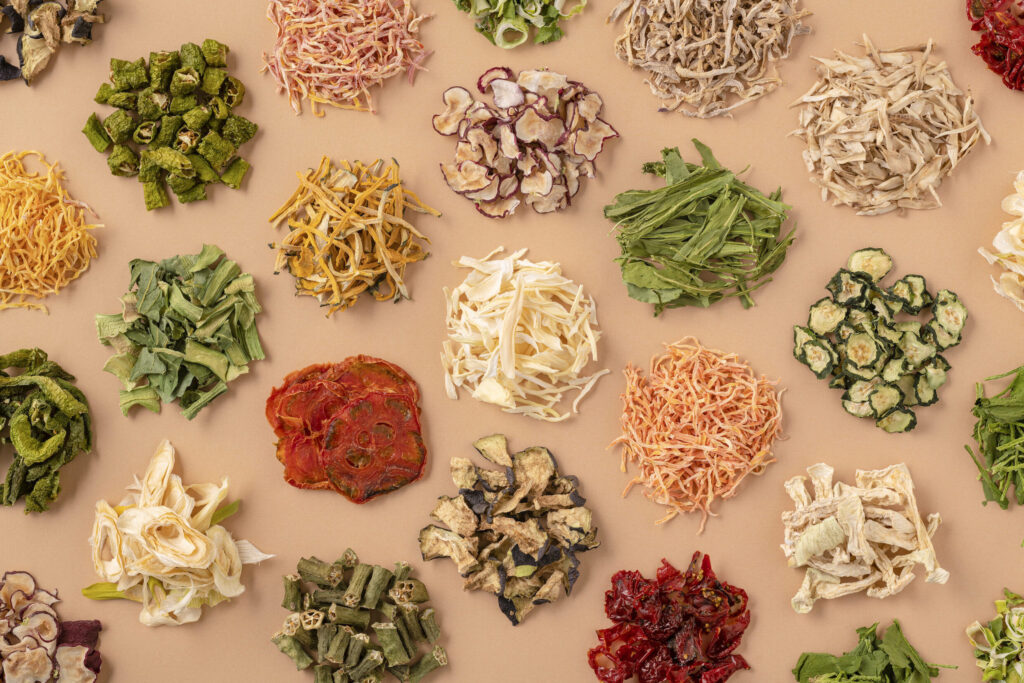
- Sold in small lots from 1 kg
- Handling heirloom vegetables from across Japan
- Dried fruits and herbs also supported
FOR BUSINESS
乾燥アスパラを、原料としてお探しですか
国産のアスパラを乾燥・粉砕してお出ししています。カット形状や粒度の指定、継続してのお取引もご相談ください。規格は 乾燥アスパラ・Asparagus powder に掲載しています。
アスパラの少量販売は姉妹ブランドの OYAOYA では取り扱いがありません。ほかの品目はカタログをご覧ください。
Frequently asked questions
Q. Can asparagus powder be supplied year-round?
A. Asparagus is harvested mainly from spring to early summer, but by processing and storing in bulk during the season we support year-round supply. If your annual usage is fixed, letting us know the required volume in advance makes things go smoothly.
Q. Can it be blended with other vegetable powders?
A. Yes. We can design an original blend combining it with the 60-plus varieties of vegetable, herb, and fruit powders processed at Agriture. Vegetable powder list page Please check the items on
Q. How well is the green color retained?
A. Our low-temperature drying process retains the raw material's green color as much as possible. That said, the color varies with the storage environment (light and moisture protection) and whether heat cooking is involved. For products where color matters, we recommend confirming packaging specifications alongside a storage test at the prototype stage.
Q. Can you issue a certificate of raw material origin and an analysis table?
A. We can issue both a certificate of origin proving the raw material is domestically grown and a microbiological test report. We also meet the quality requirements of mass retailers and mail-order channels.
Q. Can it be blended with other dried vegetables?
Related pages and further reading
- We Prototyped "Purple Chili Powder" Using Domestically Grown Purple Chili
- We Prototyped "Green Papaya Powder" Using Domestically Grown Green Papaya
Author of this article
Related articles
-
 We released a free news release posting service on our operated “Food OEM Directory”
 -
 We Prototyped "Chestnut Skin Powder" Using Domestically Grown Chestnut Skins
 -
 A Notice About the Rose Prototype
 -
 Products from OYAOYA, A Letter from a Pear, and Agriture featured on "Urelio"
 -
 Launched the employee-benefit service “Office Yaoya (OFFICE YAOYA)”
 -
 OYAOYA, a dried-vegetable brand using Kyoto vegetables, announces it will become a consolidated subsidiary of global cutlery maker Kai through M&A
 -
 We Published the Dried Vegetable Projects Page
 -
 Is There Demand for Dried Vegetables in Dubai?