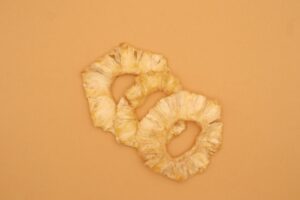
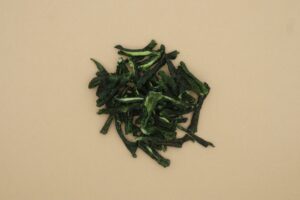
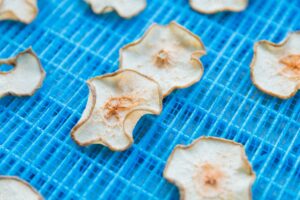
Dried turnip

Kabu (turnip) is a Brassicaceae vegetable characterized by gentle sweetness and a smooth texture, used in a wide range of dishes—mainly Japanese cuisine, as well as soups, simmered dishes, and pickles. Dried kabu is a commercial ingredient made by carefully drying domestic produce at low temperature, retaining kabu's inherent gentle sweetness and smooth mouthfeel in dried form. It is a material often requested in food development that wants to make use of a gentle flavor and texture—a base ingredient for potage, a secondary material for baby food and nursing-care food, and a simmered-dish ingredient in Japanese cuisine. For consultations on dried vegetable and powder OEM here and let us know your intended use and desired cut form.
TOC
Three commitments of Agriture's dried kabu
01 Retaining gentle sweetness and smoothness through low-temperature drying
Kabu is a vegetable whose sweetness increases and whose texture becomes soft and creamy when heated. High-temperature drying turns the sweetness into a scorched nuance and loses the smooth texture too. Agriture slowly removes moisture with a low-temperature hot-air method, giving a finish that, when rehydrated, can reproduce kabu's inherent gentle sweetness and smooth texture.
02 A design optimal as a potage base ingredient
Kabu is a vegetable with high moisture content that gives a natural thickness when made into potage. Rehydrating dried kabu in hot water and then blending it lets you make a smooth potage base without additives. It is an area often requested as a thickening material for retort potage, baby-food bases, and nursing-care food.
03 Integrated support from small-lot prototyping to mass production
Agriture accommodates small-lot prototyping in 1kg units, and simultaneous prototyping of multiple cuts—slices, dice, and cubes—is also possible. You can compare rehydration and texture before commercialization, and we support everything from initial PB/OEM development to the shift to mass production in one stop.
Product catalog showing the items we handle
Flexible support from small lots to large lots
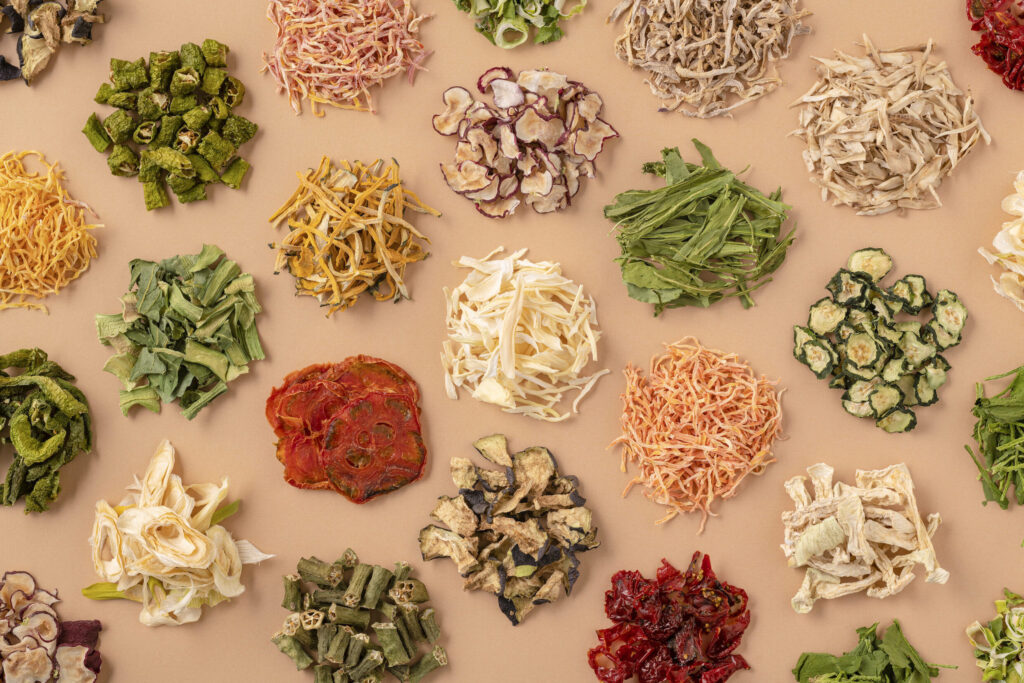
- Sold in small lots from 1 kg
- Handling heirloom vegetables from across Japan
- Dried fruits and herbs also supported
Features of commercial dried kabu
Gentle sweetness and a smooth texture
It retains kabu's distinctive gentle sweetness and the smooth texture that becomes creamy when heated, even in dried form. Rehydrated, it gives a mouthfeel close to fresh kabu—a finish suited to soups and simmered dishes.
Optimal as a potage base
Kabu has high moisture content and, blended, produces a natural thickness. Using dried kabu, you can make a smooth potage base without additives, so it is prized in the ingredient design of retort products.
An elegant white appearance
Kabu's white flesh maintains a pale white to cream color even after drying, and its elegant appearance harmonizes with Japanese and French-style dishes. Made into potage, it gives a beautiful milky-white finish.
Year-round supply with room-temperature storage
Fresh kabu is a vegetable that spoils easily and has a short storage period, but a dried product can be stored at room temperature for about 6 months, enabling stable year-round supply. It can reduce the inventory-management burden as a commercial ingredient.
Additive-free, domestic ingredients
It is finished with kabu alone, using no colorants, preservatives, or fragrances. It can be used with confidence even for uses that require raw-material safety, such as baby food and nursing-care food.
Powder development also accommodated
We also offer "kabu powder" made by grinding dried kabu. It suits uses that require a more even blend, as a potage base ingredient and a thickening material for baby food.
Product specifications (commercial)
Item | Details |
|---|---|
Raw material | Kabu (domestic) |
Shape | Slices / dice cut / cubes (choose according to the application) |
Production method | Low-temperature hot-air drying |
Best-before date | About 6 months from the shipping date |
Processing plant | Our own processing plant within Kyoto Prefecture |
Shipping unit | 100g〜 |
Minimum-lot OEM | Prototype from 1kg / full production from 10kg |
Customization support
Item | Available | Details |
|---|---|---|
Cut form changes | ◎ | Choose from slices, dice, and cubes |
Powdering | ◎ | Fine-powder processing as kabu powder is accommodated |
Small-lot OEM prototyping | ◎ | Prototyping available from 1kg |
Mixed materials and blends | ◎ | Blending with other dried vegetables is available |
Packaging changes | ◎ | Both commercial and small-portion individual packaging are available |
POWDER
A powder type is also available
We also carry "kabu powder," made by further finely grinding dried kabu. It suits uses that require a smooth finish, as a potage base ingredient and a thickening material for baby food.
Commitments to variety, grower, and growing region
The ingredient used for our dried kabu is domestic kabu sourced directly from partner farms in Japan. Kabu is a Brassicaceae vegetable, and Japan has many native cultivars. Cultivar characteristics differ by growing region—Kyoto's Shogoin kabu, Kanazawa's kabura, Tennoji kabu, and others—producing differences in sweetness and texture. Agriture selects cultivars and growing regions suited to drying, securing a raw material of stable quality.
BRAND
Variety: Kabu (genus Brassica, family Brassicaceae). A root vegetable characterized by gentle sweetness and a smooth texture, with a soft, creamy mouthfeel when heated. We select cultivars with flesh quality suited to drying.
PRODUCER
Producer: Partnering with domestic partner farms, we have set up a system to have them harvest at a size and ripeness suited for processing. We bring it into our own processing facility while keeping it fresh, shortening the lead time to processing.
REGION
Growing region: Procured from domestic root-vegetable growing regions, centered on Kyoto Prefecture. Kabu grown under cool climate conditions tends to increase in sweetness, which also has a good effect on the flavor after drying.
CULTIVATION
Cultivation method: Under managed cultivation with reduced pesticide use, we have arranged a record-keeping system that can also meet the raw-material origin certification food manufacturers require.
Low-temperature drying technology and quality control
Kabu has a high moisture content of 90% or more, making it a material that takes time to dry. Drying it rapidly at high temperature blows off kabu's sweetness, causes browning, and makes the texture dry and rough. Agriture adopts a low-temperature hot-air method with fine control of temperature and airflow, setting up a drying program that maintains kabu's inherent gentle sweetness and the smooth texture when rehydrated.
Manufacturing is managed in an integrated way at our own processing facility in Kyoto Prefecture, securing traceability from raw-material receiving to shipment. We have standardized the process of packing after a foreign-matter removal step, and we also accommodate the issuance of analysis reports and raw-material origin certificates required for OEM projects.
TIPS | Trivia on drying kabu
Because kabu has little fiber and much moisture, the slice thickness greatly affects the finished texture. Thinner slices have a shorter rehydration time, with the benefit of being ready to eat within minutes of adding to soup. Slightly thicker slices can keep a firm bite, making them suited as ingredients for simmered dishes and pickles. Agriture can adjust the slice thickness to match the application.
Use cases and adoption examples
A base ingredient for potage and soups
Rehydrating dried kabu in hot water and blending it lets you make a potage base with natural thickness and sweetness. Because a smooth soup comes out without additives, it is a use often requested as an ingredient for retort potage and baby-food soups.
As an ingredient for simmered dishes and Japanese cuisine
Adding dried kabu to a simmered dish after rehydrating it in water lets the flavor soak in easily and gives an enjoyable creamy texture. Fresh kabu spoils quickly and has storability issues, but a dried product can be supplied stably year-round, streamlining raw-material management at prepared-food factories.
As a material for pickles and light pickles
Half-rehydrating dried kabu and then steeping it in seasoning liquid lets the flavor soak in quickly, making a light pickle with firm flavor in a short time. It can be used as an ingredient for staple Japanese side dishes—senmaizuke-style thin slices, yuzu-flavored pickles, and more.
As a secondary material for baby food and nursing-care food
Because kabu has no off-notes and is sweet, it is a vegetable easy to use as an ingredient for baby food and nursing-care food. Rehydrating dried kabu in water and making it into a paste gives a food with a smooth texture that is easy to swallow. As a domestic, additive-free ingredient, it can also meet appeals of safety.
Dried-vegetable mixes and hot-pot-broth ingredient sets
It can also be used as one material in a miso-soup ingredient set combined with other dried vegetables, or in a dried-vegetable mix for hot-pot broth. List of dried vegetables You can also consult us on combinations with other materials from
Commercial usage and rehydration
Dried kabu returns to a soft, smooth texture when soaked in room-temperature water for about 15–20 minutes. When using it in soups and simmered dishes, you can also add it directly and rehydrate it while heating. When using it as a potage base, rehydrating it in hot water and then blending it gives a smooth paste with natural thickness.
For storage, sealed storage away from heat and humidity is best. After opening, use it up promptly or reduce air contact with a resealable bag to keep the quality for longer.
Related cases and articles
- Kabu powder (powder-version product page)
- List of dried-vegetable and herb products
- For consultations on dried vegetable and powder OEM here
Product catalog showing the items we handle
Flexible support from small lots to large lots
- Sold in small lots from 1 kg
- Handling heirloom vegetables from across Japan
- Dried fruits and herbs also supported
Frequently asked questions
Q. What is the minimum lot and prototype handling?
A. Prototypes are accepted from 1kg and full production from 10kg. Simultaneous prototyping of multiple cuts—slices, dice, and cubes—is also possible. If you send a concept sheet, we will propose the shortest route to sample shipment.
Q. What is the difference from daikon?
A. The big difference is that kabu has less fiber than daikon and takes on a creamy, smooth texture when heated. Its sweetness is also gentler and more elegant than daikon's, making it suited as an ingredient for potage and baby food. Because daikon has a firm bite, you can use them differently by application.
Q. What is the lead time?
A. Stock items can be shipped 1–2 weeks after order. New processing of customized specifications takes about 1–2 weeks for prototyping and 3–4 weeks for full production as a guide. You can also consult us on advance handling timed to kabu's harvest season (autumn to winter).
Q. Can you issue a raw-material origin certificate?
A. We can issue a raw-material origin certificate showing that it is domestic kabu. We also proceed with issuing a microbiological test report, discussed per project.
Q. Can the leaves be dried too?
A. We also accommodate drying kabu leaves. Because the leaves have nutritional components and flavor different from the root, they can also be separately commercialized as a rice seasoning or a miso-soup ingredient. If you want to prototype with the leaves attached, please consult us.
Q. Can it be blended with other dried vegetables?
A. We accommodate pre-blending with other dried root vegetables and dried leafy vegetables. You can consult us on blend designs combining multiple materials—soup ingredient sets, mixes for hot-pot broth, and more.
Q. Please tell me the OEM consultation flow
A. It flows as follows: inquiry via the form → concept hearing → sample delivery → paid prototype → specification confirmation → full production. Because kabu's rehydrated texture changes with slice thickness, we accommodate it with a setup that lets you compare multiple patterns at the prototype stage.
Recommended reading
- Kabu powder (details of the powder version)
- List of dried-vegetable and herb products
- For consultations on dried vegetable and powder OEM here
- We Prototyped "Dried Turnip" Using Domestically Grown Turnip
Download the product catalog
We will send the materials to your email address based on the information you provide.