Dried Rose (Edible Rose)

Dried rose (edible rose) is a commercial floral material made by drying domestically grown edible roses at low temperature and finishing them at our own processing facility in Kyoto. Without using glucose, colorants, or antioxidants, it keeps the rose's natural fragrance and petal color in the dried product. Containing gorgeously fragrant aromatic components, it is a raw material we get many inquiries for in food development that makes the most of floral materials, such as herbal teas, flavored teas, baked goods, and drink toppings. We also handle prototyping from 1kg of raw material. For consultations on dried vegetable and powder OEM here Please let us know your intended application and desired shape.
TOC
Agriture's dried rose (edible rose): three points of care
01 A low-temperature drying design that preserves the aromatic components
The essential-oil components that make up edible rose's fragrance—geraniol, citronellol, nerol, and others—volatilize rapidly as temperature rises. At Agriture, we use low-temperature hot-air drying with reduced product temperature, designing it to keep the petals' fragrance in the dried product. As a raw material for herbal teas and aroma foods that want to appeal to relaxing aromatic components, it is a process that emphasizes how well the aroma remains. Dried Vegetables and Floral Materials List You can also consult us about blending with other materials from
02 A material design using only edible varieties, with zero additives
The raw material is only domestically grown roses cultivated for food use, finished without adding any glucose coating, colorants, or antioxidants. Unlike ornamental roses, edible varieties are strictly managed for pesticides, so we use flowers of a quality you can eat as-is as raw material. The nutritional value and benefits of vegetable powder.
03 Small-lot prototyping from 1 kg of raw material and comparison sampling
At Agriture, we accept dried-rose prototyping in units of 1kg of raw material, and can even ship samples in parallel with different petal shapes (whole, cut, powder) and drying temperatures. It is a setup that makes it easy to compare specifications by application, such as for tea bags (cut) and toppings (whole). Dried rose prototype news.
Product catalog showing the items we handle
Flexible support from small lots to large lots
- Sold in small lots from 1 kg
- Handling heirloom vegetables from across Japan
- Dried fruits and herbs also supported
Features of commercial dried rose (edible rose)
Retains relaxing aromatic components
Gorgeously fragrant aromatic components such as geraniol, citronellol, and nerol are retained by low-temperature drying. It suits raw materials for herbal teas and aroma foods.
100% domestic edible varieties
Uses only domestically grown roses cultivated for food use. With edible varieties strictly managed for pesticides, we use flowers of a quality you can eat as-is as raw material.
Retains gorgeous color
With low-temperature drying and a short finishing time, it keeps the petals' pink, red, and orange colors. It can also be used as a decorative material that makes the appearance of drinks and sweets gorgeous.
Shape selectable by application
Whole petals, cut, and powder can be provided by application. We respond flexibly—whole for toppings, cut for tea bags, powder for confectionery.
Zero additives, no coloring
Glucose, dextrin, antioxidants, and colorants are all unused. A simple material composed only of the petals' own color and fragrance.
Presentation power unique to a floral material
Just scattering dried rose over the surface of drinks and sweets creates a gorgeous look. It is a material effective for social-media appeal and differentiating gift products.
Product specifications (commercial)
|
Item |
Details |
|---|---|
|
Raw material |
Edible rose (domestically grown, edible-variety cultivation) |
|
Shape |
Choose from whole petals / cut / powder |
|
Production method |
Washing → low-temperature hot-air drying → sorting → filling |
|
Best-before date |
About 6 months from the shipping date when unopened (varies with storage conditions) |
|
Processing plant |
Our own processing plant within Kyoto Prefecture |
|
Shipping unit |
Choose from 100g bag / 500g bag / 1kg bag |
|
Minimum-lot OEM |
Prototype from 1kg of raw material / full production from 5kg of raw material |
* Prototype consultation is possible from 1 kg of raw material. We can ship multiple samples in parallel with different shapes and drying temperatures.
Customization support
|
Item |
Available |
Details |
|---|---|---|
|
Form change |
◎ |
Whole petals, cut, and powder selectable by application |
|
Blend design |
◎ |
Pre-blending with herbs, tea leaves, and dried fruit supported |
|
OEM small-lot prototyping |
◎ |
Multiple versions can be prototyped in parallel from 1 kg of raw material |
|
Packaging changes |
◎ |
100g, 500g, 1kg bags; small-portioning available |
|
Quality document issuance |
◯ |
Specification sheet, raw-material origin certification, microbiological test report (discussed per project) |
PRODUCT
Leave the development of blends with other floral materials and herbs to us
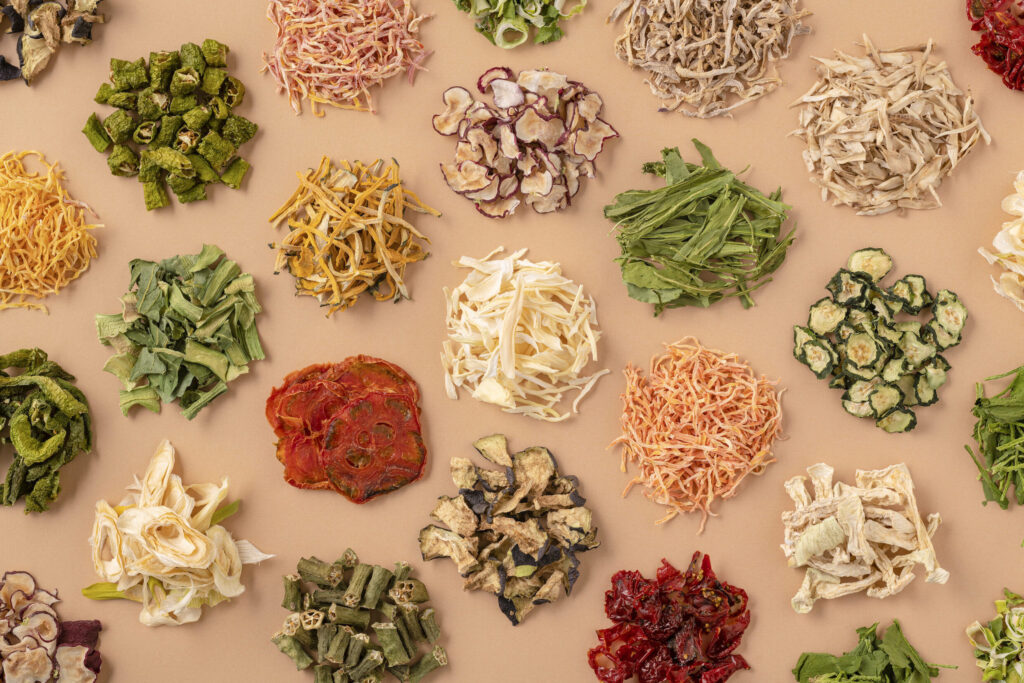
Beyond dried rose alone, we also handle the development of "flower-tea blends" combining floral materials such as lavender, chamomile, and jasmine, and herbs such as rooibos, hibiscus, and rosehip. From over 60 items of dried vegetables, herbs, and fruits, we propose raw-material designs tailored to your product concept.
Commitments to variety, grower, and growing region
Agriture's dried rose uses roses grown domestically for food use. Edible roses, unlike ornamental ones, are grown in edible varieties strictly managed for pesticides, of a quality where the petals can be eaten as-is. Because color, fragrance, and petal thickness differ by variety, we propose variety selection tailored to the application at the prototype stage.
BRAND
Variety: Edible-variety roses (edible roses). Because fragrance strength, petal color, and petal thickness differ by variety, we can propose variety selection tailored to the application from the prototype stage.
PRODUCER
Producer: Direct sourcing from domestic contract farmers specializing in growing edible roses. In partnership with growers who keep proper pesticide-management records, we secure food-grade raw material.
REGION
Growing region: In partnership with domestic edible-rose growers. Because the flower's fragrance and color depth change with the growing region's climate conditions, we propose raw material from a region that matches your product concept.
CULTIVATION
Cultivation method: Grown under strict pesticide management for food use. We maintain a records system that can meet the requirements food makers seek and raw-material origin certification.
Low-temperature drying technology and quality control
The essential-oil components that make up edible rose's fragrance, such as geraniol and citronellol, are extremely volatile, and high-heat drying loses most of the aroma. At Agriture, we use low-temperature hot-air drying with reduced product temperature, designing it to remove moisture while retaining the petals' fragrance and color. After drying, we promptly sort and fill, keeping fragrance and color fresh by minimizing contact time with oxygen and light.
Manufacturing is done at our own processing plant in Kyoto Prefecture, with integrated management from raw-material acceptance inspection to shipment. It is filled hygienically after passing through a foreign-matter removal process, and for OEM projects we issue necessary documents such as specification sheets, raw-material origin certificates, and microbiological test reports, upon consultation for each project.
💡 TIPS | Edible-rose trivia
The geraniol contained in edible rose is said to have a relaxing effect and is a component gaining attention in the field of aromatherapy as well. Putting dried rose in a teapot and pouring hot water spreads the rose's fragrance along with the steam, finishing into a tea where you feel relaxation not just through taste but through smell. For the "aroma design" of herbal teas and flavored teas, dried rose is an effective material.
Use cases and adoption examples
Herbal teas and flower teas
A frequent application: as a raw material for flower teas blending dried rose petals with rooibos, chamomile, rosehip, and the like. Making the petals visible in the tea bag adds gorgeousness to the appearance as well.
Flavoring baked goods and chocolate
Kneading powdered dried rose into the dough of cookies, macarons, and chocolate adds the rose's fragrance and a pale pink color. An application we get inquiries for as a differentiating material for high-end gift products.
Drink toppings and cocktail decoration
A topping use where whole petals are floated on the surface of lattes, cocktails, and sodas. Used as presentation for the drink menus of restaurants and cafes, the social-media-worthy look also ties into attracting customers.
Jam, syrup, and confiture
An application usable as a raw material for rose jam and rose syrup made by simmering dried rose petals with sugar. We also handle product development that reproduces traditional Turkish and Iranian rose jam with domestic edible roses.
Raw material for skincare and bath products
Food-grade dried rose is a material also used as a raw material for skincare products such as bath salts, bath products, and face masks. Using petals of an edible quality lets you appeal to "food-grade" safety.
Points on commercial use and storage
Dried rose can be used by packing it straight into tea bags or floating it on the surface of drinks. In powder form, it can be mixed straight into doughs or liquids. To draw out the aroma to the fullest, adding it after pre-soaking in syrup or oil spreads the fragrance evenly throughout.
For storage, sealed storage away from light, heat, and moisture is best. Because the petals' color fades easily in light, transferring to a light-blocking container after opening is recommended. Reducing air contact with nitrogen filling or a zip-lock bag preserves the fragrance and color longer.
Related cases and articles
- We prototyped a "dried rose" using domestically grown edible roses (News)
- Dried Vegetables and Floral Materials List
- The nutritional value and benefits of vegetable powder
Product catalog showing the items we handle
Flexible support from small lots to large lots
- Sold in small lots from 1 kg
- Handling heirloom vegetables from across Japan
- Dried fruits and herbs also supported
Frequently asked questions
Q. What is the difference between edible roses and ornamental roses?
A. Edible roses are grown in edible varieties strictly managed for pesticides, of a quality you can eat as-is. Ornamental roses do not meet food-oriented safety standards, so they cannot be used as a food raw material.
Q. What is the minimum lot and prototype handling?
A. We guide prototyping from 1kg of raw material and full production from 5kg of raw material as a guide. You can compare samples with different petal shapes (whole, cut, powder) at the same time, making it easier to narrow down the specification that suits your application.
Q. Can I choose the color?
A. Petal colors differ by variety—pink, red, orange, yellow, and so on. We can propose a variety in a color that matches your product concept from the prototype stage. However, because they are natural flowers, some color variation by lot does occur.
Q. Can you issue a certificate of raw material origin and an analysis table?
A. Both a raw-material origin certificate showing it is domestically grown edible rose and a microbiological test certificate are issued after case-by-case consultation.
Q. Can it be blended with other herbs or floral materials?
A. Yes. We can propose the design of flower-tea blends combined with floral materials and herbs such as lavender, chamomile, jasmine, rosehip, and hibiscus.
Q. What is the lead time?
A. When stock is available, it can be shipped in about 2 to 3 weeks after order as a guide. For projects involving new procurement, please plan for a lead time of 4 to 8 weeks in relation to harvest timing.
Q. Please tell me the flow of an OEM consultation
A. The flow is: consult us via the inquiry form → concept interview → sample delivery → paid prototyping (from 1kg of raw material) → specification finalization → full production. We can provide hands-on development support from floral-material variety selection to comparative proposals of color and fragrance.
Recommended reading
- We prototyped a "dried rose" using domestically grown edible roses (News)
- Dried Vegetables and Floral Materials List
- For consultations on dried vegetable and powder OEM here
Download the product catalog
We will send the materials to your email address based on the information you provide.