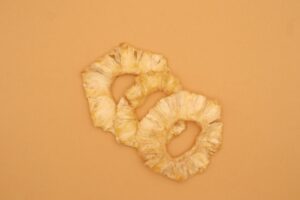
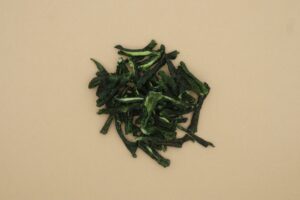
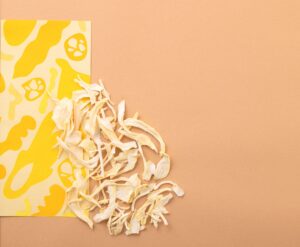
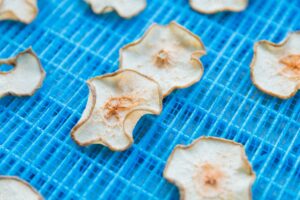
Dried enoki

Dried enoki is a commercial dried-mushroom raw material made by drying domestically produced enoki mushrooms at low temperature and finishing them at our own processing facility in Kyoto. Enoki is the most-produced mushroom in Japan, and drying concentrates guanylic acid (an umami component), making it a much-noticed ingredient in food development for broth material and salt-reduction measures. Without using glucose, colorants, or antioxidants, it keeps enoki's natural flavor and umami in the dried product. It is a raw material we get many inquiries for in commercial applications that want to make the most of natural umami, such as soups, sauces, processed foods, and dashi packs. We also handle prototyping from 1kg of raw material. For consultations on dried vegetable and powder OEM here Please let us know your intended application and desired shape.
TOC
Agriture's dried enoki: three points of care
01 A drying design that concentrates guanylic acid
Drying enoki mushrooms concentrates guanylic acid (an umami component), making the umami stronger than in the fresh state. At Agriture, we use low-temperature hot-air drying, finishing it with a temperature profile that draws out enoki's characteristic umami and flavor to the fullest. It also suits use as a broth material, Dried Vegetables and Mushrooms List You can also consult us about blending with other materials from
02 A material design using domestic enoki, with zero additives
The raw material is only domestically grown enoki mushrooms, finished without adding any glucose coating, colorants, or antioxidants. Enoki is the most-produced mushroom, with about 130,000 tons produced annually in Japan, allowing stable raw-material securing. A specification suited to concepts of "domestic raw material only" and "additive-free."The nutritional value and benefits of vegetable powder.
03 Small-lot prototyping from 1kg of raw material
At Agriture, we accept dried-enoki prototyping in units of 1kg of raw material, and can ship samples in parallel with different cut widths, drying temperatures, and finished moisture contents. It is a setup that makes it easy to compare specifications by application, such as for dashi packs (coarse crush) and soups (small cut). Dried enoki prototype news.
Product catalog showing the items we handle
Flexible support from small lots to large lots
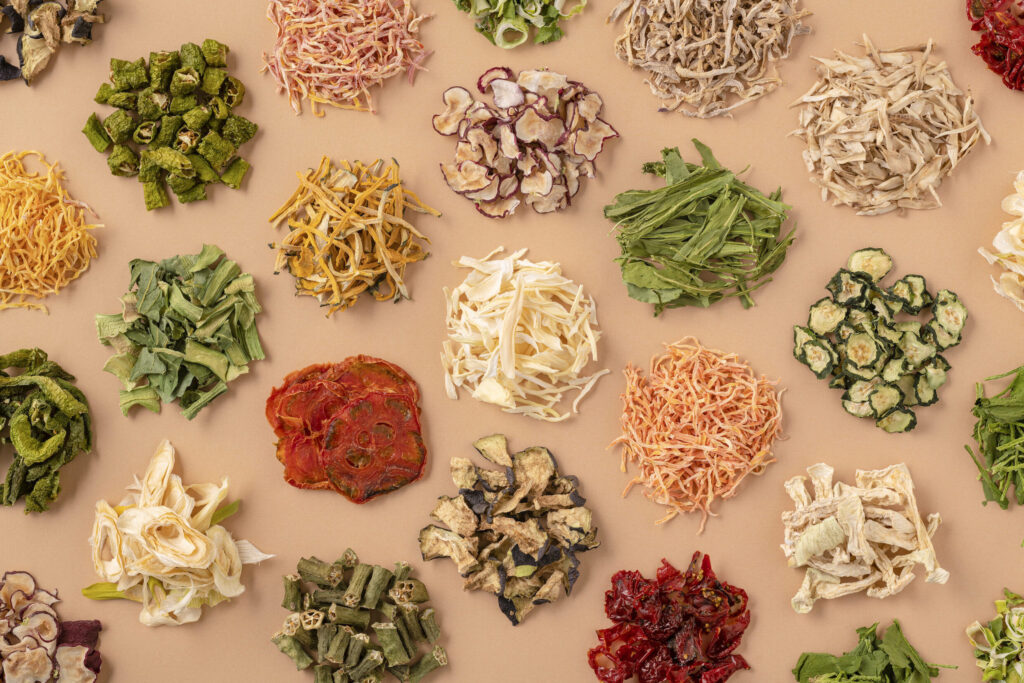
- Sold in small lots from 1 kg
- Handling heirloom vegetables from across Japan
- Dried fruits and herbs also supported
Features of commercial dried enoki
Concentration of guanylic acid (an umami component)
Drying concentrates guanylic acid, making the umami stronger than in the fresh state. As a natural umami seasoning, it is an easy material to use in developing dashi packs, soups, and sauces.
100% domestic enoki
Uses domestically grown enoki mushrooms, the most-produced mushroom in Japan. Stable supply is possible, and it can meet raw-material origin certification.
For broth material and salt-reduction measures
By making the most of natural umami components, taste satisfaction can be kept even when salt is reduced. An application getting attention in developing reduced-salt soups and seasonings.
Shape selectable by application
It can be shipped in shapes tailored to the application—whole dried, small cut, coarse crush, powder, and more. We respond flexibly, such as coarse crush for dashi packs and small cut for soups.
Zero additives, no coloring
Glucose, dextrin, antioxidants, and colorants are all unused. It is a specification well suited to the PB development of additive-free brands that want to keep the ingredient labeling simple.
Umami synergy
Enoki's guanylic acid, combined with kombu's glutamic acid or bonito flakes' inosinic acid, creates an umami synergy, making it an indispensable material for natural-dashi design.
Product specifications (commercial)
Item | Details |
|---|---|
Raw material | Enoki mushroom (domestically grown) |
Shape | Choose from whole dried / small cut / coarse crush / powder |
Production method | Washing → cutting → low-temperature hot-air drying → sorting → filling |
Best-before date | About 6 months from the shipping date when unopened (varies with storage conditions) |
Processing plant | Our own processing plant within Kyoto Prefecture |
Shipping unit | Choose from 500 g bag, 1 kg bag, or 5 kg commercial bag |
Minimum-lot OEM | Prototype from 1 kg of raw material / main production from 10 kg of raw material |
* Prototype consultation is possible from 1 kg of raw material. We can ship multiple samples in parallel with different cut widths and drying temperatures.
OEM support items | Available | Details |
|---|---|---|
OEM small-lot prototyping | ◎ | Multiple versions can be prototyped in parallel from 1 kg of raw material |
Pre-blending of raw materials | ◎ | Pre-blending with dashi materials supported |
Packaging changes | ◎ | 500 g, 1 kg, and 5 kg bags can be sorted out |
Quality document issuance | ◯ | Specification sheet, raw-material origin certification, microbiological test report (discussed per project) |
PRODUCT
Leave the development of blends with other dried mushrooms and dashi materials to us
Beyond dried enoki alone, including combinations with other dried mushrooms and dashi materials, we propose raw-material designs tailored to your product concept from over 60 items of dried vegetables, mushrooms, and herbs.
Commitments to variety, grower, and growing region
Agriture's dried enoki uses enoki mushrooms sourced from domestic contract growing regions. Enoki is cultivated actively in cold regions—led by Nagano, plus Niigata and Hokkaido—and is the most-produced mushroom, with about 130,000 tons produced annually in Japan. Because it is a raw material that can be stably supplied, it is a material that also readily handles large commercial lots.
BRAND
Variety: Enoki mushroom (Flammulina velutipes). Uses cultivated white enoki, concentrating guanylic acid (an umami component) through drying.
PRODUCER
Producer: Sourced from domestic mushroom growers centered on Nagano and Niigata. We route fresh raw material into the drying process with a short lead time.
REGION
Growing region: Stable sourcing from major growing areas such as Nagano, Niigata, and Hokkaido. Because it is a mushroom cultivable year-round, raw material can be secured regardless of season.
CULTIVATION
Cultivation method: Uses enoki mushrooms produced by clean sawdust-bed cultivation. We maintain a records system that can also handle issuance of the quality documents food makers seek.
Low-temperature drying technology and quality control
Enoki mushroom's umami component, guanylic acid, is freed as cells break down in the drying process, concentrating the umami. However, because rapid drying at high heat easily lets the flavor escape, at Agriture we design it with low-temperature hot-air drying that draws out moisture over time. Through this process, it is finished into a dried enoki that balances umami concentration with flavor retention.
Manufacturing is done at our own processing plant in Kyoto Prefecture, with integrated management from raw-material acceptance inspection to shipment. It is filled hygienically after passing through a foreign-matter removal process, and for OEM projects we issue necessary documents such as specification sheets, raw-material origin certificates, and microbiological test reports, upon consultation for each project.
Usage methods by application
💡 TIPS | Umami-synergy trivia
Umami components have a "synergy effect," said to let you feel stronger umami than when used alone. Dried enoki is the material carrying "guanylic acid" among umami components, playing an important role in natural-dashi design. Adding guanylic acid increases the depth of umami, tying into differentiating dashi products made without chemical seasonings. It is an easy shape to use as an ingredient for freeze-dried soups and instant miso soup.
Umami reinforcement for reduced-salt foods
Because reinforcing natural umami components keeps taste satisfaction even when salt is reduced, this is an application getting attention in developing reduced-salt soups, reduced-salt seasonings, and reduced-salt prepared dishes. Using enoki powder for seasoning makes it easy to design something that is "reduced-salt but not lacking."
Flavor base for processed foods and retort
Adding dried enoki to retort foods such as curry, stew, and pasta sauce gives a mushroom flavor and umami as an undertone. In powder form, it can be used as an umami base that dissolves in and stays unobtrusive.
Pet food and functional treats
Dried enoki, containing mushroom-derived umami and dietary fiber, is a raw material also considered as a flavoring material for pet food. Please consult us if you are interested in umami reinforcement with natural materials.
Points on commercial use and storage
Dried enoki, added straight to soup or hot pot, rehydrates and becomes ready to eat in 1 to 2 minutes. When used as dashi, cold-brewing (soaking in cold water for 30 minutes or more) yields a refined broth with little off-taste. In powder form, it can be mixed straight into seasonings or doughs.
For storage, sealed storage away from light, heat, and moisture is best. Because mushrooms readily absorb moisture, use it up promptly after opening, or seal it in a zip-lock bag.
Related cases and articles
- We prototyped a dried product of domestic enoki mushrooms (News)
- Dried Vegetables and Mushrooms List
- The nutritional value and benefits of vegetable powder
Product catalog showing the items we handle
Flexible support from small lots to large lots
- Sold in small lots from 1 kg
- Handling heirloom vegetables from across Japan
- Dried fruits and herbs also supported
Frequently asked questions
Q. What is the minimum lot and prototype handling?
A. We guide prototyping from 1kg of raw material and full production from 10kg of raw material as a guide. You can compare samples with different cut widths and drying temperatures at the same time, making it easier to narrow down the specification that suits your application.
Q. Can it be made into a powder shape too?
A. Yes. Dried enoki can be further pulverized into powder. It can be used as a powder base for dashi seasoning or as a seasoning material for umami reinforcement.
Q. Can it be blended with other dashi materials?
A. Yes. Blending with dashi materials such as kombu and bonito flakes enables design that considers the synergy effect of umami.
Q. Can you issue a certificate of raw material origin and an analysis table?
A. Both a raw-material origin certificate showing it is domestically grown enoki mushroom and a microbiological test certificate are issued after case-by-case consultation.
Q. Is year-round supply possible?
A. Because enoki is a mushroom cultivable year-round, raw material can be secured regardless of season. Even for large lots, we maintain a stable supply system.
Q. What is the lead time?
A. When stock is available, it can be shipped in about 2 to 3 weeks after order as a guide. For new large-lot projects, please plan for a lead time of 4 to 6 weeks.
Q. Please tell me the flow of an OEM consultation
A. The flow is: consult us via the inquiry form → concept interview → sample delivery → paid prototyping (from 1kg of raw material) → specification finalization → full production. We can provide hands-on development support that also offers blend proposals for dashi materials and reduced-salt foods.
Recommended reading
- We prototyped a dried product of domestic enoki mushrooms (News)
- Dried Vegetables and Mushrooms List
- For consultations on dried vegetable and powder OEM here
- Enoki powder
Download the product catalog
We will send the materials to your email address based on the information you provide.