
Rei Kojima– Author –

-

We prototyped “dried garland chrysanthemum” using domestic garland chrysanthemum
Agriture recently prototyped "dried shungiku" using domestically grown shungiku. Shungiku is a leafy vegetable in the daisy family, an ingredient prized for its distinctive bitterness and aroma. It's widely enjoyed as an ingredient for hot pot, dressed dishes, and tempura. By drying at low temperature, shungiku's distinctive aroma is tightly... -
We prototyped “dried kiwi” using domestic kiwi
Agriture recently prototyped "dried kiwi" using domestically grown kiwi. Kiwifruit is a fruit with a good balance of acidity and sweetness, also known for being rich in vitamin C and dietary fiber. When we carefully dried sliced domestically grown kiwi at low temperature... -
We prototyped “dried kale” using domestic kale
Agriture recently prototyped "dried kale" using domestically grown kale. Kale is a leafy vegetable in the mustard family and a superfood also widely known as a raw material for green juice. It's rich in vitamin K, vitamin C, beta-carotene, and dietary fiber. Slowly at low temperature... -
We Prototyped "Dried Turnip" Using Domestically Grown Turnip
Agriture recently prototyped "dried turnip" using domestically grown turnip. Turnip is a root vegetable prized for its gentle sweetness and smooth texture, used in a wide range of dishes both Japanese and Western—simmered dishes, pickles, soups, and more. When we dried it sliced at low temperature, the turnip's white color... -
We Prototyped "Mugwort Powder" Using Domestically Grown Mugwort
Agriture recently prototyped "mugwort powder" using domestically grown mugwort. Mugwort is a Japanese herb long beloved as an ingredient for kusamochi and yakuzen tea, prized for its distinctive refreshing aroma. At Agriture, for OEM manufacturing of dried vegetables and powder and as commercial raw material... -
We Prototyped "Dried Shimonita Negi" Using Domestically Grown Shimonita Negi
Agriture recently prototyped "dried Shimonita negi" using domestically grown Shimonita negi. Shimonita negi is a brand negi cultivated centered on Shimonita Town, Gunma Prefecture, prized for its thick white root and strong sweetness when heated. The prototyped dried Shimonita negi turned out with quite a good aroma... -
We Prototyped "Dried Lemon Slices" Using Domestically Grown Lemons
Agriture recently prototyped "dried lemon slices" using domestically grown lemons. So they can be used as a garnish for cocktails and drinks, they are dried thinly sliced. While the lemon peel tends to retain its yellow even after drying, the flesh portion... -
We Prototyped "Dried Piman (Bell Pepper)" Using Domestically Grown Piman
Agriture recently prototyped "dried piman (bell pepper)" using domestically grown piman. This is a variety thicker-fleshed than ordinary piman, with little bitterness and some sweetness. As with the Manganji togarashi we prototyped before, piman also finished with a thick-fleshed texture firmly retained after drying... -
We Began Full Production of Lotus Root Powder
Agriture recently began full production of lotus root powder. A full-scale mass-production system has started, handling everything in-house consistently—processing 100kg of lotus root into powder and filling it into small pouches. Lotus root powder has so far been centered on prototyping-stage provision, but from multiple food manufacturers... -
We Prototyped "Dried Wakegi and Wakegi Powder" Using Domestically Grown Wakegi
Agriture recently prototyped "dried wakegi" using domestically grown wakegi. Wakegi is a cross between negi and onion, a vegetable prized for a softer, milder flavor than ordinary negi. Wakegi's distinctive gentle aroma remains even when dried, and because it has little pungency... -
We Prototyped "Dried Beet" Using Domestically Grown Beet
Agriture recently prototyped "dried beet" using domestically grown beet. Beet is a root vegetable prized for its vivid purple color, an ingredient used in a variety of dishes such as salads, soups, and smoothies. In this prototype, we finished the drying with beet's distinctive purple color firmly retained... -
We Prototyped "Asparagus Stem Powder" Using the Stems of Domestically Grown Asparagus
Agriture recently prototyped "asparagus stem powder" using the stems of domestically grown asparagus. Following the dried asparagus we prototyped last time, this time we extracted just the stem portion and processed it into powder. The hard stem portion is a part usually often discarded... -
We Prototyped "Dried Garlic Sprouts" Using Domestically Grown Garlic Sprouts
Agriture recently prototyped "dried garlic sprouts" using domestically grown garlic sprouts. Garlic sprouts are the young shoots grown from garlic seed bulbs, an ingredient prized for a milder flavor than garlic itself. This time, at the client's request, the root... -
What are Iwate’s heirloom vegetables? Features, season, and ways to eat the 17 items explained
The definition of “heirloom vegetables” and the scope of this article. There is no nationally unified definition of “heirloom vegetables,” and the standards differ by certifying body. To help you accurately understand this article, we first organize the standards of the main certifying bodies. Certifying body / main standard / Kyoto Prefecture’s “Kyoto heirloom vegetables”: from before the Meiji era... -
Dried Rose (Edible Rose)
Dried rose (edible rose) is a commercial flower ingredient made by low-temperature drying domestically cultivated edible roses, finished at our own processing facility in Kyoto Prefecture. Without using glucose, coloring, or antioxidants, it retains the rose's original fragrance and petal color in the dried product. Containing aromatic compounds of a gorgeous scent, herbal tea... -
Dried enoki
Dried enoki is a commercial dried-mushroom material made by low-temperature drying enoki mushrooms produced in Japan and finishing them at our own processing facility in Kyoto Prefecture. Enoki is the most widely produced mushroom in Japan, and drying concentrates guanylic acid (an umami compound), drawing attention in food development for dashi materials and salt-reduction measures... -
Yuzu powder (Kyoto-grown)
Yuzu powder (Kyoto-grown) is a commercial citrus raw material made by low-temperature-drying the peel of yuzu harvested in Ukyo Ward, Kyoto City and the Kyoto area, and processing it consistently through grinding at our own facility in Kyoto Prefecture. Without using glucose, colorants, or antioxidants, it retains the rich fragrance and vivid yellow characteristic of Kyoto-grown yuzu in the powder... -
Lotus root powder
Domestic lotus-root powder is a commercial vegetable raw material made by low-temperature-drying lotus root sourced from domestic contract-cultivation farms, and processing it consistently through grinding at our own facility in Kyoto Prefecture. Without using glucose, colorants, or antioxidants, it retains lotus root's natural flavor and white color in the powder. It has the property of thickening when dissolved in water... -
Chestnut skin powder
Chestnut-skin powder is a commercial functional raw material made by low-temperature drying the outer shell and inner astringent skin that come out when processing chestnuts, and handling everything through to milling at our own processing facility within Kyoto Prefecture. It's an "upcycled food ingredient" made by drying and powdering byproducts normally discarded, and its distinctive feature is containing polyphenols, tannins, and dietary fiber... -
Corn powder is a raw material made by drying sweet corn and then micro-pulverizing it. In uses such as corn soup, cornbread, confectionery dough, beverage blending, and seasonings, it aims to spread corn's inherent sweetness and yellow color evenly. It achieves the "uniform dispersion into liquids and powders" that's hard to manage with fresh or canned corn, thanks to the fine grain size only a powder can offer. At Agriture,
Domestic green papaya powder is a commercial functional raw material made by low-to-medium-temperature drying domestically grown green papaya and handling everything through to milling at our own processing facility within Kyoto Prefecture. Without glucose, colorants, or antioxidants, it's finished with a temperature design that preserves the papain enzyme contained in green papaya. Beauty... -
Asparagus powder
Domestic asparagus powder is a commercial vegetable raw material made by low-temperature drying asparagus harvested through domestic contract farming and handling everything through to milling at our own processing facility within Kyoto Prefecture. Without glucose, colorants, or antioxidants, it keeps asparagus's natural green, fresh flavor and vivid green in the powder... -
Dried asparagus
Asparagus is a vegetable in season from spring to early summer, rich in asparagine and B vitamins, characterized by a crisp texture and sweetness. Dried asparagus is made by carefully drying domestic seasonal asparagus at low temperature, finished in slice and chip forms. It is used in soups, stewed dishes, mixed rice... -
Dried purple chili pepper
The purple chili is a chili characterized by a vivid purple color from anthocyanin pigments, with a fruity heat and distinctive coloring. Dried purple chili preserves the purple color to the fullest through low-temperature drying, offered in three forms: whole, flake, and coarse-crushed. As a spice mix or a drink infusion... -
Dried Basil
Basil is a herb of the genus Ocimum in the mint family, characterized by a sweet, refreshing aroma with linalool as its main component. Dried basil is made by carefully drying domestically grown sweet basil at low temperature, retaining an aroma close to that of the fresh leaf in dried-leaf form. Pasta sauce, pizza, simmered dishes... -
What are Aomori’s heirloom vegetables? Features, season, and ways to eat the 11 items explained
The definition of “heirloom vegetables” and the scope of this article. There is no nationally unified definition of “heirloom vegetables,” and the standards differ by certifying body. To help you accurately understand this article, we first organize the standards of the main certifying bodies. Certifying body / main standard / Kyoto Prefecture’s “Kyoto heirloom vegetables”: from before the Meiji era... -
[Press Release] "Food OEM Window," a food OEM matching site, launches a joint initiative with Ggrow, a provider of SEO and LLMO customer-acquisition support, responding to the AI search era
View the press release here: https://www.value-press.com/pressrelease/372711/ ■ Background of the initiative In the food industry, alongside rising raw material costs and labor shortages, the digital shift in consumer purchasing behavior is advancing rapidly, and whether B2B or B2C, "how to get found on the web" is... -
Purple chili pepper powder
Purple chili powder is a commercial spice raw material made by low-temperature drying a purple chili variety with anthocyanin-type pigments and handling everything through to milling at our own processing facility within Kyoto Prefecture. Drawing on the balance of purple color development, a fruity top note, and the soft heat characteristic of the purple variety, it's used in Japanese, Western, and confectionery... -
Sweet basil powder
Domestic sweet basil powder is a commercial herb raw material made by drying basil leaves harvested through domestic contract farming at low temperature and handling everything through to milling at our own processing facility within Kyoto Prefecture. Without glucose, colorants, or antioxidants, it keeps the leaf's natural aroma and deep green in the powder. Italian... -
What are Hokkaido’s heirloom vegetables? Features, season, and ways to eat the 14 items explained
Hokkaido’s heirloom vegetables are a distinctive food culture born from the fusion of varieties brought from abroad by the Meiji-era Development Commission and native varieties refined in a harsh cold climate. The 14 items deeply rooted in the lives of Hokkaido residents—Sapporo ki (yellow onion), Danshaku potato, Rawan butterbur, and more—are also a mirror reflecting Hokkaido’s pioneering history itself... -
"Organic Food Purchases Are Decided by Trust, Not Taste"—A Japan-UK Joint Study Proves It with a 2,800-Person Survey; Institutional Trust in Organic JAS Certification Is the Key to Spreading Organic Farming in Japan
A Japan-UK 2,800-person survey by Brunel University × Kobe University proved that "organic food purchases are decided by institutional trust rather than taste." It showed that in Japan, trust in government-led Organic JAS certification directly drives purchases, and that improving the transparency of the certification system is the key to spreading organic farming. -
Turning 2 Million Tons of Rice Husks a Year into Food—The Japan-Born Project "Kami" Changes the Conventional Wisdom of Food Loss × Agricultural By-Products
The Japan-born project "Kami," which converts 2 million tons of rice husks discarded as agricultural by-products into a food resource, pre-opened on April 15. A new trend in reducing food loss and circular agriculture. -
[Press Release] A service that lets you start small-pouch filling from 10 pouches launches | Supporting the start of a food OEM for the first time with small lots
*As of September 2026, the minimum lot for small-bag filling is 500 bags. This has changed from the terms at the time of this release. For the latest terms, see the Small-Bag Filling OEM Service page. Press release: https://www.value-press.com/pressrelease/372537/ Background: Small-lot fill... -
Preventing Crops' "Field Food Loss" with AI—Mirai Saien's TENRYO Achieves a 90% Reduction in Work and a 15% Yield Increase at JA Toyohashi
In 2026, the AI pest-and-disease prediction app "TENRYO," developed by the University of Tsukuba-born agritech startup Mirai Saien Inc. (Nagoya; Representative: Tomofumi Hatakeyama), is accelerating its penetration into agricultural sites. Against the "field food..." in which about 25% of crops worldwide are lost before harvest each year... -
"OYASAI FARM," an Urban AI Hydroponic Unit, Goes on Live Display at Tokyo Innovation Base in Yurakucho—Achieving a 52% Cut in Initial Investment and a 290% Increase in Production
On April 1, 2026, the urban AI hydroponic unit "OYASAI FARM" by OYASAI Inc. (Fukuoka; Representative: Hayata Kunimura) began live display at Tokyo Innovation Base (TiB) in Yurakucho, Tokyo. The display period runs until May 31, 2026. The company is an agricultural startup founded in April 2025, with... -
With National Support, Facilities Recovering Reclaimed Phosphorus from Sewage Sludge Expand—A Turning Point for Agriculture Moving Toward Domestically Produced Fertilizer
In April 2026, the Ministry of Land, Infrastructure, Transport and Tourism revealed a policy of strengthening national support measures toward expanding facilities that recover "reclaimed phosphorus" from sewage sludge. To rebuild the stable-supply system for fertilizer raw materials, shaken by Russia's invasion of Ukraine, it treats the existing infrastructure of sewage treatment plants as "domestically produced phosphorus..." -
Turning 110,000 Tons of Off-Spec Asahikawa Potatoes into Ice Cream—A Regional Revitalization Project Connecting the Dairy Crisis and Discarded Vegetables
On April 1, 2026, Iroenpitsu Inc., based in Asahikawa, Hokkaido, announced a plan to open an "ice cream shop that draws people from around the world" in front of Asahikawa Station. At first glance it looks like a story of a unique restaurant opening, but behind it lies a serious problem—about 111,000 tons a year in the Kamikawa district... -
Same-Day Discarded Supermarket Food to Single-Parent Households—The "Stenas" Demonstration Achieves an Average 42% Match Rate
On April 7, 2026, the Sustainable Food Chain Council and Nessu Inc. announced the results of a demonstration of the food-matching platform "Stenas," conducted as an FY2025 model project of the Ministry of the Environment. Fresh food that food supermarkets could no longer sell that day... -
Vietnam's Agriculture, Forestry, and Fishery Exports Reach 16.69 Billion Dollars in Q1 2026—Sharp Price Drops in Coffee and Rice, but Fisheries Up 13% Provide Support
According to the Q1 (January–March) 2026 export statistics for agriculture, forestry, and fishery products announced by Vietnam's Ministry of Agriculture and Rural Development, total exports reached 16.69 billion US dollars (up 5.9% year-on-year). It was achieved amid the headwind of a sharp drop in international prices for staple crops such as coffee and rice, and the resilience of the fisheries sector in particular... -
High Prices and the "Logistics 2024 Problem" Increase Food Loss—A Kuradashi Survey Reveals the Real Situation at 78 Companies
On April 8, 2026, Kuradashi Inc., which operates a food-loss-reduction service, published the results of its latest attitude survey covering 78 food-related businesses. According to the survey, about 78.2% of businesses are already working on reducing food loss, while "demand changes due to high prices" and "logistics constraints..." -
What are Yamato vegetables? Features and ways to eat the 25 heirloom vegetables Nara is proud of
Yamato vegetables is the collective name for heirloom vegetables and original brand vegetables certified by Nara Prefecture. Centered on native varieties nurtured in the climate of the Nara basin and Yamato highlands since before the war, a total of 25 items are currently certified: 20 “Yamato heirloom vegetables” and 5 “Yamato specialty vegetables.” (Reference: Nara Prefecture official site)... -
What are the Naniwa heirloom vegetables? An explanation of the features and season of the 25 items Osaka is proud of
What are the Naniwa heirloom vegetables? Certification standards and history. In Osaka, once called “the nation’s kitchen,” unique vegetables rooted in each region’s climate have been cultivated since the Edo period. The Naniwa heirloom vegetables are a group of items officially certified by Osaka Prefecture, with 25 items currently registered. The rapid postwar... -

OYAOYA Exhibited at FBIF2025 Held in Shanghai
FBIF (Food & Beverage Innovation Forum) is one of the most influential food-industry events in the Asia-Pacific region, an international forum for advancing innovation in the food and beverage industry. Since being established by Simba Events in Shanghai, China in 2014... -
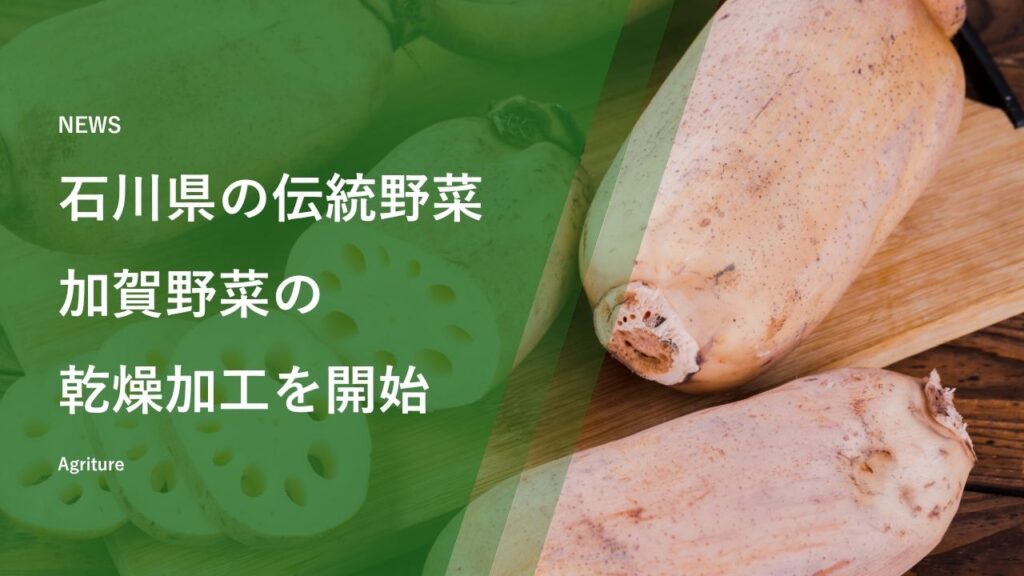
We Began Dry-Processing "Kaga Vegetables," the Traditional Vegetables of Ishikawa Prefecture
We have begun dry-processing "Kaga vegetables," the traditional vegetables of Ishikawa Prefecture. In partnership with local farmers, we deliver them as dried vegetables that lock in the seasonal flavor as-is. What are Kaga vegetables? Kaga vegetables refer to traditional vegetables long cultivated in the Kaga region of Ishikawa Prefecture... -
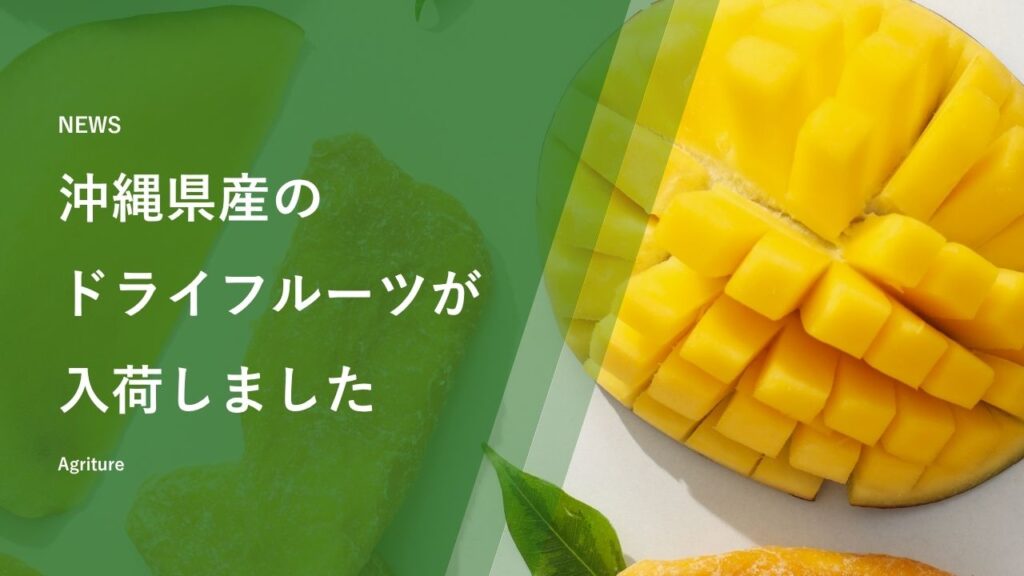
Okinawa-Grown Dried Fruit Arrived
We have received "dried pineapple" and "dried shikuwasa" as new dried fruit. Two kinds of dried fruit that concentrate the refreshing flavor of tropical Okinawa as-is join the lineup anew. Concentrating the appeal of tropical fruit | Dried pineap... -
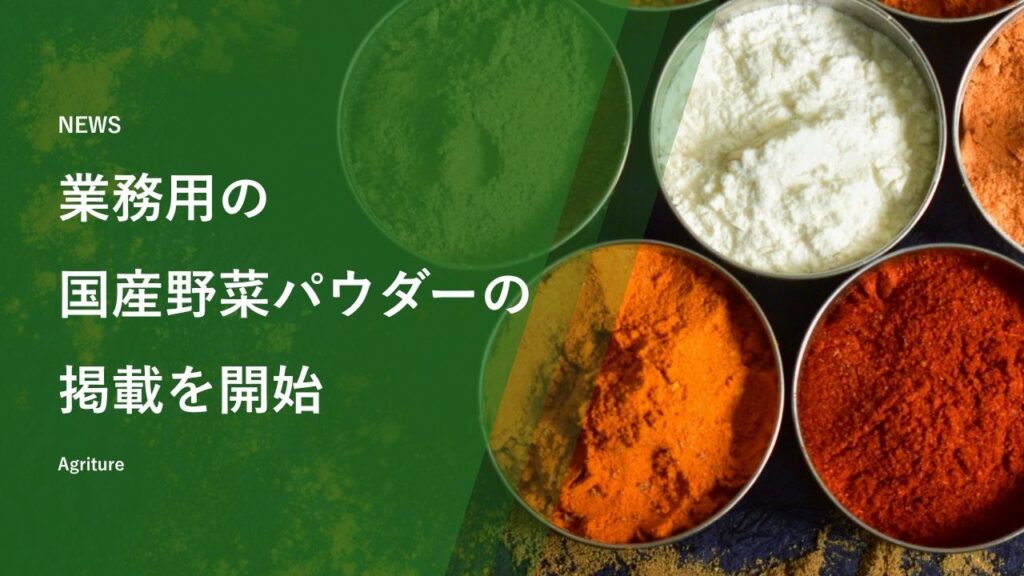
We Began Listing Domestically Grown Vegetable Powder
We have newly begun listing "vegetable powder." Vegetable powder, made by drying domestically grown vegetables into powder, draws attention as a handy ingredient that easily adds nutritional value. What is vegetable powder? Vegetable powder dries fresh vegetables and... -

We Were Listed on Food OEM Window
We listed our information on Food OEM Window, which lists OEM manufacturers under the concept "Never be at a loss choosing a food OEM again." It offers not only a list of manufacturers but also columns for each genre, a term encyclopedia, and more. Food OEM Window here. Food OEM Window Agriture... -

Listing Information
Agriture's products were introduced in "Kuradashi Magazine," operated by "Kuradashi," a shopping site themed on reducing food loss. "Kuradashi Magazine" is where Kuradashi, which works on reducing food loss, covers sustainability and... -
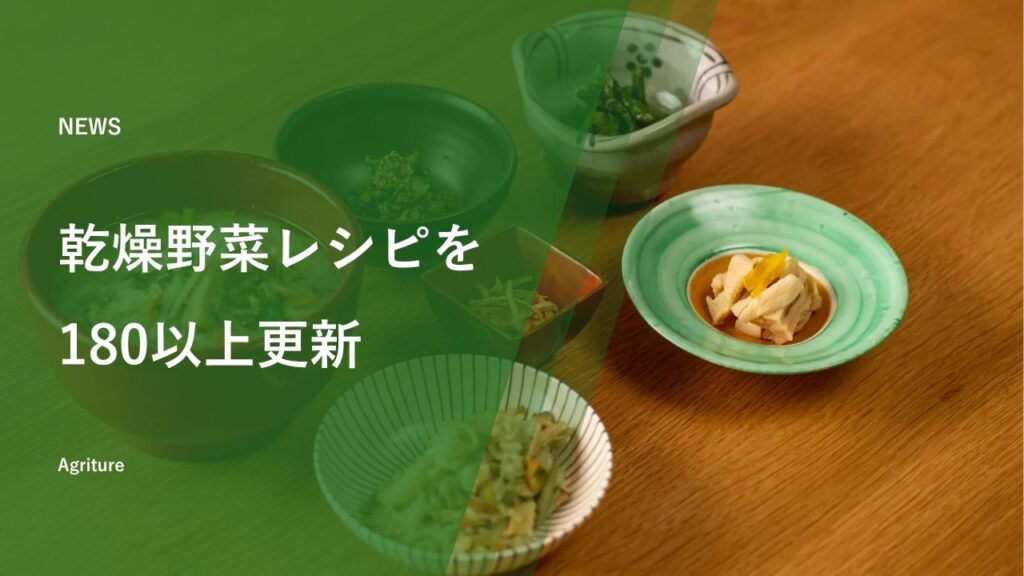
We Updated Over 180 Dried Vegetable Recipes
Recipes Published on OYAOYA. On OYAOYA, the dried vegetable brand we operate, we have published a total of over 180 recipes through user submissions and dedicated recipe creation. We've produced not only ordinary soup recipes but also ones with variations that are only possible because they're dried vegetables... -

Is There Demand for Dried Vegetables in Dubai?
With the backing of Kyoto Prefecture, we exhibited at the Kyoto booth within a trade show held in Dubai this February. In the Middle East region—where desert makes up most of the land and there's no image of agriculture except in Israel—based on the hypothesis that dried vegetables could work, we exhibited at this trade show... -
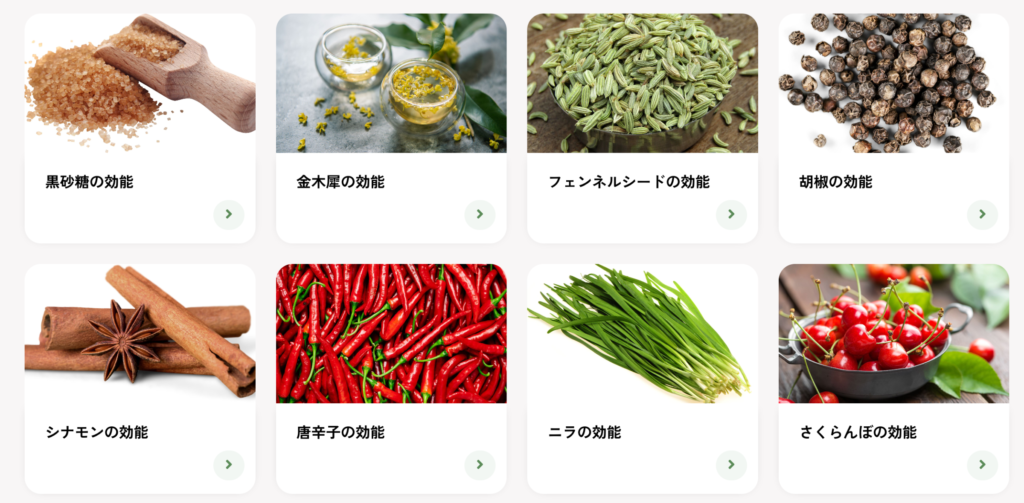
We Created an Efficacy Encyclopedia by Vegetable
Know the Efficacy of Each Vegetable! You want to live a health-conscious diet, but many people may struggle, thinking "I don't know what vegetable does what..." For such people, the [Efficacy by Vegetable] that compiles each vegetable's characteristics and uses from a yakuzen perspective...