
Rei Kojima– Author –

-
Contract Manufacturing Guide for Vegetable Powder Filling | Quality Control and Optimal Package Selection
The filling and packaging of vegetable powder is a process that greatly influences the final product's quality and cost. Because powder carries risks of static electricity, moisture absorption, clumping, measurement accuracy, and foreign-matter contamination, it requires "filling-specialist know-how" separate from raw material processing. When making a differentiated product for commercial use, the filling maker's equipment and... -
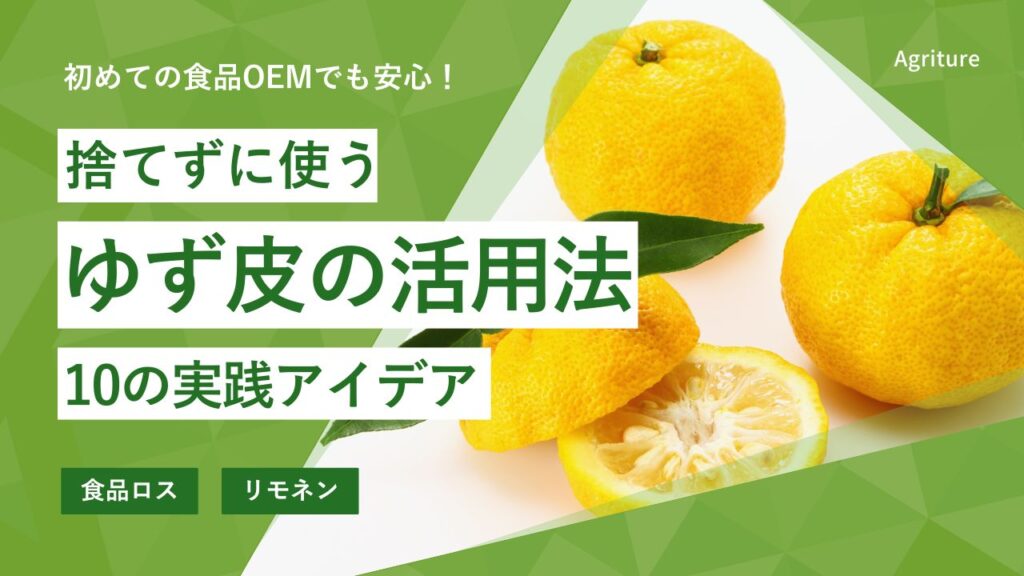
柚子の皮の使い道は干すと広がる、果汁と種まで使い切る手順
鍋の仕上げに皮を少し削いだら、あとは黄色い実がひとつ残る。果汁を搾ったら、今度は皮とワタと種が残る。ゆずは、どこかを使うたびに別のどこかが余る果物です。 農林水産省の令和5年産特産果樹生産動態等調査では、ゆずの全国の出荷量26,734トンのうち... -
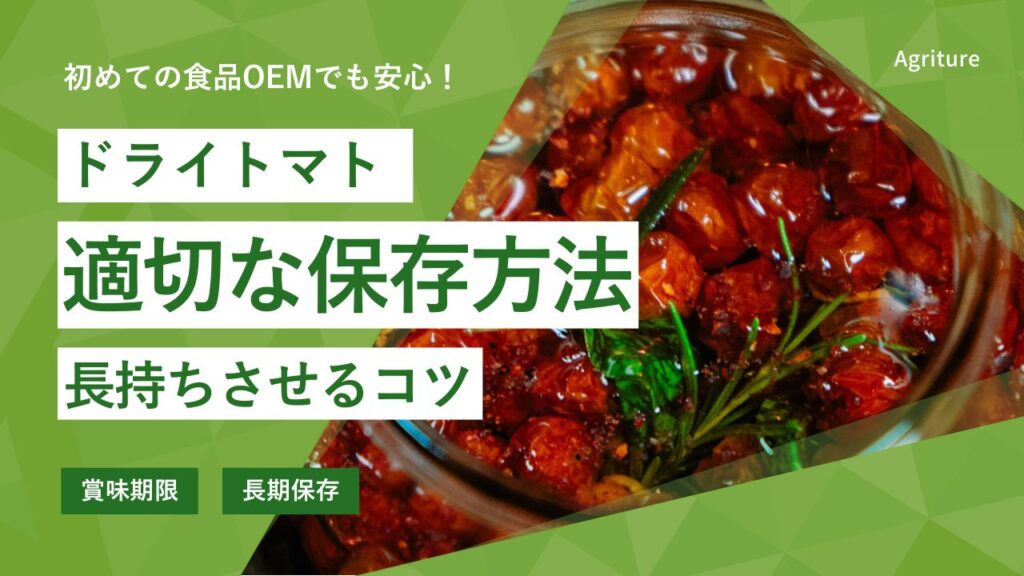
How to Store Dried Tomatoes: Tips for Room Temperature, Refrigeration, and Freezing, Plus Best-Before Dates
The basic approach to storing dried tomatoes is to use room temperature, refrigeration, and freezing as appropriate. Unopened, fully dried types can be kept at room temperature for six months or more, but once opened they absorb moisture and change in quality, so the rule is to put them in an airtight container and move them to the fridge. Frozen, they keep for 3–4 months... -
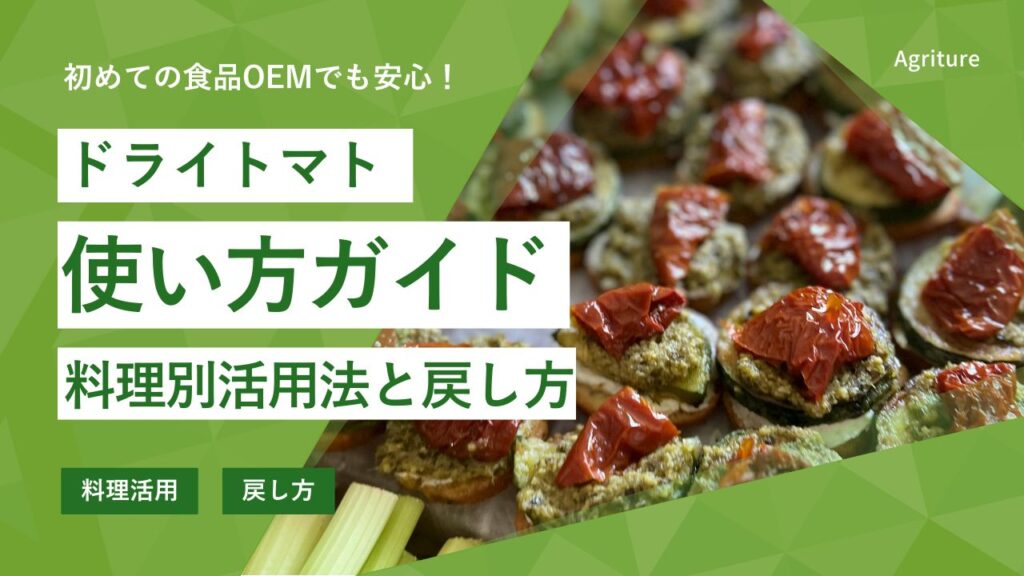
How to Use Dried Tomatoes: Rehydrating, Popular Recipes, and Uses by Variety
There are three basic ways to use dried tomatoes: "rehydrate before cooking," "eat as-is," and "keep them on hand marinated in oil." Because drying tomatoes concentrates their umami compounds, adding even a small amount to pasta or soup adds depth of flavor. This article covers how to rehydrate them... -
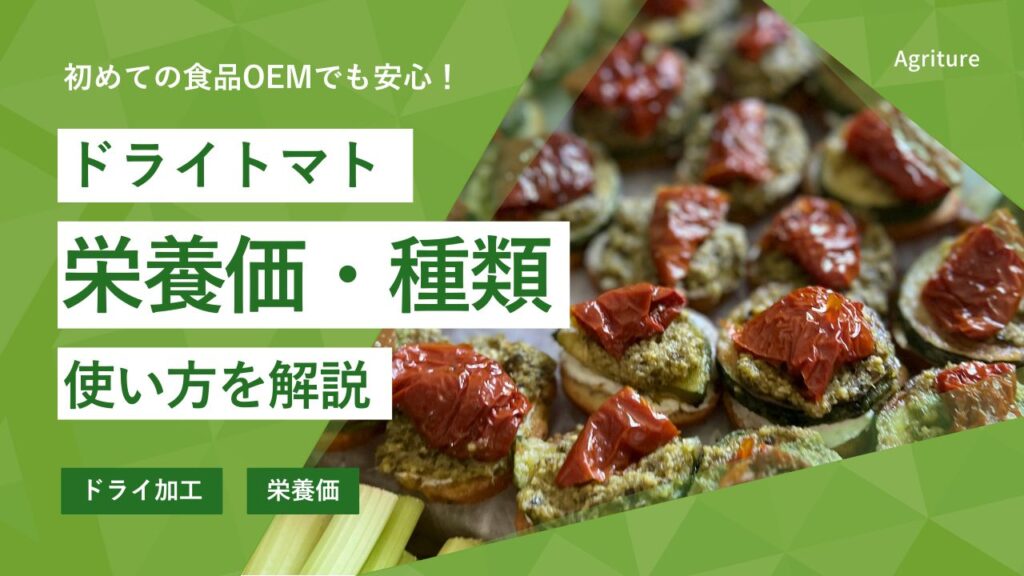
What Are Dried Tomatoes? A Basic Guide to Types, Flavor and Uses
Dried tomatoes are a processed food made by drying fully ripe tomatoes to greatly reduce their moisture. As the water that makes up about 90% of a fresh tomato is removed, the umami becomes concentrated, making it an ingredient that adds deep richness and color to dishes in small amounts. In Italy they have long been used in pasta sauces and antipas... -
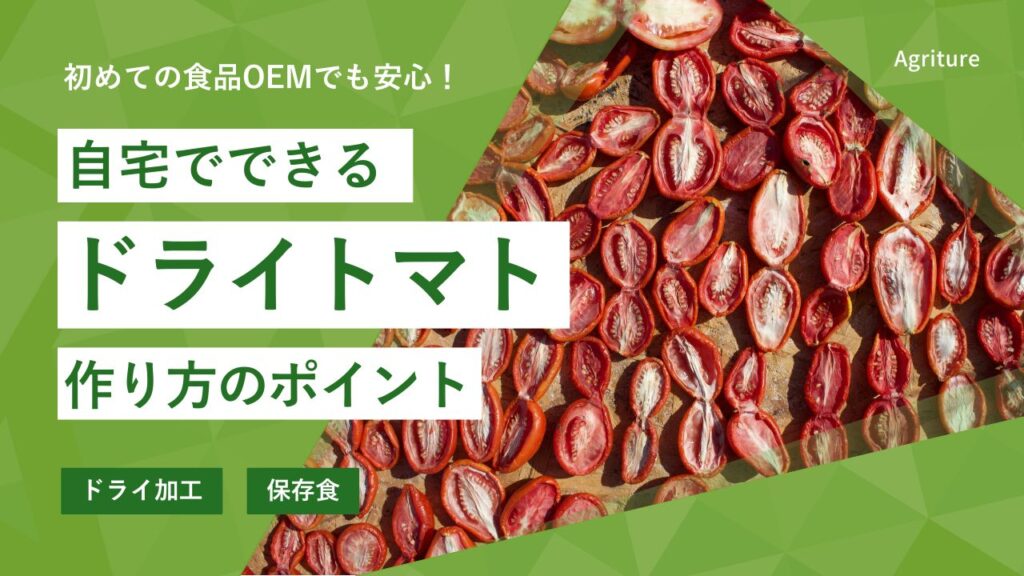
How to Make Dried Tomatoes: Drying Tips, and How Cherry and Large Tomatoes Turn Out Differently
Dried tomatoes are made by drying fully ripe tomatoes. This processed food is prized for a deep richness and aroma quite unlike fresh tomatoes. Tomatoes are about 90% water, and removing that water through drying concentrates their umami. At Agriture, tomatoes for stock specialized in vegetable dashi... -
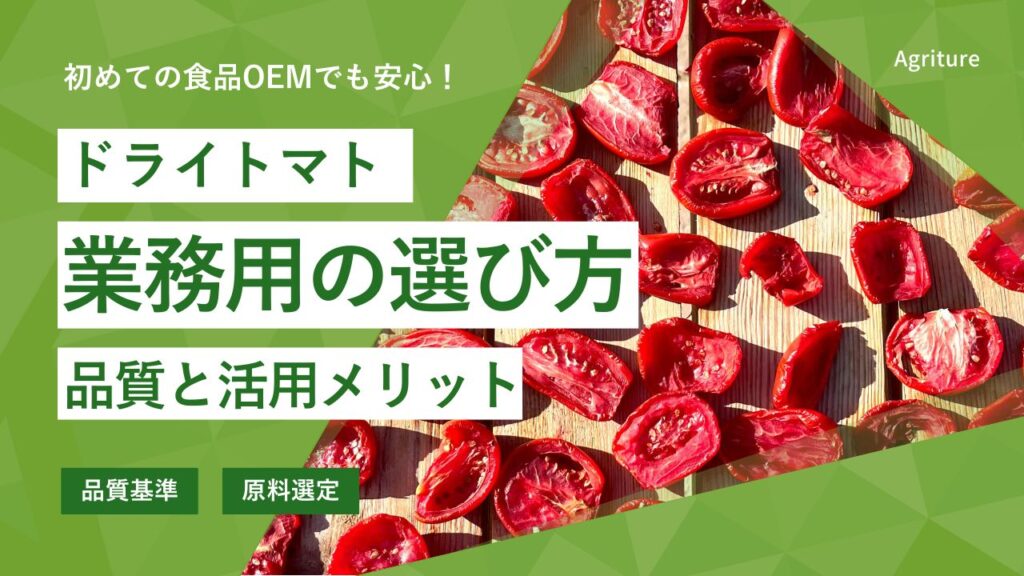
How to choose commercial dried tomatoes | Quality and OEM case studies
When sourcing commercial dried tomatoes, organizing the comparison along five axes—growing region, variety, processing type, lot capacity, and supply system—is fundamental. The options are wide, from Italian sun-dried products to domestic makers' low-temperature-dried products, and for restaurant pasta sauces, bakery ingredients... -
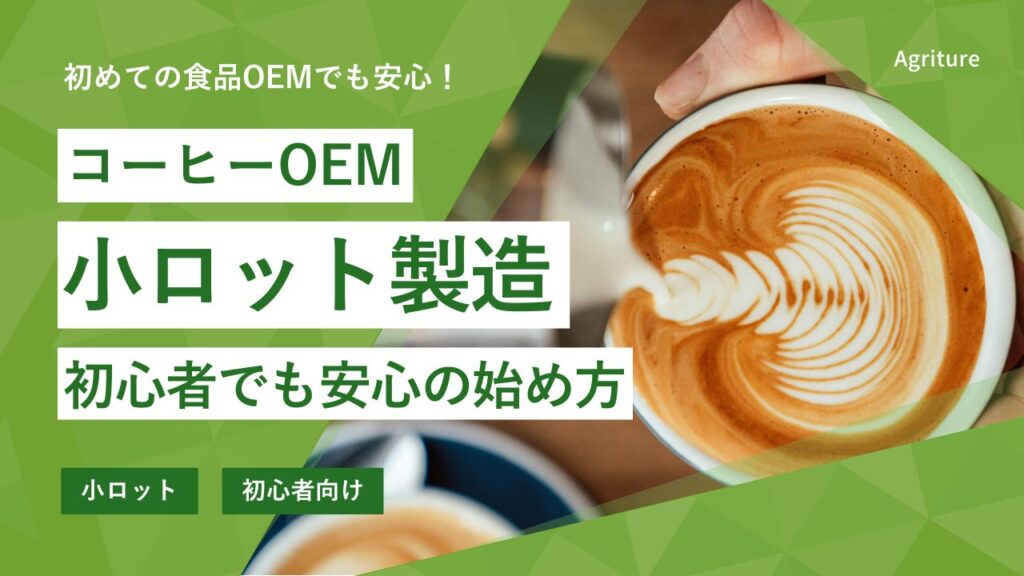
How to start coffee OEM at small lots | 3 formats and 7 ordering points
Small-lot coffee OEM ordering is a way to bring a unique-brand coffee to market with reduced risk. For each of the three formats—beans, drip bags, and RTD (PET bottle / can)—the minimum lot, unit price, and equipment differ. With a small-lot-support maker, prototyping and mass production from 50–500 units... -
How to choose a coffee OEM vendor | 5 vendor categories and a quote check
How to choose a coffee OEM vendor is the single most important decision that influences a brand's taste, cost, and speed. Vendors come in five types—self-roasting specialists, major subcontractors, drip-bag specialists, roaster-operated shops, and regional roasteries—and each has different areas of strength, minimum lots, and prototyping flexibility. ... -
A complete explanation of the coffee OEM flow! All steps from order to delivery
Coffee OEM is a system in which you outsource the production of original coffee under your own brand to a specialist manufacturer. Cafes and restaurants turn their house flavor into retail products, companies prepare original drip bags as novelties or commemorative gifts, and tourist facilities create local souven... -
Is decaf coffee bad for you? Effects, brewing methods, and how to choose
Have you ever heard that "decaf coffee is bad for you" or "isn't it pointless?" For people who are pregnant or want to enjoy coffee to unwind at night, it is a topic where you want to know the truth. In short, if you choose the extraction method correctly, decaf coffee... -
How to make an herbal tea blend | Formulation design balanced with bitterness, tartness, and umami
Blending herbal tea is a way of combining several herbs and tea leaves to pack a flavor, aroma, and function into a single cup that you can't get from any one on its own. Herbal tea blends made at home extend to enjoyment such as gathering single ingredients at Kaldi or Muji and carrying them in your own bottle. Herbal... -
6 Practical Techniques to Cut the Initial Costs of OEM Filling | Start Smart with Small-Lot Support
Wanting to launch your own brand of food or health food. But the investment in manufacturing equipment is too heavy a burden. For small and medium-sized companies and startups with such worries, OEM filling is a powerful option. But have you ever been surprised looking at the initial-cost quote? In fact, with ingenuity... -
How to choose stick-filling OEM food | 8 points to avoid failure with small-lot support
Stick-filling OEM is a filling format suited to providing single-use, small-capacity products (supplements, soup base, smoothie, protein, coffee, etc.) in small individual packs. Pre-measured and easy to open, with high portability, it is used for office stocking, subscription boxes, and promotional novelties... -
5 Points for Selecting Packaging Materials | The Best Fit for Your Filling Method and Product Characteristics
Selecting packaging materials is a process that simultaneously influences the shelf life of the contents, the cost, and brand value. Unless you choose the optimal material to match the contents' characteristics (powder, liquid, granular, paste), the filling method, the distribution route, and the sales channel, unexpected quality degradation, unit-cost overruns, and machine-compatibility problems occur... -
A complete explanation of how to request a filling quote | Necessary information and a comparison checklist
For a filling OEM quote request, whether you can convey the necessary information without excess or deficiency greatly changes the accuracy and speed of the quote you get back. If you organize the raw material, capacity, form, lot, delivery time, and quality requirements, plus filling conditions by powder/liquid/paste and the requirements for changeover cleaning, then multiple makers... -
How to Achieve Stand Pouch Filling in Small Lots | Tips for Cost Reduction and Quality Control
Stand-pouch filling is a packaging format often adopted for small-lot D2C, gifts, and novelties of food. With a self-standing shape that is easy to display, resealable with a zipper, and a wide range of choices from transparent to aluminum to custom design, it suits food operators wanting to launch a branded product from small quantities... -
Original coffee marketing strategy | Ways to grow sales
The coffee market is now facing a major turning point. Consumer preferences have diversified, and it has become an era of seeking not just "coffee" but story and experiential value. To succeed with an original coffee marketing strategy, everything from product development to promotion consistently... -
How to Make an Original Tea OEM: Points of Differentiation and the Planning Process
An original tea is a unique tea designed to match your brand concept, rather than an off-the-shelf tea leaf. By combining five elements—selecting the base tea leaf, blending ingredients, blend ratios, packaging, and story—you pack a "brand story" into a single cup. Rather than simply... -
Tea OEM Price Ranges: 5 Ways to Keep Costs Down and 7 Points for Quotes
Tea OEM price ranges are determined by five factors: product type, lot, ingredient grade, packaging, and certification requirements. Tea bags run from tens to hundreds of yen per unit, and for leaf tea the unit price moves greatly depending on tea-leaf grade, while vegetable tea and foods with function claims add further prototyping and testing costs... -
How to Request Tea OEM Manufacturing: A Complete Guide to the Industry's 5 Types and a Cost Breakdown
You want to launch your own original tea brand. For you who harbor this wish, there is the option of a tea OEM. OEM is short for "Original Equipment Manufacturer," a system for outsourcing the manufacture of your own brand's products to another manufacturer. In the tea industry, from raw material procurement... -
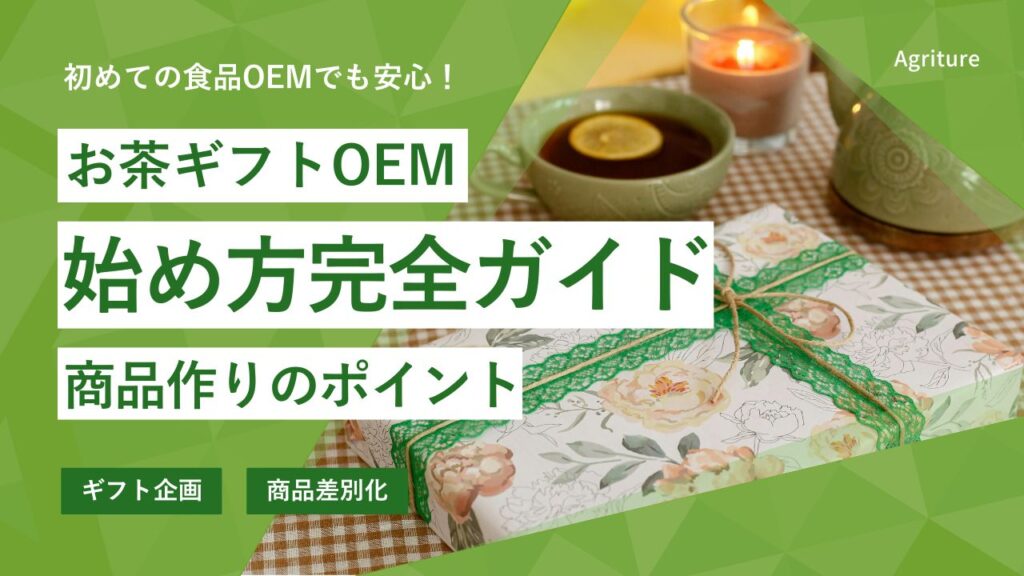
Tea Gift OEM: 10 Points for Making Products That Get Chosen and an Ordering Guide
Tea gift OEM is an approach that lets you plan and sell original tea gift products without owning your own manufacturing equipment. You can design products to match the gift occasion and price range—chugen, seibo, celebratory return gifts, corporate novelties—across a wide range from green tea, black tea, and tea bags to premium blends and vegetable tea... -
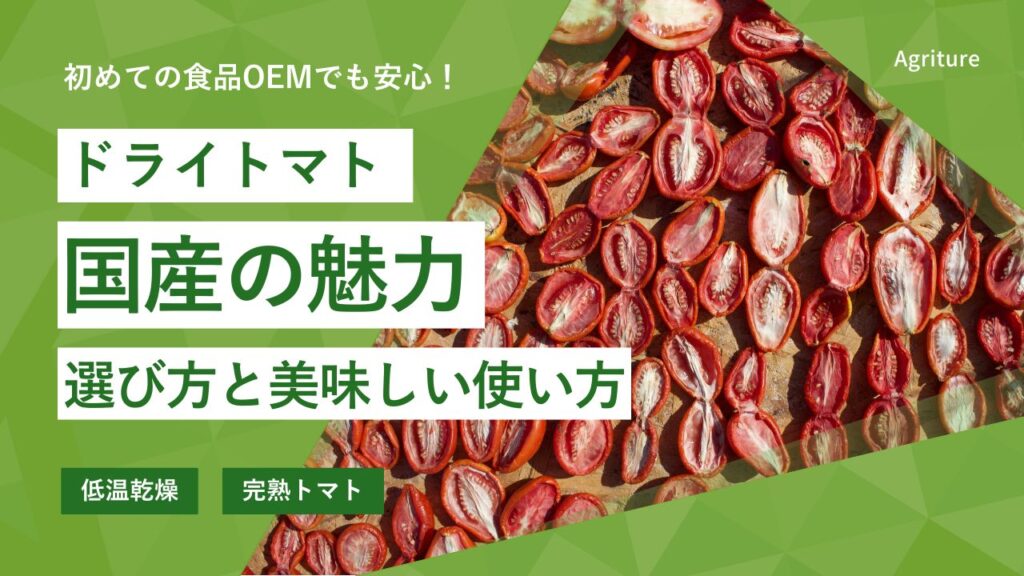
How to choose dried tomatoes | Domestic, additive-free, no added salt
When choosing domestic dried tomato, just keeping in mind the four check items—"domestic or imported," "additive-free (whether it contains salt, sugar, or preservatives)," "whether it has certification such as Organic JAS," and "processing type"—greatly changes your satisfaction after buying. In recent store shelves, additive-free and domestic labeling front and center... -
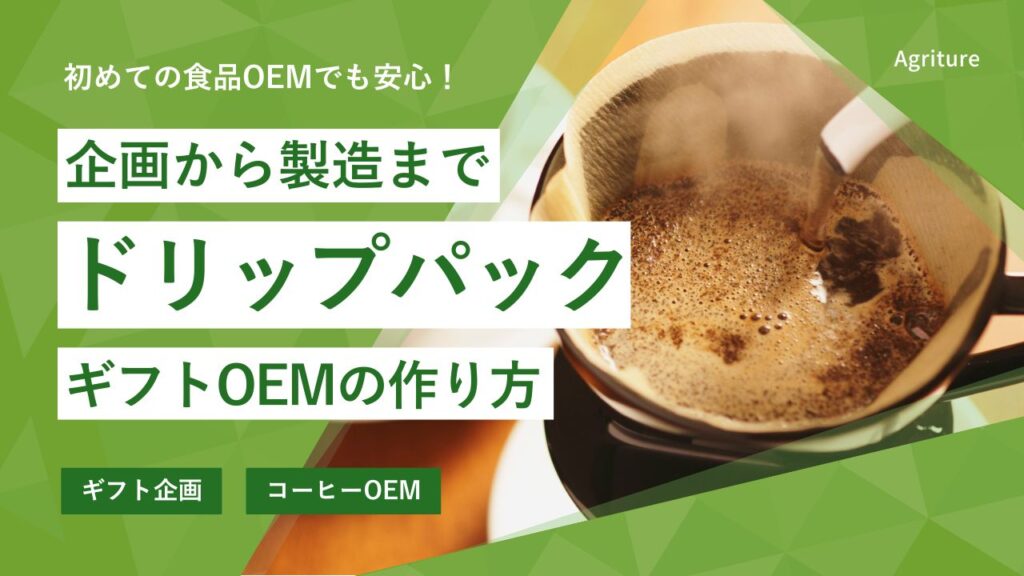
Drip Pack Gift OEM: A Guide to 5 Filter Types and Specifications by Use
Drip pack gift OEM is a coffee gift product that companies and shops can roll out under their own brand. In the industry, the names "drip bag" and "drip pack" are used interchangeably, but both refer to a product form in which a single serving of ground beans is filled into an individually packaged filter bag. Small-lot... -
How to Develop Vegetable Tea for Business People: Product Planning That Captures Health Demand
For today's business people whose work centers on desk work, maintaining health is a major challenge. As more people struggle with a lack of vegetables and a lack of exercise, demand is rising for functional beverages that let you easily supplement nutrition. In particular, the new category of "vegetable tea" combines the nutrition of conventional tea and vegetables... -
Flavored coffee OEM | Design guide for beans and adding aroma
Flavored coffee OEM is a format for contract-manufacturing an original coffee with aromas—vanilla, hazelnut, caramel, chocolate, yuzu, Japanese ingredients, and the like—entrusted to a roaster or coffee specialist maker. From label changes based on off-the-shelf products to bean selection, roast level, and flavor... -
Flavored Tea Development: Differentiating Aroma with 3 Elements × 4 Axes
Flavored tea is a product category that adds the aromas of fruits, herbs, spices, flowers, and the like to a base tea leaf such as black, green, oolong, or white tea. The basic approach is to differentiate through three elements—base tea leaf, flavoring ingredient, and method of imparting aroma—and demand exists for D2C, cafés, gifts, and tourist souvenirs... -
A must-read for e-commerce businesses: how to make a dried vegetable mix through OEM
Dried vegetable mix OEM is contract manufacturing in which several dried vegetables are blended to fit a product concept and sold under your own brand. It is used for products rehydrated with hot or cold water, such as miso soup fillings, soups, cup noodle toppings, mixed rice and emergency food. This article... -
How to start a health tea OEM | How to build a brand chosen for functional beverages
With health consciousness rising now, the functional beverage market continues its rapid expansion. Health tea in particular is supported by many consumers as an easily adopted daily health habit, and the 2024 market for foods with function claims is projected to top 600 billion yen. In such a huge market, one's own... -
The Complete Guide to OEM Manufacturing of Domestic Dried Vegetables | A Thorough Explanation from Small-Lot Support to How to Choose
As awareness of food safety rises, demand for domestically grown dried vegetables is rapidly expanding. As of 2025 in particular, additive-free products that use no food additives and OEM manufacturing services that can handle small lots are strongly sought by small and medium-sized companies and new entrants. Conventionally, mass production was... -
Choosing a Food OEM Prototyping Partner: 8 Criteria and the Practice of On-Site Auditing
Choosing a food OEM partner is the work of discerning, at the prototyping stage, a manufacturer's areas of strength, quality control systems, know-how, production capacity, and inventory handling. A manufacturer that appears often in rankings is not necessarily the right fit for you, and "how they tailor formulation proposals," "bridging from prototype to mass production," and handling trouble... -
The Going Rate for Food OEM Prototyping Costs and 10 Points for Cutting Costs
Food OEM prototyping costs generally range from 10,000–50,000 yen for powder-based products, 20,000–100,000 yen for beverages and seasonings, and 50,000–200,000 yen for snacks and baked goods. Because prototyping incurs initial costs on the manufacturer's side for equipment operation, raw material procurement, and formulation design, understanding in detail what costs how much before signing a contract... -
Kansai Food OEM: 6 Steps to Making a New Product and Subsidies
The strengths of making a new product with a Kansai food OEM lie in the industrial clusters in each of the six prefectures—Osaka, Kyoto, Hyogo (Kobe), Nara, Wakayama, and Shiga—Kinki's food research institutions, the logistics network of Hanshin, Kintetsu, Kansai Airport, and the Port of Kobe, and the diversity of regional food culture. Prepared dishes, seasonings, health foods, confectionery, beverages, packaging... -
The complete guide to powder-processing OEM in Kansai | Strengths by area and how to choose small-lot-friendly manufacturers
For those looking for powder-processing OEM in the Kansai area, we explain the features of Kansai's food-processing bases centered on Osaka, Kyoto, and Hyogo, and the points for selecting a maker. Kansai is an area where the food manufacturing industry has clustered since long ago. The processing technology represented by Osaka's flour-food culture, and Kyoto's traditional ingredients... -
The complete guide to succeeding at PB development with vegetable powder | Small lots supported
Vegetable powder is an ingredient made by drying and powdering vegetables, combining shelf stability with concentrated nutrition. This characteristic is a strong weapon for food manufacturers, retailers, and D2C operators who want to launch private brand (PB) products from small lots. Fresh vegetables have waste loss and purchasing fluctuation... -
Vegetable sweets OEM | The complete guide to designing color, flavor, and nutrition with vegetable powder
Using vegetable powder in sweets lets you add the natural color and flavor of kabocha, purple sweet potato, beet, spinach, carrot, and more without artificial colorings or food dye. Just mix it with cake flour, milk, and eggs to give homemade cookies, cakes, bread, macarons, and ice cream a "with vegetables" touch... -
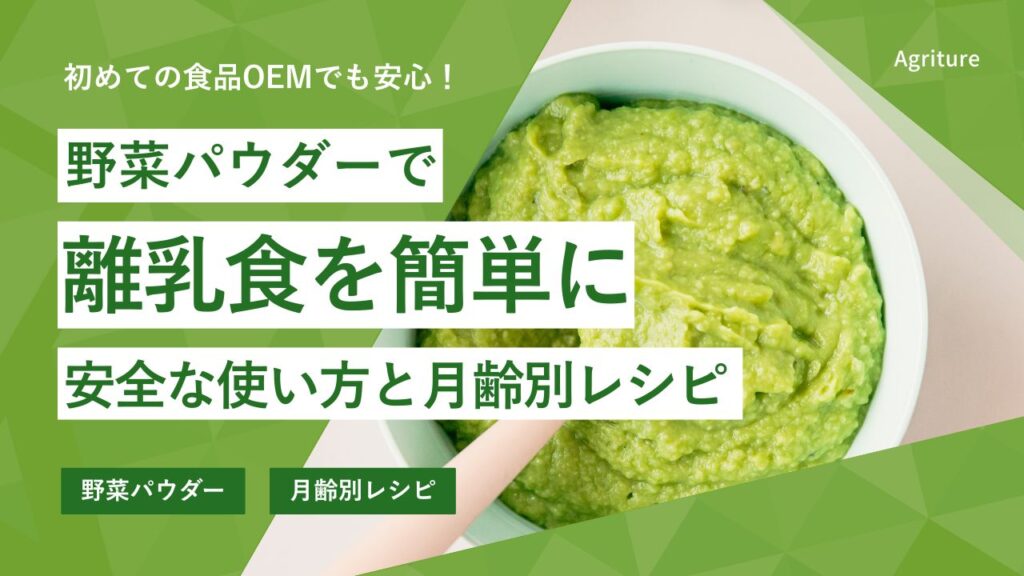
Make Baby Food Easy with Vegetable Powder: Safe Uses and Recipes by Age
Vegetable powder is a handy ingredient that both saves time and boosts nutrition when making baby food. Choosing a domestically grown, additive-free powder lets you incorporate vegetables such as kabocha, spinach, carrot, and lotus root little by little to match your baby's age, while being mindful of powderiness and allergy risk... -
The complete guide to choosing vegetable powder: also explaining the difference between commercial and household use
Vegetable powder is a food ingredient made by drying and powdering vegetables, used as a commercial raw material across a wide range—confectionery, beverages, soups, baby food, care food, pet food. Even the same "vegetable powder" differs in production method (hot-air drying, freeze-drying, vacuum drying), particle size (mesh... -
Additive-free design with vegetable powder | How to choose natural colorants for use as coloring food
Using vegetable powder as a natural pigment lets you put color and flavor into a product with just the ingredient name, without adding food red or edible colorants. The crimson of beets, the yellow of pumpkin, the green of spinach, the magenta of purple sweet potato—being able to write "beet powder" or "pumpkin powder" in the product's ingredient list is the greatest... -
How to use commercial vegetable powder | Uses at restaurants and storage
Commercial vegetable powder is a raw material for handling the color, flavor, and nutrition of vegetables at room temperature—used by restaurants, cafés, hotels, school-meal businesses, and food makers. Compared with fresh vegetables, it excels in shelf life, work efficiency, and yield, and can reduce sourcing variation and disposal loss, making it a standard material in commercial kitchens and workshops... -
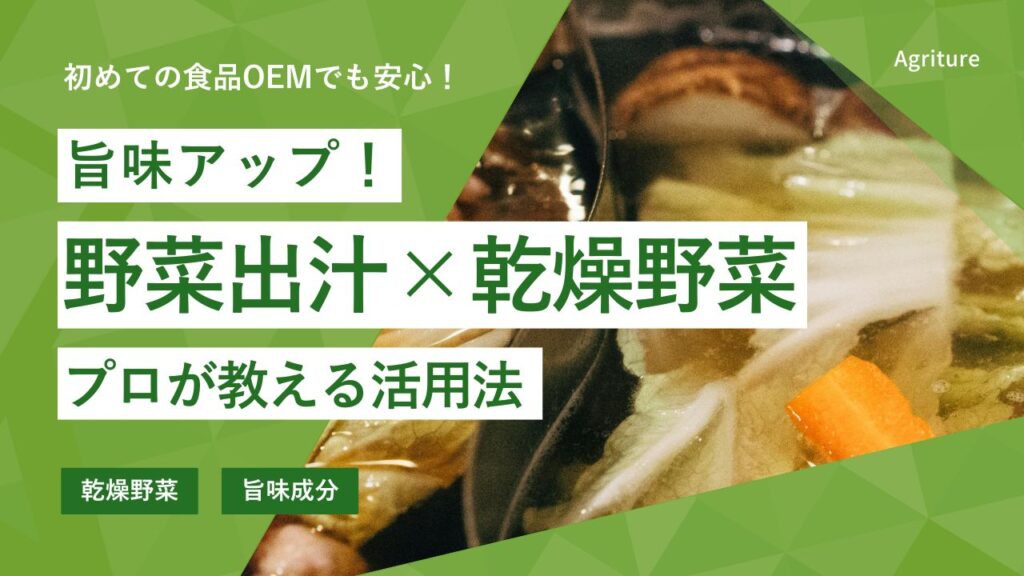
The Secret to Vegetable Dashi Is Dried Vegetables! Tips for Drawing Out Umami
Combining vegetable dashi with dried vegetables is a use that makes it easier to achieve both umami density and time savings compared with drawing dashi from fresh vegetables. Because their water has been removed, dried vegetables have relatively concentrated flavor compounds such as glutamic acid and aspartic acid, which dissolve directly into the soaking liquid. Agriture's... -
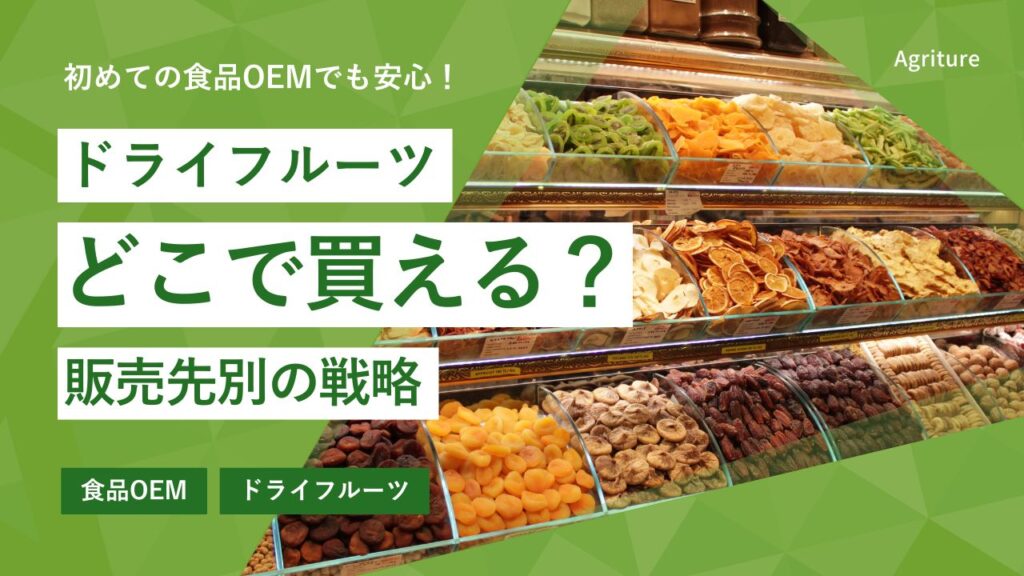
Where Can You Buy Dried Fruit? A Thorough Explanation of the Characteristics of Each Source and How to Choose
Dried fruit is a popular food that concentrates fruit's vitamins and dietary fiber. Demand is expanding as a snack, a cooking ingredient, and even a gift. But when it comes to "where can you actually buy it?", from convenience stores and supermarkets to imported-food shops such as Muji and Kaldi, and further... -
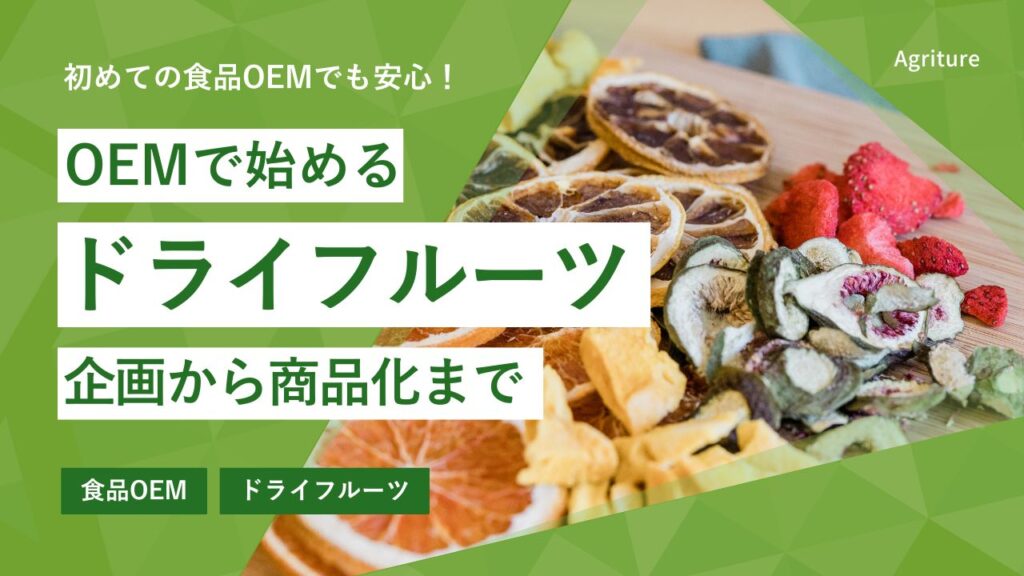
Why choosing sweet varieties for dried fruit OEM leads to failure
Dried fruit OEM means outsourcing everything from drying the fruit to bagging it, then selling the product under your own brand. You can have a product without owning equipment, but costs are determined very differently from dried vegetable or confectionery OEM. The real difference is yield. Fruit is more than 80% water... -
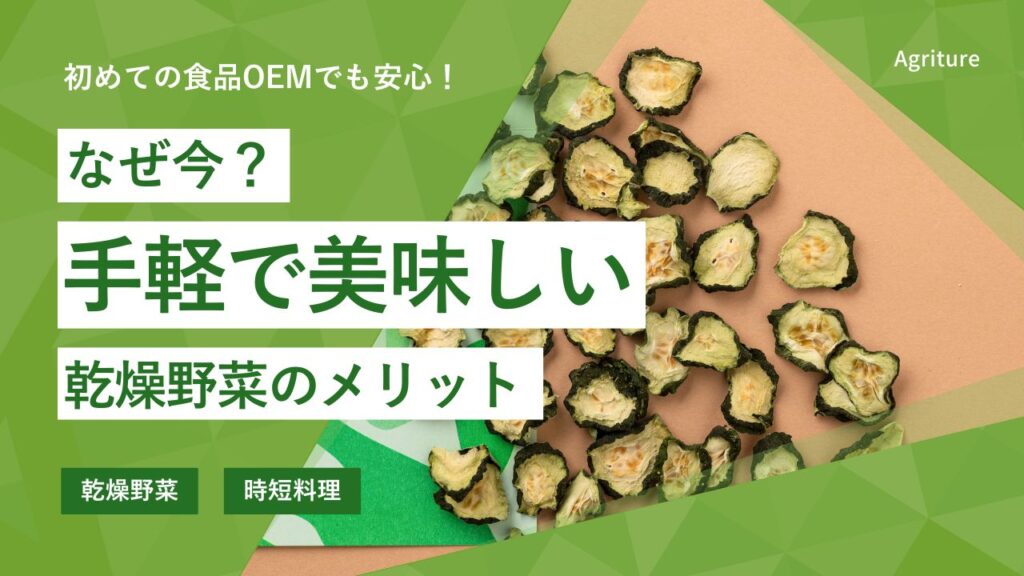
Why Dried Vegetables Now? 5 Benefits Beyond Just Convenient and Nutrient-Concentrated
"I want to eat vegetables properly every day"; "I need to eat 350g of vegetables a day." Even when you think this, work, chores, and childcare take over and before you know it the day is done. It is precisely those people we want to offer, anew, the option of "dried vegetables." Dried vegetables may bring to mind kiriboshi daikon... -
How to Choose Dried Goods, Taught by a Pro | 5 Important Points and How to Tell Them Apart
Dry goods are foods with raised shelf life through drying ingredients. From traditional ones like kelp, shiitake, and beans to newer categories like dried vegetables and dried fruit, there's a truly wide variety of kinds. The greatest appeal of dry goods is, above all, their high shelf life. Long-term stor... at room temperature -
How to start vegetarian OEM | Ingredient selection and product planning for vegan support
We want to develop food for vegetarians and vegans through OEM. But we're not sure how far raw-material restrictions and production-process considerations need to go—we're hearing more of these voices from companies. What you'll learn in this article: the difference in dietary restrictions between vegetarian and vegan (directly tied to raw-material design... -
A Guide to Using Dried Vegetables as a Pet Food Raw Material
More owners want to incorporate vegetable nutrition when thinking about their pet's health. But raw vegetables don't keep and take effort to prepare, so it's not easy to work them into daily meals. That's where "dried vegetables," with excellent storability and convenience, are drawing attention... -
6 Reasons Dried Vegetable Gifts Are Well-Received and Tips for Choosing Them
Dried vegetable gifts, drawing attention alongside rising health consciousness. Lately their popularity as gifts has been surging. What is the appeal of this new kind of gift, which sets itself apart from conventional sweets and consumables? This article covers the reasons dried vegetable gifts get chosen and well-received products... -
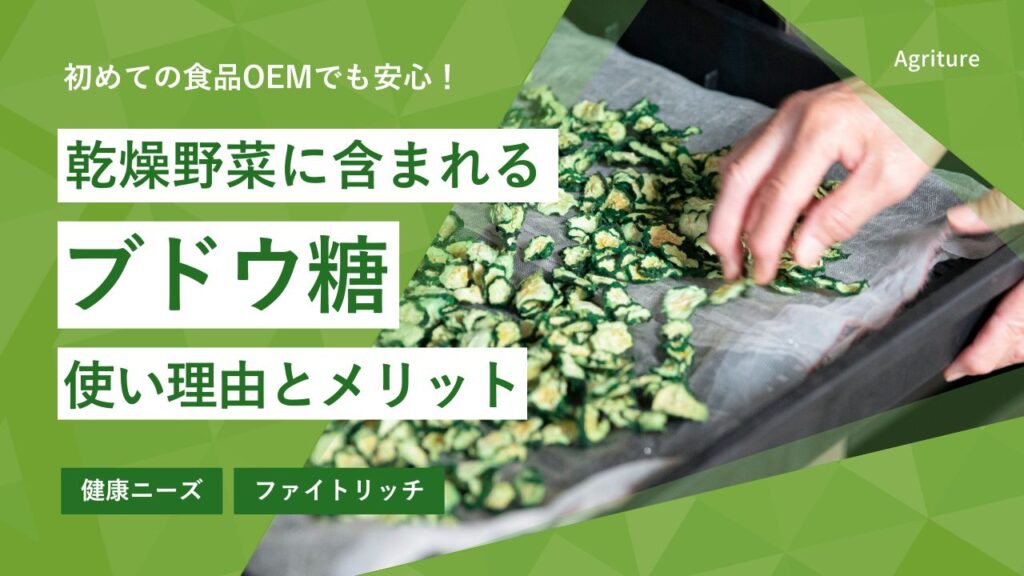
How to Make Dried Vegetables | Tips for Easy Home-Dried Vegetables and Recipe Uses
Dried vegetables are a handy ingredient that raises storability by removing moisture and concentrates vegetables' nutrition and umami. With easy cooking and simple room-temperature storage, the market is expanding for both commercial and home use, and it's also drawing attention as an OEM ingredient. Meanwhile, "is glucose used in dried vegetables..." -
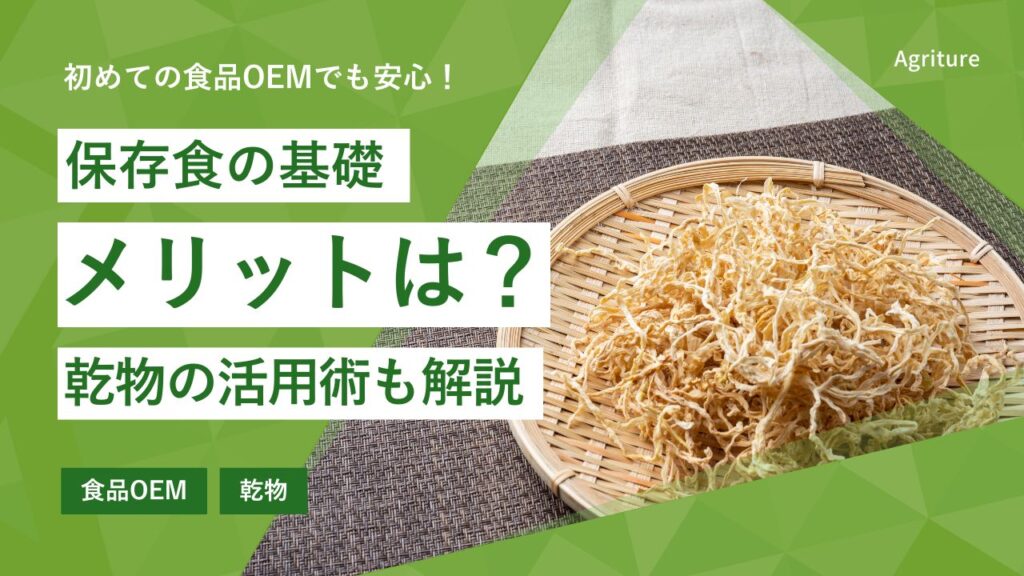
A Complete Guide to the Pros and Cons of Dried Goods: Uses Explained Too
Dried goods are foods made by evaporating the water from ingredients through methods such as sun-drying. They are said to have already been used as far back as the Jomon and Yayoi periods, and are deeply rooted in Japanese food culture. Amid Japan's distinctive climate—hot and humid in summer, cold and dry in winter—in an age without refrigerators, ingredients...