
How to Develop Vegetable Tea for Business People: Product Planning That Captures Health Demand

Summary of this article
We explain how to develop vegetable tea for business professionals from the product-planning viewpoint of capturing health demand. It covers target-setting for the desk-work generation, the differentiation points of hybrid vegetable × tea-leaf products, selection criteria for tea leaves and vegetable ingredients, the freeze-dry method, HACCP, FSSC 22000, and Organic JAS certification, the collaboration process with OEM makers, packaging strategy for tea bags, leaf, and gift boxes, and e-commerce and SEO marketing.
For modern business professionals whose work centers on the desk, maintaining health is a major challenge.
As more people struggle with a lack of vegetables and exercise, demand is rising for functional beverages that let you supplement nutrition easily. The new category of "vegetable tea" in particular is drawing attention as an innovative product that fuses the nutrition of traditional tea and vegetables. Its greatest appeal is that blending vegetable powder or dried vegetables into tea leaves lets you take in nutrients like vitamins, minerals, and dietary fiber with ease.
As health consciousness grows, research on the functionality of agricultural products and foods is also advancing. Interest in functional components contained in vegetables and tea is increasing along with health consciousness, and this background is helping drive the expansion of the vegetable tea market.
Recommended reading

TOC
Basic concept design for vegetable-tea development
The first step of product development is a clear concept.
Start by concretely defining your target audience. For example, clarify who the product is for, business professionals in their 30s to 40s whose work centers on the desk and who are health-conscious, homemakers who care about their family's health, a premium-oriented segment aiming at gift demand, and so on. Once the target is set, the direction for ingredient selection and package design to match those needs comes into view.
Clarifying the differentiation points
To make the most of the strength of a "vegetable × tea-leaf" hybrid product, you need to clarify what value you provide. For example, a "green blend" using leaf vegetables like Spinach,and kale,, or a "root-vegetable blend" using carrots and beets,, lets you pitch the different nutritional value and flavor of each vegetable type.
Product design that focuses on functional components is also effective. Combining the catechins and theanine in tea with antioxidant components derived from vegetables, such as beta-carotene and polyphenols, creates products that resonate with health-conscious consumers.
Making a product with a story
Making the raw materials' origin and manufacturing process transparent builds trust with consumers. Putting out concrete information like "100% domestic vegetables," "grown without pesticides," and "dried vegetables used to concentrate nutritional value" provides reassurance and added value.
Points for ingredient selection and quality control
What governs the quality of vegetable tea is ingredient selection.
For tea leaves, the variety, origin, cultivation season, and processing method greatly affect taste and aroma. Green tea, oolong tea, and black tea differ in the degree of oxidation and in processing steps like rolling and drying, so you need to choose with the compatibility with the vegetable ingredients in mind. For example, green tea has the effect of softening the grassy note of vegetables and suits blending with vegetable powder.
How to choose vegetable ingredients
When using dried vegetables or vegetable powder, flavor, color, mouthfeel, and dissolvability are important evaluation points. Spinach and kale are high in nutritional value, and their vivid green also has visual appeal. Carrot and beet have a natural sweetness and improve drinkability.
The drying method of the vegetables also affects quality. The freeze-dry method has little loss of nutrients and retains color and aroma well, so it suits high-quality vegetable tea. Hot-air drying, on the other hand, holds down cost, so you can choose according to the price tier.
Quality control and certification setup
To ensure safety, choosing an OEM maker with a solid quality-control setup like HACCP and FSSC 22000 is required. Holding Organic JAS, HALAL, and KOSHER certifications also brings export and specific-market expansion into view.
At the prototype stage, finely adjust the blend ratio of vegetable ingredients and tea leaves and check the flavor balance. Too much vegetable powder makes the grassy note and astringency strong, and too little weakens the nutrition angle, so finding the optimal balance is the key to success.
The collaboration process with an OEM maker
To commercialize without owning your own manufacturing equipment, collaboration with an OEM maker is essential.
OEM (Original Equipment Manufacturer) refers to a form where you outsource your own-brand product to another maker, from raw-material sourcing through manufacturing and packaging. The major benefits are being able to launch a new product with reduced risk without owning manufacturing equipment, and optimizing cost and quality by partnering with a contractor that has manufacturing know-how.
Criteria for choosing an OEM maker
Check whether it can handle vegetable ingredients, whether small-volume runs and custom blends are possible, and whether the quality-control and certification setup is in place. Among domestic tea OEM makers, some are good at producing original tea products and have a track record of original blends, small-lot support, and design support.
How to advance spec design and prototyping
In the spec discussion with the OEM maker, concretize the blend ratio of vegetable ingredients, the tea-leaf type, the processing steps, the flavor design, and the packaging spec. Choose the format to suit the sales channel and target, tea bags, leaf, gift boxes, and so on.
At the prototype stage, thoroughly verify the flavor, color, mouthfeel, and dissolvability of the vegetable ingredients. Especially for the powder type, a spec that dissolves easily in hot water and resists settling is important. Repeat prototyping several times to find the optimal blend ratio and processing method.
Minimum order quantity and lead time
Since OEM manufacturing requires a certain volume and lead time, if you want to roll out on a small scale, choosing a maker that can handle prototyping and small volumes matters. The flexibility to hold down the initial investment while adjusting the production volume as you watch market response is especially important when newly entering the market.
Package design and sales strategy
Package design, which decides a product's first impression, is an important factor that governs sales.
Choose a design and material that can pitch the vegetable-derived ingredients. For example, kraft paper and zipper bags can emphasize a natural, health-conscious image, and gift boxes can stage a premium feel. Placing vegetable illustrations and a nutrition-facts table on the package conveys the product's features visually.
Choosing sales channels
Splitting the format between everyday use and gift use lets you reach a wide range of customers. Effective strategies include an everyday-use 100g zipper bag at an affordable price, and a gift-use set of 50g × 2 types to stage a premium feel.
When rolling out mainly through e-commerce, SEO matters. Work keywords like "domestic vegetable blend tea," "tea using dried vegetables," and "functional vegetable tea" into your product pages and blog articles to increase search traffic. On the product page, describe the raw material's origin, the manufacturing process, the nutritional components, and drinking suggestions in detail to resolve consumers' questions.
Marketing strategy
Putting out a story of "one-stop from raw material through planning and manufacturing" raises the brand's credibility. Using social media to share the behind-the-scenes of product development and the producers' thoughts generates empathy and wins fans.
For KPI design, set metrics like e-commerce traffic, product-page PV, inquiry count, order count, and repeat rate, and continue data-based improvement. In the early stage, prioritize raising awareness, and consider using advertising and influencer marketing as well.
Future development and the potential for market expansion
The vegetable-tea market is expected to grow further going forward.
Development as a Food with Function Claims also comes into view. By scientifically demonstrating a specific health effect and notifying the Consumer Affairs Agency, concrete claims like "for those with somewhat high blood pressure" and "regulates the intestinal environment" become possible. This dramatically improves the appeal to highly health-conscious consumer segments.
A new market of vegetable tea for pets is also drawing attention. Pets' health-consciousness is rising too, and demand for additive-free, natural-ingredient beverages is increasing. Drawing on the know-how cultivated in developing vegetable tea for humans and rolling out products for pets secures a new revenue source.
Expanding into RTD (Ready To Drink) formats is also promising. Developing canned or PET-bottled vegetable teas opens up sales at convenience stores and supermarkets, reaching a wider range of consumers. Some OEM manufacturers can handle multiple formats such as tea bags, loose leaf, and RTD.
Summary: The Formula for Successful Vegetable Tea Development That Captures Health Demand
Developing vegetable tea for business professionals starts with setting a clear concept. The keys to success are defining the target audience specifically, then selecting raw materials, managing quality, and designing packaging to match their needs.
Partnering with an OEM manufacturer lets you bring high-quality products to market without owning production equipment, keeping risk low. By fine-tuning the blend ratio of vegetable ingredients and tea leaves to optimize the balance of flavor, nutrition, and safety, you can create products that resonate with health-conscious consumers.
For sales strategy, focus on e-commerce and invest thoroughly in SEO, increasing search traffic with keywords like "domestic vegetable blend tea" and "functional vegetable tea." Being transparent about ingredient origins, the manufacturing process, and nutritional content on product pages and social media builds trust with consumers.
Looking ahead, keep foods with function claims, vegetable tea for pets, and RTD formats in view as you work to expand the market. As health demand rises today, vegetable tea is a product category with significant potential. Why not take on the challenge of vegetable tea development yourself?
If you are considering product development with off-spec or your own farm's vegetables:From planning to processing, materials, package printing and novelties, you can consult us through a single point of contact. → Learn more about one-stop product development
FOR BUSINESS
乾燥野菜のOEM・受託加工を承ります
国産の野菜・果物の乾燥、100メッシュ相当までの粉砕、10g以上の小袋充填までをお受けしています。小ロットの試作から量産までご相談ください。寄せられた相談の実例は OEM・卸のご相談 に掲載しています。
乾燥品の賞味期限は、出荷日から6ヶ月程度を目安にご案内しています。
- Drip Pack Gift OEM: A Guide to 5 Filter Types and Specifications by Use
- Flavored coffee OEM | Design guide for beans and adding aroma
Author of this article
Related articles
-
 Original coffee marketing strategy | Ways to grow sales
 -
 ベジタリアンとは?国の規格が分けている4つの区分と食べられないもの
 -
 長ねぎと白ねぎは同じもの?ねぎの種類と呼び名を国の資料で確かめる
 -
 柚子の種類は何種類あるのか、公の資料で名前が残る系統を数えた
 -
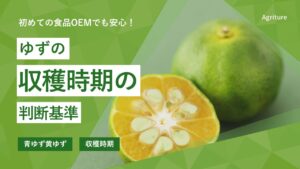 ゆずの時期は年に二度、青ゆずは7月から黄ゆずは10月から
 -
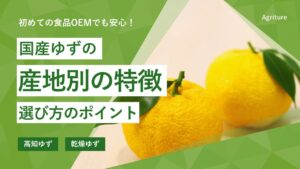 ゆずの産地は高知が半分を占め、二位は徳島から愛媛に変わった
 -
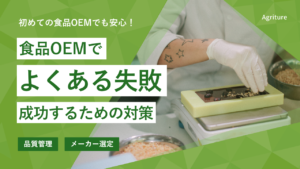 Preventing Food OEM Failures: Common Failure Cases and Countermeasures for Success
 -
 How to find a food OEM | How to efficiently find the best manufacturing partner