
ベジタリアンとは?国の規格が分けている4つの区分と食べられないもの

Summary of this article
ベジタリアンとは何かを、2022年9月制定の日本農林規格(JAS 0025)の条文から整理しました。国が立てている区分は卵と乳製品、卵のみ、乳製品のみ、ヴィーガンの4つで、どれも魚介類は使えません。除外が認められるのは卵・乳製品・蜂蜜類・羊毛脂だけ。表示の条件、揚げ油の共用禁止、製造ラインの洗浄、世界で約6.5億人・訪日客の約167万人という農林水産省の数字までまとめました。
「ベジタリアンとは何か」を調べると、8種類とも10種類とも書かれた分類表が出てきます。どれが正しいのか、判断がつかないまま読み終わることになります。
先に結論を書きます。日本には、ベジタリアンとヴィーガンについて国が定めた規格があります。2022年9月6日に制定された日本農林規格(JAS)で、そこでは4つの区分しか立てていません。卵と乳製品を食べるベジタリアン、卵だけ食べるベジタリアン、乳製品だけ食べるベジタリアン、そしてヴィーガンです。
ネット上の「8種類」「10種類」という分類は、世界で使われてきた呼び名を集めたもので、間違いではありません。ただし商品に「ヴィーガン」と書くときに満たすべき基準は、この4区分のほうです。この記事では、規格の条文をそのまま引きながら、定義・食べられないもの・表示のルールを整理します。
国産の野菜と果物を乾燥させて食品メーカーに供給している立場から、原料を選ぶ側で実際に何が問題になるかもあわせて書きました。
TOC
ベジタリアンとは何か、国の規格はこう定めている
2022年に、日本農林規格に「ベジタリアン又はヴィーガンに適した加工食品」が加わりました。
2022年9月に制定されたJAS 0025
正式には「ベジタリアン又はヴィーガンに適した加工食品の日本農林規格」(令和4年9月6日農林水産省告示第1390号)といい、令和4年10月6日から施行されています。規格番号はJAS 0025です。
この規格は、認定NPO法人日本ベジタリアン協会からの申出を受けて、日本農林規格調査会の審議を経て農林水産大臣が制定したものです。民間団体の定義ではなく、国の規格として存在しているのが重要な点です。
規格が立てているのは4つの区分
規格の第4章は、ベジタリアンまたはヴィーガンに適した加工食品の基準を4つに分けています。
| 規格上の区分 | Eggs | Dairy | その他の動物由来 |
|---|---|---|---|
| 卵及び乳製品を摂食する Vegetarian | 使える | 使える | 使えない |
| 卵を摂食する Vegetarian | 使える | 使えない | 使えない |
| 乳製品を摂食する Vegetarian | 使えない | 使える | 使えない |
| Vegan | 使えない | 使えない | 使えない |
世間でよく使われる「ラクト・オボ・ベジタリアン」が1行目、「オボ・ベジタリアン」が2行目、「ラクト・ベジタリアン」が3行目にあたります。規格はカタカナの呼び名を使わず、何を食べるかで名前を付けています。
魚を食べる人は、この規格には入らない
よく聞かれるのが「ベジタリアンは魚を食べるのか」です。規格の答えははっきりしています。4つの区分のどれも、魚介類を使うことを認めていません。除外されているのは卵・乳製品・蜂蜜・羊毛脂だけで、魚はそこに入っていません。
魚を食べる「ペスカタリアン」や、鶏肉も食べる「ポーヨー・ベジタリアン」といった呼び名は世の中にありますが、国の規格はそれらを対象にしていません。商品に「ベジタリアン」と表示したいなら、魚介類は使えないということです。
規格は宗教や環境を扱っていない
規格の適用範囲には、次のように書かれています。
この規格は,人の健康,地球環境保全,社会経済的配慮(フェアトレード,アニマルウェルフェア等)及び宗教的信条に基づいた要求事項を規定しているものではないが,これらに関係する加工食品を適用範囲外とするものではない。
ベジタリアン又はヴィーガンに適した加工食品の日本農林規格(JAS 0025:2022)1 適用範囲
つまり、この規格は健康や環境や宗教の話ではなく、原材料と製造工程の話だと自分で線を引いています。ハラールやコーシャとは別の基準です。宗教上の制限に対応したい場合は、この規格を満たしても足りません。
ベジタリアンが食べられないもの
「肉と魚を使わなければいい」で済まないのが、この分野の難しいところです。規格には、除外してよいものが名指しで書かれています。裏を返せば名前が挙がっていないものは、すべて使えないということです。
規格が名指ししている除外対象
卵と乳製品を食べるベジタリアン向けの基準では、動物由来の原料を使ってはならないとしたうえで、次のものだけを例外としています。
- 動物の卵又はその加工食品
- 動物の乳又はその加工食品
- 蜂蜜又は蜜蜂製品(蜜ろう、プロポリス等)
- ラノリンを含む羊毛脂
- 上の4つの成分又はその派生物
The one to note is蜂蜜と蜜ろう、プロポリス、羊毛脂が明示されていることです。蜂蜜はベジタリアンなら食べる、ヴィーガンなら食べない、という区別が国の規格でも同じ形になっています。
また、2次原料における加工助剤については「動物の骨炭及び甲殻類から得られるキトサンに限る」という限定が付いています。砂糖の精製に使われる骨炭や、清澄剤に使われるキトサンは、ここに該当します。
ヴィーガンは例外がない
ヴィーガンに適した加工食品の基準には、除外リストがありません。動物由来の1次原料と2次原料を、いっさい使ってはならないとだけ書かれています。卵も乳製品も蜂蜜も使えません。
商品開発の順序としては、ヴィーガン基準を満たせば、ほかの3区分も自動的に満たせます。もっとも厳しいところに合わせておけば、表示の選択肢が広がります。
動物試験を行っていないこと
4つの区分すべてに、同じ条件が付いています。「いかなる動物試験も製造業者等によって実施されていてはならない」。原材料だけでなく、開発の過程まで見られます。
食品の規格に動物試験の条項があるのは意外に思えますが、ヴィーガンの考え方が動物の利用そのものを避けるところから来ていることを考えれば筋が通っています。
原材料表示で見落としやすいもの
規格が名指ししていないものは全部だめ、という前提で原材料表示を読み直すと、思わぬところに動物由来が残っています。
| 見落としやすい原材料 | 何に由来するか | 使われている例 |
|---|---|---|
| Gelatin | 牛や豚の骨・皮 | ゼリー、グミ、ムース |
| レンネット | 子牛の胃 | チーズの凝固 |
| Cochineal coloring | カイガラムシ | 飲料、菓子、漬物 |
| かつおだし・煮干しだし | 魚 | 汁物、煮物、めんつゆ |
| シェラック | ラックカイガラムシ | 菓子の光沢剤 |
| オイスターソース | かき | 中華の調味 |
| 「◯◯エキス」表記 | チキン、ビーフ、ポークなど | スープ、スナック、たれ |
| 乳化剤・光沢剤 | 由来が書かれないことがある | 加工食品全般 |
日本の食品開発でいちばんつまずくのはだしです。和食の土台がかつお節と煮干しでできているので、そこを植物性に置き換えないと成立しません。
FOR BUSINESS
乾燥野菜のOEM・受託加工を承ります
国産の野菜・果物の乾燥、100メッシュ相当までの粉砕、10g以上の小袋充填までをお受けしています。小ロットの試作から量産までご相談ください。寄せられた相談の実例は OEM・卸のご相談 に掲載しています。
乾燥品の賞味期限は、出荷日から6ヶ月程度を目安にご案内しています。
だしをどう置き換えるか
動物性のだしを外したとき、味の土台をどう作るかが実務の中心になります。ここは当社が原料を供給している領域です。
昆布・しいたけ・野菜を組み合わせる
植物だけでうま味を出すなら、複数の素材を重ねるのが基本です。単品では物足りなくても、組み合わせると輪郭が出ます。
- 昆布:和風の土台。水出しでも出る
- Dried shiitake:深みが出る。戻し汁ごと使う
- Dried tomato:洋風・中華にも合う
- Dried onion:甘みと厚みを足す
- Dried carrot:色と香りを補う
作り方と配合の考え方は野菜出汁の解説.
だし以外でも、青菜は色と香りを足す用途でよく使われます。Dried spinach and Dried komatsunaは、スープや練り込みで動物性を使わずに彩りを出せる素材です。
乾燥野菜が向いている理由
ベジタリアン対応の加工食品で乾燥野菜が使われやすいのには、原材料表示の側の事情があります。
- 原材料が野菜そのものだけで、添加物を使わずに済む
- 水分がないので常温で運べて、保管の場所を選ばない
- 重量あたりの体積が小さく、配合の調整がしやすい
- 加熱して乾かしているので、そのまま使える形にできる
「原材料名に書くものが増えない」というのが、この分野では効きます。表示を短くできるほど、由来を説明する手間が減るからです。
規格外の野菜を使う選択
形が揃わない、傷がある、大きさが基準から外れる。そうした野菜は味に問題がなくても流通に乗りにくく、乾燥させる用途とは相性がよいです。当社でもMaking use of off-spec vegetablesに取り組んでいます。
「ヴィーガン」と書くために必要なこと
規格の第6章は表示の基準です。パッケージにこの言葉を書くには、何を満たす必要があるのか。
言葉を書くなら基準を満たす
規格はこう定めています。
加工食品の容器包装に“卵・乳製品摂食ベジタリアン”,“卵摂食ベジタリアン”,“乳製品摂食ベジタリアン”,これらの3 タイプをまとめた“ベジタリアン”若しくは“ヴィーガン”又はこれらに類似する意味の用語を表示する場合は,箇条4 及び箇条5 の該当する要求事項を満たさなければならない。
ベジタリアン又はヴィーガンに適した加工食品の日本農林規格(JAS 0025:2022)6 表示 a)
The key is「又はこれらに類似する意味の用語」という部分です。「ヴィーガン」と書かなくても、それに近い意味の言葉を使えば同じ基準がかかります。
商品名と同じ視野に入るように表示する
もうひとつ、置き場所の決まりがあります。規格は、これらの用語を表示する場合は「動物由来の類似の加工食品との区別を容易にするため,加工食品の商品名と同じ視野に入るように表示しなければならない」としています。
裏面の隅に小さく書くのではなく、商品名を見たときに一緒に目に入る位置に置け、ということです。買う人が棚の前で判断できるようにするための決まりです。
意図せざる混入があっても表示できる場合
現実の工場では、同じラインで動物由来の商品を作っていることがあります。規格はそこを頭から否定していません。
意図せざる混入の可能性があっても、適切な予防処置が講じられていれば表示してよいとされています。さらに、アレルゲンの注意喚起を表示する場合であっても、ベジタリアンやヴィーガンの用語を表示してよいと明記されています。
「本品は卵を使用した設備で製造しています」という注意書きと、「ヴィーガン」の表示は両立するということです。ここは実務でよく誤解されるところです。
製造の現場で求められること
規格の第5章は生産行程管理の基準です。原材料を選ぶだけでは済まず、工場の運用まで条件が付きます。
受け入れ時に根拠を入手して、区分して保管する
1次原料を受け入れるときに、基準を満たしていることの根拠を入手し、満たしていない原材料や添加物と混合しないよう区分して管理しなければならないとされています。
「たぶん植物性だろう」では通りません。仕入先から書面で確認を取り、保管も分けます。原料を供給する側から見ると、この根拠を出せるかどうかが採用の分かれ道になります。
揚げ油の共用が禁じられている
製造の基準には、見落としやすい条項があります。「適さない原材料又はこれを使用した加工食品を揚げた油が使用されていてはならない」。
原材料表を見ただけでは分からない部分です。同じフライヤーで鶏の唐揚げを揚げていたら、その油で野菜を揚げたものは基準を満たしません。
ラインを共用するなら製造前に十分な洗浄
製造ラインが共用の場合は、製造開始前に十分な洗浄が行われていなければなりません。規格は対象を「関連する機械,機器,用具及び原材料が接触するあらゆる表面」まで広げています。
ベルト、ホッパー、充填機のノズル、計量器。原料が触れるところはすべて入ります。専用ラインを持たない工場では、切り替えのたびに時間とコストがかかることになります。
| Process | 規格が求めていること |
|---|---|
| 原料の受入れ | 基準を満たす根拠を入手する |
| Refrigerator needed | 基準を満たさない原料と区分する |
| Manufacturing | 意図せざる混入を防ぐ予防処置 |
| 揚げ油 | 適さない原料を揚げた油を使わない |
| ライン共用 | 製造開始前に十分な洗浄 |
| Labeling | 商品名と同じ視野に入る位置に |
We have materials available to help you understand dried processing OEM
Agriture OEM, flexibly handling everything from small lots to large lots
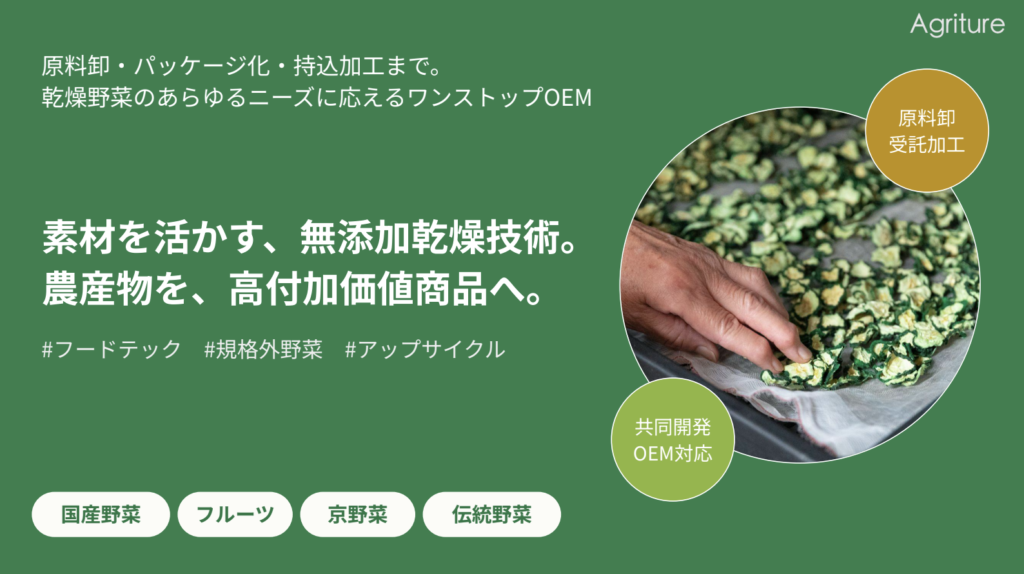
- OEM available from small lots of 10 kg
- Drying of brought-in raw materials also possible
- Support from processing to filling in one place
「8種類」という分類は何だったのか
ここまで国の規格を見てきましたが、世の中で広く使われている分類も、役に立たないわけではありません。
呼び名は食文化から生まれた
ラクト、オボ、ペスコ、ポーヨー、フルータリアン、フレキシタリアン。これらはそれぞれの国や文化のなかで、どこまで食べるかを言い表すために生まれた呼び名です。国が規格を作る前から使われてきました。
| よく見る呼び名 | What they eat | 国の規格に | あるか |
|---|---|---|---|
| Vegan | 植物性のみ | ある | ― |
| ラクト・オボ | 卵と乳製品まで | ある | 卵及び乳製品を摂食するベジタリアン |
| Ovo | 卵まで | ある | 卵を摂食するベジタリアン |
| Lacto | 乳製品まで | ある | 乳製品を摂食するベジタリアン |
| ペスカタリアン | 魚介類まで | ない | ― |
| Pollo | 鶏肉と魚介類まで | ない | ― |
| Flexitarian | ときどき肉も | ない | ― |
| Fruitarian | 果実など限られたものだけ | ない | ― |
相手がどこまで食べるかは、聞かないと分からない
同じ「ベジタリアン」と名乗る人でも、卵を食べるかどうかは人によります。呼び名に頼らず、卵・乳製品・蜂蜜・だしの4点を確認するのが実務では早いです。
- 卵は食べるか
- 乳製品は食べるか
- 蜂蜜は食べるか
- かつおだし・煮干しだしは避けるか
- 同じ設備で作られたものを避けるか
最後の項目は見落とされがちですが、厳格な人ほど気にします。規格が製造ラインの洗浄まで定めているのは、この需要があるからです。
ベジタリアンは世界に何人いるのか
数字を出すときは出どころが問題になります。ここでは農林水産省が規格の説明資料に書いている数字を使います。
2018年で約6.5億人、日本は人口比の約4%
農林水産省の新事業・食品産業部が公表している資料には、次のように書かれています。
主要100ヶ国・地域におけるベジタリアン及びヴィーガンの人口は、新型コロナウイルス感染症の感染拡大前の2018年には約6.5億人であり、欧米諸国を中心に毎年約1%近く増加傾向(日本では人口比率の約4%がベジタリアン及びヴィーガン)。
農林水産省 新事業・食品産業部「ベジタリアン又はヴィーガンに適した加工食品JAS」
日本の人口比で約4%という数字は、国内だけ見ても400万人台にあたります。「日本ではまだ少ない」で片づけられる規模ではありません。
訪日客のうち約167万人
同じ資料には、飲食店向けの規格を作った背景として次の数字が挙げられています。
2018年度の訪日客約3,119万人のうち、約167万人がベジタリアン及びヴィーガンであり、訪日客から食材変更のリクエストに柔軟な飲食店や専門店などの数が少ないことに対する不満が多くあったところ。
農林水産省 新事業・食品産業部「ベジタリアン又はヴィーガン料理を提供する飲食店等の管理方法JAS」
訪日客のおよそ20人に1人という割合です。そして農林水産省自身が、対応できる店が少ないことへの不満が多かったと書いています。国が規格を作った動機がここにあります。
飲食店向けの規格もある
加工食品の規格とは別に、「ベジタリアン又はヴィーガン料理を提供する飲食店等の管理方法」という規格もあります。飲食店側に求められるのは、加工食品とは少し違う内容です。
- 使用してはならない食材及び添加物を定める
- 適さない食材・添加物の混入を防ぐ
- ベジタリアンまたはヴィーガンに適した料理を1品目以上提供する
- 料理数、食材の根拠、配合割合などを顧客に正しく情報提供する
- 看板等にマークを貼付する
「1品目以上提供する」という条件が入っているのが特徴です。全品対応でなくてもよい代わりに、何がどう対応しているかを客に正しく伝えることが求められます。
製品にはマークが貼られる
加工食品の規格では、基準を満たして認証を受けた製品に「VEGAN ヴィーガン」などのマークを貼付できます。棚の前で判断する材料になるので、対応商品を探している人にとってはここが目印になります。
日本にはもともと菜食の土台がある
ベジタリアン対応は輸入された考え方のように見えますが、材料の面では日本に蓄積があります。
精進料理は動物性を使わない献立
寺院で受け継がれてきた精進料理は、肉も魚も使わない料理です。昆布やしいたけでだしを取り、大豆製品でたんぱく質を補い、季節の野菜を使います。動物性を外しても献立が成立することを、長い時間かけて確かめてきた体系, contained in burdock and cocoa.
ただし精進料理には、ねぎ・にんにく・にらなどを避ける考え方が伴うことがあります。ベジタリアン対応とは別の制約なので、そのまま同じものとして扱うことはできません。
乾物という蓄積
切り干し大根、干ししいたけ、高野豆腐、かんぴょう、昆布。日本の乾物は動物性を使わずに保存性とうま味を確保する技術の集積です。水で戻すだけで使える形になっているのも、加工食品の原料として扱いやすい点です。
当社が国産の野菜を乾燥させているのも、この延長にあります。原材料名に「野菜」としか書かずに済む素材は、表示の面でも扱いやすくなります。
We have materials available to help you understand dried processing OEM
Agriture OEM, flexibly handling everything from small lots to large lots
- OEM available from small lots of 10 kg
- Drying of brought-in raw materials also possible
- Support from processing to filling in one place
ベジタリアン対応の商品をつくるとき
ここからは、商品開発の立場で押さえておくことです。
どの区分を狙うかを最初に決める
ヴィーガンまで対応すれば、ベジタリアンの3区分もカバーできます。ただし卵と乳製品が使えなくなるぶん、配合の自由度は下がります。対象を広げるか、作りやすさを取るかの判断が最初に来ます。
| 狙う区分 | 使える原料 | 届く範囲 |
|---|---|---|
| Vegan | 植物性のみ | 4区分すべて |
| 卵及び乳製品を摂食するベジタリアン | 卵と乳製品まで | 1区分 |
| 卵を摂食するベジタリアン | 卵まで | 2区分 |
| 乳製品を摂食するベジタリアン | 乳製品まで | 2区分 |
原料側に出してもらう情報
- 1次原料と2次原料の由来(動物由来を含むかどうか)
- 加工助剤に骨炭やキトサンを使っていないか
- 製造ラインの共用状況と、洗浄の手順
- 揚げ油を共用していないか
- 動物試験を行っていないこと
Of these, 2次原料と加工助剤は、通常の規格書には書かれていないことがあります。先に聞いておかないと、最終段階で差し戻しになります。
当社でお受けしていること
国産の野菜・果物の乾燥と粉砕をお受けしています。原料は野菜そのものなので、動物由来の混入を管理しやすいのが特徴です。原料のお持ち込みにも対応しています。扱っている品目は乾燥品の一覧andパウダーの一覧に掲載しています。
商品企画の進め方はベジタリアンOEMの始め方に、ヴィーガンという言葉の整理は用語解説のヴィーガン.
FOR BUSINESS
乾燥野菜のOEM・受託加工を承ります
国産の野菜・果物の乾燥、100メッシュ相当までの粉砕、10g以上の小袋充填までをお受けしています。小ロットの試作から量産までご相談ください。寄せられた相談の実例は OEM・卸のご相談 に掲載しています。
乾燥品の賞味期限は、出荷日から6ヶ月程度を目安にご案内しています。
Frequently asked questions
ベジタリアンとは何ですか?
動物由来の食品を避ける食べ方をする人のことです。日本では2022年9月に「ベジタリアン又はヴィーガンに適した加工食品の日本農林規格」が制定され、卵と乳製品を食べるベジタリアン、卵だけ食べるベジタリアン、乳製品だけ食べるベジタリアン、ヴィーガンの4つに区分されています。
ベジタリアンとヴィーガンの違いは何ですか?
国の規格では、ベジタリアンの3区分は卵か乳製品のどちらか、または両方を使えるのに対し、ヴィーガンは動物由来をいっさい使えません。蜂蜜も羊毛脂も除外されます。ヴィーガンの基準を満たせば、ベジタリアンの3区分もすべて満たせます。
Do vegetarians eat fish?
国の規格の4区分では、魚介類はどれも使えません。除外が認められているのは卵・乳製品・蜂蜜類・羊毛脂だけです。魚を食べる人を指す「ペスカタリアン」という呼び名は世の中にありますが、加工食品の表示基準としては定義されていません。
ベジタリアンが食べられないものは何ですか?
肉と魚介類のほか、ゼラチン、チーズの凝固に使うレンネット、コチニール色素、かつおだしや煮干しだし、シェラック、オイスターソース、チキンエキスなどの動物由来のエキス類です。ヴィーガンの場合は卵・乳製品・蜂蜜も加わります。規格では砂糖の精製に使う骨炭や、甲殻類から得られるキトサンにも言及があります。
蜂蜜はベジタリアンなら食べられますか?
国の規格では、ベジタリアンの3区分すべてで蜂蜜と蜜蜂製品(蜜ろう、プロポリス等)が除外対象として明記されています。つまり使ってよい扱いです。ヴィーガンの基準には例外がないので、蜂蜜は使えません。
商品に「ヴィーガン」と書くには何が必要ですか?
規格の第4章の原材料基準と、第5章の生産行程管理の基準を満たす必要があります。似た意味の言葉を使う場合も同じ基準がかかります。さらに、商品名と同じ視野に入る位置に表示することが求められます。
同じラインで動物性の商品を作っていても表示できますか?
できます。規格は、意図せざる混入の可能性があっても適切な予防処置が講じられていれば表示してよいとしています。アレルゲンの注意喚起を表示する場合も同様です。ただし製造開始前の十分な洗浄と、適さない原料を揚げた油を使わないことが条件になります。
宗教上の食事制限にも対応できますか?
この規格は宗教的信条に基づいた要求事項を規定していないと、規格自身が適用範囲で明記しています。ハラールやコーシャとは別の基準なので、宗教上の制限に対応したい場合は、それぞれの認証や要件を別に確認する必要があります。
Download the OEM contract processing materials
We will send the materials to your email address based on the information you provide.
Summary
- 日本には2022年9月制定の国の規格がある(JAS 0025、農林水産省告示第1390号)
- 規格が立てている区分は4つ。卵と乳製品、卵のみ、乳製品のみ、ヴィーガン
- 4区分のどれも魚介類は使えない。ペスカタリアンは規格の対象外
- 除外が認められているのは卵・乳製品・蜂蜜類・羊毛脂だけ
- ヴィーガンには例外がなく、動物由来をいっさい使えない
- 4区分すべてで、製造業者による動物試験が行われていないことが条件
- 揚げ油の共用は認められず、ライン共用時は製造前の十分な洗浄が要る
- 意図せざる混入の可能性があっても、予防処置があれば表示できる
- 表示は商品名と同じ視野に入る位置に置く
- 規格は宗教的信条を扱っていない。ハラールやコーシャとは別
「8種類」の分類表を覚えるより、国の規格が何を4つに分けていて、何を除外として認めているかを押さえるほうが、商品を作る側でも選ぶ側でも迷いません。
Recommended reading
- How to start a yakuzen tea OEM | A product development guide that makes use of the wisdom of Eastern medicine
- Freeze-Dried vs. Dried Vegetables: A Guide to Choosing a Drying Method by Flavor, Lot Size and Cost
Author of this article
Related articles
-
 Original coffee marketing strategy | Ways to grow sales
 -
 長ねぎと白ねぎは同じもの?ねぎの種類と呼び名を国の資料で確かめる
 -
 柚子の種類は何種類あるのか、公の資料で名前が残る系統を数えた
 -
 ゆずの時期は年に二度、青ゆずは7月から黄ゆずは10月から
 -
 ゆずの産地は高知が半分を占め、二位は徳島から愛媛に変わった
 -
 Preventing Food OEM Failures: Common Failure Cases and Countermeasures for Success
 -
 How to find a food OEM | How to efficiently find the best manufacturing partner
 -
 What Is the Minimum Lot for a Food OEM? How to Choose a Small-Lot-Capable Food Factory Explained