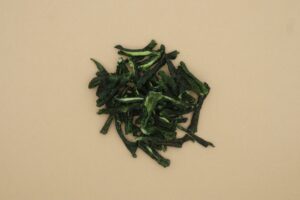
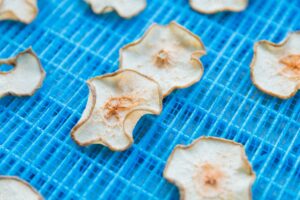
Tomatoes for dashi

TOC
Domestic Dried Tomato for Dashi, OEM
Raw material: tomato
Growing region: Kyoto, Kyotango
Glucose: not used
Supply as raw material: available
Minimum lot: from 100 g

Three Points of Care Behind the Dashi Tomato
01 Redesigning Flesh Trimmings as an Umami Raw Material
In tomato processing, uniform flesh is called for, while trimmings and the areas near the stem have traditionally tended to become feed or waste. At Agriture we focus on the umami packed in those parts and redesign them anew as a raw material dedicated to dashi.
02 The Strong Sweetness and Acidity of Kyotango-Grown Tomatoes
We use tomatoes harvested in summer by partner farms in Kyotango, in northern Kyoto. Fruit grown in a climate with strong sunlight and temperature swings has a strong balance of sugar and acidity, giving a distinct rise of flavor when made into dashi.
A Design Leaning Toward Umami Rather Than Aroma
The flesh ratio is adjusted differently from ordinary dried tomatoes, so the aroma doesn't come too far forward and the flavor blends quietly into dashi and miso soup.
Suited to Inbound Tourism
It's a raw material we're getting more inquiries about from facilities wanting to switch the miso soup and Japanese-Western fusion soups at hotel breakfasts to a plant-based base.
Contributing to Reducing Food Loss
By elevating trimmings that couldn't be used with just the flesh into a valuable raw material, we contribute both to expanding sales channels for partner farms and to reducing food loss.
Flexible Support for Powdering
We also handle a fine-powder type, and can adjust the particle size to match uniform blending into sauces, soups, and seasonings, or coloring uses.
Additive-free and coloring-free
Because it's finished using nothing but the tomato's own acidity, sweetness, and umami—no glucose or sugar—it fits brands that want to value the ingredient.

Product specifications
Customization support
Custom size support (changing cut thickness, adjusting shape): open to discussion for orders of 10kg or more. OEM support: available. Large-lot production: available (consultation required 3 months before the production period). For past case studies, here available for viewing here.
Variety, grower, origin
BRAND
Cultivar:Medium to large tomatoes for processing and fresh use. We select varieties with a strong balance of sugar and acidity, suited to use as a dashi raw material.
PRODUCER
Producer:Partner farms in Kyotango, Kyoto Prefecture. By combining greenhouse and open-field cultivation, they achieve a long harvest from summer into early autumn.
REGION
Production area:Kyotango, Kyoto Prefecture. The cool climate on the Sea of Japan side and the day-night temperature swings make it a land that concentrates tomato umami.
CULTIVATION
Cultivation method:In addition to conventional cultivation, we partner with farms committed to reduced-pesticide use and compost cycling. We've built a raw-material supply system that uses everything without waste, right down to the areas near the stem and flesh trimmings.
Low-Temperature Drying That Locks In Tomato Umami
Agriture's drying process is slow and low-temperature. Drying all at once at high heat can make the acidity stand out too much or drive off the aroma components, so we remove moisture while controlling the temperature range. This makes umami components like glutamate easier to retain, giving depth when drawn out into dashi.
💡 TIPS | Drying-processing trivia
The true identity of tomato umami is glutamate, which has umami of the same lineage as kelp. Combined with the guanylate in shiitake, an umami synergy is created, giving depth to plant-based dashi. The pairing of dried tomato and dried shiitake is adopted even for hotel and ryokan breakfasts as a classic plant-based dashi composition.
Use cases
Plant-Based Miso Soup and Japanese-Style Soups
By using dashi tomato in place of bonito dashi, you can make vegetarian- and vegan-friendly miso soup. It suits settings—hotel breakfasts, school cafeterias, hospital meals—where you "want to remove animal ingredients but still want richness."
The Base of Vegetable Bouillon and Potage
This is a method of rehydrating dried tomato in water or hot water and taking bouillon based on the soaking water. Combined with onion, carrot, celery, and mushrooms, you can make a soup with depth without relying on store-bought bouillon.
Steeping Seasonings and Vegetable Miso
By steeping dashi tomato inside miso, the tomato umami transfers into the miso itself. Steeped miso can be used for miso soup, dips, and as a base seasoning for stir-fries, letting you build multiple product lines from a single raw material.
A Secret Ingredient for Simmered Dishes and Simmered Soups
Adding a small amount to simmered dishes like pot-au-feu, minestrone, and curry lifts the overall umami. It also pairs well with developing simmered dishes that stand on vegetables alone.
How to Use Commercial Dashi Tomato
Dashi tomato shows its true worth not by asserting its aroma on its own, but by combining with other ingredients. In Japanese cuisine the basic move is to pair it with shiitake; in Western cooking, with mushrooms and celery. We're getting more cases where the development teams of restaurants and processed-food makers consult us about it as an ingredient for replacing animal materials.
Product catalog showing the items we handle
Flexible support from small lots to large lots
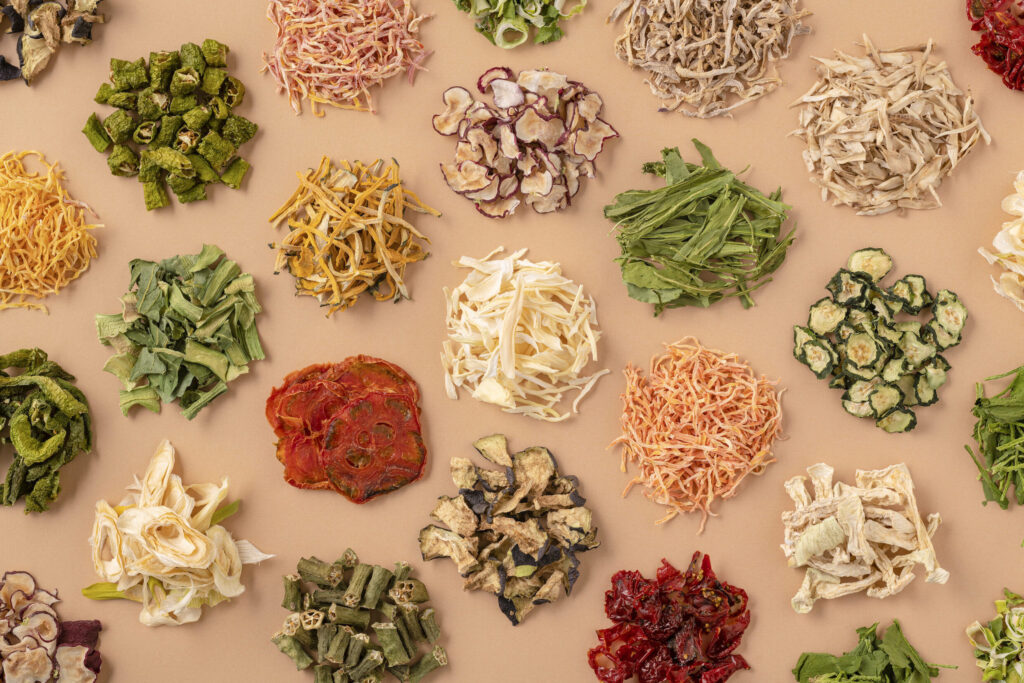
- Sold in small lots from 1 kg
- Handling heirloom vegetables from across Japan
- Dried fruits and herbs also supported
Frequently asked questions (FAQ)
Q. About what is the minimum lot?
A. You can try it from 100g. For full-scale adoption, consultations in 1kg and 10kg units are more common.
Q. About how much does it cost?
A. It varies by lot and processing form. We'll provide a quote along with your sample request, so please inquire.
Q. How much lead time is needed?
A. For stock items, we can ship in about 2 weeks from order. For large lots that require building out the production plan, we recommend consulting us up to 3 months in advance.
Q. Can you disclose the origin of the raw material?
A. It's grown by partner farms in Kyotango, Kyoto Prefecture. We can also discuss disclosing the grower's name. Adding inspection items to match your OEM delivery destination's specs is also possible.
Q. What are your HACCP and hygiene management systems like?
A. We carry out hygiene management based on HACCP principles at our own factory. We also have a track record of handling delivery-destination audits.
Q. Can I consult you about OEM planning using dashi tomato?
A. Of course. We support the whole picture—from recipe design to product concept, packaging, and sales channels.
Yakuzen properties (for fresh tomato)
From the yakuzen perspective, tomato is classified in the "heat-clearing" category. It has long been used as an ingredient that cools heat trapped in the body and helps with summer fatigue, dry mouth, and loss of appetite.
Tomato's acidity and sweetness are said to gently regulate the workings of the stomach and intestines and to help remove excess heat from the body. Especially when your appetite drops in summer heat, taking it in a cold soup or salad can refresh you from the inside.
💡 TIPS | Yakuzen trivia
In yakuzen (medicinal cuisine), the basic approach is to balance "cooling" ingredients like tomato with "warming" ingredients like garlic and ginger. Working garlic into a summer gazpacho is a piece of yakuzen-style blending wisdom to prevent over-cooling.
Dried tomato also has the appeal of high shelf life, making it usable in yakuzen cooking regardless of season. By adding a little at a time to daily miso soup and soups, you can incorporate it into everyday meals without strain.
YAKUZEN
For those who want to know more about tomato from a yakuzen view
The yakuzen-style properties of tomato and how to eat it by season are explained in detail on our sister media "Yasai Yakuzen." Please use the recipes and ingredient explanations as hints for product development.
Recommended reading
- Commercial dried vegetables(OEM)
- Contract processing service(OEM)
- Product lineup(Product)
Download the product catalog
We will send the materials to your email address based on the information you provide.