
Rei Kojima– Author –

-
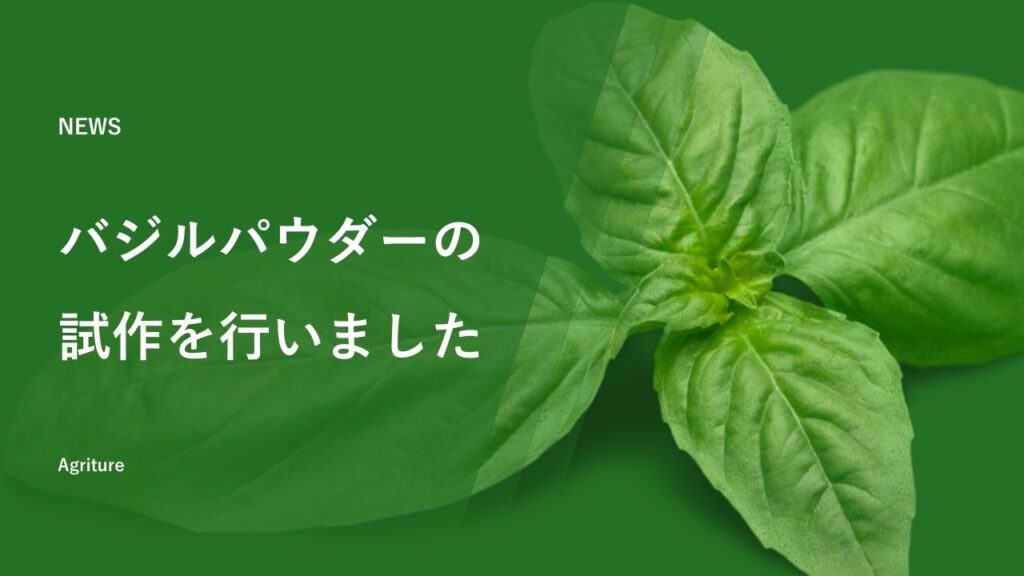
We Prototyped "Basil Powder" Using Domestically Grown Sweet Basil
Agriture recently prototyped "sweet basil powder" using domestically grown sweet basil. Sweet basil is a herb with a refreshing aroma and faint sweetness, known as a versatile ingredient that elevates the flavor of a whole dish. The freshness distinctive of the fresh leaf... -
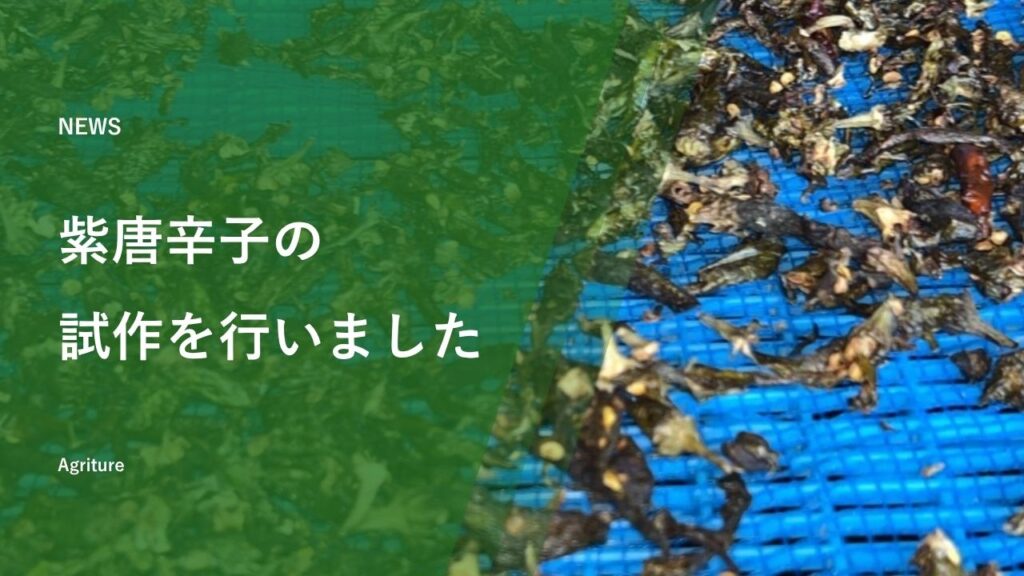
We Prototyped "Purple Chili Powder" Using Domestically Grown Purple Chili
Agriture recently prototyped "purple chili powder" using domestically grown purple chili. Purple chili is a variety rich in anthocyanin, prized for its beautiful purple color and fruity aroma. It has a deep richness within its heat, and gives color and flavor to dishes, sweets, drinks, and more... -
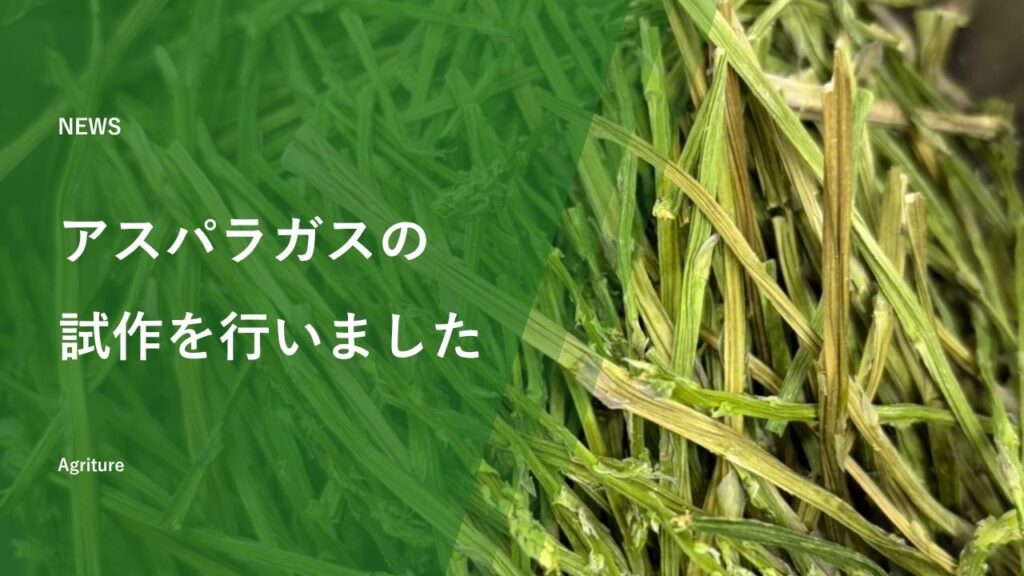
We Prototyped "Asparagus Powder" Using Domestically Grown Asparagus
Agriture recently prototyped "asparagus powder" using domestically grown asparagus. Asparagus is a vegetable that comes into season from spring into early summer, prized for its juicy sweetness and aroma. It's rich in amino acids including aspartic acid and B vitamins, and health... -
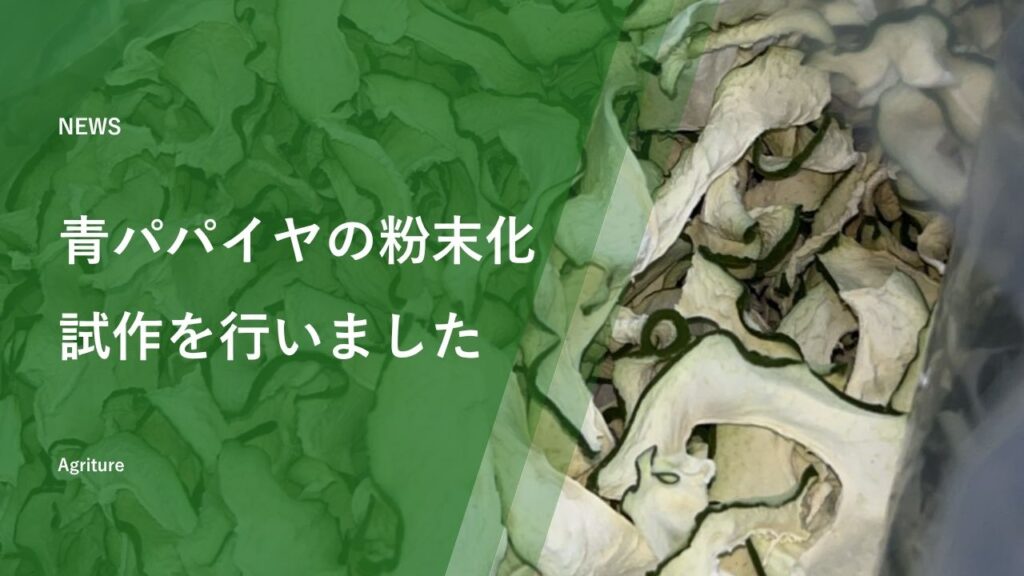
We Prototyped "Green Papaya Powder" Using Domestically Grown Green Papaya
Agriture recently prototyped "green papaya powder" using domestically grown green papaya. Green papaya is papaya harvested before full ripeness, and because it's rich in enzymes and dietary fiber, it draws attention as "papaya as a vegetable." The enzyme papain in particular... -
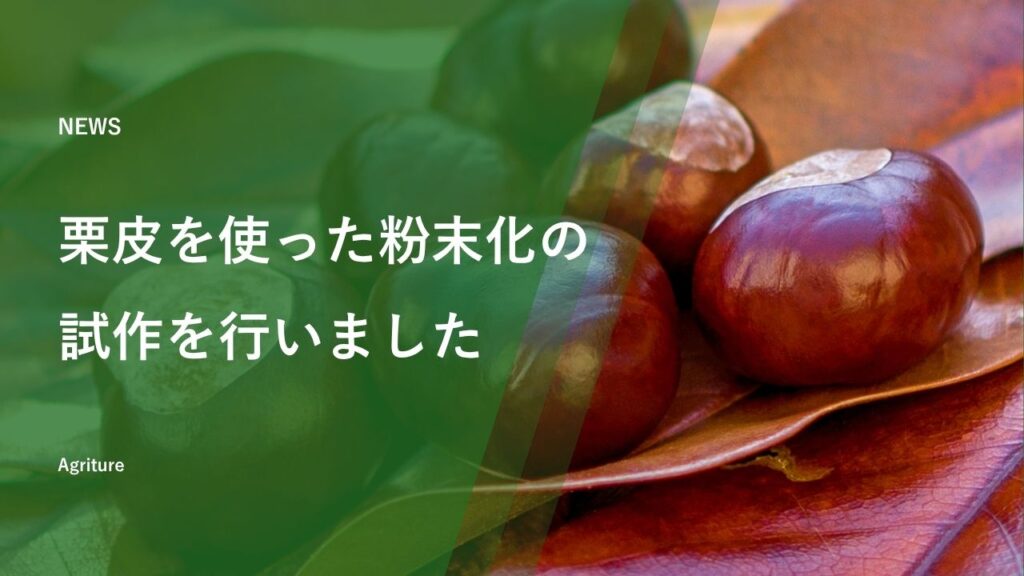
We Prototyped "Chestnut Skin Powder" Using Domestically Grown Chestnut Skins
Agriture recently prototyped "chestnut skin powder" making use of domestically grown chestnut skins. Chestnut skins have so far been a by-product often discarded in the food-processing process, but they draw attention as a sustainable ingredient. In particular, chestnut's inner and outer skins contain polyphenols and tannins... -

We Prototyped "Dried Banana" Using Domestically Grown Bananas
Domestically grown bananas are high in sugar, fruit prized for a rich, creamy sweetness. By drying fully ripe bananas, you can concentrate the ingredient's own aroma and sweetness, enjoying a natural flavor without using sugar or additives. Unlike imported bananas, a fresh aroma distinctive of domestic... -
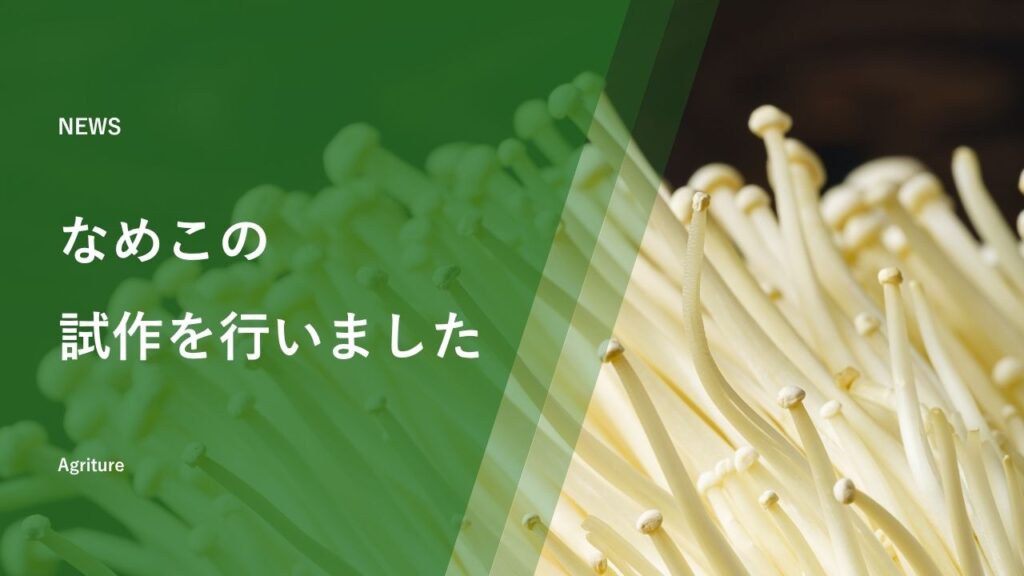
We Prototyped "Dried Enoki" Using Domestically Grown Enoki
Enoki is one of the most-produced mushrooms in Japan, prized for its mild flavor and crisp texture. Applying drying processing enables long-term storage and further deepens umami and aroma. Grinding it into powder also allows use in developing dashi ingredients and health foods... -
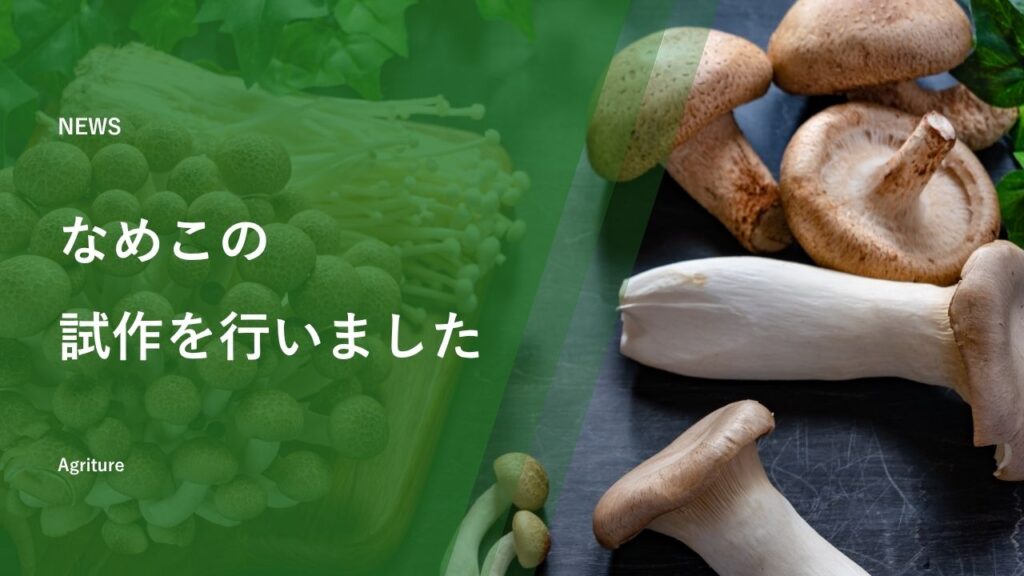
We Prototyped "Dried Nameko" Using Domestically Grown Nameko
Nameko is a mushroom prized for its distinctive sliminess and rich umami, widely enjoyed in miso soup, dressed dishes, and more. Drying concentrates the umami components and raises shelf life, so it can be used in a form suited to commercial and processing uses. Because nameko's texture and flavor remain firmly even after rehydration... -

A Notice About the Rose Prototype
The rose is known as an aromatic, gorgeous flower, and because it contains relaxing aromatic compounds beyond just visual beauty, it's also used for food and herbal tea. Edible rose is an ingredient that can add aroma and color just by adding a small amount to sweets, beverages, seasonings, and more... -
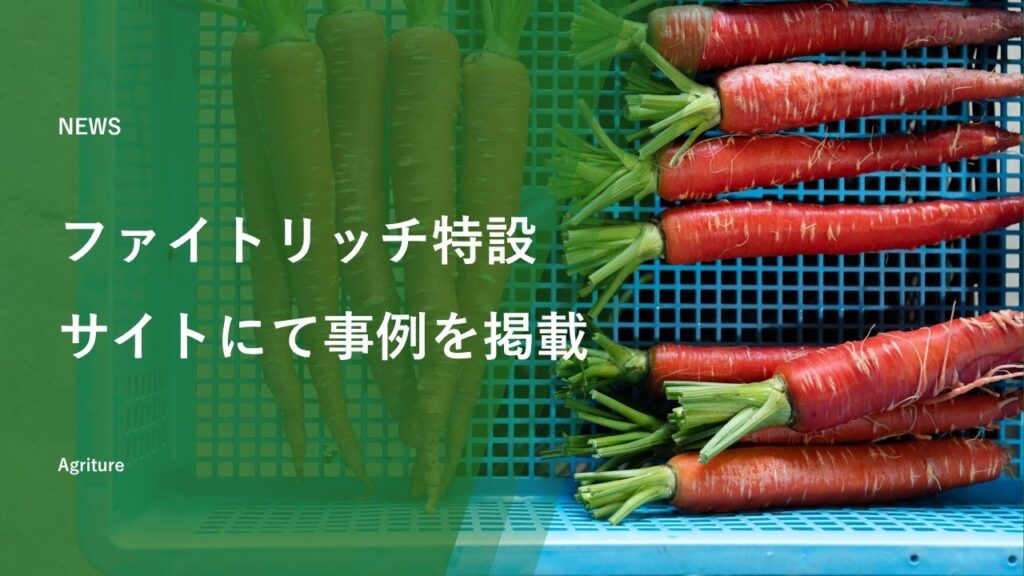
Agriture was featured on the official site of Takii Seed's "Fight & Rich"
An interview article with Agriture Inc. was featured in the "User Introductions" content on the official site of "PhytoRich," Takii Seed's functional-vegetable brand. They introduced our low-temperature drying technology, our use of the varieties, our upcycling initiatives, and more. "User Introductions..." -
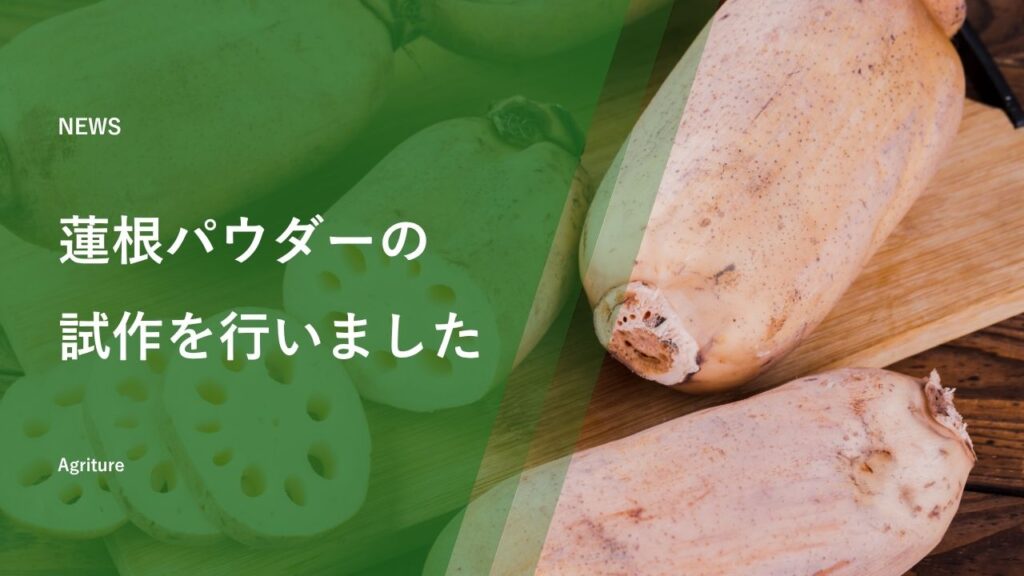
We Prototyped Lotus Root Powder
Agriture recently prototyped "lotus root powder" using domestically grown lotus root. Lotus root is widely cultivated throughout Japan, a vegetable prized for its crisp texture and gentle sweetness. It's used in a variety of dishes—simmered, stir-fried, deep-fried—and is rich in dietary fiber and vitamin... -

Agriture's dried vegetables featured on Nippon TV's "Meguru Shokutaku"
Agriture's initiative was recently featured on the Nippon TV network program "Meguru Shokutaku (The Table Comes Around)." The broadcast date is September 3, 2025. The episode is No. 18, "Value in Non-Standard Vegetables: Dried Vegetables." It's an episode that introduces putting non-standard and surplus vegetables to good use, creating new value through dry processing... -

Products from OYAOYA, A Letter from a Pear, and Agriture featured on "Urelio"
Our brands OYAOYA, Letters from a Pear, and Agriture have been listed on "Urelio," a platform that supports international trade in food ingredients and processed products. Under the philosophy of "bringing more of Japan's deliciousness to the world through the power of IT and storytelling," Urelio connects domestic food... -
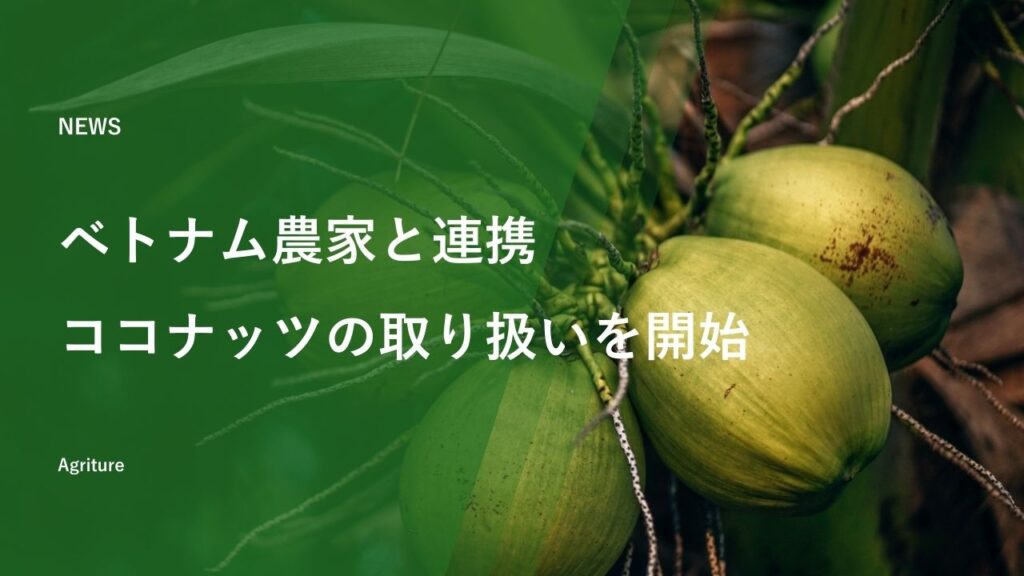
We have begun handling coconut
Agriture has newly begun handling coconut ingredients based on fair trade principles. By connecting directly with farmers in producing regions and conducting fair transactions, it is an initiative that supports sustainable agriculture and livelihoods in those communities. Coconut is widely produced mainly across Asia... -
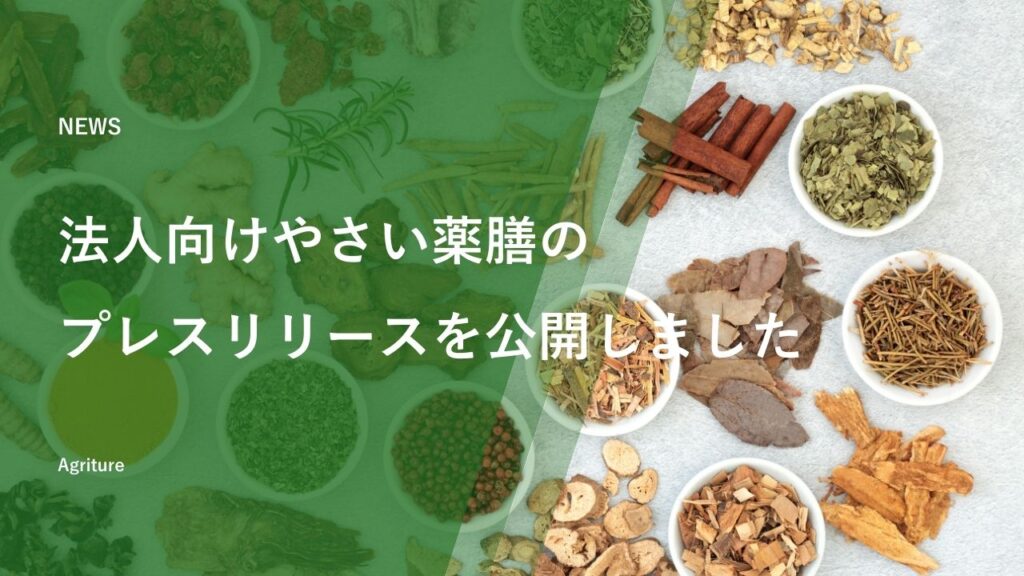
We published a press release for the corporate "Yasai Yakuzen" service
Agriture Inc. published a press release regarding the official release of "Yasai Yakuzen," a corporate health-management program. "Yasai Yakuzen" is a new service that provides a mechanism by which employees can practice self-care without strain from their everyday meals, using familiar vegetables from a yakuzen (medicinal-food) perspective... -

Launched a food support service for Gen Z
Agriture Inc. has launched a "Product Development Support Service for Gen Z." Gen Z bases its food choices not on price and convenience alone but on "is it eco-friendly?" and "can I empathize with the story?" Making the most of the perspective that the founder himself is Gen Z, we resonate with this generation... -
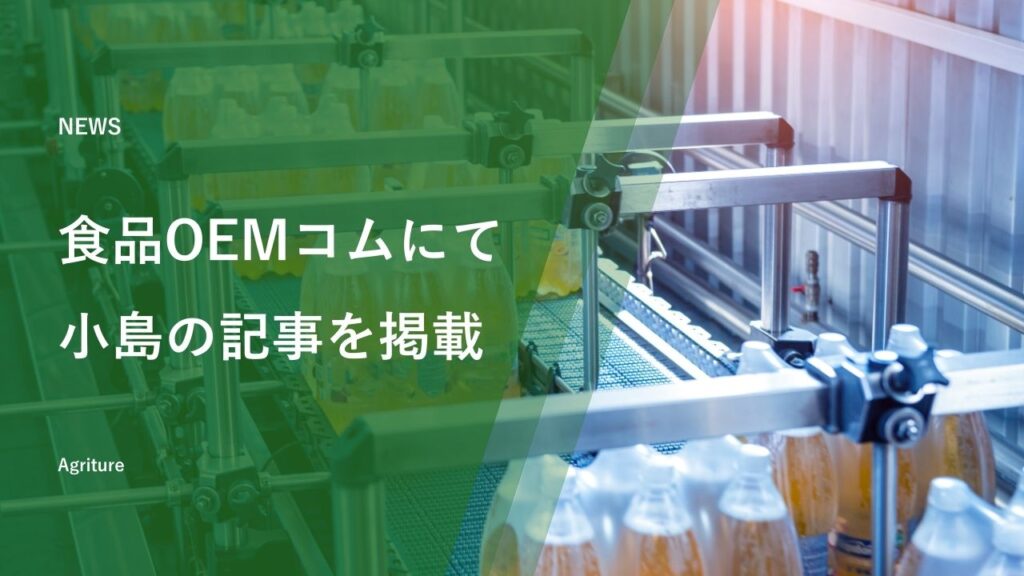
A column by Agriture representative Kojima was published on Food OEM Com
A contributed article by Rei Kojima of Agriture Inc. was published in the column section of "Food OEM.com," an OEM matching platform specializing in the food industry. "Food OEM.com" is one of Japan's largest platforms disseminating a wide range of information on food OEM, from raw-material sourcing to manufacturing, packaging, and distribution... -

The initiatives of the dried-vegetable brand "OYAOYA" were introduced on KYOTOVEGAN
We were recently featured in a column by "KYOTOVEGAN," a regional network supporting vegans and vegetarians, introducing the initiatives of our dried-vegetable brand "OYAOYA." The article covers the "building of equal relationships with farmers" we've cherished since our founding, and non-standard vegetables... -
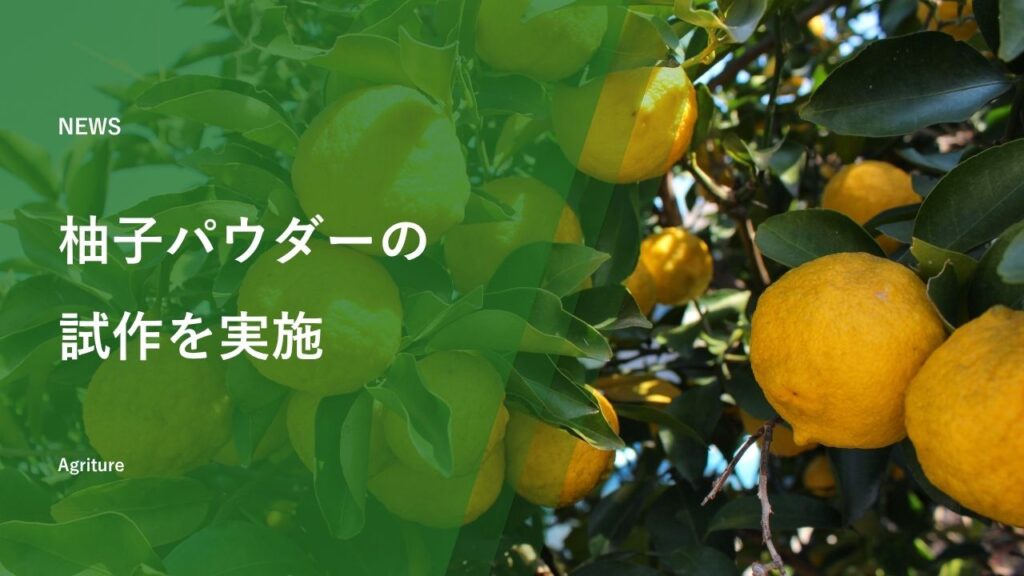
京都産の柚子を皮ごと乾燥させ、柚子パウダーの試作を始めました
このたび、Agritureでは、京都市右京区で収穫された柚子を使った「柚子パウダー」の試作を行いました。 京都市右京区の山あいでは柚子の栽培が続いています。寒暖差のある土地で育った柚子は皮に厚みがあり、香りがよく立ちます。加工の原料としても扱いや... -

[Media coverage] CEO Kojima interviewed as a social entrepreneur taking on business challenges
CEO Kojima was interviewed for the 18th installment of the "Social Dreamers 100 PROJECT," which interviews social entrepreneurs taking on business challenges with the aim of creating a sustainable future. For the 18th installment, we welcomed Rei Kojima, CEO of Agriture Inc., and heard his story... -
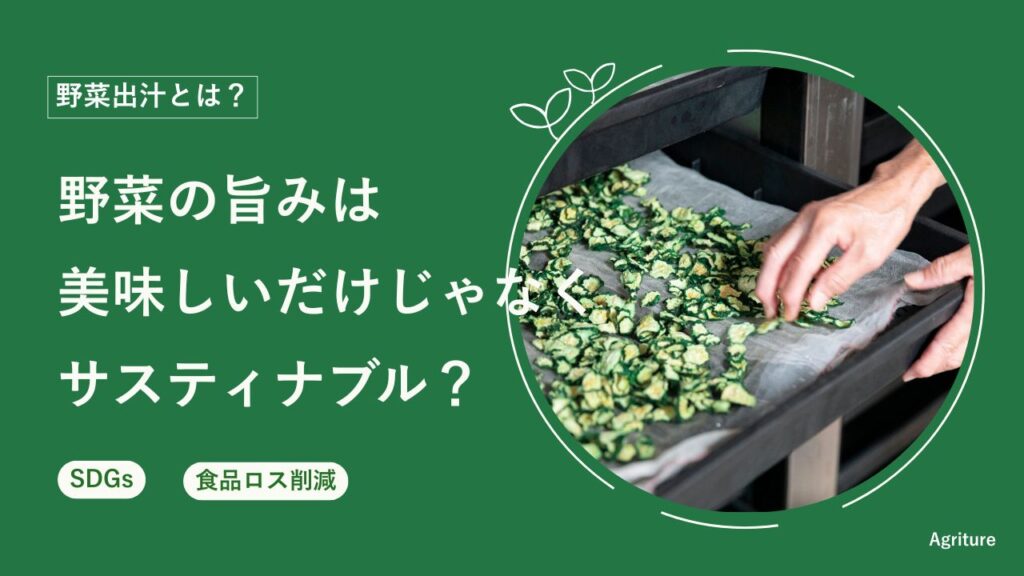
What is vegetable dashi? A new option for sustainable umami
In Japan's long-standing food culture, dashi is the foundation of cooking and an important element that produces a delicate umami. Dashi of animal or seaweed origin, like bonito and kelp, is the basis of Japanese cuisine. It plays the role of adding rich flavor to a whole dish. However, with the diversification of food culture and the globa... of food -
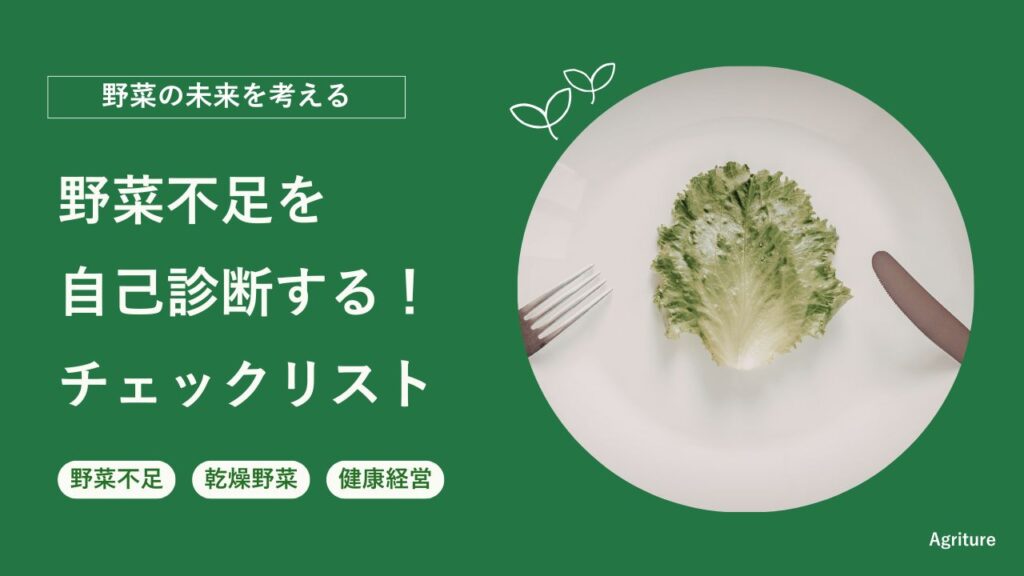
Self-Check Your Vegetable Shortage! Confirm Your Health with a 10-Item Checklist You Can Do Right Now
The reality of modern Japan, where vegetable shortfall is worsening. Are you getting enough vegetables in your daily meals? In fact, the average vegetable intake of Japanese stops at about 256 g, about 94 g short of the 350 g a day recommended by the Ministry of Health, Labour and Welfare. Especially among the younger generations in their 20s to 40s, this vegetable shortfall is worsening further... -
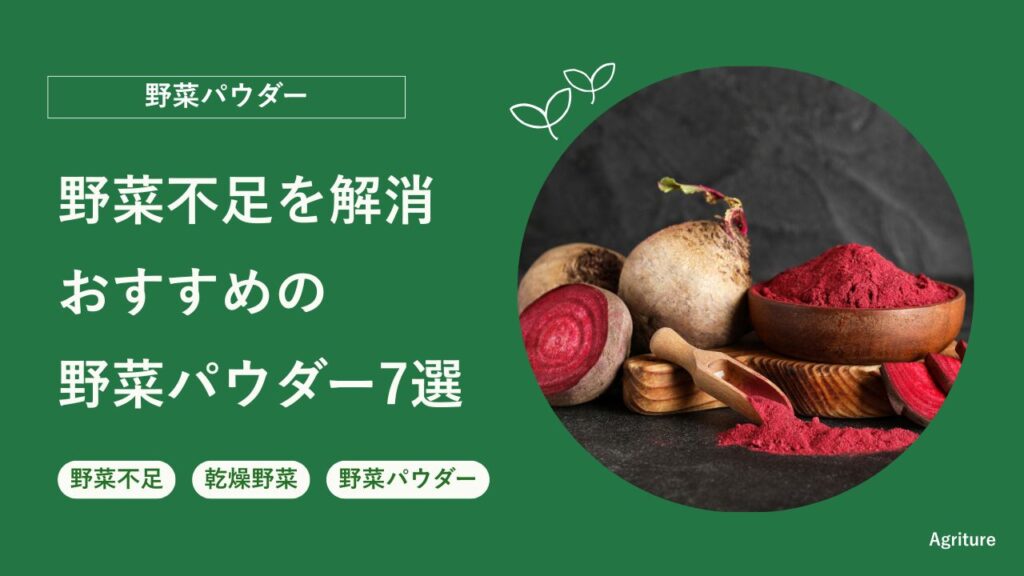
[Latest 2025] A thorough comparison of 7 recommended vegetable powders
Vegetable powder is a food made by drying fresh vegetables into powder. It is growing in popularity as a convenient item for easily taking in vegetable nutrients. The daily vegetable intake recommended by the Ministry of Health, Labour and Welfare is 350 g, but the average intake of Japanese stops at about 280 g. Many... -
Is Not Eating Vegetables Unhealthy? Lifestyle Improvements You Can Start for Now
Have you felt somehow under the weather lately? The daily vegetable intake recommended by the Ministry of Health, Labour and Welfare is 350 g. However, according to the 2023 National Health and Nutrition Survey, the average vegetable intake of Japanese stops at about 256 g. The vegetable-intake situation of people in their 20s is especially serious, with men... -
食物繊維が多い食べ物は?野菜・豆・海藻・きのこを多い順に見る
When you hear "foods high in fiber," you tend to picture vegetables, but in fact it spans a wide range — beans, seaweed, mushrooms, grains, potatoes, even fruit. Fiber, which tends to fall short in daily meals, can be increased without strain once you know it by category. In this article, foods high in fiber... -
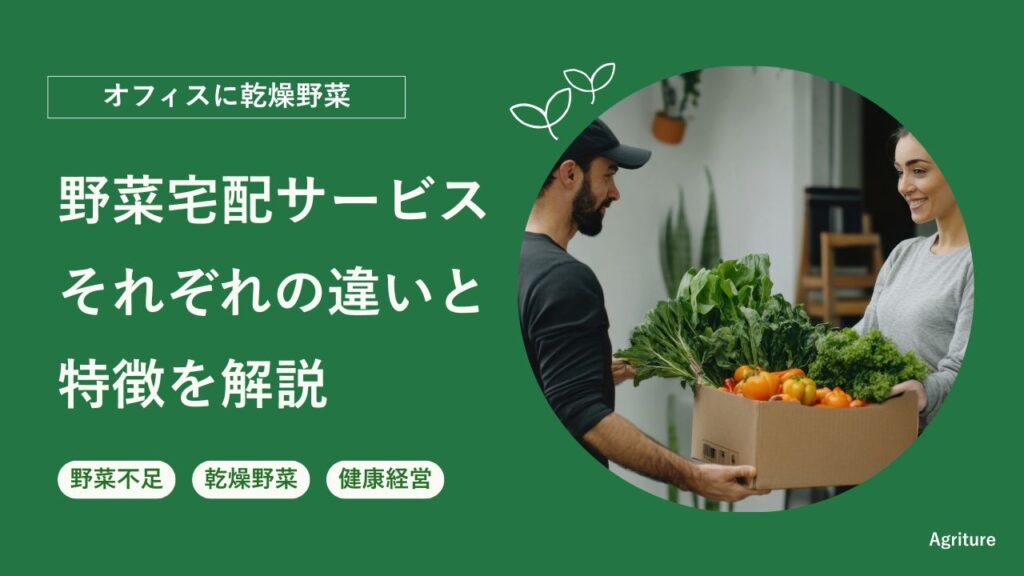
How to choose a vegetable delivery service based on actual use, and 8 recommended companies
Vegetable delivery services became widely used because of COVID-19. People spent more time at home, more of them wanted to be particular about the ingredients they cooked with, and going out shopping became a chore. These two factors together suddenly made delivery a familiar option.... -
The new common sense of health maintenance that vegetable intake from your 40s can change
The daily vegetable intake recommended by the Ministry of Health, Labour and Welfare is 350 g. But in reality, the average intake of Japanese stops at about 280 g. From their 40s on especially, vegetable intake tends to decrease further due to work busyness and lifestyle changes. This 70 g gap can, for your health... -
Solve Vegetable Shortage Even with Convenience-Store Food! 5 Smart Ways to Supplement
In your busy days, do you find yourself relying on easy convenience-store food? The daily vegetable intake recommended by the Ministry of Health, Labour and Welfare is 350 g. However, the average intake of Japanese stops at about 280 g, and the reality is that many people fail to meet the needed amount. Convenience-store food especially... -
The difference between dried vegetables and vegetable supplements: comparing the benefits and drawbacks
Are you eating the necessary amount of vegetables every day? The daily vegetable intake recommended by the Ministry of Health, Labour and Welfare is 350 g. But the average intake of Japanese stops at about 280 g. This 70 g gap amounts to about one small side dish. Especially busy businesspeople and people living alone... -

Directly tied to improving corporate productivity! Key points for adopting health management
The term health management has become one you hear often lately. This is not merely part of employee benefits but a way of thinking drawing attention as a corporate growth strategy. Health management refers to a management method that considers employees' health care from a management perspective and practices it strategically. In the US... -
Is Japanese vegetable intake below average? The latest data and improvement measures
The daily vegetable intake recommended by the Ministry of Health, Labour and Welfare is 350 g. However, according to the 2023 National Health and Nutrition Survey, the average vegetable intake of Japanese is only 256.0 g (men 262.2 g, women 250.6 g). Seeing this figure, how do you feel? The recommended amount... -
10 Ways to Solve Vegetable Shortage That Even Busy People Can Practice
The vegetable intake of Japanese is in a serious situation. The daily vegetable intake recommended by the Ministry of Health, Labour and Welfare is 350 g, but the actual average intake stops at about 280 g. People in their 20s and 30s especially are about 30 g below average. There are not a few people who cannot get enough vegetables, citing busyness... -
Boost your vegetable intake even on busy mornings! Simple techniques you can do in 5 minutes
The daily vegetable intake recommended by the Ministry of Health, Labour and Welfare is 350 g, but the average intake of Japanese stops at about 280 g. Especially on busy mornings, many people feel they have no room to take in vegetables. Working vegetables into breakfast is effective for increasing the day's vegetable intake... -
What is eating vegetables first? Eating order and how to practice it
Have you heard of "veggie first," the practice of eating vegetables first at a meal? Also known as eating vegetables first, it has been adopted by health-conscious people. Eating vegetables first offers several benefits, such as a greater sense of satisfaction after meals and a chance to rethink eating habits... -
Vegetable powder cost-performance comparison! 7 points on how to choose and use
Do you know about vegetable powder? The daily vegetable intake recommended by the Ministry of Health, Labour and Welfare is 350 g, but the average intake of Japanese stops at about 280 g. Seeing this figure, you can tell that many people are unable to take in the vegetables they need. Especially for busy businesspeople, every... -
What is the 350 g-a-day vegetable guideline? Easy ways to achieve it
Have you heard the phrase "let's eat 350 g of vegetables a day"? This figure is the target value set by the Ministry of Health, Labour and Welfare in its health-building indicator 'Health Japan 21.' But even told 350 g, it's hard to picture how much that actually is. In fact, the vegetables of Japanese... -
How to eat vegetables during hay fever season
When hay fever season comes, days of being troubled by sneezing, runny nose, and itchy eyes begin. Many people may feel, here comes the tough season again this year. In fact, it has been pointed out that your diet, especially your vegetable intake, may be affecting hay fever symptoms... -
8 Effective Ways to Relieve Constipation Caused by Vegetable Shortage
Are you troubled by constipation? Its cause may unexpectedly be "vegetable shortfall." The daily vegetable intake recommended by the Ministry of Health, Labour and Welfare is 350 g, but the average intake of Japanese stops at about 280 g. This 70 g gap may be hindering your bowel movements. Vegetable shortfall... -
Preventing Food OEM Failures: Common Failure Cases and Countermeasures for Success
You want to make a food under your own brand. More and more companies are thinking this way. Entrants from other industries—retail, restaurants, startups—are becoming more active, and the food OEM market continues to expand. On the other hand, cases such as "the product didn't turn out as expected" or "costs exceeded expectations"... -
How to find a food OEM | How to efficiently find the best manufacturing partner
More and more companies want to roll out their own brand products in the food industry. Entrants from other industries—retail, restaurants, startups—are becoming more active, and inquiries such as "we want to prototype from small quantities" and "we want to make a product that leverages our strengths" are rapidly increasing... -
What Is the Minimum Lot for a Food OEM? How to Choose a Small-Lot-Capable Food Factory Explained
When considering food OEM, the first question is usually, "I want to make about this many, but how many bags will this factory accept at minimum?" Many people also want to start with a small lot of around 100 bags and proceed by testing in small steps. That instinct... -
What Is Phytorich? A Vegetable Series Developed by Takii & Co. That You "Choose by Color," Rich in Functional Components
As diets diversify today, there is demand not just for "getting nutrition" but for higher-value-added foods. Vegetables rich in functional components are drawing particular attention. Among them, the "Phytorich series" developed by Takii Seed offers a rich range of functional components you "choose by color."... -
Adding Vegetables to Your Morning with Dried Vegetables: A Guide to Getting Dietary Fiber Easily
"How to get your vegetables" with dried vegetables. In the morning there is no time, so you make do with just bread or rice, and vegetables fall by the wayside. We hear this often. The earlier your workday starts, the harder it is to fit vegetables into breakfast. That is where dried vegetables come in. Water... -
Predicting the Dried Vegetable Market in 2030! An Explanation of Growth Fields and the Latest Trends
Dried vegetables are ingredients that raise shelf life and usability by driving off the moisture in vegetables. When made at home they're often called "hoshi-yasai" (sun-dried vegetables), and the appeal is being able to choose the finish yourself, from half-dried (semi-dry) to fully dried. This article covers the steps for making sun-dried vegetables on a home colander plus a balcony… -
Food OEM Market Trends 2026: A Growth Strategy Seen Through Small-Lot and Domestic-Ingredient Needs
The food OEM market is at a turning point. Not only major companies but also retailers, restaurants, and startups—entrants from other industries are surging. Voices saying "we want to make our own brand product" and "we want to try prototyping from small quantities" are rising like never before. Behind this... -
How to Use OEM Matching Sites: Efficiently Finding the Optimal Manufacturing Partner
With a stream of entrants from other industries—retail, restaurants, startups—inquiries saying "we want to make our own brand product" never stop. But what many companies face is the challenge of "how to find a manufacturing partner they can trust." With trade shows and referrals alone... -
Food industry trade show trends 2025 | The latest developments to keep in mind
Trade shows that give a full view of the entire supply chain—from raw material sourcing to manufacturing and import/export—are held one after another, becoming a place industry insiders can’t miss for business meetings and discovering trends. But with so many trade shows held, “which event to attend” and “what you can gain... -

A guide to preparing for a trade show | Schedule, costs, and checklist
Exhibiting at a trade show brings great effect in acquiring new customers and improving awareness. But for beginners, it’s often unnerving not knowing where to start with preparations. What you’ll learn in this article: the preparation schedule and cost guide for exhibiting; preparation by period... -
How to proceed with hometown-tax product development | OEM techniques that make the most of local ingredients
The market for furusato tax (hometown tax) donations continues to expand year after year. For municipalities, return gifts are an important means of broadcasting a region's appeal nationwide. But quite a few operators struggle with worries like "how do we develop an attractive product" or "we can't put together a manufacturing setup on our own"... -
Prevent trade show failures! 8 common failure patterns and countermeasures
Exhibiting at a trade show is a prime opportunity to acquire new customers and improve awareness. However, cases where a valuable investment goes to waste due to insufficient preparation or strategic missteps are not few. In food, beverage, and agriculture trade shows especially, there are challenges unique to the industry. Exhibiting costs are by no means...