How to choose a vegetable delivery service based on actual use, and 8 recommended companies

Summary of this article
This is written from the standpoint of someone who works with vegetables, based on my experience using vegetable delivery services as an ordinary customer. The conclusion: vegetable delivery lasts longer when used as a treat a few times a month rather than as a replacement for the supermarket. Its greatest value is the fun of getting vegetables in the box that you would never choose yourself. Services fall into three types by how they work: Oisix is less a vegetable box than a produce-focused version of a food box; Tabechoku lets you buy by naming specific items rather than a box; and Sakanotochu, which handles its own sourcing and shipping, suits everyday use. When choosing, work backward from how often you cook each week, and the key to sticking with it is skipping deliveries before trips. The article also covers checking delivery areas and unattended delivery, growing regions and inspection systems, how to think about price and subscriptions, the option of off-spec vegetables, and pairing with dried vegetables that keep for six months at room temperature.
Vegetable delivery services became widely used because of COVID-19. People spent more time at home, more of them wanted to be particular about the ingredients they cooked with, and going out shopping became a chore. These two factors together suddenly made delivery a familiar option.
Another big factor was the spread of furusato nozei (hometown tax donations). Ordering vegetables from producers is no longer something only for a small group of enthusiasts. Today it's nothing special.
A lack of vegetables is also part of the background. The daily target set by the Ministry of Health, Labour and Welfare is 350 g, but the Japanese average remains around 280 g. Awareness of falling short has, in part, pushed people toward delivery.
This article is written from the standpoint of a dried vegetable manufacturer that buys vegetables from farmers. My work puts me in contact with many kinds of vegetables, but separately from that, there was a period when I used vegetable delivery as an ordinary customer. I've written, based on that experience, what I learned from using it, what it took to keep going, and how the character of each service differs.
TOC
Honestly, how was it?
To start with the conclusion: vegetable delivery fits better as a treat a few times a month than as a way to source everyday ingredients. It's closer to a luxury, or a hobby.
You get vegetables you would never buy yourself
When I actually ordered and ate them, they simply tasted good. But even more interesting was getting vegetables in the box that I wouldn't have chosen myself.
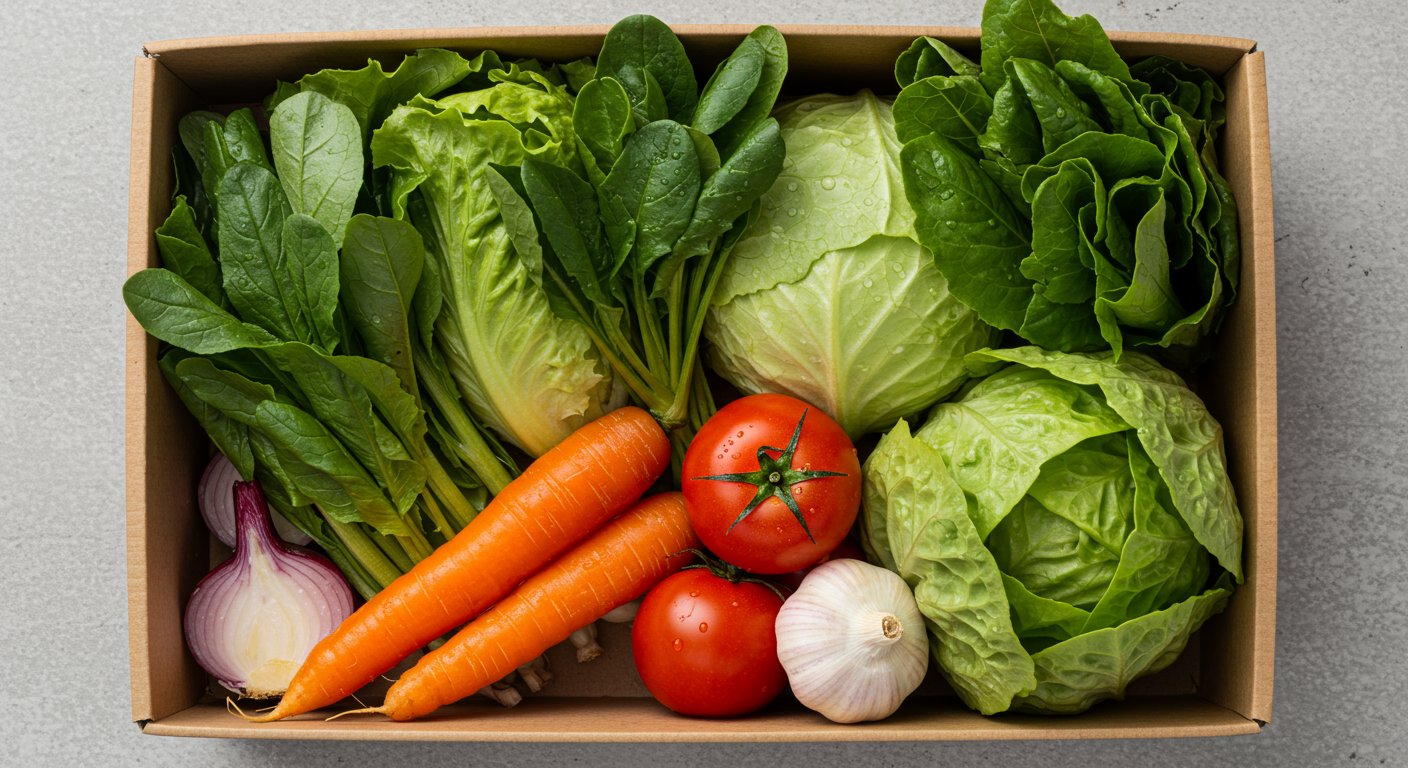
When shopping at the supermarket, you inevitably reach for the same vegetables, because you pick the ones you know how to use. A delivery box brings leafy greens whose names you don't know and root vegetables in colors you've never seen. Looking them up, cutting them and tasting them turned out to be surprisingly fun, and keeping it up wasn't much of a burden.
If you think of it as everyday groceries, it won't last
On the other hand, trying to cover all your daily meals with delivery is unrealistic. If delivery days and cooking days don't line up, the vegetables won't wait for you.
| How you see it | Will it last? | Reason |
|---|---|---|
| Cover all everyday ingredients with it | Hard to sustain | If delivery and cooking days don't line up, vegetables go bad |
| Use it as a treat a few times a month | Easy to sustain | You can plan meals around the delivery day |
| Use it assuming you'll buy extra as needed | Easy to sustain | Can be combined with the supermarket |
If you judge it by "can it replace the supermarket," it usually won't last. Thinking of it as "a way to meet vegetables you don't normally come across" lets you stick with it much longer.
What to check before signing up
Before comparing services, there are items to check to see whether it will work with your lifestyle. Skip these and it won't last, however good the taste or price.
Do you have time to receive deliveries?
First, the delivery area. Some services cover the whole country, while others are limited to certain regions. Check first whether your home is covered.
- Can you specify the delivery date and time? Is there a slot that fits your routine?
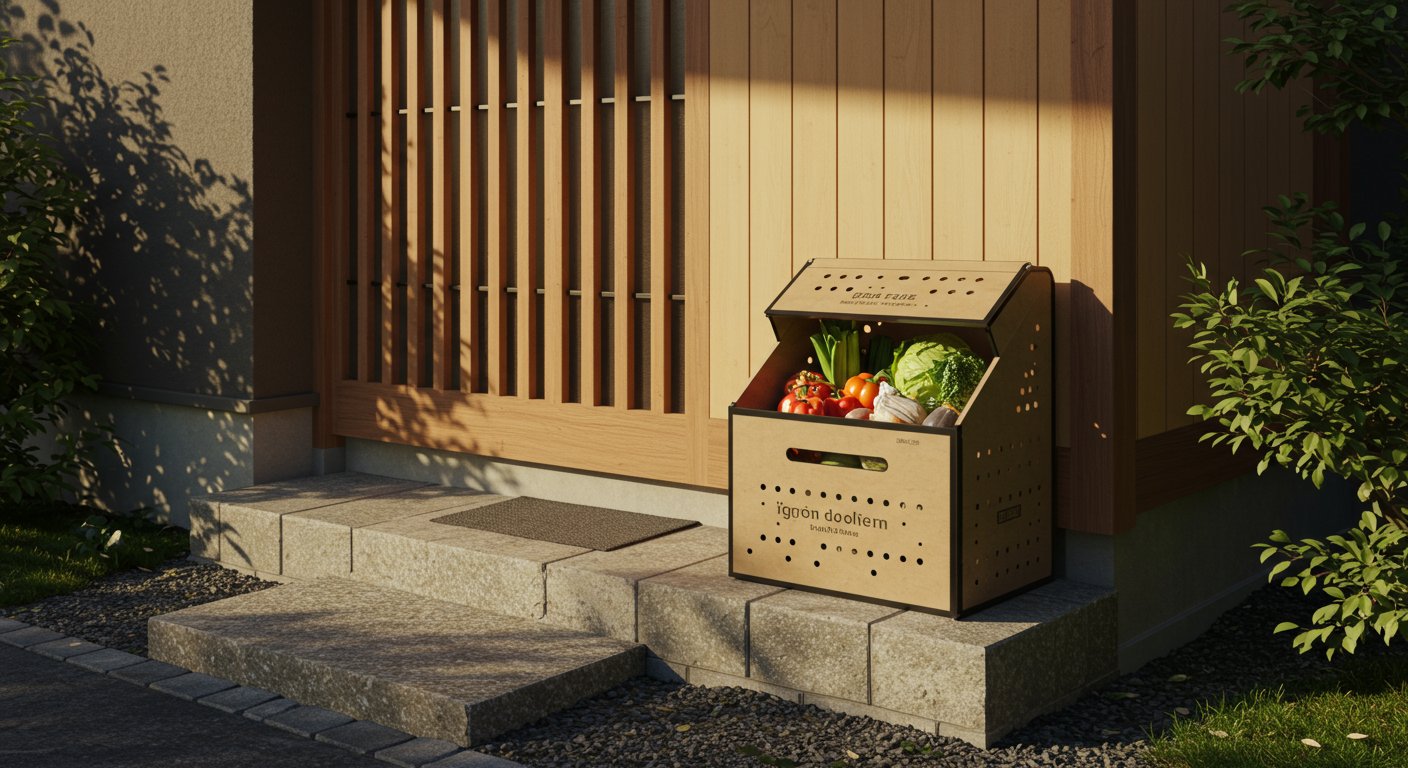
- Can it be left unattended when you're out? Some services use dedicated insulated boxes
- What happens if you can't receive it? Check how redelivery is handled
If unattended delivery is available, you can receive deliveries even when you're not home. If you're out during the day, this is what decides whether you'll keep going.
How do they keep produce fresh?
The value of delivery is determined by the condition of the produce when it arrives. Every company takes care over this, but their methods differ.
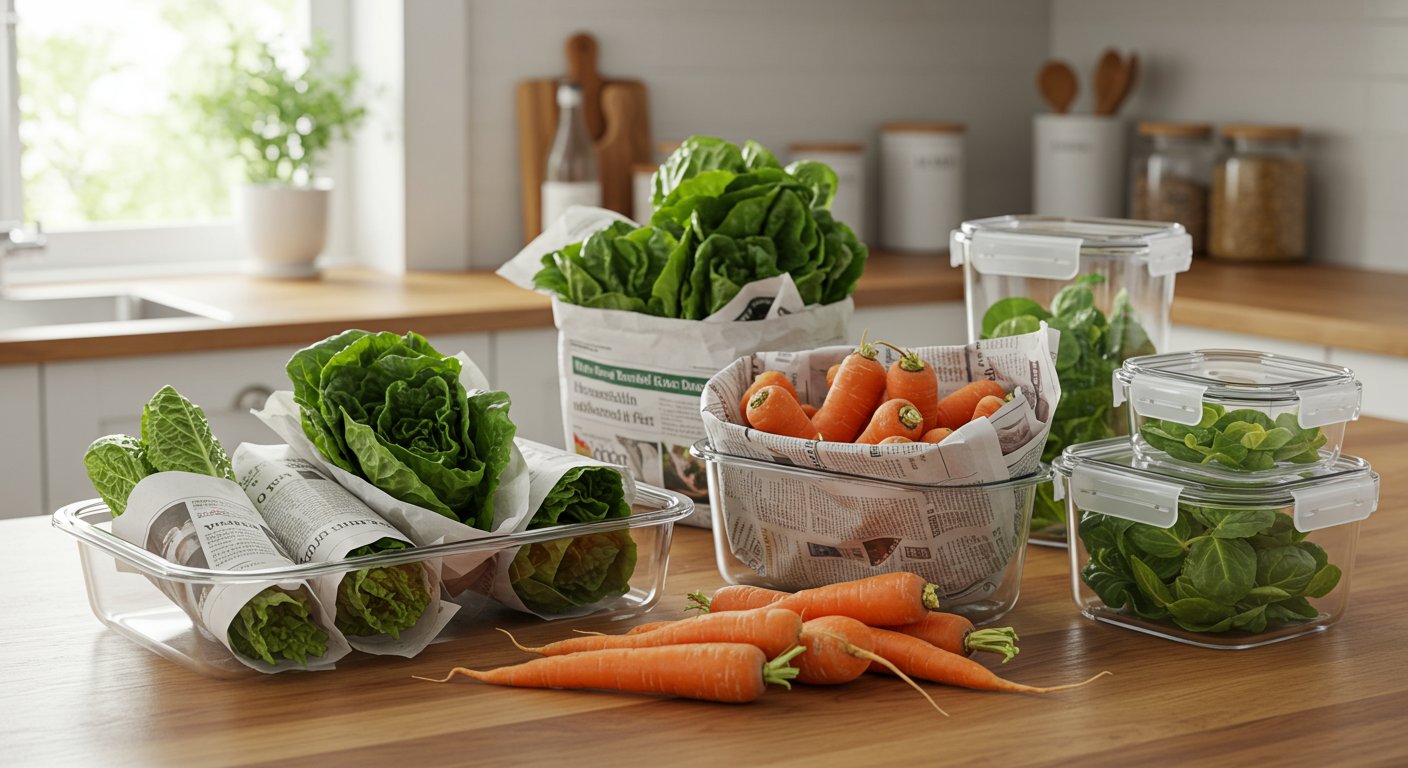
Some services deliver vegetables with the outer leaves still on, leaves that would normally be removed for appearance, because they protect the inside from drying out. Others wrap each item in newspaper to protect it from impacts in transit. The condition when you open the box reflects the accumulation of details like these.
Can you tell the growing region and the producer?
Whether a service discloses where and by whom its vegetables were grown says a lot about its approach. Direct-from-farm services list information for each grower, but some box services also name their growers.
| What to check | What to check |
|---|---|
| Origin and growers | Is the prefecture listed? Is the grower's name given? |
| Cultivation method | Whether it holds organic JAS certification, and how it explains its pesticide use |
| Inspection system | Whether it tests for pesticide residues and radioactivity and publishes the results |
| Traceability | Can you trace which farm the vegetables you received came from? |
If organic or pesticide-free produce matters to you, check the certification status as well. A phrase like "we use as few pesticides as possible" is a separate matter from whether organic JAS certification has been obtained.
Can you buy more than vegetables?
Whether a service also carries meat, fish, processed foods and ready-made dishes determines whether you can consolidate your shopping. This makes a real difference for households with small children or people who can't get to the shops during the day.
On the other hand, if you only want to enjoy vegetables, a wide range isn't the deciding factor. What you should look at depends on what you want from the service.
How do the services differ?
The differences between companies show up less in prices or product counts than in how each service is structured. Who sources the produce, and who ships it? When that differs, what arrives and how you use it change too.
Three broad types
| Type | Mechanism | Typical services | Suitable use |
|---|---|---|---|
| Box type | The operator picks seasonal vegetables and packs them into a box | Radish Boya, Daichi wo Mamoru Kai, Bio Marche | Enjoy the season, leaving the choice to them |
| Platform type | Farmers list their produce directly and you choose what to buy | Tabechoku, Pocket Marche | Pick the specific items you want to eat |
| Integrated sourcing and shipping type | The operator sources the produce and ships it itself | Sakanotochu, Oisix | Everyday use |
Looking at it through these three types narrows down what to compare. In practice, it makes sense to compare box services with box services and platforms with platforms.
Oisix is not just a vegetable service
Oisix is a little different. You can order vegetables alone, but its real strength is a wide range of processed foods made from farm produce. It also offers meal kits.
It feels less like a vegetable box and more like a food box specializing in farm produce. If you use it only for vegetables, it may feel slightly off. Still, the processed foods on offer include things you don't usually come across, and they are fun just to browse.
The fact that processed foods mean some longer-lasting items get mixed in also helps in practice. I'll come back to this under "Tips for sticking with it" below. Its thorough radioactivity and pesticide residue testing is another reason it is popular with safety-conscious customers. The first-time trial set is generous, so you can start there (Oisix official website)。

Tabechoku: buy by item, not by box
Tabechoku really shines when you buy the items that catch your eye directly from farmers, rather than receiving a box on a regular schedule.
Say you're craving pears in autumn. That's when it becomes useful. Rather than thinking of it as a subscription, it suits buying what you want, when you want it, according to your interests and tastes.
It partners with more than 8,000 farmers and fishers across Japan, and products are shipped soon after harvest. Pesticide and chemical fertilizer use and each producer's particular practices are clearly shown. Because you can buy single items as well as subscriptions, it is relatively easy to try for the first time (Tabechoku official website)。

Pocket Marche is also a direct-from-farm service, and you can buy meat and fish there too. If you look at vegetables alone, there isn't much difference from Tabechoku. It comes down to how well you get on with the farmers listing on each.
Sakanotochu suits everyday use
At Sakanotochu, the operator sources the vegetables and ships them itself. Because you aren't buying farm by farm as with direct-from-farm services, supply is more stable. Under the banner of "farming that will last a hundred years," it follows a policy of using as few pesticides as possible and places emphasis on building healthy soil (Sakanotochu official website)。

As a platform for buying the vegetables and rice you use every day, it is very well suited. Because most of its vegetables come from new and small-scale farmers, you can also come across varieties you won't see in supermarkets. You can choose weekly, biweekly or monthly delivery, so it is designed to make it hard to end up with more than you can eat.
Three services that choose for you
| Service | Features | Reasons to choose it |
|---|---|---|
| Radish Boya | Founded more than 40 years ago. A pioneer in delivering organic and low-pesticide produce | Long relationships with contract farmers keep quality consistent. The "Palette" box delivers what's in season |
| Daichi wo Mamoru Kai | Committed to promoting organic farming and protecting the environment | Strict in-house standards. Also carries meat, fish and eggs, with highly transparent producer information |
| Bio Marche | Focused on organic JAS-certified vegetables | The place to go if you want only organic. Offers sets sized by household |
All three deliver seasonal vegetables chosen for you. Not knowing what's inside until you open the box is part of the fun, but it doesn't suit people who want to plan meals before buying.


Vegetables also arrive through furusato nozei
Furusato nozei (hometown tax donation) is a system for receiving local specialties through municipalities, but in effect it can also work as a vegetable delivery service. As mentioned at the start, the spread of this system has helped make ordering vegetables from afar commonplace.
Some municipalities offer subscriptions of organic or pesticide-free vegetables, or seasonal assortments. Many vegetable sets from small, community-based farms leave a lasting impression with their rich flavor. Because they are thank-you gifts, you may not be able to choose the delivery timing precisely, but as a treat a few times a year they are a good fit.
Decide based on how much you cook
The surest way to choose is not to ask which service is best, but how much cooking you do each week.
If you cook on weekends
If you keep weekdays simple and cook in batches on weekends, a format where you can predict how much will arrive works best.
- Use Tabechoku to buy specific items that match the season. You can target exactly what's in season
- Order seasonal vegetables chosen for you from Daichi wo Mamoru Kai or Radish Boya
- Set delivery to biweekly or monthly and keep the amount to what you can use up over the weekend
If you only cook on weekends but have deliveries set to weekly, you will definitely have leftovers. This is something to adjust from the start.
If you cook every day
If you're in the kitchen every day, a service with stable supply is easier to use.
- Use Sakanotochu to buy the vegetables and rice you use every day in one go
- Combine vegetables with processed foods and meal kits from Oisix
- Assume you'll top up at the supermarket for anything you're short of
If you cook every day, you'll go through what arrives fast enough. In that case, weekly delivery works fine.
If you live alone
For one person, a standard set is almost always too much. Realistic options are choosing a service with small sets or reducing delivery to once a month.
Platform-type services, where you pick specific items, make it easier to adjust quantities, because you can buy only what you want in the amount you need. If you choose a box service, deciding what you'll cook on delivery day before you order helps avoid leftovers.
A product catalog that shows around 100 items we handle
Agriture, flexibly handling everything from small lots to large lots
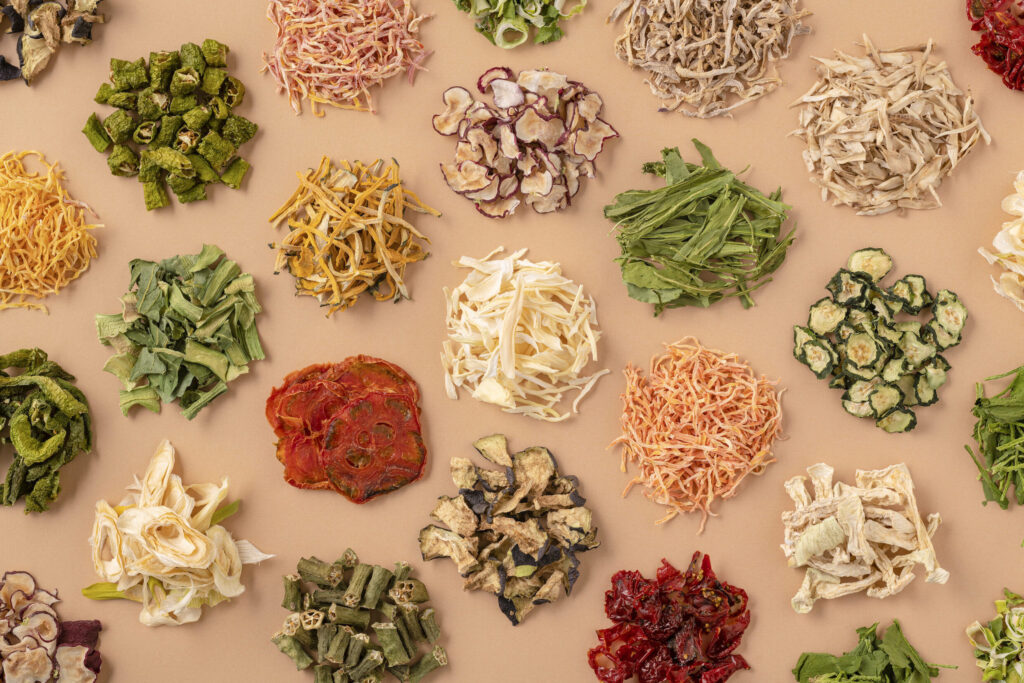
- Available for purchase in small lots from 1 kg
- We handle heirloom vegetables from across Japan
- Dried fruit and herbs also supported
Tips for sticking with it
We often hear from people who started but couldn't keep it up. The cause is usually a mismatch between quantity and lifestyle.
Skip before you travel
This makes the biggest difference. Vegetables arrive all at once, so if you receive them just before going away, they'll have spoiled by the time you get back.
Most services have a skip function. As soon as a trip or business travel is scheduled, skip that delivery. This one small step clearly reduces how much goes to waste. The trick is to stop thinking of a subscription as "something that arrives automatically" and see it instead as "something you adjust yourself."
Mix in longer-lasting items
With a service like Oisix that carries processed foods, you can avoid filling the box with fresh produce alone. Including a portion of longer-lasting items lowers the risk of not using everything up.
| Combination | Result |
|---|---|
| Fill it only with fresh vegetables | Assumes you'll use it all within a week. Falls apart if plans change |
| Mix fresh produce with processed and dried foods | Can be saved for later if plans change |
Give away what you can't use
Another option is to give friends whatever you can't use yourself. Unusual vegetables make good conversation starters, so the people you give them to tend to enjoy them too.
If family lives nearby, sharing is another good option. While you're still getting a feel for quantities, having an outlet like this takes the pressure off.
Sort everything as soon as it arrives
- Wrap leafy greens in paper towels before putting them in storage bags
- Wrap root vegetables in newspaper and keep them in a cool, dark place
- Decide the order of use. Use perishable leafy greens first
- Blanch or freeze items on the day they arrive
If you don't have time to sort everything on the day it arrives, that simply means the quantity is too large. Reviewing your plan will solve the problem faster.
Is it expensive?
It's often assumed to cost more than the supermarket, but comparing it with the wrong thing leads to the wrong conclusion.
Look at the total, including shipping
Compare the total cost including membership fees, annual fees and shipping, not just item prices. A single delivery of a vegetable subscription set typically costs around 3,000 yen, or roughly 12,000 yen a month for four deliveries.
That said, putting this figure next to your supermarket vegetable bill isn't a meaningful comparison. As mentioned earlier, vegetable delivery is less a replacement for everyday shopping than a treat a few times a month. Thinking of it as eating out one less time is closer to reality.
If you want to keep costs down
- Use the first-time trial set to check the actual quantity and taste before deciding
- Check the conditions for free shipping. You can often meet them by ordering in bulk
- Reduce delivery frequency. Switching to biweekly or monthly lowers the cost of each delivery
- Choose a service that handles irregular (non-standard) vegetables
There's no need to be wary of the word "subscription." Most services let you skip or cancel. Knowing you can stop if it doesn't suit you, the quickest route is to try it once.
Irregular vegetables are cheaper
Some services handle vegetables that can't go to market because they are oddly shaped or blemished. They taste the same but cost less, making them a sensible choice for people who use a lot of vegetables.
It also means vegetables that would have been thrown away end up on the table. Making use of irregular vegetables is at the core of our own business, so we see firsthand that this movement is growing. Our initiatives are described in Sustainable initiatives.
We'd also like you to try dried vegetables
The fun of vegetable delivery lies in encountering vegetables you don't usually come across. Along the same lines, there's one more thing we'd like you to try: dried vegetables.
The texture is completely different from fresh
We dry vegetables sourced from farmers in regions across Japan. As the moisture leaves, the texture of even the same vegetable becomes softer and rounder. The more used to eating something fresh you are, the more the difference surprises you.
We especially recommend items you probably wouldn't normally buy. Dried cucumber and dried tomatoes, for example, have textures that are hard to imagine from the fresh versions. Try adding them to a dish, and a familiar recipe becomes something new.
Keeps for six months at room temperature
Dried vegetables keep for about six months at room temperature. They also act as a backup when you're not sure you can use up all the fresh produce from a delivery. How their nutrition changes compared with fresh vegetables is covered in A nutritional comparison of dried and raw vegetables. Because they can be kept for a long time at room temperature, they can also be used as emergency supplies for disasters.
| Fresh vegetables from delivery | Dried vegetables | |
|---|---|---|
| How long they keep | A few days to a week | About six months at room temperature |
| How to use | Plan meals from the day they arrive | Add a pinch whenever you want |
| Texture | As is, fresh | Varies with how you rehydrate. Completely different from fresh |
| Suitable situations | Cooking in batches on weekends | When you want one more dish or a bit of extra color |
In the previous section I suggested mixing in longer-lasting items, and dried vegetables fill exactly that role. They won't spoil even if you're away on a trip.
Used alongside a vegetable box, they widen your cooking repertoire even further. Enjoy seasonal fresh produce through delivery while keeping dried vegetables on hand. For enjoying vegetables as a hobby, this combination hits the sweet spot.
Summary
If you think of a vegetable delivery service as a replacement for the supermarket, you won't stick with it. Using it as a treat a few times a month, or as a hobby, fits the reality better. A box brings vegetables you would never pick yourself. That alone makes it worth trying once.
When choosing, work backward from how much you cook each week. If it's only on weekends, pick items on Tabechoku or use a box service biweekly. If you cook every day, keep supply steady with Sakanotochu or Oisix. Splitting it this way rarely goes wrong.
The key to sticking with it comes down to skipping deliveries before you travel. If you stop thinking of a subscription as something that arrives automatically and see it as something you adjust yourself, waste clearly goes down.
And when it comes to vegetables you don't usually encounter, dried vegetables point in the same direction. They keep for six months at room temperature, so keeping them on hand alongside fresh deliveries makes things easier. Agriture's dried vegetables are available Product page.
Related article: Checklist to self-diagnose a vegetable shortfall・10 selected dried vegetable recipes・Our work with irregular vegetables. If you're looking for a way to get vegetables into the workplace, see Office services, and if you're looking for commercial use, please also see Commercial dried vegetables as well
Download the product catalog
We will send the materials to your email address based on the information you provide.
- 食物繊維が多い食べ物は?野菜・豆・海藻・きのこを多い順に見る
- The new common sense of health maintenance that vegetable intake from your 40s can change