
Vegetable deficiency– tag –
-
22 Companies Including Kagome Launch the "Vegetable-Shortage Solution Idea Contest 2026 for Those in Their 20s"—The Reality of 218g for Men and 210g for Women in Their 20s, Recruiting University-Born Solutions with 500,000 Yen in Total Prizes
22 companies led by Kagome launched an idea contest 2026 for students on March 2. Against intake of 218g for men and 210g for women in their 20s, it invites measures to close the gap to the 350g target. Realistic solutions such as keeping dried vegetables stocked in the office are also welcome. -
Vegetable shortage lowering productivity? The link between presenteeism and diet
What you'll learn in this article. What presenteeism is and how much loss it brings to a company. Data linking vegetable deficiency to lower productivity. The effects you can expect from improving the food environment. Ways to fix vegetable deficiency you can start right away at the office. What is presenteeism? The true nature of a hidden loss. "Coming to work... -
10 dried-vegetable recipes | from miso soup to side dishes, solving vegetable shortage in a hurry
What you will learn in this article: 10 easy recipes using dried vegetables (5 to 15 minutes); recipes by category, including miso soup, soups, salads, stir-fries and simmered dishes; tips for using dried vegetables and how to avoid mistakes; ideas for working dried vegetables into a week of meals. Why dried vegetable recipes help with a lack of vegetables... -
Solve the Vegetable Shortage of Living Alone with Dried Vegetables | A New, Effortless Habit
What you'll learn in this article. The real reasons living alone leads to vegetable deficiency. Why dried vegetables are a perfect match for living alone. Concrete recipes and ways to work them in. A cost comparison with fresh vegetables. How to choose and store dried vegetables. "I know I should eat vegetables, but it's just hard..." When you start living alone... -
7 ways for vegetable-averse adults to overcome it without strain
What you'll learn in this article: common causes of adult vegetable dislike and "how taste works"; how to overcome vegetable dislike without strain using dried vegetables and vegetable powder; concrete tactics by disliked vegetable; ways to work it in and recipe examples you can keep up daily; the effect vegetable shortfall has on the body and a guide to improvement. "Children... -
Dried vegetables for camping and hiking | lightweight, and they fix a vegetable shortfall
What you'll learn in this article. Why you fall short on vegetables outdoors and its effects on the body. Why dried vegetables are ideal for camping and hiking. The types of dried vegetables to bring and how to choose them. Easy recipes you can use in the field. Tips for packing and carrying them. When it comes to meals for camping and hiking—cup noodles,... -
5 ways to solve vegetable shortfall in older adults | Making use of dried vegetables
What you'll learn in this article. Three reasons older adults tend to fall short on vegetables. Cooking techniques that make vegetables easy to eat even with weaker chewing. Simple care-food recipes using dried vegetables. The vegetable intake needed per day and the reality for older adults. How to support the meals of a parent living apart. "Lately, Dad... -
Preventing vegetable shortfall while dieting | Add dietary fiber with dried vegetables
What you will learn in this article: why vegetable shortages easily occur while dieting; how dietary fiber raises the success rate of dieting; calorie and nutrient data for dried vegetables; concrete ways to include dried vegetables in diet meals; effective ways to get dietary fiber to curb hunger. "I'm restricting my diet... -
Aojiru vs. vegetable juice vs. dried vegetables, thoroughly compared | Which method truly works for beating vegetable deficiency?
Aojiru vs. vegetable juice vs. dried vegetables: which really helps with a lack of vegetables? You know you should eat more vegetables, but you just can't seem to do it. For people like that, the first thing they try is probably aojiru or vegetable juice. Go to a drugstore and the shelves are full... -
A Vegetable Intake Guide for Expectant Mothers | How to Supplement Folate and Iron with Dried Vegetables
What you'll learn in this article. The vegetable intake needed per day during pregnancy and the nutrients you tend to fall short on. How to choose vegetables that efficiently supply folate and iron. Ways to keep using dried vegetables even through morning sickness. Recommended recipes and eating tips by pregnancy stage. Tips for quick cooking with dried vegetables. "Ever since I found out I was pregnant, meals... -
The Agriculture & Livestock Industries Corporation's "Vegetable Information, April 2026 Issue" Features ZEROCO's Freshness-Preservation Technology—The Potential of Ice-Temperature Storage for Agriculture and Distribution
The April 2026 issue of the monthly "Vegetable Information," published by the Agriculture & Livestock Industries Corporation (ALIC), carried a feature article on the vegetable freshness-preservation technology developed by ZEROCO Inc. The corporation is a public institution that surveys and publishes vegetable supply-demand and price trends, and being featured in its specialist journal shows industry attention on ZEROCO's technology... -
MAFF Announces the April 2026 Vegetable Price Outlook—Cabbage and Lettuce Down Year-on-Year, Potatoes and Onions Remain High
On March 31, 2026, the Ministry of Agriculture, Forestry and Fisheries published the April growth conditions and price outlook for vegetables destined for the Tokyo Metropolitan Central Wholesale Market. With rainfall and rising temperatures since late February, the growth of many leafy vegetables has recovered, and cabbage and lettuce are expected to see supply slightly above average and prices fall year-on-year. On the other hand, last summer's... -
Onions at the Keihin Market Turn Toward a Price Decline as Saga-Grown Supply Increases—After a 2025 Poor Harvest Surged to 159% of Average, Reading the Downward Trend from April Onward
According to the vegetable outlook in the Japan Agricultural News (dated March 29, 2026), the onion market at the Keihin Market is expected to turn to a downward trend. High prices have continued for a long time, but as shipment volumes of Saga Prefecture-grown onions increase, supply and demand ease, shifting toward a phase where the price level settles. Food processi... -
Vegetable Shortage Among Those in Their 20s Is 100g Below Target — The Answer Shown by the Solution Idea Contest 2026 and Dried Vegetables
The vegetable-intake target set by the Ministry of Health, Labour and Welfare is 350g per day. But the average intake among those in their 20s remains at about 256g, a reality about 100g short of the target. From March 2, 2026, recruitment began for the 2nd "Vegetable-Shortage Solution Idea Contest 2026 for Those in Their 20s," launching a new effort to increase vegetable intake among the young... -
In late March 2026, cabbage stayed high at 149 yen/kg at the Nagoya market. Against the backdrop of price instability of spring vegetables amid continued poor weather, the strengths of dried vegetables—stable supply, long-term storage, and avoiding price-fluctuation risk—are drawing renewed attention.
In June 2025, the Ministry of the Environment published FY2023 (fiscal 2023) food loss generation. The total was about 4.64 million tons, down 80,000 tons from the previous fiscal year (4.72 million tons), setting a new record low since estimation began. Business-related was about 2.31 million tons and household-related about 2.33 million tons, with business-related falling below household-related for the first time. Reduc... -
Outstanding Health & Productivity Management Organizations 2026 Expand to 26,850 Organizations | Why Food Became the Most Important Theme
On March 9, 2026, the Ministry of Economy, Trade and Industry announced the certified organizations for "Outstanding Health & Productivity Management Organizations 2026." A total of 26,850 organizations were certified—3,765 in the large-enterprise category and 23,085 in the small- and medium-enterprise category. This was an increase of 3,654 in total from the previous year (3,400 large, 19,796 SME), and since the system began... -
Certified Health and Productivity Management Organizations Expand Further: Why Food Has Become the Top Theme
The number of companies certified as Certified Health and Productivity Management Organizations in FY2026 has expanded further, surpassing 10,000. As certifications continue to grow across both the large enterprise and SME categories, food programs are drawing attention. Alongside exercise habits and mental health care, vegetable intake and nutritional improvement are the most... -
Vegetable Shortage Among Japanese People Widens | The Reality of Not Reaching the 350g Target
The vegetable-intake target set by the Ministry of Health, Labour and Welfare is 350g per day. But according to the latest National Health and Nutrition Survey, the average intake among Japanese people remains at about 280g, continuing to hover at about 80% of the target. How to fill this "70g wall" has become a new theme for the food industry. Across all age groups... -
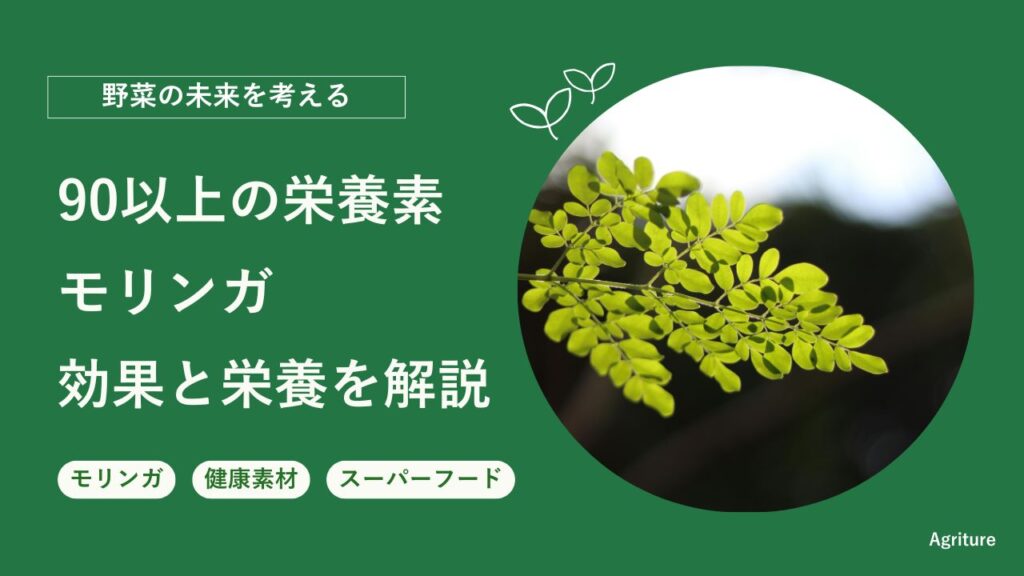
What is the superfood moringa? Its nutritional features and how to choose and drink powder and tea
"Moringa," which has drawn attention lately alongside rising health consciousness. A plant of the horseradish-tree family native to India, it's also called the "miracle tree" and "tree of life" because almost all of its parts—leaves, seeds, roots—can be used. This tree, which grows in tropical and subtropical regions, has astonishing growth... -

Yasai Yakuzen
Yasai Yakuzen, balancing the body with vegetables. Together with YAKUZEN TOKYO Co., Ltd., we launched the “Yasai Yakuzen” service—a way of eating that balances the body from within using “familiar vegetables” available at supermarkets. Even the vegetables we casually eat, when appropriately chosen and appropriately cooked from a yakuzen perspective... -
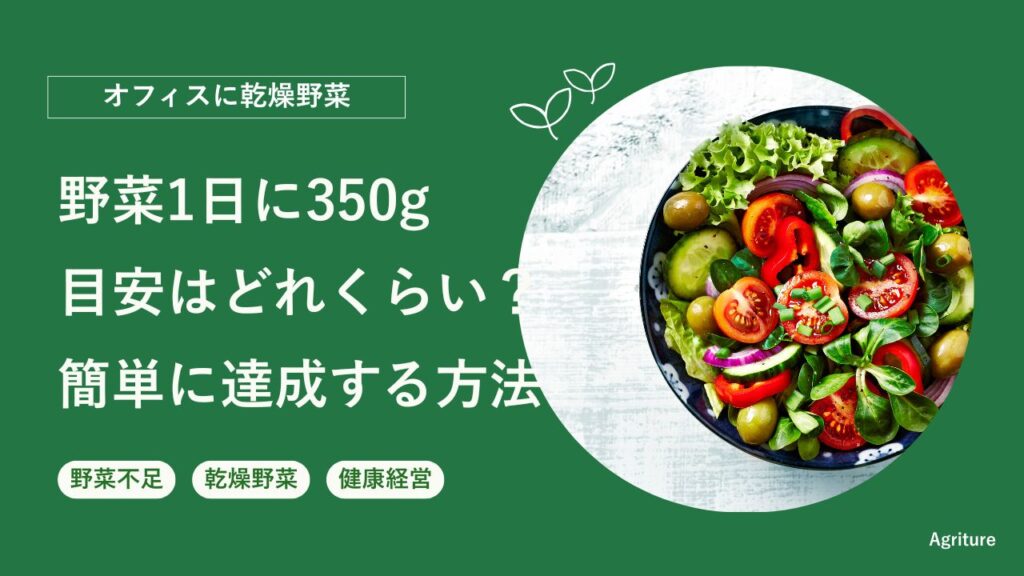
What is the 350 g-a-day vegetable guideline? Easy ways to achieve it
Have you heard the phrase "let's eat 350 g of vegetables a day"? This figure is the target value set by the Ministry of Health, Labour and Welfare in its health-building indicator 'Health Japan 21.' But even told 350 g, it's hard to picture how much that actually is. In fact, the vegetables of Japanese... -
How to eat vegetables during hay fever season
When hay fever season comes, days of being troubled by sneezing, runny nose, and itchy eyes begin. Many people may feel, here comes the tough season again this year. In fact, it has been pointed out that your diet, especially your vegetable intake, may be affecting hay fever symptoms... -

8 Effective Ways to Relieve Constipation Caused by Vegetable Shortage
Are you troubled by constipation? Its cause may unexpectedly be "vegetable shortfall." The daily vegetable intake recommended by the Ministry of Health, Labour and Welfare is 350 g, but the average intake of Japanese stops at about 280 g. This 70 g gap may be hindering your bowel movements. Vegetable shortfall... -
Self-Check Your Vegetable Shortage! Confirm Your Health with a 10-Item Checklist You Can Do Right Now
The reality of modern Japan, where vegetable shortfall is worsening. Are you getting enough vegetables in your daily meals? In fact, the average vegetable intake of Japanese stops at about 256 g, about 94 g short of the 350 g a day recommended by the Ministry of Health, Labour and Welfare. Especially among the younger generations in their 20s to 40s, this vegetable shortfall is worsening further... -
[Latest 2025] A thorough comparison of 7 recommended vegetable powders
Vegetable powder is a food made by drying fresh vegetables into powder. It is growing in popularity as a convenient item for easily taking in vegetable nutrients. The daily vegetable intake recommended by the Ministry of Health, Labour and Welfare is 350 g, but the average intake of Japanese stops at about 280 g. Many... -
Is Not Eating Vegetables Unhealthy? Lifestyle Improvements You Can Start for Now
Have you felt somehow under the weather lately? The daily vegetable intake recommended by the Ministry of Health, Labour and Welfare is 350 g. However, according to the 2023 National Health and Nutrition Survey, the average vegetable intake of Japanese stops at about 256 g. The vegetable-intake situation of people in their 20s is especially serious, with men... -
食物繊維が多い食べ物は?野菜・豆・海藻・きのこを多い順に見る
When you hear "foods high in fiber," you tend to picture vegetables, but in fact it spans a wide range — beans, seaweed, mushrooms, grains, potatoes, even fruit. Fiber, which tends to fall short in daily meals, can be increased without strain once you know it by category. In this article, foods high in fiber... -

How to choose a vegetable delivery service based on actual use, and 8 recommended companies
Vegetable delivery services became widely used because of COVID-19. People spent more time at home, more of them wanted to be particular about the ingredients they cooked with, and going out shopping became a chore. These two factors together suddenly made delivery a familiar option.... -
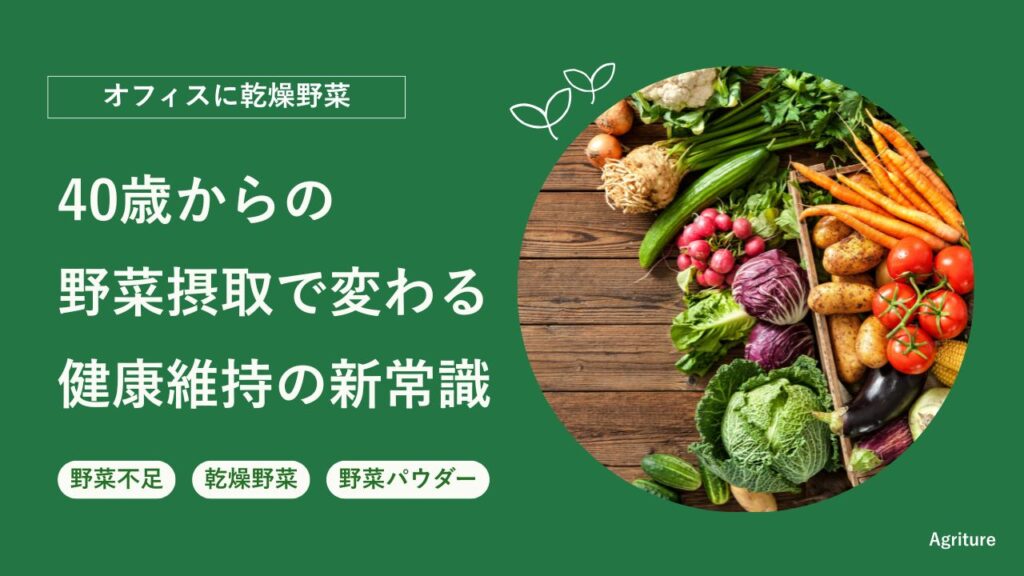
The new common sense of health maintenance that vegetable intake from your 40s can change
The daily vegetable intake recommended by the Ministry of Health, Labour and Welfare is 350 g. But in reality, the average intake of Japanese stops at about 280 g. From their 40s on especially, vegetable intake tends to decrease further due to work busyness and lifestyle changes. This 70 g gap can, for your health... -
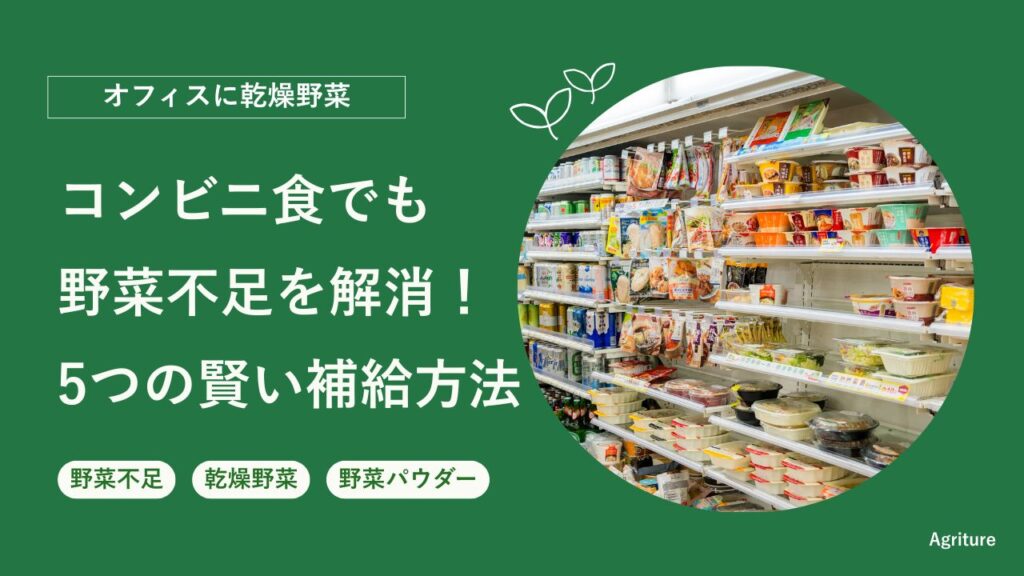
Solve Vegetable Shortage Even with Convenience-Store Food! 5 Smart Ways to Supplement
In your busy days, do you find yourself relying on easy convenience-store food? The daily vegetable intake recommended by the Ministry of Health, Labour and Welfare is 350 g. However, the average intake of Japanese stops at about 280 g, and the reality is that many people fail to meet the needed amount. Convenience-store food especially... -
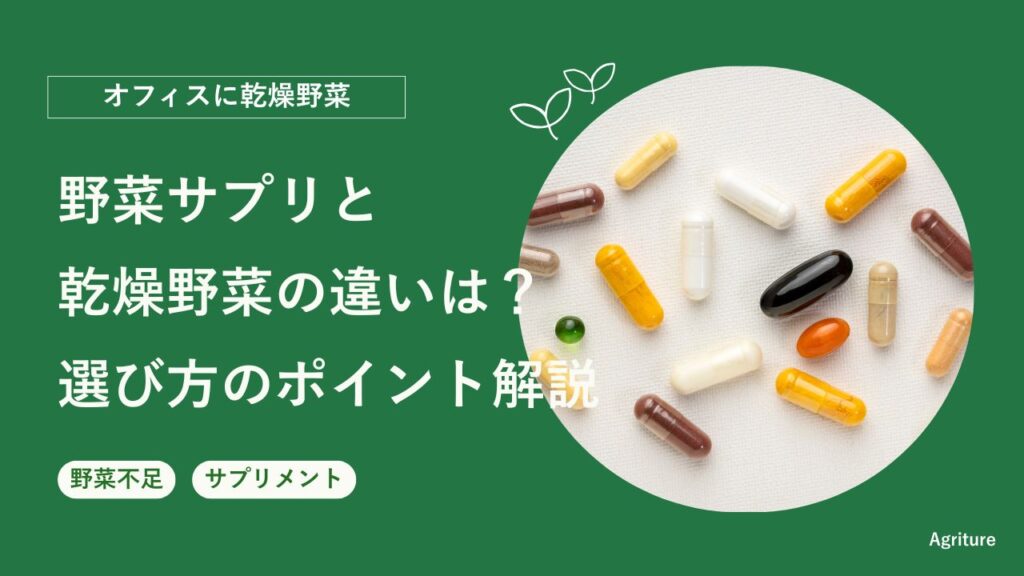
The difference between dried vegetables and vegetable supplements: comparing the benefits and drawbacks
Are you eating the necessary amount of vegetables every day? The daily vegetable intake recommended by the Ministry of Health, Labour and Welfare is 350 g. But the average intake of Japanese stops at about 280 g. This 70 g gap amounts to about one small side dish. Especially busy businesspeople and people living alone... -

Directly tied to improving corporate productivity! Key points for adopting health management
The term health management has become one you hear often lately. This is not merely part of employee benefits but a way of thinking drawing attention as a corporate growth strategy. Health management refers to a management method that considers employees' health care from a management perspective and practices it strategically. In the US... -
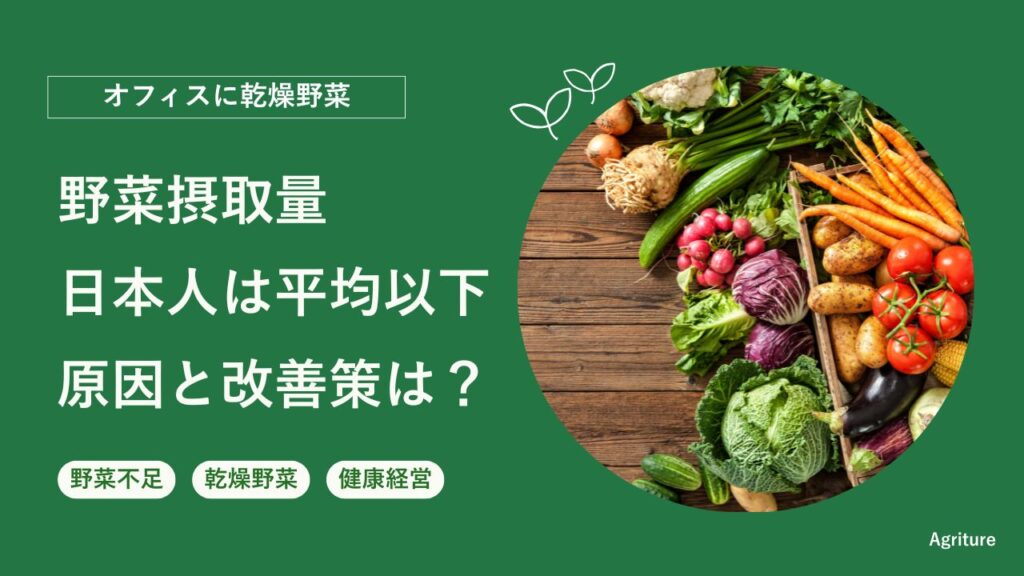
Is Japanese vegetable intake below average? The latest data and improvement measures
The daily vegetable intake recommended by the Ministry of Health, Labour and Welfare is 350 g. However, according to the 2023 National Health and Nutrition Survey, the average vegetable intake of Japanese is only 256.0 g (men 262.2 g, women 250.6 g). Seeing this figure, how do you feel? The recommended amount... -
10 Ways to Solve Vegetable Shortage That Even Busy People Can Practice
The vegetable intake of Japanese is in a serious situation. The daily vegetable intake recommended by the Ministry of Health, Labour and Welfare is 350 g, but the actual average intake stops at about 280 g. People in their 20s and 30s especially are about 30 g below average. There are not a few people who cannot get enough vegetables, citing busyness... -
Boost your vegetable intake even on busy mornings! Simple techniques you can do in 5 minutes
The daily vegetable intake recommended by the Ministry of Health, Labour and Welfare is 350 g, but the average intake of Japanese stops at about 280 g. Especially on busy mornings, many people feel they have no room to take in vegetables. Working vegetables into breakfast is effective for increasing the day's vegetable intake... -

Vegetable powder cost-performance comparison! 7 points on how to choose and use
Do you know about vegetable powder? The daily vegetable intake recommended by the Ministry of Health, Labour and Welfare is 350 g, but the average intake of Japanese stops at about 280 g. Seeing this figure, you can tell that many people are unable to take in the vegetables they need. Especially for busy businesspeople, every...
1