Vegetable powder cost-performance comparison! 7 points on how to choose and use
Tea
Sustainability
Raw materials & ingredients
Powder
Vegetable powder
Recipes & uses
Vegetable deficiency

Summary of this article
In a cost-performance comparison of vegetable powder, we examine two types—freeze-dried and dried vegetable—by nutritional value, price, and use. At 2,780 yen a bag for 35 servings, that's about 79 yen a serving, and with no discarded portion, it's more economical than fresh vegetables. We explain seven selection points—raw-material growing region, presence of additives, particle size, kinds of blended vegetables, nutritional value, cost-performance calculation, and ease of use and shelf life—along with ways to use it.
Do you know vegetable powder?
The is 350g recommended by the Ministry of Health, Labour and Welfare, but the average intake of Japanese people stays at about 280g. Looking at this figure, you can see that many people aren't able to take in the vegetables they need. Especially for busy businesspeople, getting enough vegetables every day is not easy. Vegetable Intake What can easily resolve modern people's vegetable shortfall is "vegetable powder." A food made by drying vegetables into powder, it has superior shelf life, requires little cooking effort, and lets you efficiently take in vegetable nutrition even amid busy days.
However, the market has a variety of vegetable powders, and prices range from top to bottom. It's easy to get lost about which to choose.
This article introduces how to choose vegetable powder and cost-effective ways to use it, in seven points. If you're troubled by a vegetable shortfall, please use it as a reference.
A thorough comparison of the types and features of vegetable powder
TOC
Vegetable powder is broadly divided into two types: "freeze-dried" and "dried vegetable." Let's compare the features of each.
Features of the freeze-dried type
Freeze-drying is a method of rapidly freezing vegetables and then sublimating the moisture under vacuum. This method's biggest feature is that it can retain the vegetable's natural flavor and nutrients at a high level. Vividness of color is also maintained, resulting in a beautiful-looking powder.
However, because the production cost is high, the price also tends to be relatively high. Since it's high in nutritional value even in small amounts, it suits those who prioritize nutritional replenishment.
Features of the dried-vegetable type
Dried vegetables are made by evaporating moisture with hot air, sunlight, and the like. Because production cost is lower than freeze-drying, they're offered at a comparatively reasonable price. They suit those who want to use a lot, or who prioritize cost performance.
However, because heat is applied, some heat-sensitive nutrients can be lost. Color and flavor may also change slightly, so it's good to use them for different purposes according to the application.
Which to choose depends on the points you prioritize. If you put nutritional value and flavor first, freeze-dried is recommended; if you prioritize cost performance, the dried-vegetable type is recommended.
Seven points to avoid failure in choosing vegetable powder

We introduce seven points worth noting when choosing vegetable powder. Keep these in mind and you'll be able to find a product that suits you.
1. Check the raw material's quality and growing region
The quality of vegetable powder is greatly affected by the quality of the vegetables used. Ones that use domestically grown vegetables have high safety, and in many cases
is secured. Traceability is guaranteed in many cases.
Check the origin information printed on the packaging carefully. Products clearly labeled "100% domestic vegetables" in particular give you a reliable benchmark for choosing with confidence. There are also Organic cultivation and powders made with pesticide-free vegetables. If you are strongly health-conscious, factor in this added value as well.
2. Check whether additives are used
Some vegetable powders contain additives to improve shelf life. If you are mindful of your health, we recommend choosing additive-free products.
Products clearly labeled "no additives" or "additive-free" let you enjoy the vegetables' natural flavor and nutrition, and can also be used with peace of mind in children's meals.
3. Particle size changes how easy it is to use
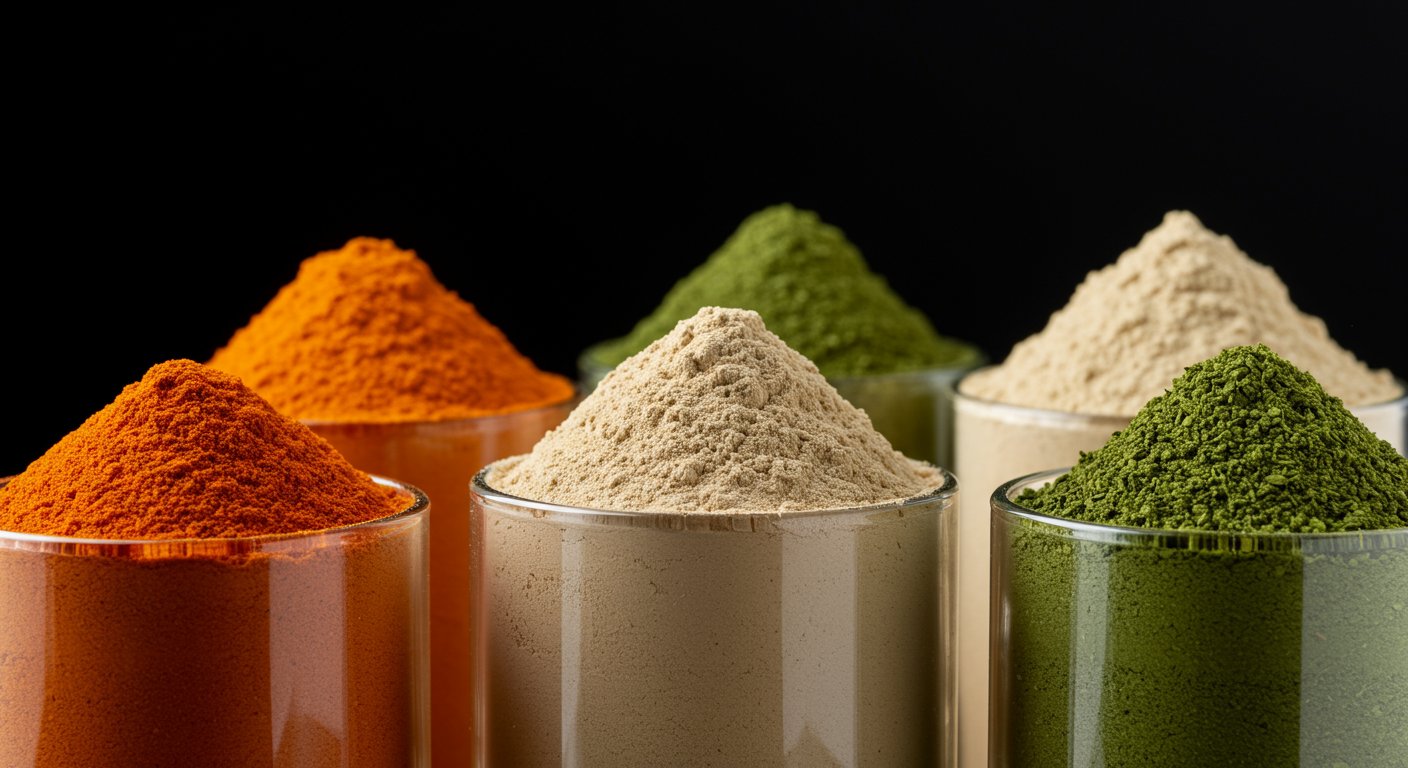
The particle size (grain diameter) of vegetable powder has a big impact on usability. Fine powders with an average particle size of around 20μm (micrometers) are hard to feel on the tongue and dissolve easily into drinks and dishes.
Coarser powders, on the other hand, let you enjoy the texture but can be harder to dissolve. Choose according to your intended use.

4. Check the types and amounts of vegetables in the blend
There are single-vegetable powders and types that blend several vegetables together. If you are after a specific nutrient or effect, go for a single-vegetable powder; if you want to take in a balanced range of nutrients, a blended type is a good choice.
When choosing a blended type, check not only how many vegetables are included but also the ratio of each. Even with many types, the vegetables other than the main one are sometimes included in extremely small amounts.
5. Check the nutritional value and functionality
The nutrients contained vary by vegetable powder. For example, green tea powder is rich in polyphenols such as catechins. The finer the particles become during powdering, the more easily the powder dissolves in water and food and the more easily it is taken into the body.
It is important to choose according to the nutrients you want to supplement and the effects you are hoping for.
6. How to calculate cost performance
When working out the cost performance of a vegetable powder, we recommend comparing by "price per serving." For example, one bag at 2,780円 for 35 servings works out to about 79円 per serving. Compare this against your daily spend on buying vegetables.
And whereas fresh vegetables have parts you throw away, powder can be used up without waste, which is another sign of good economy.
7. Ease of use and storability matter too
Individually packaged types are handy to carry and easy to use even at the office. Large-volume types, meanwhile, offer good cost performance but call for care in how you store them after opening.
For storability, types in a resealable bag or airtight container are convenient. Since powder is vulnerable to moisture, store it in the refrigerator or a dry place after opening.
7 ways to use vegetable powder: tips for working it into everyday meals
Here are some ways to make effective use of vegetable powder. Use these as a guide and try working them into daily life.
Just stir it into a drink: an easy way to use it
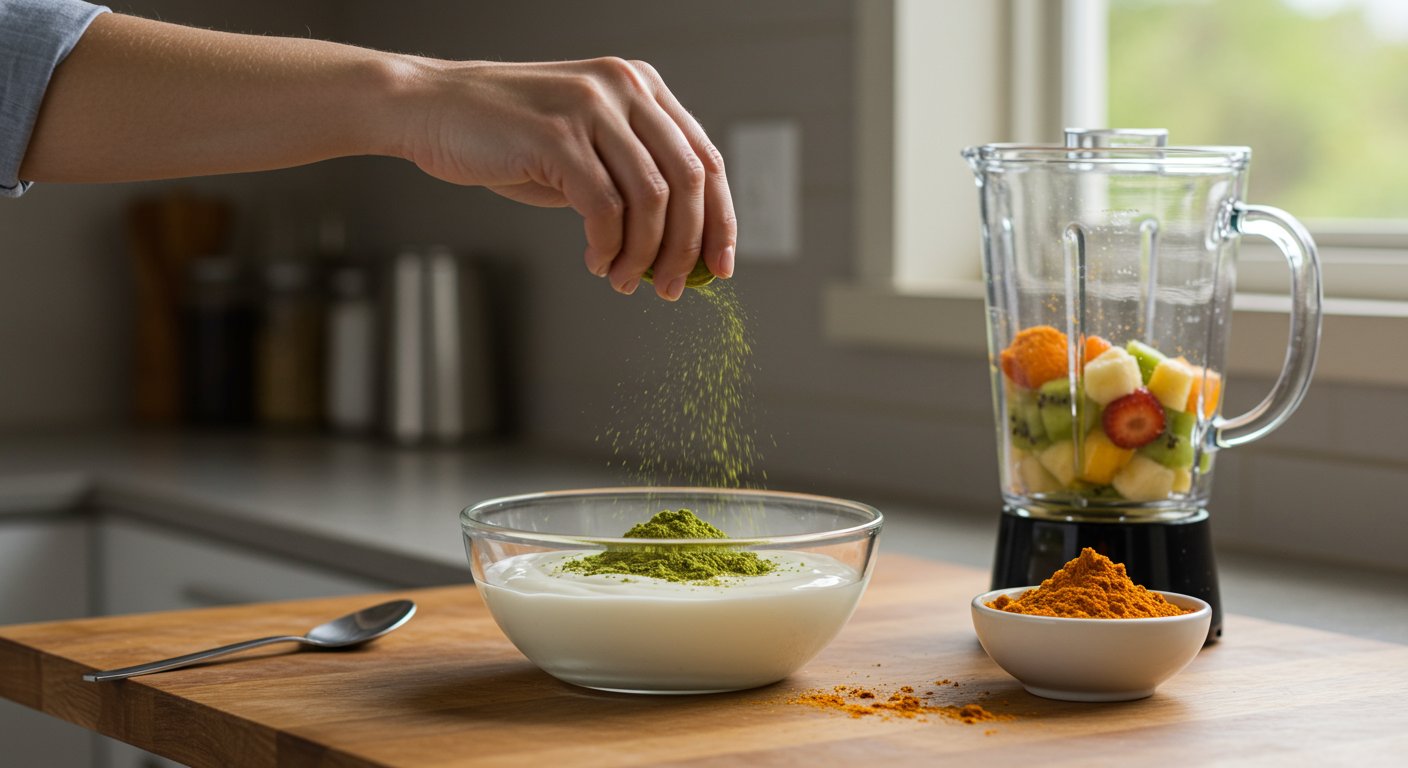
The simplest method is to stir it into a drink. Just add about a teaspoon of vegetable powder to milk, yogurt, or a smoothie to take in vegetable nutrition with ease.
Tasteless, odorless types are especially appealing because they boost nutritional value with barely any change to the flavor. Add it to a breakfast drink and you can make up for a vegetable shortfall even on a busy morning.
Use it as a secret ingredient in cooking
Adding a small amount to dishes such as curry, stew, or soup lifts the flavor and raises the nutritional value. Using a powder of a vegetable children dislike, in particular, lets even picky eaters take in vegetable nutrition without noticing.
Mixing it into ground-meat dishes such as hamburg steak or meat sauce is another good option. You can also expect it to help tame the smell of the meat.
Ideal for baby food and nursing-care meals too
Because vegetable powder has fine particles, it also suits baby food and nursing-care meals. Its appeal is that it is easy to digest and absorb, and lets you add a range of nutrients with ease.
It is especially helpful for making up nutrients that tend to run short when there is picky eating. A tasteless, odorless type boosts nutritional value with barely any change to the food's flavor, so it also suits children with sensitive palates.
Mix it into homemade sweets for a nutrition boost
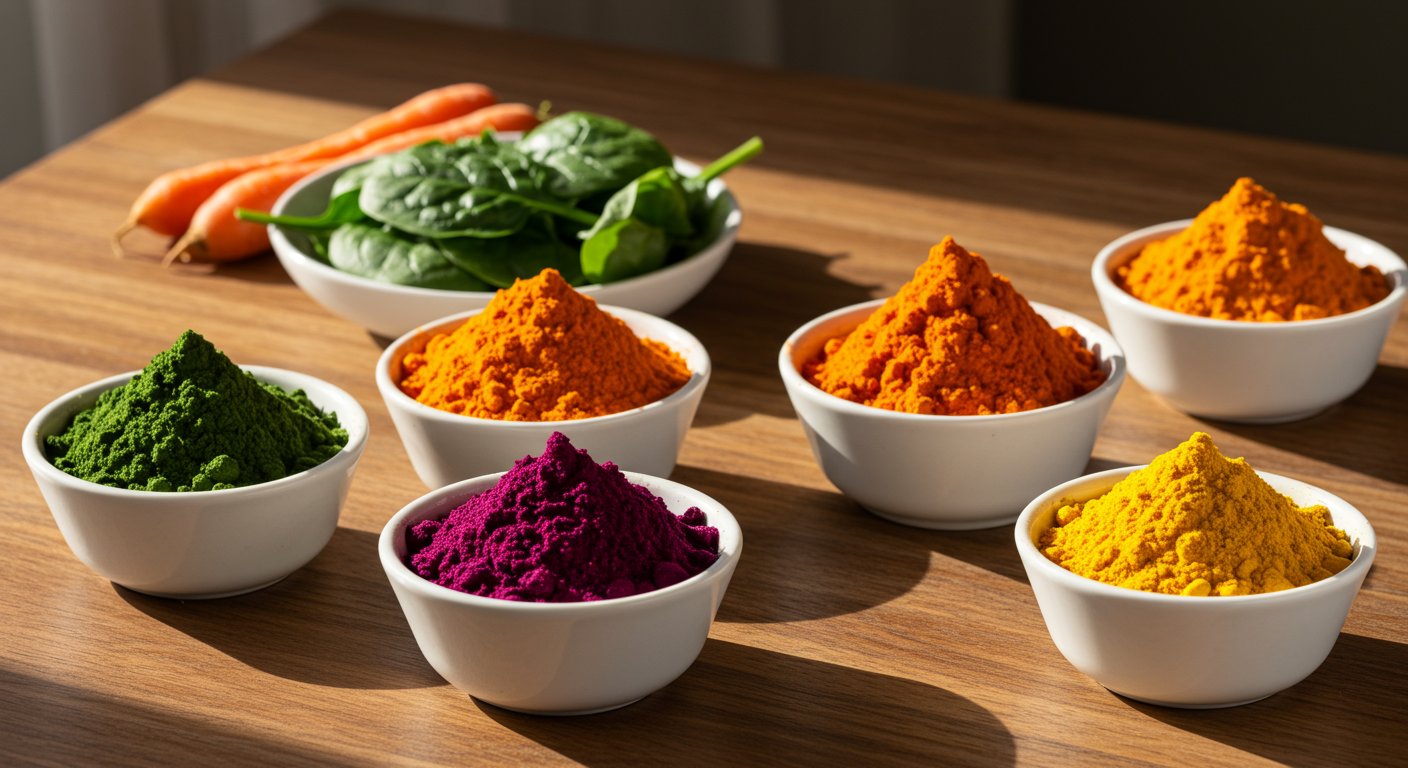
Adding vegetable powder to homemade sweets such as cookies, muffins, or pancakes makes them look more vivid and raises their nutritional value. Spinach powder for green, kabocha powder for yellow, beet powder for red – it works as a natural coloring too.
Making colorful sweets together with your children is a nice idea as well.
Stir it into dressings and sauces
Adding vegetable powder to homemade dressings or dip sauces deepens the flavor and raises the nutritional value. Mix it into mayonnaise and it transforms into a colorful dip sauce.
Stir it into the dressing you pour over a salad and you can strengthen the vegetable nutrition even further.
A strong ally for quick cooking
Since no prep of the vegetables is needed, it is ideal for quick cooking on busy days. Use onion powder instead of finely chopped onion, for example, and you can cut cooking time without shedding tears.
There is also no worry about the flavor changing with how the vegetables are cut or sautéed, so even beginner cooks can achieve a consistent taste – another point in its favor.
Solve picky eating too! 3 ideas for commercializing vegetable powder you can keep up every day
For topping up nutrition at the office
Easy-to-carry, individually packaged vegetable powder is perfect for topping up nutrition at the office. Keep it on your desk and you can take in vegetables with ease, free from constraints of time or place.
You can top up nutrition simply by stirring it into water or tea, so it is a good fit for busy businesspeople.
How to store vegetable powder well and choose it wisely
To use up the vegetable powder you went to the trouble of buying without waste, it helps to know the right way to store it. Keep the smart ways to choose it for your purpose in mind, too.
Storage tips for making it last
Because vegetable powder is vulnerable to moisture, it calls for care in storage. After opening, transfer it to an airtight container or close a resealable bag firmly before storing.
For the storage spot, the refrigerator or a cool, dark place with little humidity is recommended. In summer especially, watch out not only for moisture but also for high temperatures. If you store it refrigerated, let the container return to room temperature before opening to prevent condensation.
Also, when scooping it out with a spoon or the like, always use a dry one. Even a trace of moisture can cause quality to deteriorate.
Recommended choices by purpose
How to choose vegetable powder changes with your purpose. If nutritional support is the main aim, a nutrient-rich freeze-dried type or a blended type with several vegetables in good balance is recommended.
If flavoring dishes is the aim, choose a type with a strong single-vegetable flavor. Onion powder, for example, helps boost the savory depth of a soup, while tomato powder helps strengthen the flavor of a pasta sauce.
If you are choosing vegetable powder for children, go for one that is additive-free and highly safe. A tasteless, odorless type suits children with sensitive palates especially well.
Summary: an easy path to a healthy diet with vegetable powder
Vegetable powder is a handy food that makes up for the vegetable shortfall of modern life with ease. Keep the key points for choosing it in mind and work it into daily life, and you can eat healthily even amid busy days.
If you are not reaching the 350g of vegetables per day recommended by the Ministry of Health, Labour and Welfare in particular, why not use vegetable powder to bring your nutritional balance into shape
For cost performance, we recommend using single-vegetable powders and blended types selectively to match the purpose. And with care in storage, it lasts a long time, making it economical too.
Make good use of vegetable powder and achieve a healthy, richer diet!
- What is eating vegetables first? Eating order and how to practice it
- What is the 350 g-a-day vegetable guideline? Easy ways to achieve it