8 Effective Ways to Relieve Constipation Caused by Vegetable Shortage

Summary of this article
As a way to resolve constipation from vegetable shortage, a study of U.S. NHANES data reported that the odds ratio for the highest vegetable-intake group was a low 0.60. Against the Ministry of Health, Labour and Welfare's recommended 350 g per day, the Japanese average is 280 g, and this 70 g gap becomes a cause that hinders bowel movements. We explain eight effective methods, including using soluble and insoluble dietary fiber differently, combining with fermented foods and fruit, and using dried vegetables.
Are you troubled by constipation? The cause may, surprisingly, be a "vegetable shortage." The Ministry of Health, Labour and Welfare recommends Vegetable Intake is 350 g per day, but the average intake of Japanese people stays at about 280 g. This 70 g gap may be what is hindering your bowel movements.
Constipation caused by a lack of vegetables is not just uncomfortable; it can also lead to problems such as bloating. If it continues for a long time, it can easily lead to a worsening gut environment.
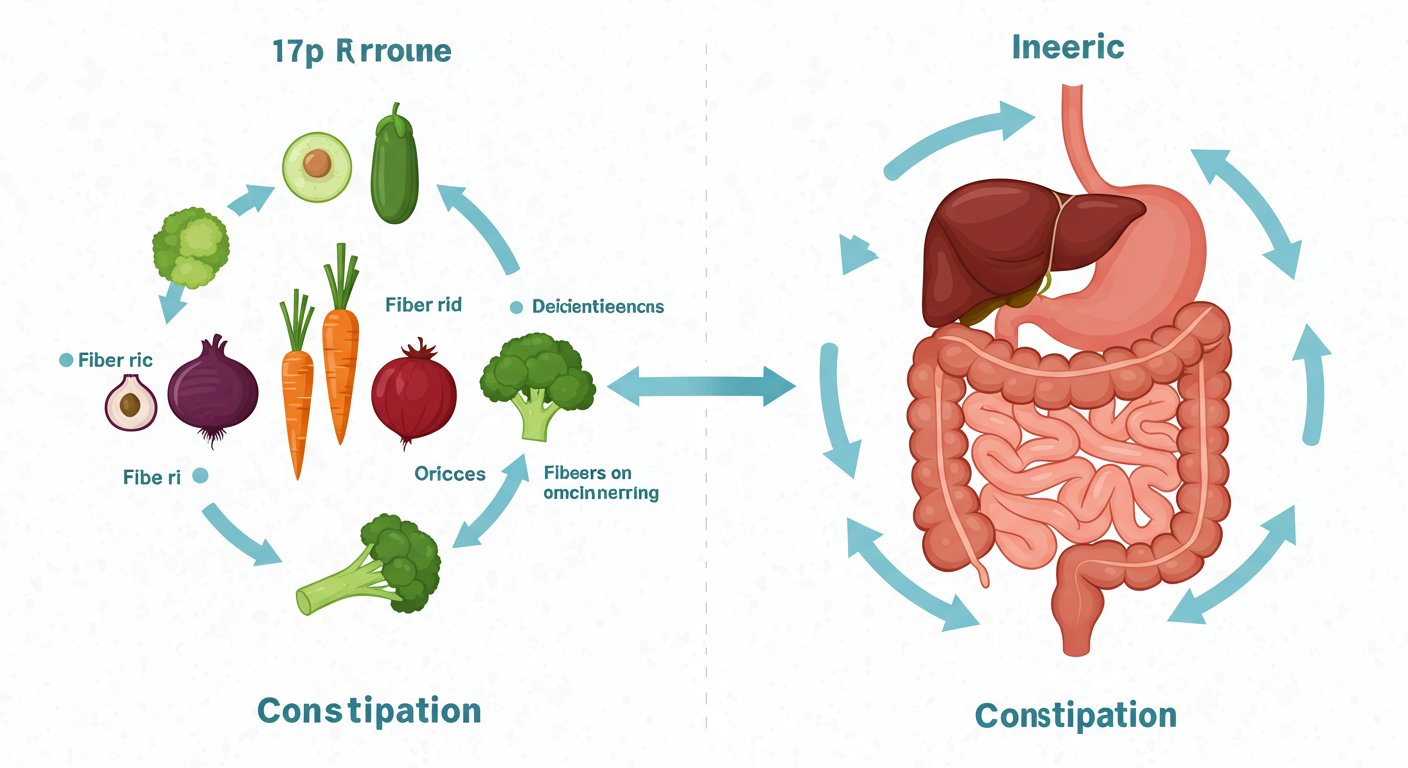
Vegetables are rich in Dietary fiber that promote bowel movements. In particular, soluble dietary fiber absorbs moisture to soften stool, while insoluble dietary fiber increases stool bulk and activates the intestines' peristalsis. These two kinds of dietary fiber work together to support smooth defecation.
| Type | Main function | Vegetables that contain a lot |
|---|---|---|
| Water-soluble dietary fiber | Absorbs moisture to soften stool, and also becomes food for good bacteria | Gobo, pumpkin, okra, yamaimo, seaweed |
| Insoluble dietary fiber | Increases stool bulk and promotes the intestines' peristalsis | Spinach, cabbage, carrot, edamame, mushrooms |
TOC
Eight ways to resolve constipation with vegetables and diet
For foods containing dietary fiber, vegetable intake is the key. However, quite a few people say "I'm too busy to have time to eat vegetables." In fact, a study analyzing U.S. NHANES data reported that among the 13,832 subjects, people in the highest vegetable-intake group had a constipation odds ratio of 0.60 (95% CI: 0.49–0.73), and a tendency was seen that the more vegetables people eat, the less prone they are to constipation.
Also, Another study reported that people with a high indicator of overall dietary quality (HEI) had a significantly lower probability of experiencing constipation, suggesting the importance of intake of vegetables, fruit, and whole-grain foods.
1. Incorporate vegetable juice at breakfast
A glass right after waking in the morning is effective. Pulp-containing vegetable juice often lets you take in plenty of dietary fiber. Pectin derived from tomato or carrot absorbs moisture in the intestines and increases stool bulk.
Morning is the time when the intestines move most actively. Drinking vegetable juice at this time promotes the intestines' peristalsis and leads to natural defecation. Taking it together with a glass of water further boosts the effect.

For those prone to constipation, drinking half a cup of vegetable juice before bed as well can be expected to support the next morning's bowel movement. However, choose it while checking the label so as not to take in too much sugar.
2. Consciously take vegetables rich in soluble dietary fiber
Soluble dietary fiber has the effect of softening stool and promoting defecation. It is especially abundant in gobo, pumpkin, okra, yamaimo, and the like.
These vegetables just need to be added a little at a time to daily cooking. For example, putting okra in miso soup or adding pumpkin to a salad is effective. Because soluble dietary fiber also has the role of increasing good bacteria in the intestines, a gut-regulating effect can also be expected.
Okra's sticky component contains a lot of soluble dietary fiber, and its advantage is that it is easy to add to miso soup or natto. It is an ingredient easy to keep up as a daily dish.
3. Add bulk with vegetables high in insoluble dietary fiber
Insoluble dietary fiber increases stool bulk and promotes the intestines' peristalsis. It is abundant in spinach, cabbage, carrot, edamame, and the like.
Actively incorporate these vegetables as salads and side dishes. It is a point to be especially mindful of for those who feel their stool volume is low. However, since suddenly increasing intake can cause bloating, we recommend increasing it gradually.
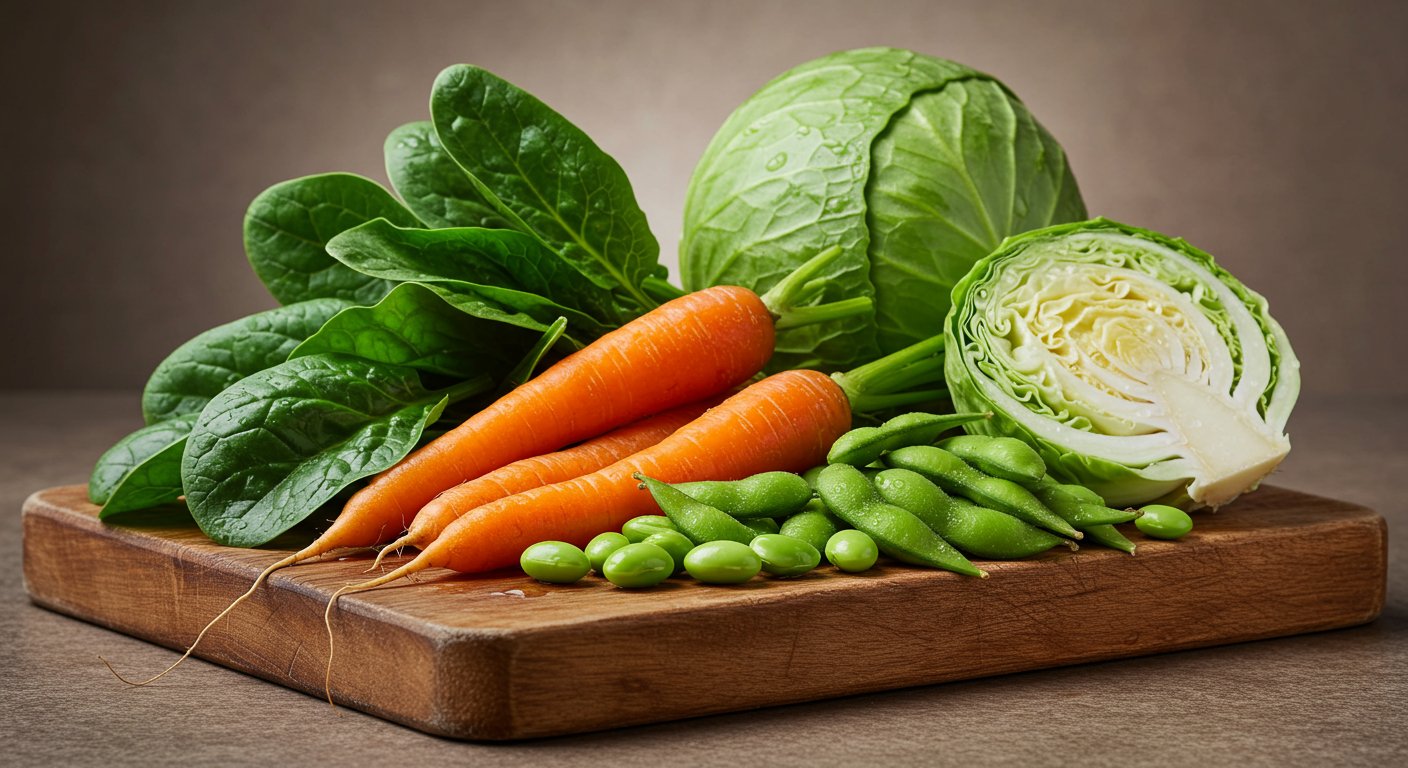
For those who say "I don't have time to eat vegetables," keeping pre-cut vegetables on hand in the refrigerator is convenient. Even on busy mornings, you can take them in easily just by adding them to a salad or soup.
4. Combine fermented foods and vegetables
The combination of vegetables and fermented foods is a powerful pair among foods containing dietary fiber. Fermented foods such as yogurt, natto, and miso are rich in lactic-acid bacteria and bifidobacteria that regulate the gut environment.
For example, adding fruit such as banana or kiwi to yogurt can be expected to have a "synbiotics" effect that takes in both prebiotics and probiotics. This further improves the gut environment.
Mixing okra or mekabu into natto is also recommended. Natto bacteria reach the intestines alive and work to increase good bacteria and aid digestion. Combining them with fiber-rich okra or mekabu can resolve constipation more effectively.
5. Actively incorporate fruit
Fruit too is expected to be effective among foods containing dietary fiber. Banana, apple, kiwi, and the like contain dietary fiber, pectin, and more, and may soften stool and aid the intestines' movement.
In fact, a large-scale study using the Healthy Eating Index (HEI) large-scale study reported the result that the more fruit and vegetables people eat, the significantly lower their probability of constipation.
Also, a review that comprehensively examined the effects of fruit on the intestines' peristalsis and gut microbiota review also pointed out that "the dietary fiber, sorbitol, polyphenols, and the like in fruit may be involved in improving bowel movements."
Incorporating a piece of fruit at breakfast or making a habit of having fruit as an after-meal dessert can naturally increase fruit intake.
6. Use dried vegetables and powders
For those who don't have time to eat fresh vegetables, dried vegetables and vegetable powders are recommended. They can be stored long-term, require little cooking effort, and let even busy businesspeople take in vegetables easily.
Keeping them on hand at your office desk lets you incorporate vegetables without being constrained by time or place. You can also arrange them freely—adding them to soup or miso soup, or topping yogurt.
For example, Agriture's dried vegetables are domestically grown vegetables whose shape does not meet specifications and that thus have trouble reaching the market, low-temperature-dried in collaboration with contract farms and welfare facilities in northern Kyoto. Handling nearly 100 items including Kyoto vegetables, and relying on no sugar or additives, they let you supplement dietary fiber simply by adding a pinch to soup or miso soup. Because they make use of off-grade vegetables, eating them also connects to reducing food loss. (From knowledge at our own production site.)
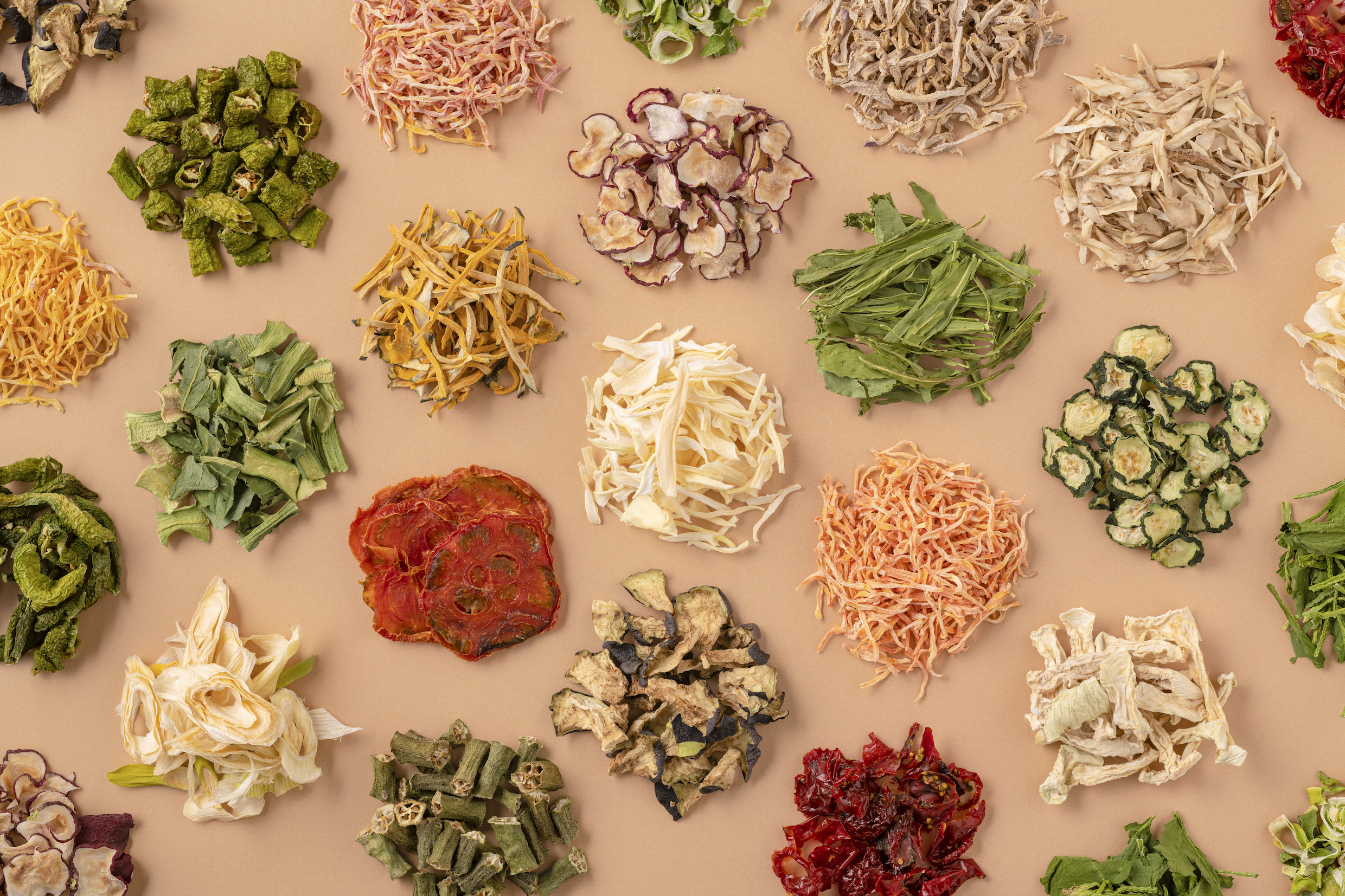
Because dried vegetables have more concentrated nutrients than fresh vegetables, they also have the advantage of letting you take in nutrition efficiently even in small amounts. However, since their moisture content is low, be sure to also take in enough water.
7. Make a habit of always eating breakfast
The relationship between skipping breakfast and constipation is also drawing attention. The Toyama Birth Cohort Study (subjects were junior high school students) reported that students who came to skip breakfast during the survey period had a constipation-onset odds ratio of 1.73 (95% CI: unknown).
This study, against the background of the possibility that breakfast intake regulates bowel-movement rhythm and the relationship between the body clock's rhythm and the intestines' peristalsis, is evidence that supports the importance of eating breakfast. Also, a study of elementary and junior high school students Another study also reported that "skipping breakfast" was statistically associated with a decline in defecation frequency.
8. Incorporate moderate exercise
Along with vegetable intake, exercise is something not to forget. Light exercise such as walking and stretching activates the intestines' peristalsis, and its advantage is that it is easy to incorporate into daily life. Even people who do a lot of desk work can give a push to the intestines' movement by moving their body frequently.
For those who do a lot of desk work, make a habit of standing up and doing a light stretch once an hour. Consciously moving the abdominal muscles also activates the intestines' movement.
Say goodbye to constipation by resolving vegetable shortage
Constipation from vegetable shortage can be resolved by incorporating small ingenuities into daily life. Why not start with what you can do from today, aiming for the Ministry of Health, Labour and Welfare's recommended 350 g of vegetables per day?
When constipation eases, the gut environment is regulated, connecting to support for managing your condition and to your skin condition, metabolism, and building your daily condition. Especially for busy modern people, using vegetable juice and dried vegetables is recommended.
Please try, from today, incorporating a method that suits your lifestyle—a morning vegetable-juice habit or using dried vegetables at the office. Start by adding one more dish of foods containing dietary fiber.
Regulating the gut environment is the foundation of a healthy life. Rethink your vegetable shortage and start with easy-to-keep-up measures for bowel movements.
Recommended reading
- Ways to resolve a lack of vegetables that even busy people can practice
- How to resolve a lack of vegetables even with convenience-store food
- Cost-performance comparison and how to choose vegetable powder
- The relationship between dried vegetables and dietary fiber

Learn about Office Yaoya
We have prepared materials
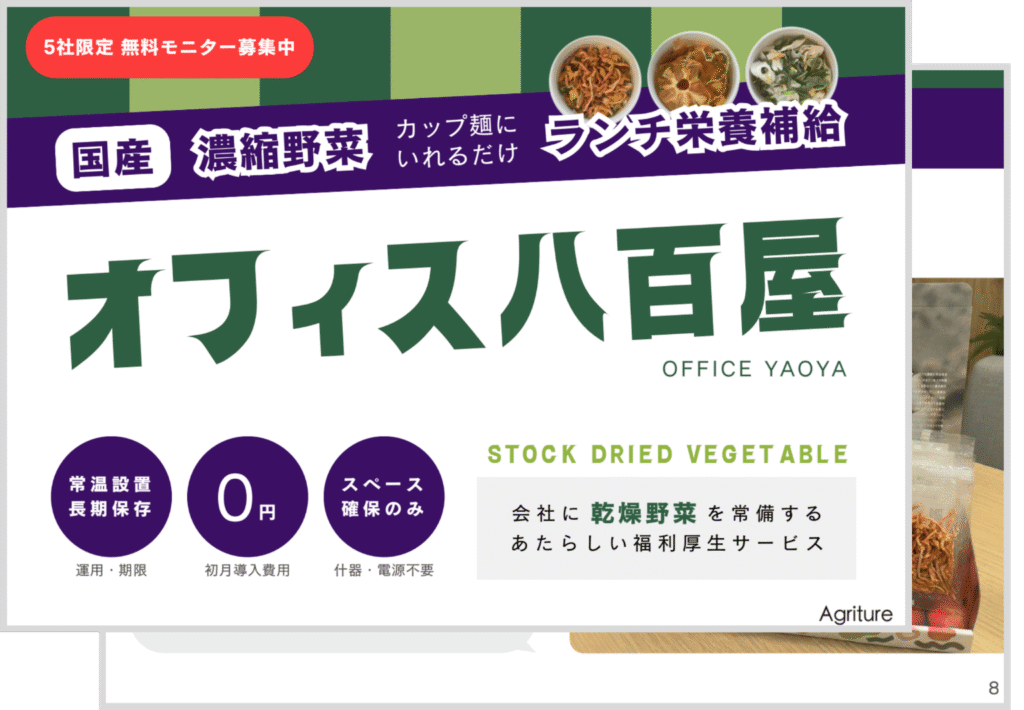
- Service details and vegetable lineup
- Pricing and plans
- How adoption and operation work
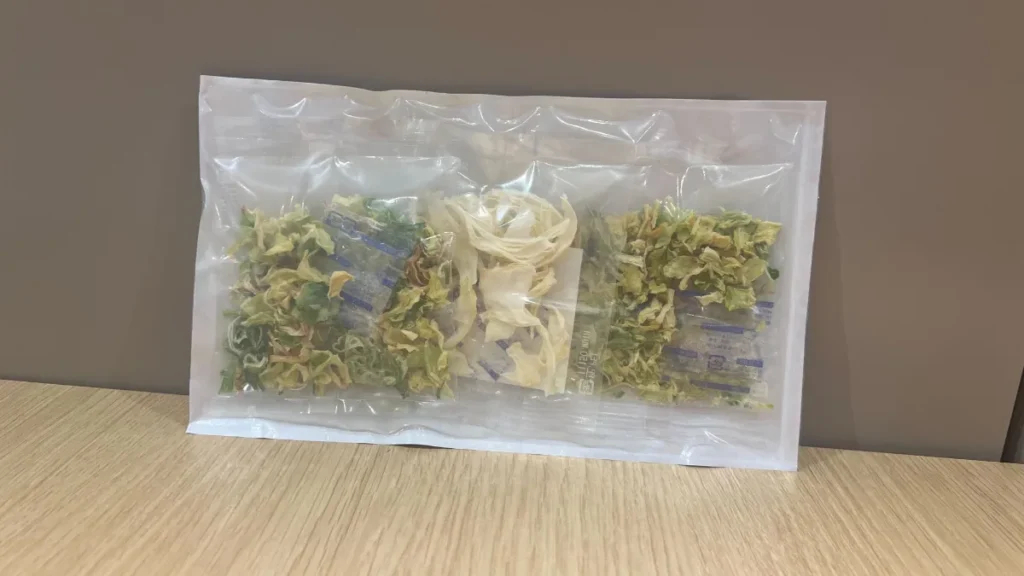
Sample sets are also available. Download the materials for details!
We offer sample sets so you can try Office Yaoya in small quantities. See the materials for details.
FAQ
We have summarized frequently asked questions about vegetable shortage and constipation.
Download the office dried vegetable materials
We will send the materials to your email address based on the information you provide.
- How to eat vegetables during hay fever season
- A Guide to Selecting Superfood Raw Materials: Points to Master in Product Development