
We Launched an OEM Service That Lets You Create an Original Blend from Over 30 Kinds of Dried Vegetables

Summary of this article
Agriture has launched an OEM service that lets companies original-blend dried vegetables — made by upcycling over 30 kinds of off-grade vegetables — into novelties. Partnership with growers in northern Kyoto enables small-lot production, offering an environmentally conscious product option as distribution novelties for recruiting events and trade shows.
TOC
Original blends of dried vegetables
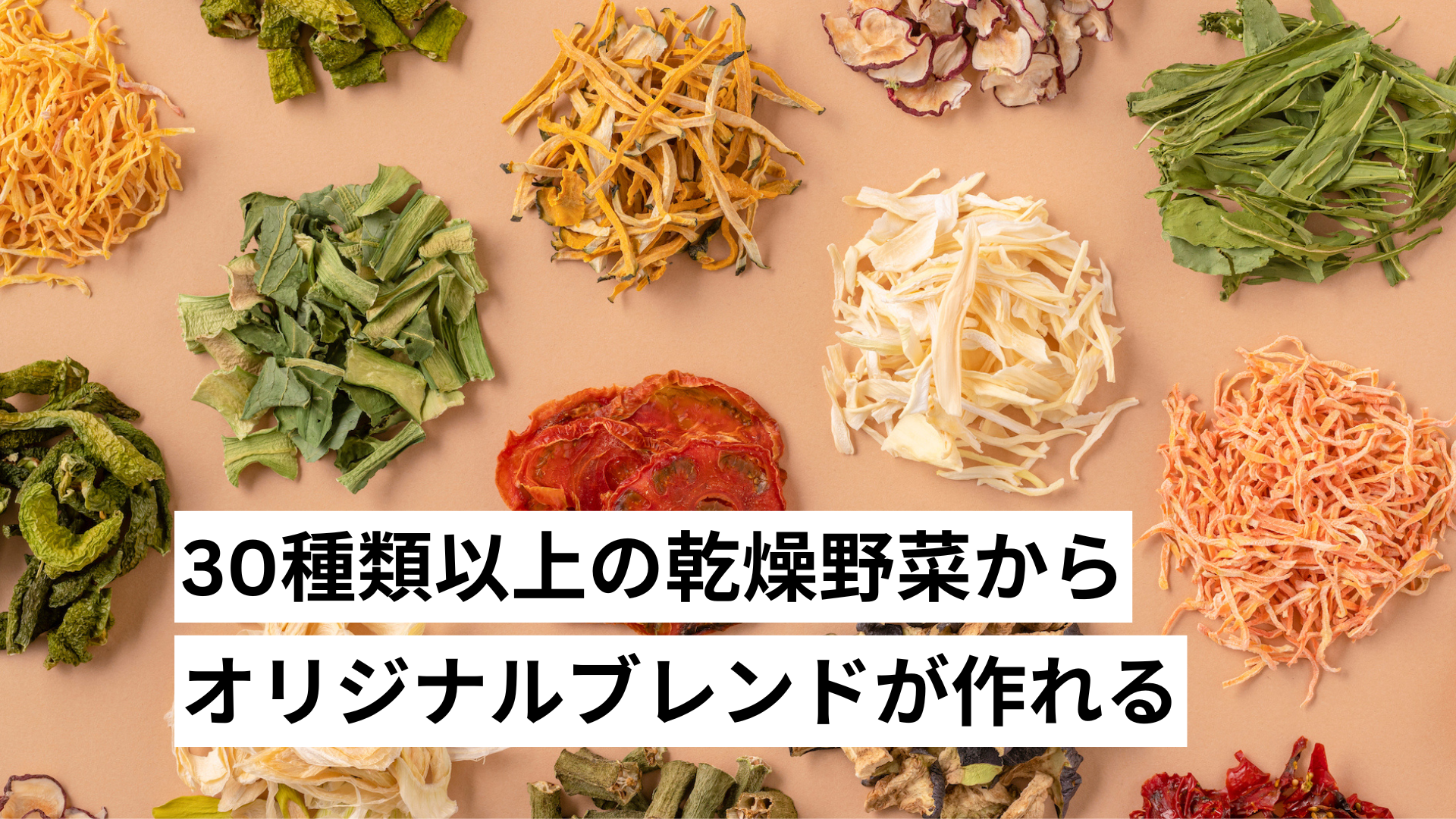
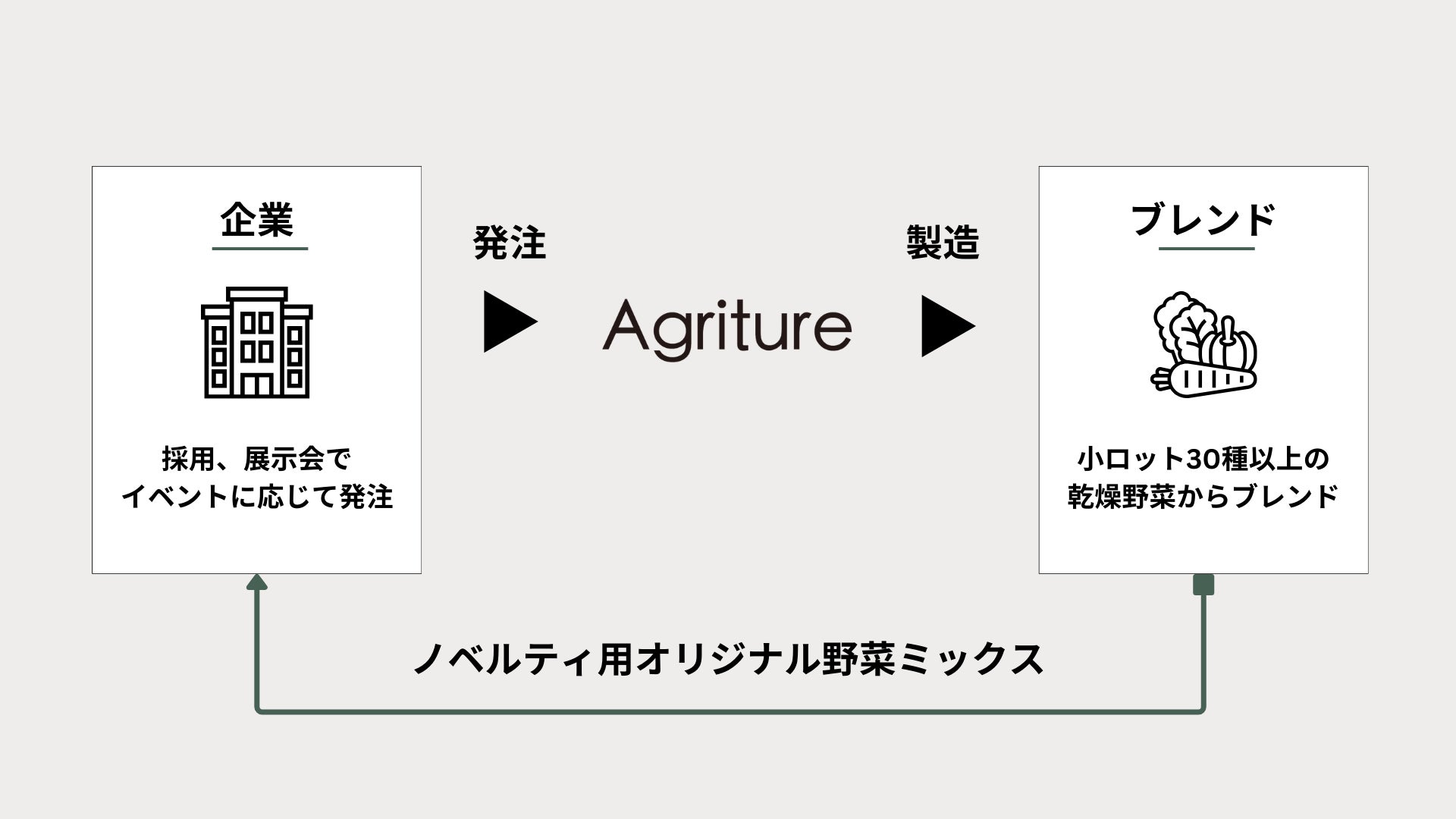
Toward realizing a sustainable society by 2030, companies are undertaking SDGs efforts. In recent years, environmentally conscious products have been added as an option in distribution novelties for recruiting events and trade shows too. In response to such demand for environmentally conscious novelties, Agriture has launched an OEM service that lets companies turn the dried vegetables — made by upcycling the over 30 kinds of off-grade vegetables it handles — into a company original blend as a novelty.
The features of Agriture OEM
At Agriture, you can make original blends of dried vegetables in small lots. Dried vegetables were conventionally made by growers within the scope of sixth-industrialization, or industrially in large lots by food makers. We have built a system for small-lot production through stabilizing products in partnership with large-scale growers in northern Kyoto, partnering with regional operators via agriculture-welfare collaboration, and putting to good use dryers left idle in the region.
Growers | Process vegetables left over from their own farms. |
Food manufacturers | Source vegetables from partner farms and manufacture; quality is stable and there are many items. |
Agriture | Source off-grade vegetables from partner farms in Kyoto and process them. |
About the OEM service:https://agriture.jp/wholesale-oem
FOR BUSINESS
乾燥野菜を業務用でお探しですか
国産の野菜・果物を乾燥し、必要に応じて粉砕してお出ししています。扱っている品目は100種前後で、規格は 乾燥品の一覧・パウダーの一覧 に掲載しています。
少量でのご購入は、姉妹ブランドの通販サイト OYAOYA で承っています。
The features of the dried vegetables
In partnership with growers in northern Kyoto, we handle over 30 kinds, including Kyoto vegetables and everyday vegetables. Because there are — alongside staples like cabbage and onion — vegetables rare as dried products such as cucumber and ginger, original blends can be produced to match a concept such as a dish or a scene.
List of vegetables:https://agriture.jp/product
Of the vegetables harvested at growers, about 30% of the total harvest is said to be off-grade. Off-grade vegetables — irregular in shape or size, or bruised — are said to be hard to turn into revenue, because their image of being cheaply available as "imperfect goods" leads to price haggling and, at farm stands, price competition. By buying such vegetables through direct trade and upcycling them, we aim to realize sustainable agriculture.
- An Interview Article with Representative Kojima Was Featured on "Spaceship Earth."
- We Began Selling Kyoto Vegetable Coffee
Author of this article
Related articles
-
 We released a free news release posting service on our operated “Food OEM Directory”
 -
 We Began Selling Kyoto Vegetable Coffee
 -
 Okinawa-Grown Dried Fruit Arrived
 -
 We Began Listing Domestically Grown Vegetable Powder
 -
 [Press Release] A service that lets you start small-pouch filling from 10 pouches launches | Supporting the start of a food OEM for the first time with small lots
 -
[Press Release] "Food OEM Window," a food OEM matching site, launches a joint initiative with Ggrow, a provider of SEO and LLMO customer-acquisition support, responding to the AI search era
-
 [100% Plant-Based] Releasing "Dried Tomato for Dashi," Perfect for Vegetable Dashi
 -
 Releasing the Nijisseiki Pear Dried Fruit "Letters from a Pear"