
Rei Kojima– Author –

-

Launched the employee-benefit service “Office Yaoya (OFFICE YAOYA)”
Agriture Inc. (Kyoto City) has fully launched "Office Yaoya (OFFICE YAOYA)," a new employee-benefit service that keeps dried vegetables stocked in the office. With 100%-domestic, additive-free, low-temperature dried vegetables, it approaches both the vegetable shortfall of busy businesspeople and the waste problem in agriculture... -
Too Good To Go, the Domestic Supermarket Industry's First Adoption—Starting at 2 Super Value Stores in Tokyo, Reducing Prepared-Food Loss at Up to 50% Off
The Denmark-born food-loss-reduction app "Too Good To Go" was adopted on March 26, 2026, at stores of Super Value (operated by OIC Group), the first domestic supermarket chain to do so. The service starts first at two stores in Tokyo, Super Value Suginami Takaido and Todoroki... -
JA Kumamoto Keizairen Regenerates Blemished Vegetables into Washi Lights—"Tomoru Oyasai" Starts Crowdfunding on Makuake Today
On March 30, 2026, JA Kumamoto Keizairen (Kumamoto Prefecture Economic Federation of Agricultural Cooperatives) started crowdfunding on Makuake for "Tomoru Oyasai," which regenerates blemished vegetables (tomato, eggplant) that can't be shipped or eaten into poster lights with washi shades. The JA Keizairen originally... -
Onions at the Keihin Market Turn Toward a Price Decline as Saga-Grown Supply Increases—After a 2025 Poor Harvest Surged to 159% of Average, Reading the Downward Trend from April Onward
According to the vegetable outlook in the Japan Agricultural News (dated March 29, 2026), the onion market at the Keihin Market is expected to turn to a downward trend. High prices have continued for a long time, but as shipment volumes of Saga Prefecture-grown onions increase, supply and demand ease, shifting toward a phase where the price level settles. Food processi... -
Consumer Affairs Agency Begins Operating a Food Bank Certification System from April 1—Reducing Loss by Raising the Reliability of Food Donations in Partnership with MAFF
From April 1, 2026, the Consumer Affairs Agency, in partnership with the Ministry of Agriculture, Forestry and Fisheries, begins operating a food bank certification system. By certifying food bank organizations that manage food appropriately and meet the compliance items of the "Food Donation Guidelines," it promotes donations from food manufacturers and retailers, reducing food loss... -
Vegetable Shortage Among Those in Their 20s Is 100g Below Target — The Answer Shown by the Solution Idea Contest 2026 and Dried Vegetables
The vegetable-intake target set by the Ministry of Health, Labour and Welfare is 350g per day. But the average intake among those in their 20s remains at about 256g, a reality about 100g short of the target. From March 2, 2026, recruitment began for the 2nd "Vegetable-Shortage Solution Idea Contest 2026 for Those in Their 20s," launching a new effort to increase vegetable intake among the young... -
The Consumer Affairs Agency approves the second food loss reduction policy in a Cabinet decision—raising the 2030 target from 50% to 60%, for an additional 200,000-ton reduction
Cabbage Stays High at 149 yen/kg in Late March—Amid Continued Price Instability of Spring Vegetables, Why the "Stability" of Dried Vegetables Draws Attention -
In late March 2026, cabbage stayed high at 149 yen/kg at the Nagoya market. Against the backdrop of price instability of spring vegetables amid continued poor weather, the strengths of dried vegetables—stable supply, long-term storage, and avoiding price-fluctuation risk—are drawing renewed attention.
In June 2025, the Ministry of the Environment published FY2023 (fiscal 2023) food loss generation. The total was about 4.64 million tons, down 80,000 tons from the previous fiscal year (4.72 million tons), setting a new record low since estimation began. Business-related was about 2.31 million tons and household-related about 2.33 million tons, with business-related falling below household-related for the first time. Reduc... -
Upvege, Which Powders Off-Spec Vegetables, Points to a New Trend in Upcycling
In October 2025, Green Ace Co., Ltd. officially launched the upcycled food brand "upvege." Using its proprietary powdering technology, it transforms "unused vegetables"—those that didn't reach the market because their shape or size didn't meet standards—into high-value-added products with their color, aroma, and nutrition intact... -
Outstanding Health & Productivity Management Organizations 2026 Expand to 26,850 Organizations | Why Food Became the Most Important Theme
On March 9, 2026, the Ministry of Economy, Trade and Industry announced the certified organizations for "Outstanding Health & Productivity Management Organizations 2026." A total of 26,850 organizations were certified—3,765 in the large-enterprise category and 23,085 in the small- and medium-enterprise category. This was an increase of 3,654 in total from the previous year (3,400 large, 19,796 SME), and since the system began... -
Food loss at 4.64 million tons, a record low | Business-related loss falls below household-related for the first time
AEON-Born Sustainable Chocolate | Achieving Cacao-Free with Sunflower Seeds -
Cacao, the raw material for chocolate, faces supply anxiety due to climate change. Amid this, AEON has been selling the chocolate alternative "Choco ka?" using sunflower seeds since 2025, drawing attention as a sustainable-food rollout at a major distributor. AEON's cacao-free ch...
March 25, 2026 -
The off-spec vegetable delivery service "LossHeru" partnered with Japan Post to begin selling at post offices nationwide. The familiar post office is becoming a new point of contact for reducing food loss. Japan Post Becomes a Channel for Off-Spec Vegetables. On January 19, 2026, the off-spec vegetable delivery service operated by Ekunes Inc...
The FY2023 (fiscal 2023) food loss estimate published by the Ministry of the Environment was 4.64 million tons, a new record low since statistics began. But what deserves attention beyond the figure is the change in the breakdown. Business-related (companies, restaurants, etc.) food loss was 2.31 million tons, falling below household-related (2.33 million tons) for the first time... -
Food loss at 4.64 million tons, a record low | Business-related loss falls below household-related for the first time
FamilyMart × Food-Loss App Cuts Waste 5% | Convenience Stores Move -
Certified Health and Productivity Management Organizations Expand Further: Why Food Has Become the Top Theme
The number of companies certified as Certified Health and Productivity Management Organizations in FY2026 has expanded further, surpassing 10,000. As certifications continue to grow across both the large enterprise and SME categories, food programs are drawing attention. Alongside exercise habits and mental health care, vegetable intake and nutritional improvement are the most... -
On January 28, 2026, FamilyMart announced a partnership with "Too Good To Go," an app with a cumulative food-loss-reduction record of over 500 million meals worldwide. It began pilot operation at 6 Tokyo stores in the Ikebukuro, Komazawa University, and Aoyama areas, succeeding in reducing waste by about 5%...
Upcycled Foods Expand | The New Value of Off-Spec Vegetables -
In the food industry, the "upcycling" movement is accelerating. Efforts to use off-spec vegetables and manufacturing by-products not as "waste" but as "valuable ingredients" are drawing attention as part of sustainability management. A movement facing the 4.64-million-ton food-loss challenge. Environ...
We Were Featured on MAFF's "Nippon Food Shift" Suste-Nabe Page -
Vegetable Shortage Among Japanese People Widens | The Reality of Not Reaching the 350g Target
The vegetable-intake target set by the Ministry of Health, Labour and Welfare is 350g per day. But according to the latest National Health and Nutrition Survey, the average intake among Japanese people remains at about 280g, continuing to hover at about 80% of the target. How to fill this "70g wall" has become a new theme for the food industry. Across all age groups... -
The Freeze-Dried Vegetable Market Grows 8.7% Annually | The Background of Its Expansion
The global freeze-dried vegetable market is rapidly growing. The 2026 market size will reach about 9 billion dollars, and the vegetable segment in particular shows high growth at a CAGR of 8.7%. The attention on dried vegetables, which achieve both health-consciousness and convenience, supports this growth. Why freeze-dried vegetables are growing... -
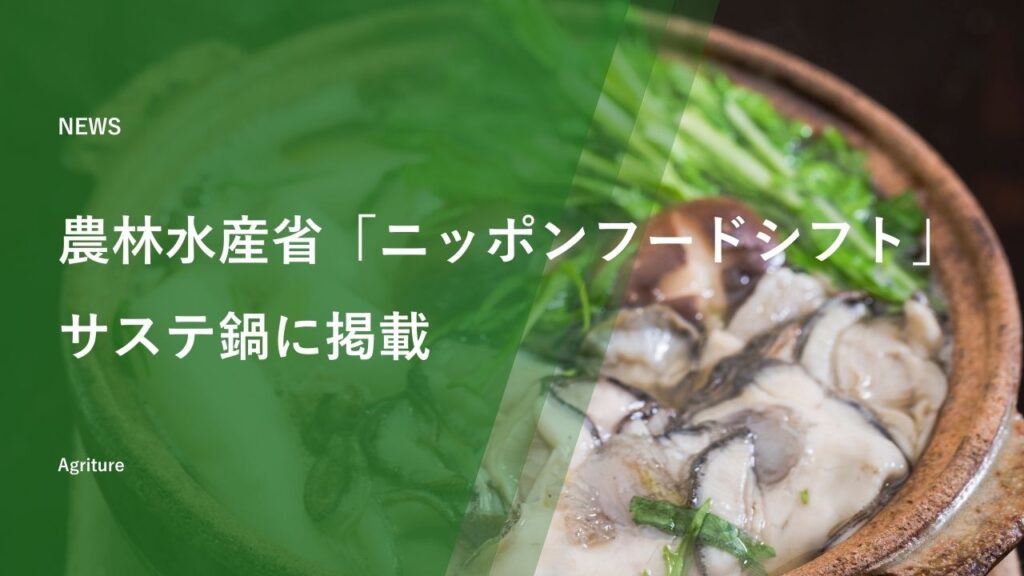
Agriture Inc. has been listed as a joint PR member on the Suste-Nabe special page of "Rethinking Japan Through Food. NIPPON FOOD SHIFT," the food-education and food-security awareness project promoted by the Ministry of Agriculture, Forestry and Fisheries. What Is Suste-Nabe? "Suste-Nabe" is the challenge surrounding our food...
March 10, 2026 -
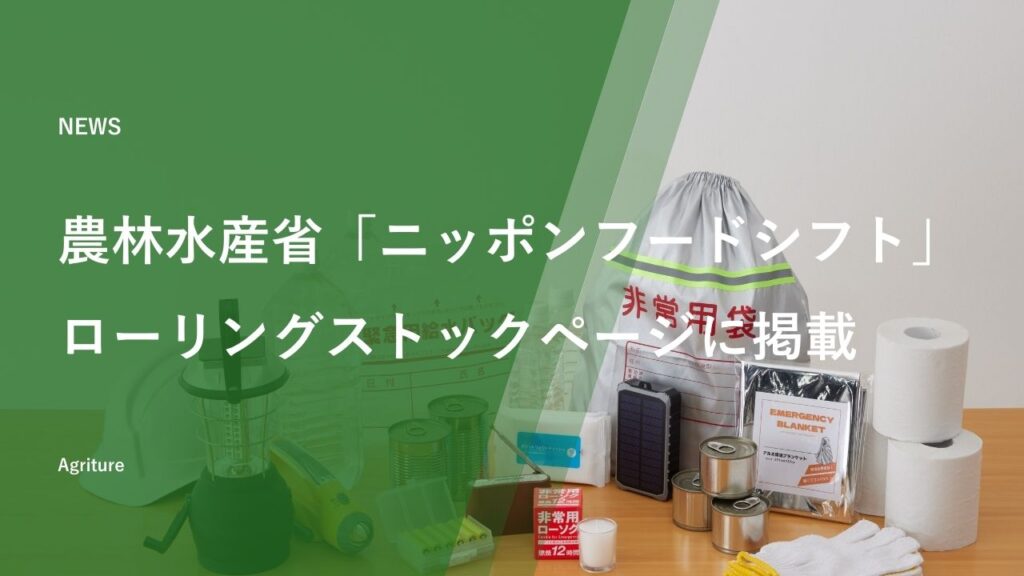
Featured on the rolling-stock page of the Ministry of Agriculture, Forestry and Fisheries’ “Nippon Food Shift”
Agriture Inc. was featured as a joint-PR member on the rolling-stock special page of "Thinking About Japan Through Food. NIPPON FOOD SHIFT," a food-education and food-security awareness project promoted by the Ministry of Agriculture, Forestry and Fisheries. What is rolling stock? Rolling stock is... -

What is the superfood moringa? Its nutritional features and how to choose and drink powder and tea
"Moringa," which has drawn attention lately alongside rising health consciousness. A plant of the horseradish-tree family native to India, it's also called the "miracle tree" and "tree of life" because almost all of its parts—leaves, seeds, roots—can be used. This tree, which grows in tropical and subtropical regions, has astonishing growth... -
Notable upcycle food brands | A sustainable choice
With about 40% of the food produced worldwide being discarded, “upcycle foods” are drawing attention as a new solution that turns that waste into value. This article explains the idea of upcycling—breathing new life into ingredients and byproducts destined for disposal—and the Kyoto-born dried vegetable brand “OY... -

The potential of new businesses using unused resources, and 5 secrets to success
Soaring resource prices, pressure for environmental consideration, the current toward sustainable management. What companies are now called on to have is a “use-it-all” mindset. Drawing attention is the use of “unused resources” overlooked until now—byproducts of discarded crops, ingredients dormant in regions, and what comes out during processing... -
The relationship between non-standard vegetables and food loss | Solutions and case studies
“Non-standard vegetables” discarded without reaching the market for reasons such as appearance or size not meeting standards. Although they are still perfectly edible, many are discarded, making them a major cause of food loss. Today, putting such non-standard vegetables to use is drawing attention... -
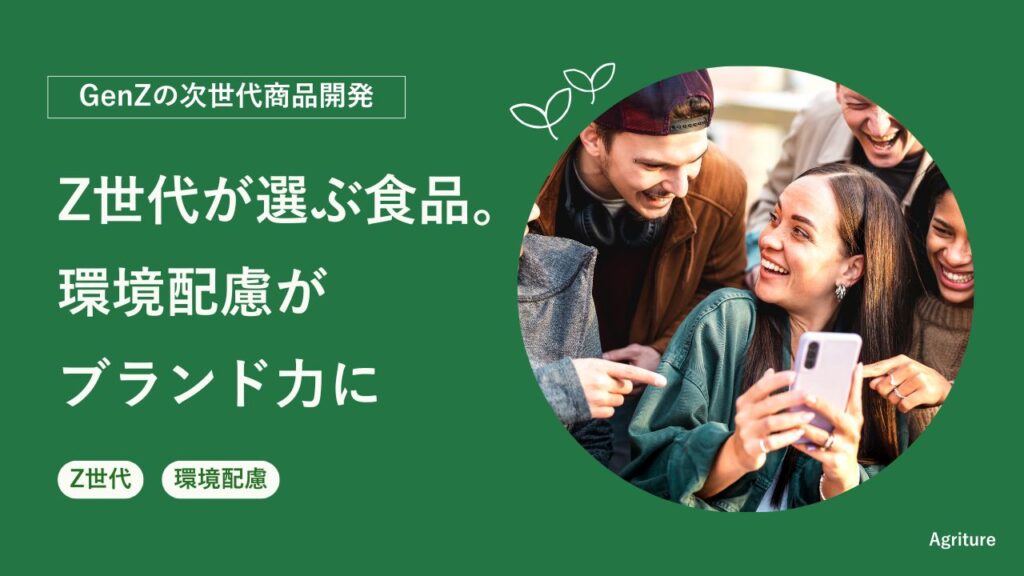
The foods Gen Z chooses. An era when environmental consideration becomes brand strength
Hello, everyone. I’m Kojima of Agriture Inc. We work to transform unused resources—non-standard vegetables and surplus harvest—into new food raw materials through drying and powdering. Working daily to give new value to vegetables, across generations... -
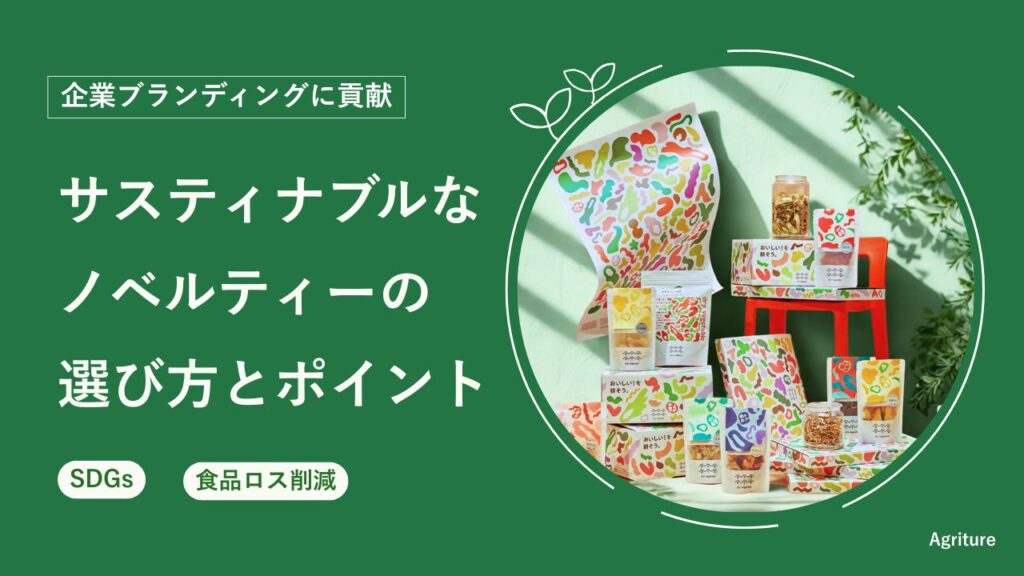
Contributing to corporate branding! How to choose sustainable novelties
As companies work toward realizing a sustainable society, novelty goods too are increasingly required to reduce environmental impact and be sustainable. Among these, dried vegetables are sometimes used as a new kind of novelty that can contribute to the SDGs (Sustainable Development Goals)... -
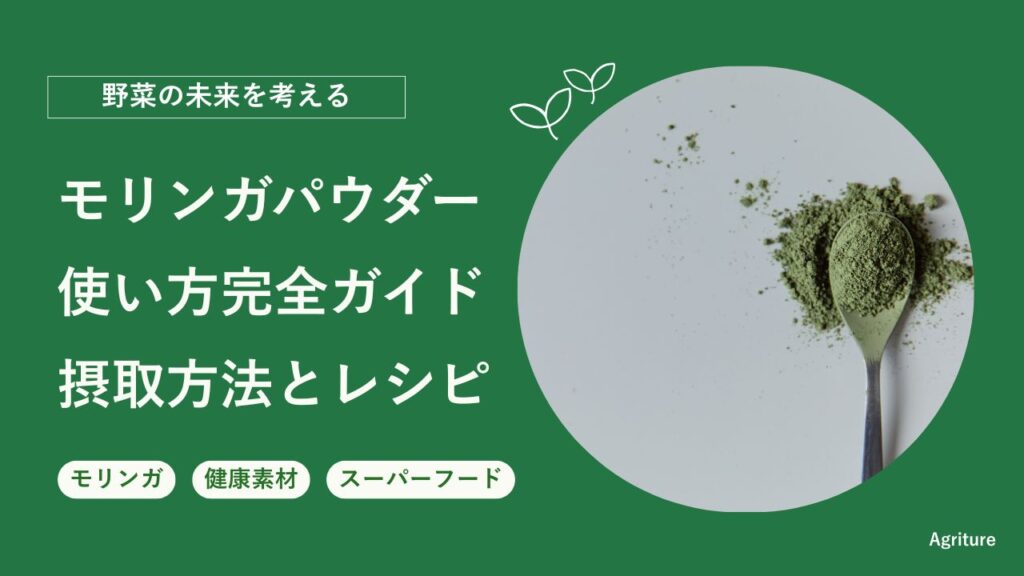
モリンガパウダーはどう使う?飲み方・混ぜ方と保存のコツ
Moringa powder is a health food made by drying and powdering the leaves of moringa, called the "miracle tree." This plant native to India contains over 90 kinds of nutrients, with a good balance of the nutrients our bodies need—vitamin A, vitamin C, calcium, iron, amino acids, and more... -
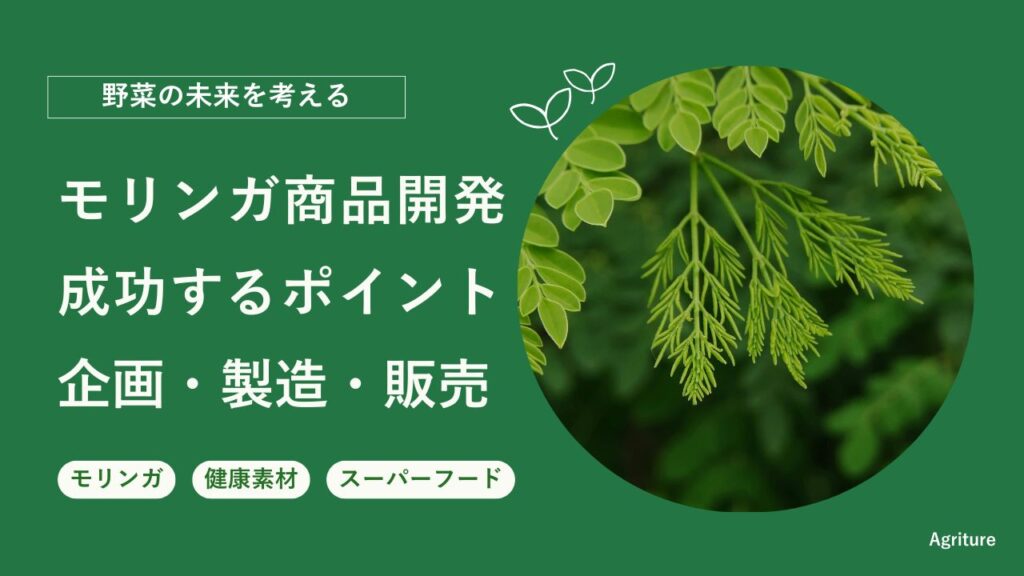
Points for Moringa Product Development: A Winning Strategy for Planning, Manufacturing, and Sales
Alongside rising health consciousness, interest in superfoods is expanding rapidly. Among them, moringa—called a "nutrient-rich tree"—contains a wide range of nutrients such as vitamin A, vitamin C, calcium, iron, and amino acids, and is drawing attention as functional foods, powder products, and green-juice-type... -
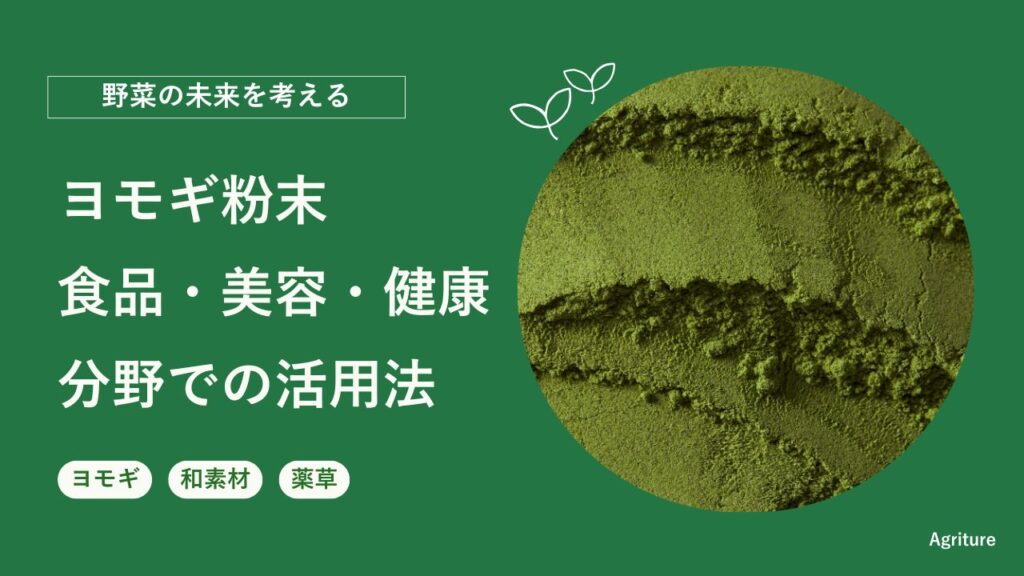
Complete guide to using mugwort powder | Recipes for kusa mochi, bread, and lattes, plus amounts and selection
Mugwort powder (yomogi powder), usable in kusa mochi, mugwort tea, and mugwort bread. Made by drying and powdering the leaves, mugwort powder’s appeal is that it can be mixed directly into dough or drinks without the trouble of rehydrating. Still, many people are unsure “how much to add” and “what uses there are”... -
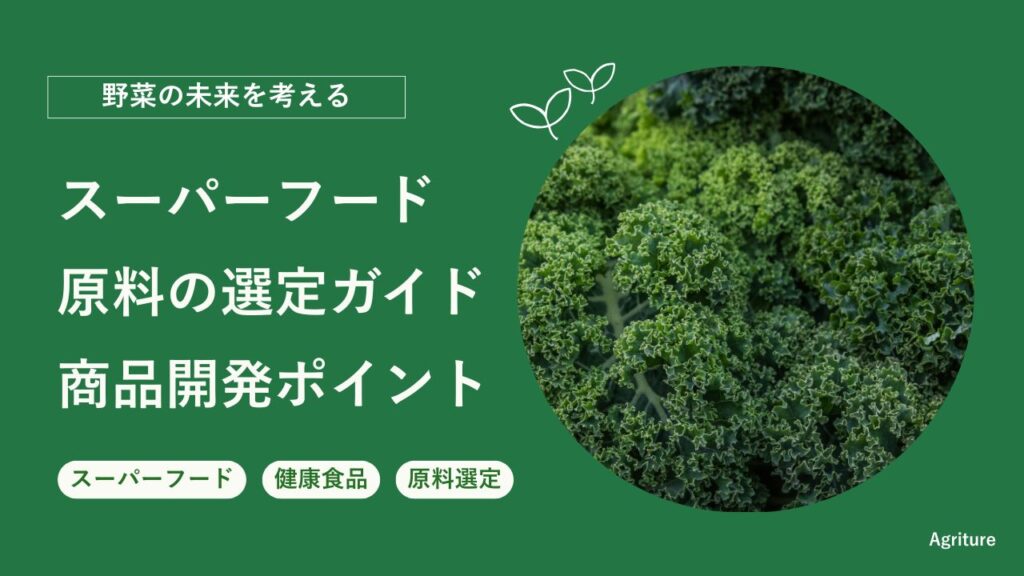
A Guide to Selecting Superfood Raw Materials: Points to Master in Product Development
Alongside rising health consciousness, the functional food market is expanding rapidly. At its core are the nutrient-rich raw materials called "superfoods." A superfood is a food with excellent nutritional balance that contains many kinds of beneficial components, or one in which a particular beneficial component stands out... -
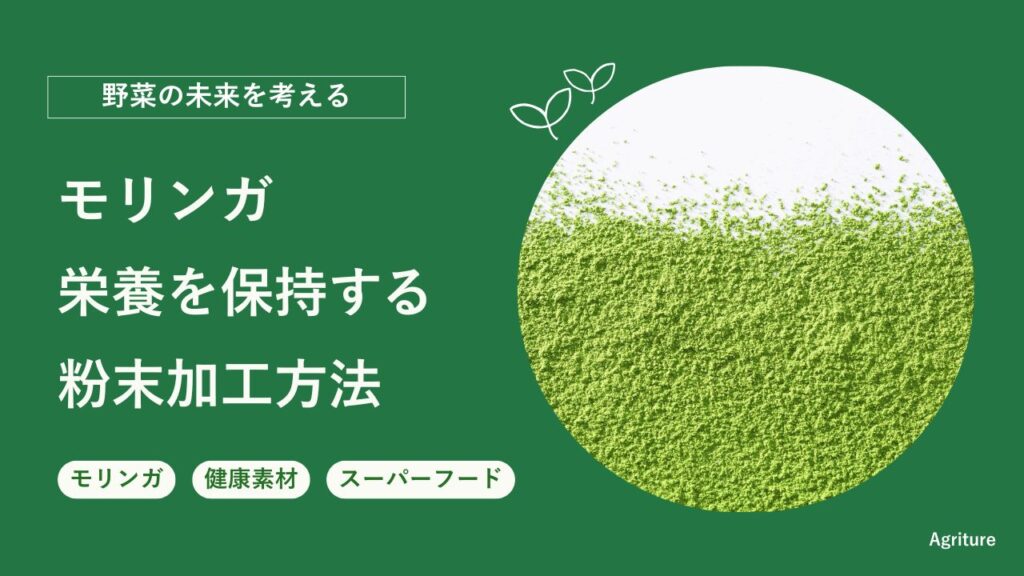
Moringa is called a "nutrient-rich tree" and draws attention as a superfood containing over 90 kinds of nutrients. But to make the most of that rich nutritional value, an appropriate processing method is essential. The powdering process starts from harvest. At a processing facility in Kagoshima Prefecture...
Dried goods are ingredients dried for long-term storage. By removing the moisture, they are characterized by concentrated umami and nutritional components. In Japanese food culture, dried goods have long held an important place. With their excellent shelf stability, the convenience of being usable easily anytime, and their distinctive flavor and texture... -
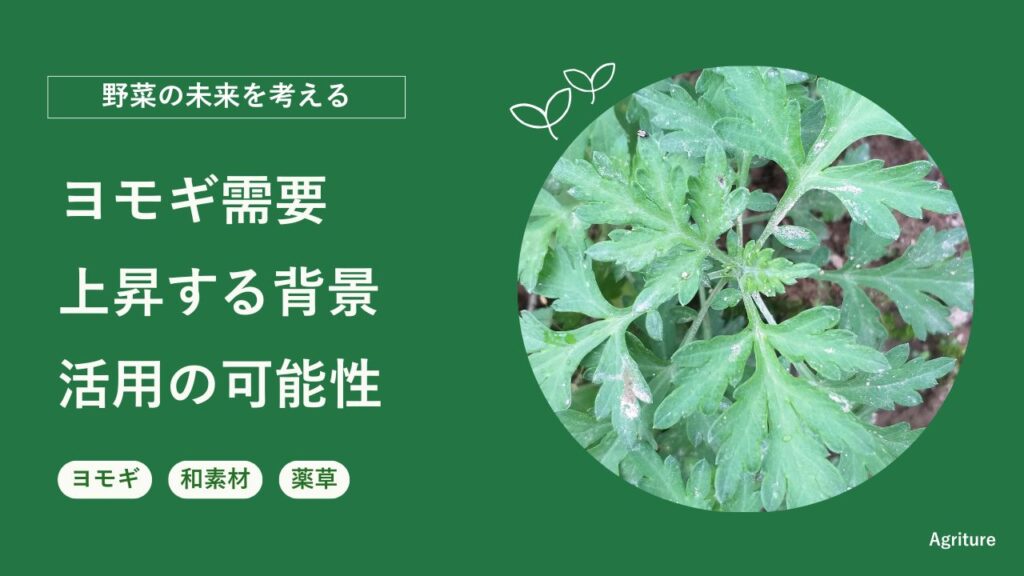
What is behind the rising demand for mugwort? Market trends and the potential for use
Demand for mugwort is rising markedly. Why is this Japanese herb, long beloved in Japan, now drawing so much attention? Behind it lie rising health consciousness, a reappraisal of Japanese herbs, and the discovery of new uses in the beauty and food industries. Especially since 2024... -
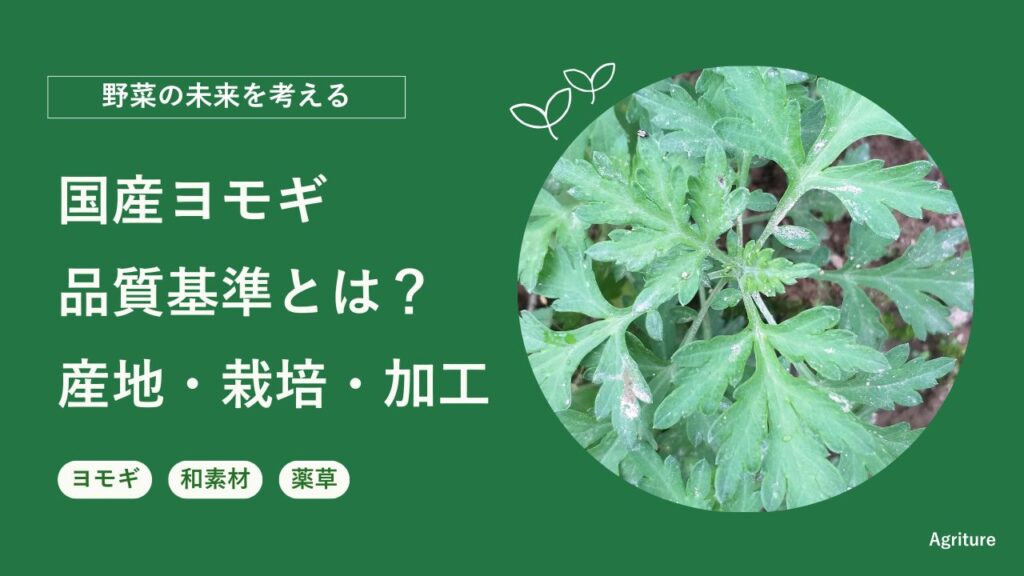
What are the quality standards for domestic mugwort? Points to judge by growing region, cultivation, and processing
When it comes to mugwort quality, what do you think is the most important factor? Many people focus on the words “domestic” and “pesticide-free,” but in fact the biggest factor determining quality is “drying technology.” No matter how fine the mugwort you grow, if nutrition and aroma are lost in the drying process,... -

Why high-priced domestic dried fruit is scarce, and its potential in pet and confectionery development
Dried fruit, whose popularity is rising as a healthy snack and natural ingredient. However, most products distributed in the domestic market are overseas-grown and sugar-added. In fact, “domestic” and “sugar-free” dried fruit is still a limited presence. Why domestic... -
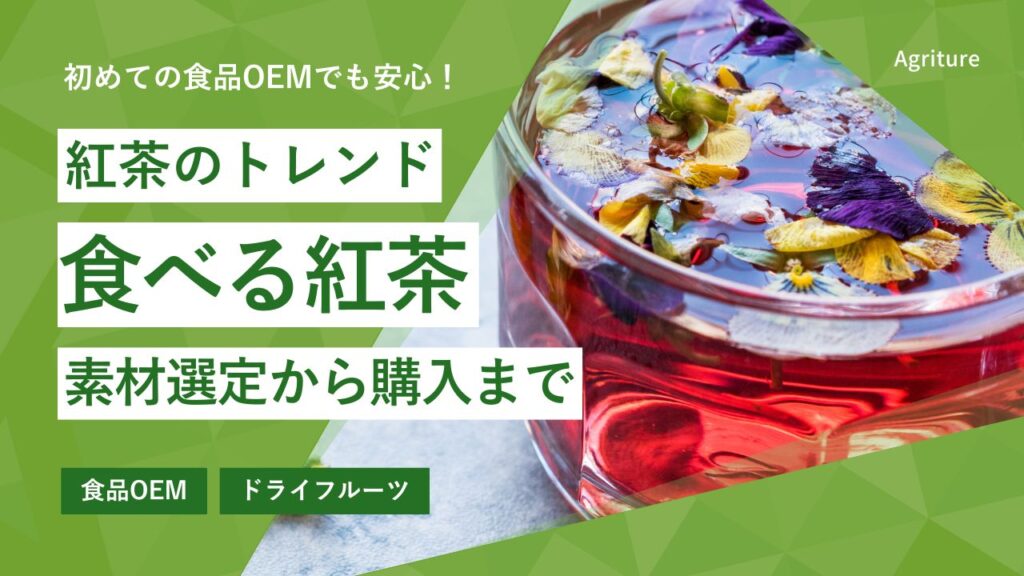
What is edible tea? The appeal of fruit tea, ideal for gifts and novelties
Also searched for as “dried fruit black tea,” “edible tea” is a group of products that pair dried fruit with teas such as black tea, rooibos, and herbal tea; you pour hot water to enjoy the aroma and taste, then eat the fruit itself at the end. Apple, mandarin orange, strawberry... -
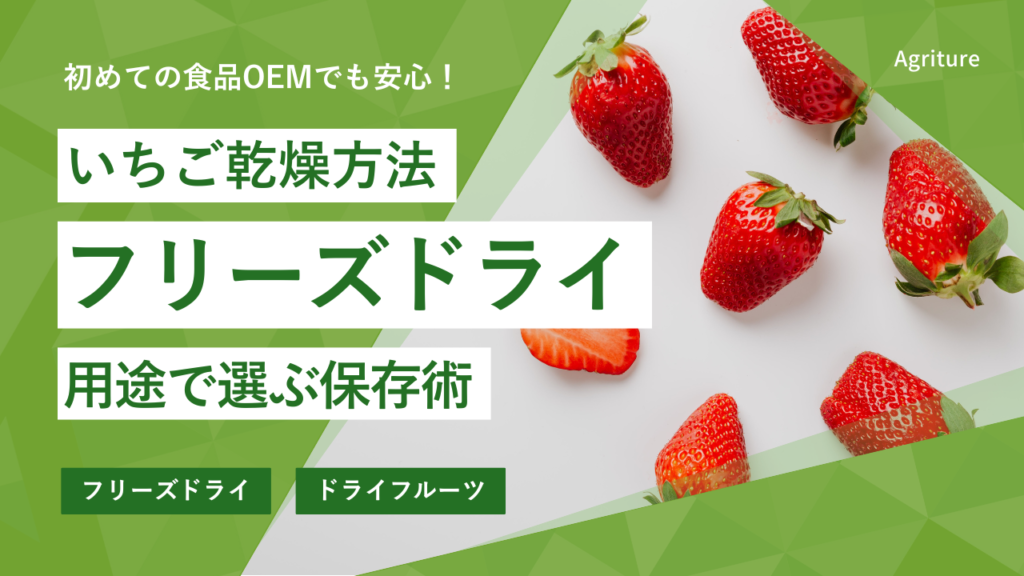
A Thorough Comparison of Strawberry Drying Methods: The Characteristics and Uses of Freeze-Drying, Sun-Drying, and the Oven
Strawberries are fruit prized for their vivid color and sweet-tart flavor, but the drawback is that they don't keep. What draws attention there is the method of drying strawberries for long-term storage. Diverse drying technologies exist—freeze-drying, sun-drying, oven, dried-fruit maker—and each... -
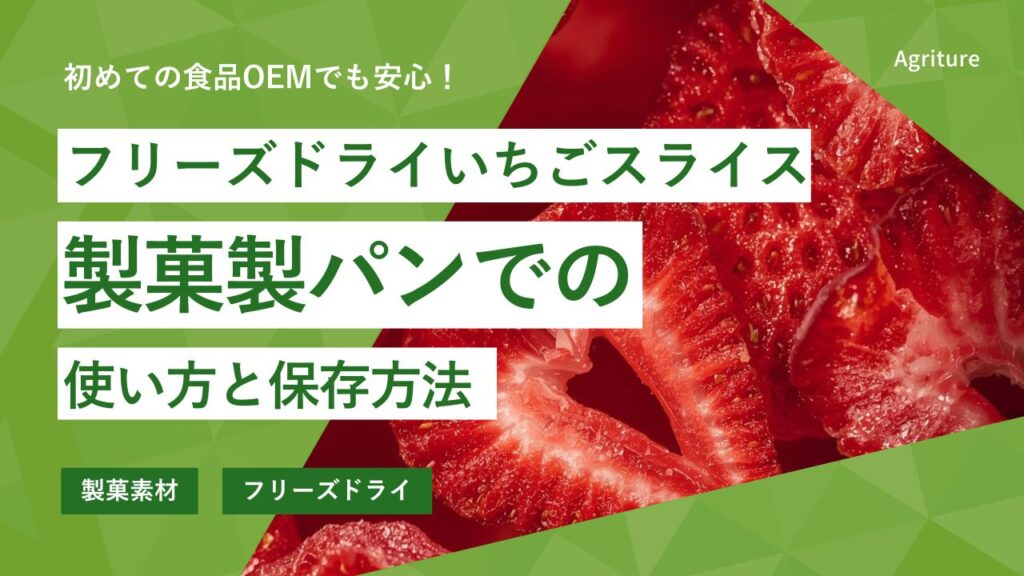
Freeze-Dried Strawberry Slices | Confectionery Uses by Thickness
Freeze-dried strawberry (slice) is an ingredient made by cutting strawberries to a uniform thickness (2–5mm) and then freeze-drying them. Being thin and easy to top with, and with the cross-section pattern vividly retained, it's used for products that "show on the surface"—chocolate, granola, baked goods, latte art, premium cereal, and more... -
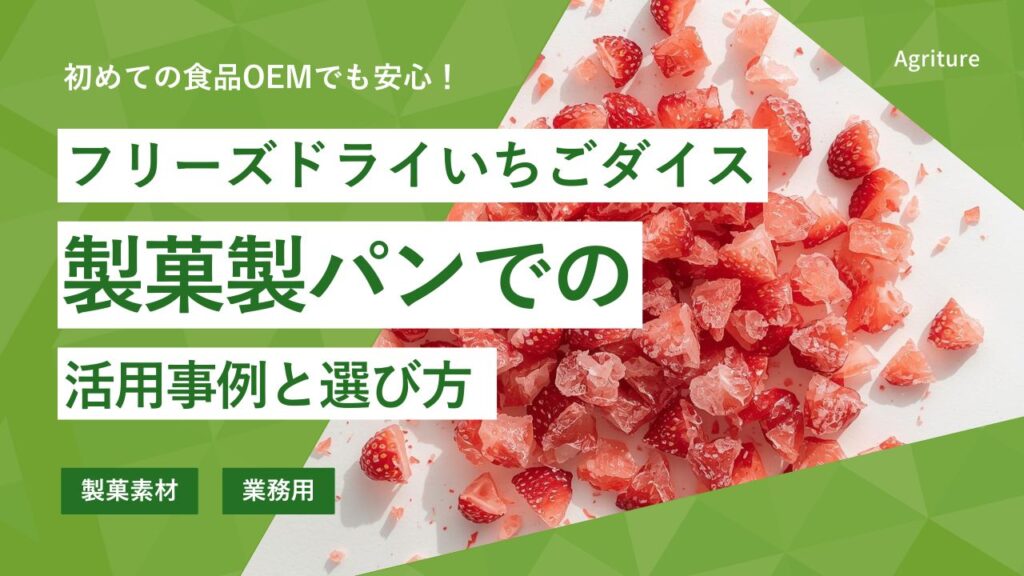
Freeze-Dried Strawberry Dice | Kneading Uses in Confectionery and Baking
Freeze-dried strawberry (dice) is an ingredient made by dicing strawberries into uniform sizes and then freeze-drying them. With uniform pieces easy to knead and mix into dough, it's the "put inside" type for ice cream, cookies, pound cake, granola, cereal bars, and more... -
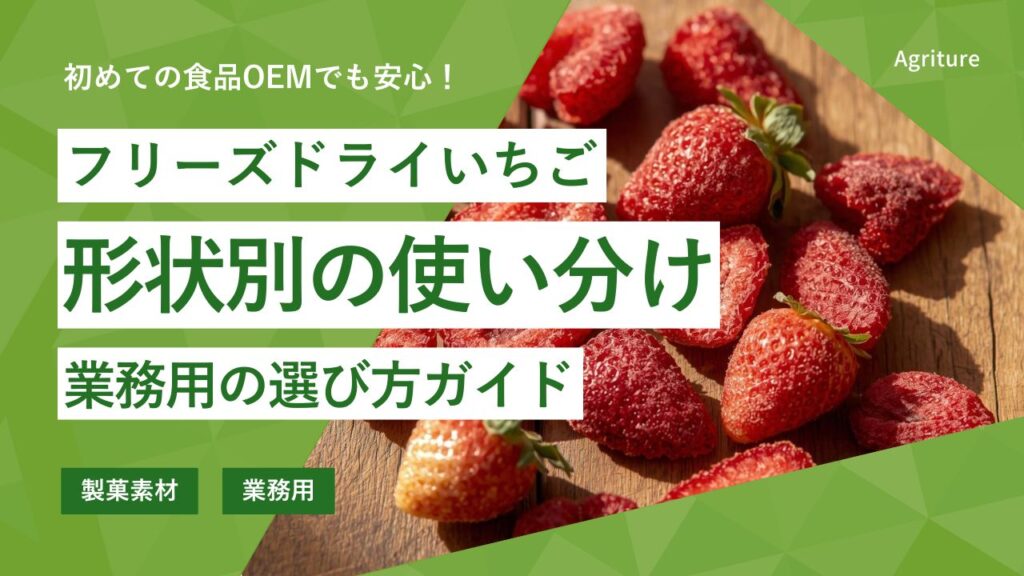
Commercial Freeze-Dried Strawberry | How to Choose Shape and Growing Region
Freeze-dried strawberry is a commercial ingredient adopted in confectionery, baking, granola, chocolate, and gifts. Because it rapidly freezes 90%-water strawberries and then dries them by vacuum sublimation, it becomes lightweight and long-term-storable while retaining color, aroma, and shape. When choosing for commercial use, shape, raw material... -
Freeze-Drying Processing Costs | Price Ranges by Product and Lot
Freeze-drying processing cost ranges vary greatly by the material's moisture content, yield, lot scale, shape (whole / slice / dice / powder), and packaging specification. Finished-product types (miso soup, soup, zenzai) run 80–500 yen per serving, and material types (freeze-dried strawberry, fruit powder... -
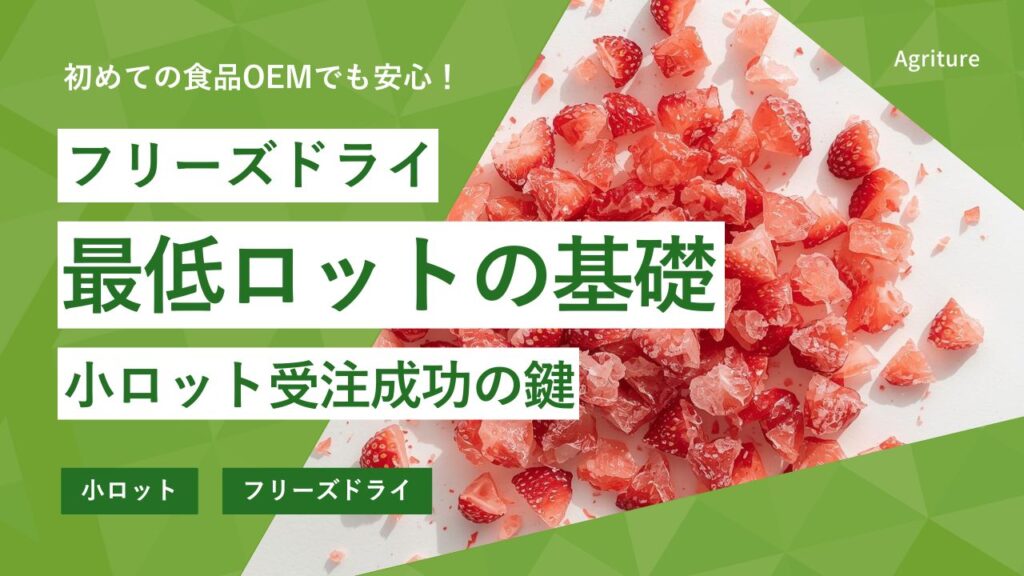
Freeze-Drying Minimum Lots: Small-Lot Ordering and Choosing a Manufacturer
The first snag in placing an OEM order for freeze-drying processing is the minimum-lot wall. For fruits such as strawberry and mango, it's common to require an order of around 500kg of fresh raw material, which becomes a major hurdle for prototyping-stage small D2C and SME manufacturers. This article covers, for material... -
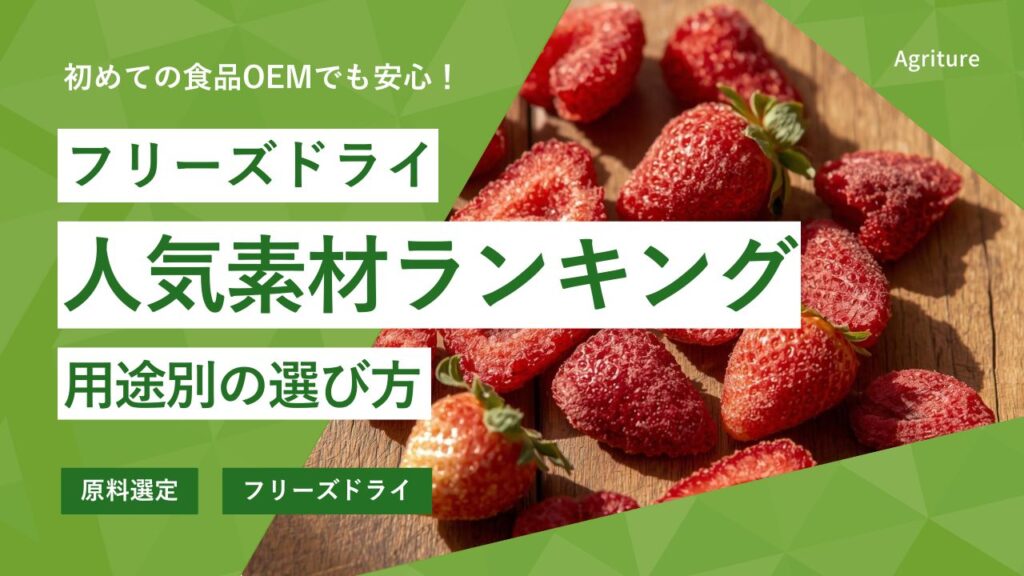
Freeze-Dried Material Ranking | Popularity and How to Choose by Use
Freeze-drying is a drying technology whose adoption is spreading in confectionery, beverages, nutritional foods, and instant foods. Unlike hot-air drying, it sublimates and removes only the moisture without heating, so the material's original color, aroma, and shape tend to remain—freeze-dried strawberry, miso soup, zenzai, and other "hot water or..." -
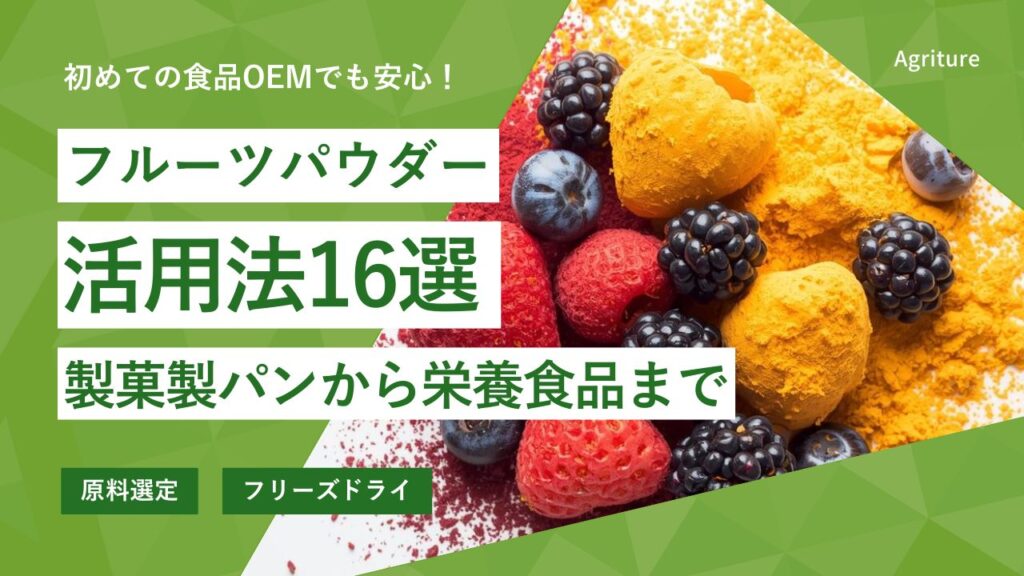
How to Use Fruit Powder | Substitution Design for Confectionery and Sweets
Fruit powder is an ingredient made by powdering fruits such as strawberry, mango, blueberry, apple, pear, yuzu, and banana. In confectionery, sweets, drinks, and nutritional foods, for formulations where fresh fruit or flesh is hard to use (dough or cream where you don't want to add moisture, products premised on heating or long-term storage... -
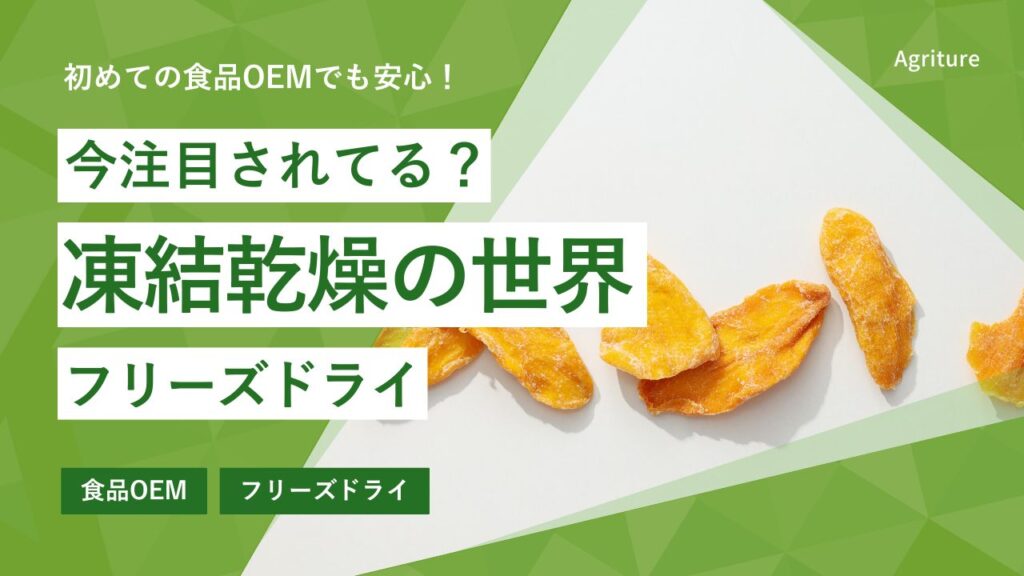
What is freeze-dried? A gentle explanation of the drying technology spreading to miso soup, vegetables, and strawberries
Chocolate-coated strawberry sweets are a common sight in online shops and souvenir stores. They're popular thanks in part to inbound tourism, and those light, crisp strawberries are made by freeze-drying. Freeze-drying isn't just for emergency food and outdoor use; instant... -
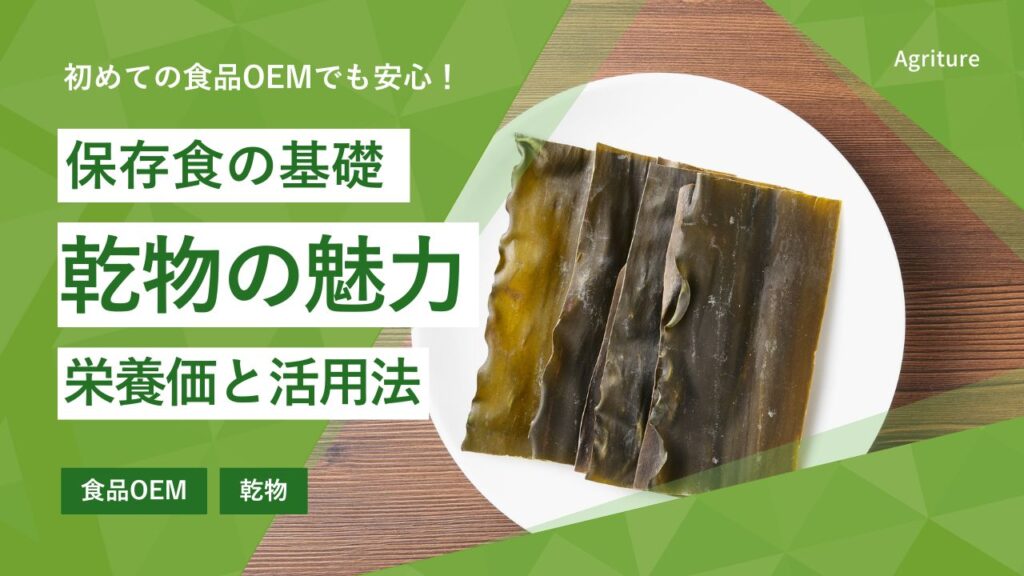
What Are Dried Goods? The Secret of Their Nutritional Value and Uses in the Modern Diet
Agriture partners with farmers around the world, promoting fair trade and sustainable agriculture. Through high-quality agricultural products, we run a fair trade business connecting producers and consumers. -
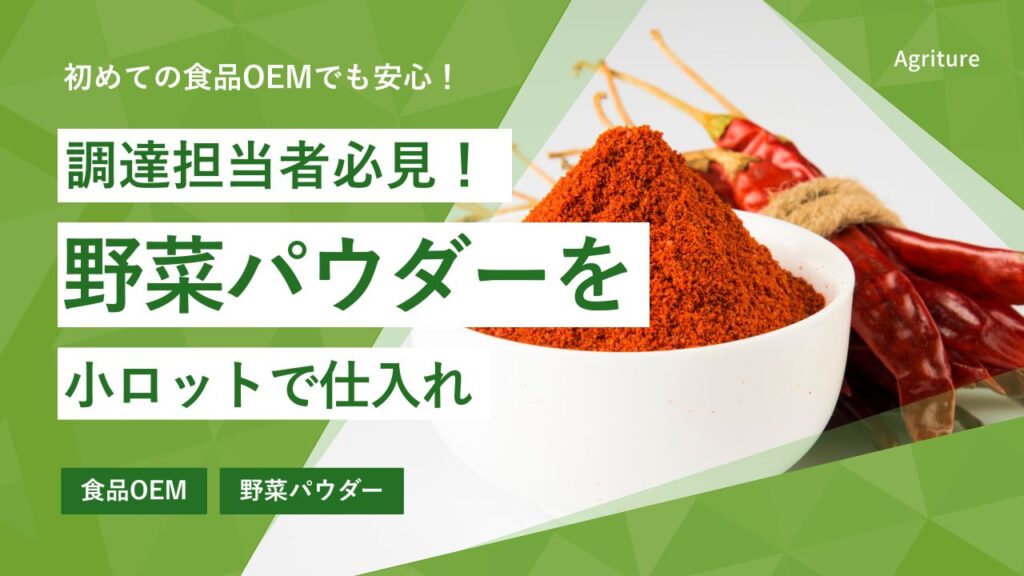
How to source commercial vegetable powder in small lots, and how to use it
Wanting to source commercial vegetable powder in small lots—this is a challenge common to a wide range of businesses: restaurants, food manufacturers, EC operators, confectionery workshops, and more. The unit-price benefit of bulk sourcing is appealing, but considering inventory risk, loss at the prototyping stage, and cash flow, “first, at a scale of about 5–50 kg... -
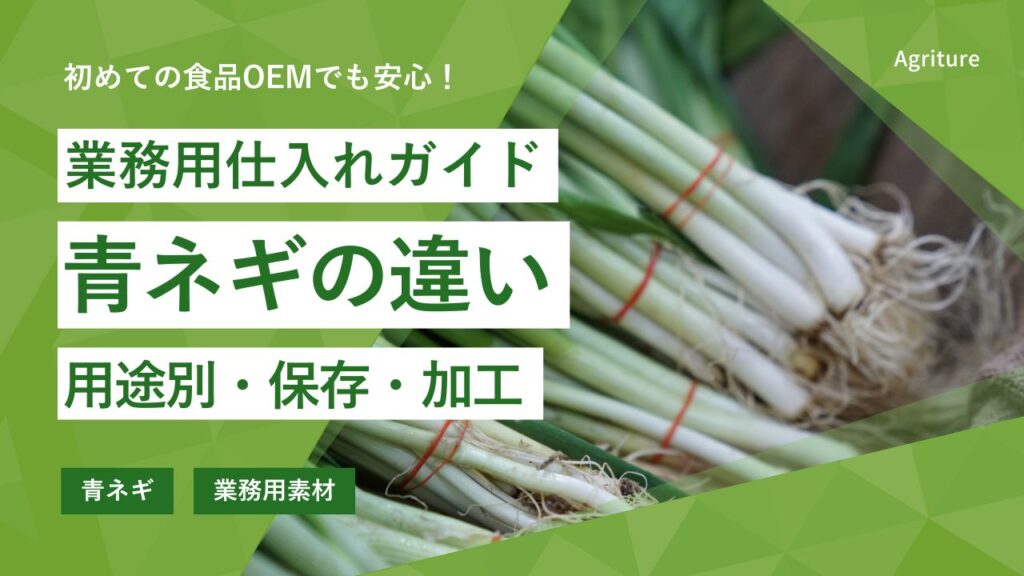
長ねぎと白ねぎは同じもの?ねぎの種類と呼び名を国の資料で確かめる
ねぎの売り場には、長ねぎ、白ねぎ、根深ねぎ、青ねぎ、葉ねぎ、小ねぎ、万能ねぎ、わけぎ、あさつきと、呼び名だけが増えていきます。同じものを指している言葉と、植物としてまったく別の作物を指している言葉が、同じ棚に並んでいるからです。 この記事... -
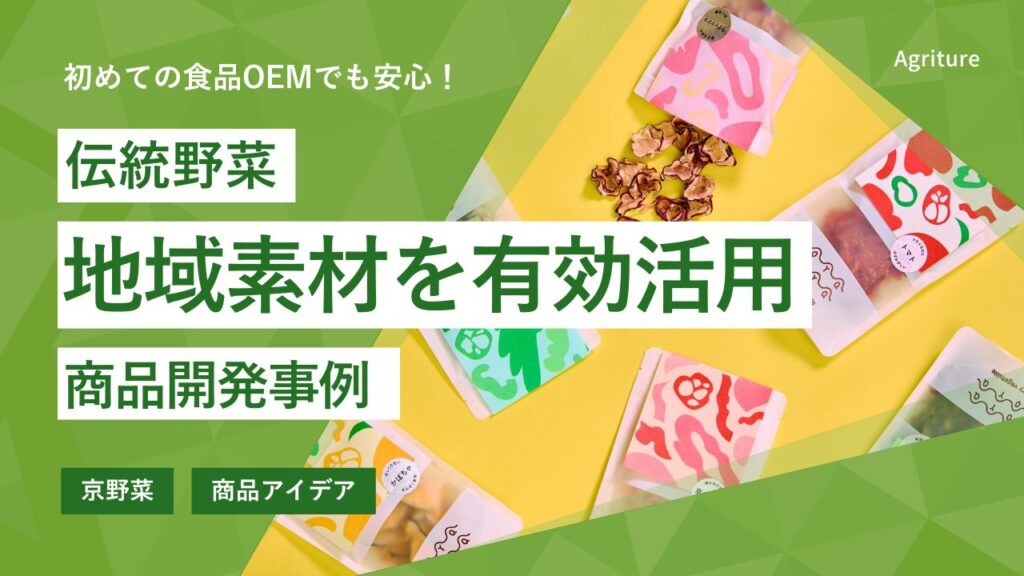
Heirloom vegetable OEM | A commercialization case guide using Kyoto vegetables and local ingredients
Right now, product development that makes use of “regional individuality” is drawing attention. Among these, foods using heirloom vegetables and Kyoto vegetables are strongly supported for the gift market and inbound-oriented products, thanks to their visual beauty and rarity. Especially now, with inbound tourists increasing, region... -
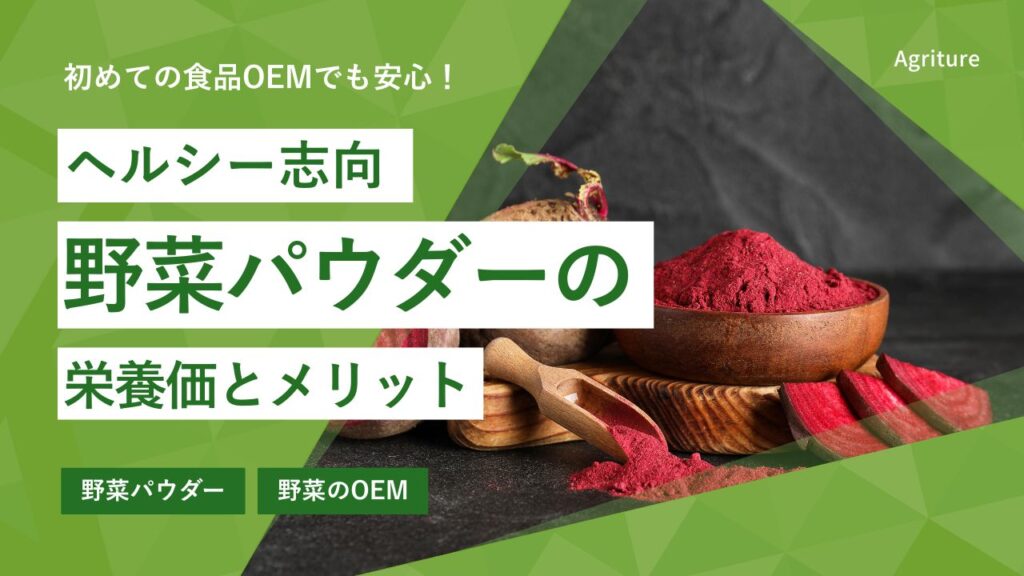
What Is Vegetable Powder? Features, Shelf Life, Uses and a Guide to OEM
Even though we know eating plenty of vegetables every day matters, the effort of cooking and the difficulty of storing them mean it often gets put off in busy days. One ingredient drawing attention as a support for such diets is vegetable powder. Turning vegetables into powder removes water, and the bulk...