
Custom Processing of Dried Vegetables: A Guide to Cut Shape, Blending, and Moisture Content

Summary of this article
As custom processing for dried vegetables, we explain four types—particle-size adjustment, shape processing, blending, and special processing. We cover recommended particle sizes by use from 10 to 200 mesh, choosing between dice cuts from 3mm to 15mm and slices or flakes, a five-step process for designing an original blend of multiple vegetables, four things to consider when blending such as unifying rehydration time and balancing color, and the concrete flow from prototype to production.
"There's no off-the-shelf dried vegetable spec that fits our product just right"—anyone in product development has probably felt this at least once. You want the dried vegetables in your soup cut a bit smaller, a finer mince or flake for a furikake, five kinds of vegetables blended at a specific ratio...
What answers requests that off-the-shelf products can't meet is Custom processing of dried vegetables. From dice, slice, julienne, and mince to flake, you can freely combine cut size and shape to finish a spec that fits your product just right. Agriture handles contract processing of dried vegetables at our own factory in Kyoto, flexibly accommodating everything from cut-size adjustment, shape processing, blending, and moisture-content specification.
This article explains, concretely, what custom processing can do and what to think about when deciding the spec.

We have materials available to help you understand dried processing OEM
Agriture OEM, flexibly handling everything from small lots to large lots
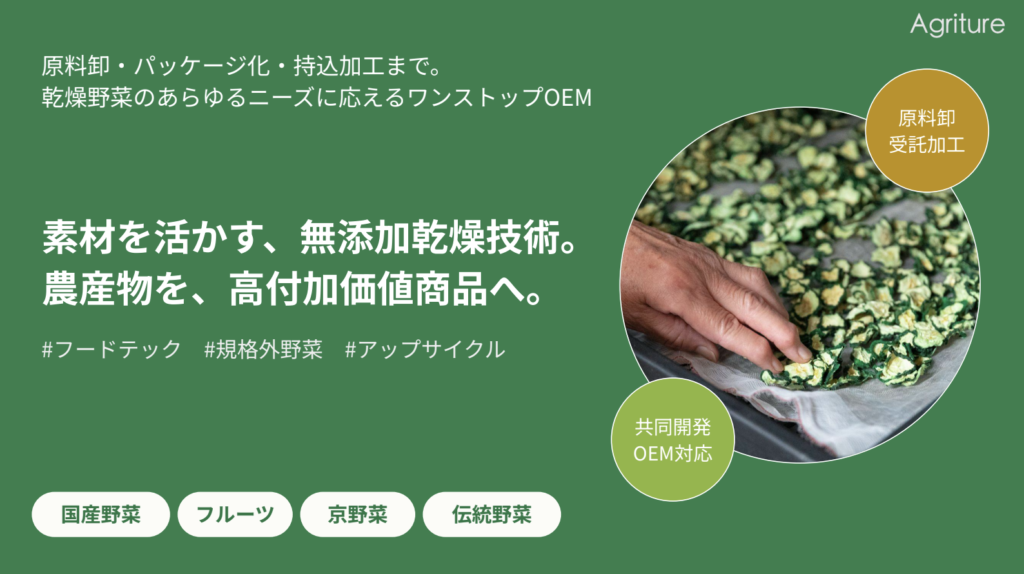
- OEM available from small lots of 10 kg
- Drying of brought-in raw materials also possible
- Support from processing to filling in one place
TOC
What custom processing of dried vegetables can do
The big picture of processing types
Custom processing, broadly speaking, breaks down into four types. Which part of the product design you want to customize changes the best way to place your request.
| Customization axis | What can be adjusted | Example uses it suits |
|---|---|---|
| Cut shape and size | Dice, slice, julienne, mince, flake | Soup ingredients, furikake, instant-noodle garnish |
| Blending | Mix multiple items at any ratio | Five-vegetable mix, furikake, ochazuke |
| Moisture content | Adjustable from 5 to 15% (balancing room-temperature shelf life and texture) | Long-life products, emergency stock, bagged commercial goods |
| Ingredient specification | Domestic, specific origin, contract farmers, off-spec utilization | PB products using Kyoto vegetables, food-loss-appeal products |
The difference between off-the-shelf and custom products
Whereas off-the-shelf products are mass-produced to a general-purpose spec, custom products are optimized for your own product. Because you can start from small-lot prototyping, development is flexible and quick.
Off-the-shelf
- Minimum lot: from 1kg (maker standard)
- Cut size: maker-defined
- Blending: fixed
- Lead time: short (in-stock items)
- Price: low
Custom
- Minimum lot: prototyping from 100g
- Cut size: specified in the spec sheet
- Blending: free design
- Lead time: 2 to 4 weeks for prototype, 6 to 12 weeks for production
- Price: somewhat higher (the value of distinctiveness)
Features and uses by cut shape
The most-requested item in custom processing is specifying the cut shape. the texture, rehydration time, and appearance in the final product Because it governs these, the shape you choose directly affects how finished the product feels. Below, we lay out the features, suited uses, and Agriture product examples for six main shapes.
Dice cut (cubes / 3 to 10mm)
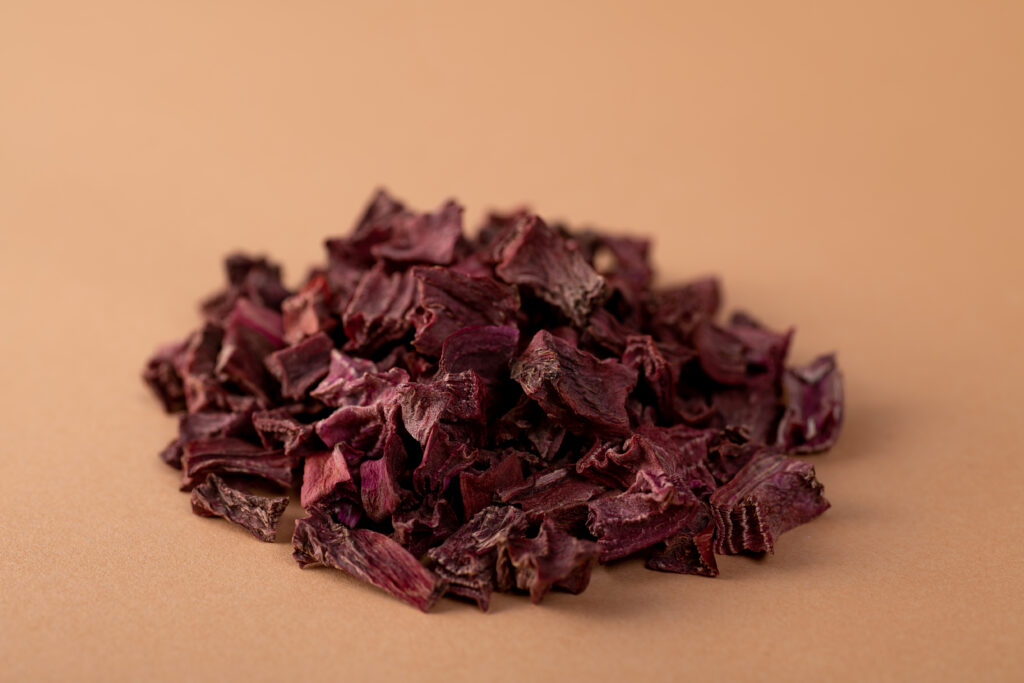
Cutting vegetables into cubes to rectangular blocks. Suits products that want to keep a chunky, ingredient-forward feel. Widely used in minestrone, pilaf, takikomi gohan, commercial cup soups, and restaurant prep; smaller 3 to 5mm suits instant soups, while larger 8 to 10mm suits prepared dishes and an ingredient-forward appeal.
Agriture product examples:Dried kabocha squash・Dried Shogoin daikon's dice cut is available as a commercial soup ingredient. Vegetables with soft, high-moisture flesh (such as tomato) do not suit dicing and are supplied as round slices.
Slice (thin cut / 2 to 5mm thick)
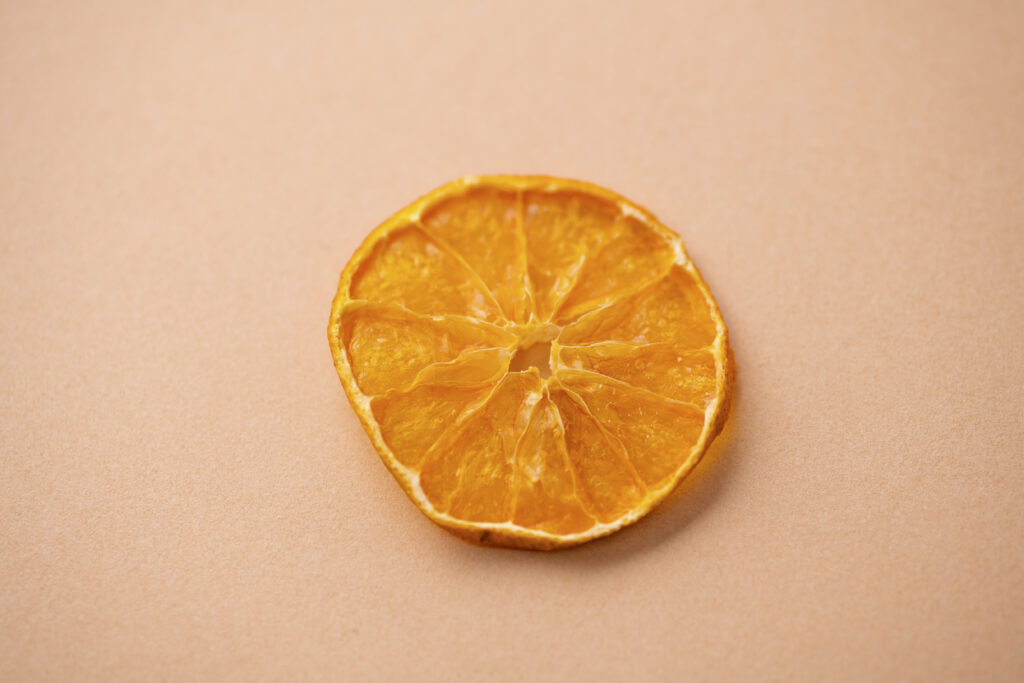
Cutting thin in rounds or quarter-rounds. It takes to dashi easily and is a standard shape for miso soup, Japanese-style soups, and simmered dishes. Thinner 2 to 3mm suits instant soups, while thicker 4 to 5mm suits simmered and prepared dishes. It also adds color to the appearance.
Agriture product examples:Dried tomato (Kyotango, Kyoto / Momotaro-type large fruit) round slices are the standard spec, supplied commercially across a wide range from pasta and appetizers to bakery and chilled menus. Dried Shogoin daikon's quarter-round slices are used for Japanese-style soup and simmered-dish ingredients, and Dried lemon・Dried mandarin's slices are used in tea blends and drink bases.
Julienne (fine strips / 1 to 3mm wide x 20 to 40mm long)
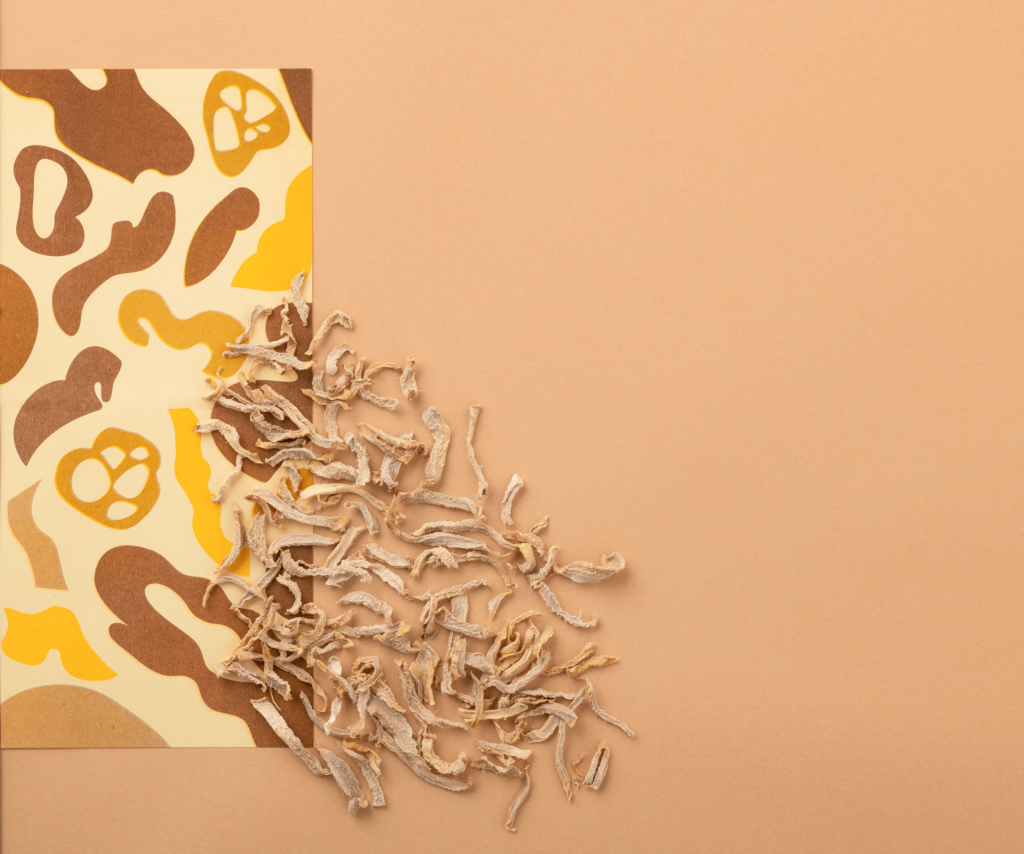
Cutting into thin, longer strips. Easy to use in instant-noodle garnish, stir-fries, and dressed dishes, with a short rehydration time. It can also be used in kinpira-style Japanese side dishes and as a furikake ingredient.
Agriture product examples:Dried Kujo green onion's julienne is a staple product for instant-noodle garnish and as a condiment. Dried burdock (sasagaki)・Dried Kyo-kurenai carrot's julienne is supplied commercially for kinpira-style prepared dishes and dressed dishes.
Mince (1 to 3mm)
Cut finer still. Used in furikake, hamburg steak, gyoza filling, and products for children; its strength is how well it clings to and mixes into rice and minced products. It also suits sprinkling on as is, without rehydrating.
Agriture product examples:Dried Kujo green onion's mince is popular for furikake and as a condiment, and Dried spinach・Dried komatsuna's mince is also supplied for baby food and care food.
Flake / chip (irregular, flat)
Processed into irregular thin flakes. Used in toppings, cereal, snacks, and furikake. In some cases, thin flakes that break naturally during drying are sorted out; in others, they are intentionally cut and dried.
Agriture product examples:Dried apple・Dried banana's chips are supplied commercially for cereal, granola, and toppings. Dried beetroot's flakes have a track record as a color accent for salads and smoothies.
Stick / special shapes (pet-and-human / portable snack)
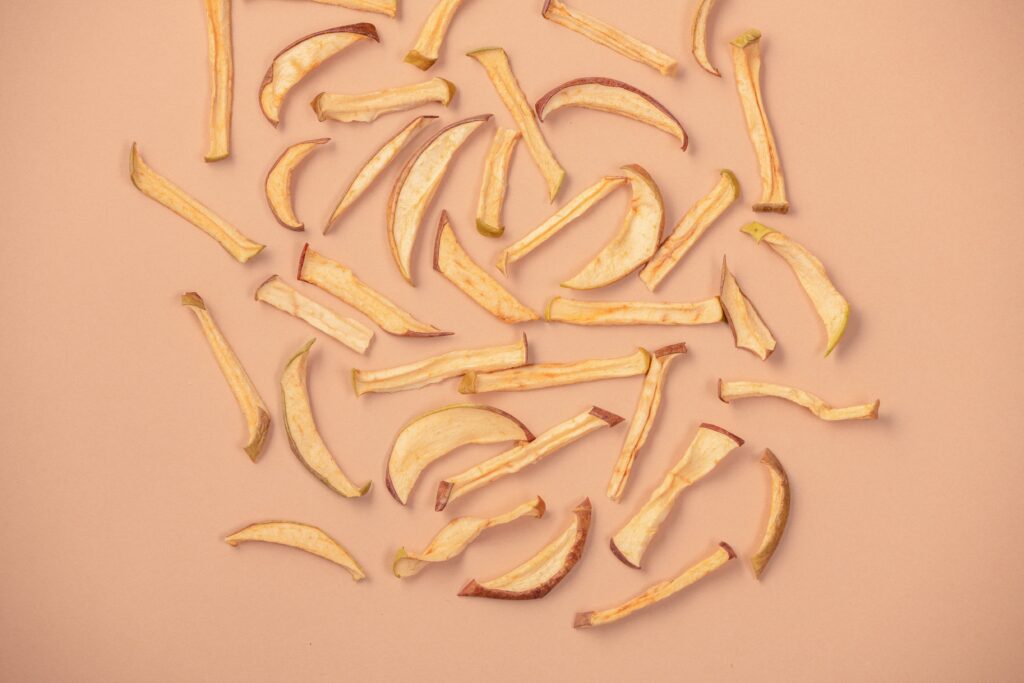
Special shapes to match the use, such as sticks and finger shapes, can also be discussed. Pet treats, portable snacks for children, petal shapes for gifts—you can design shapes that set you apart from competitors.
Agriture product examples:In a collaboration with One's Daily,we processed Nagano-grown "Hatorazu apples" into a stick shape. They were commercialized as an additive-free treat that people and dogs can eat together.
Powder (powdered / 100 to 200 mesh)
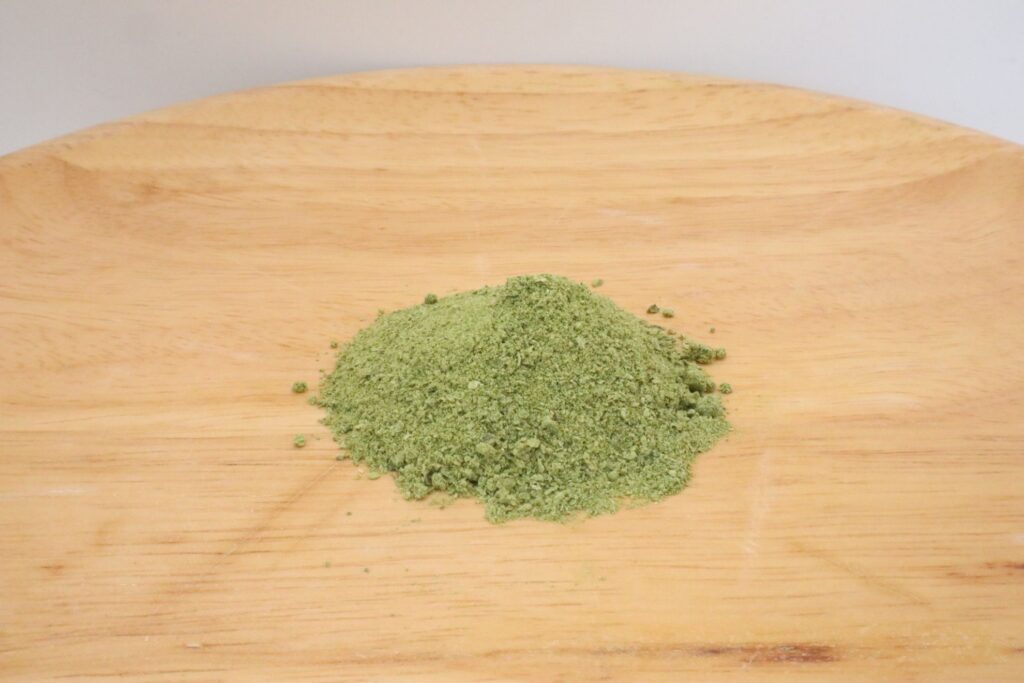
The finest shape. Used as an ingredient for confectionery, beverages, baby food, functional foods, and seasonings. Because this is handled on a separate line from dried vegetables, for details see Commercial vegetable powder | Agriture’s lineup.
💡 Tips for specifying cut shape
There is a trade-off: finer means faster rehydration but flavor is more easily lost, while larger keeps the texture but is more prone to uneven drying. At Agriture, for the first prototype we prepare several samples in different cut sizes so you can actually rehydrate them in hot water and compare.
FOR BUSINESS
乾燥野菜を業務用でお探しですか
国産の野菜・果物を乾燥し、必要に応じて粉砕してお出ししています。扱っている品目は100種前後で、規格は 乾燥品の一覧・パウダーの一覧 に掲載しています。
少量でのご購入は、姉妹ブランドの通販サイト OYAOYA で承っています。
Schedule and cost sense, from prototype to production
A typical schedule
| Stage | Lot guideline | Lead-time guideline |
|---|---|---|
| First prototype | 100g〜1kg | 2–4 weeks |
| Refinement prototype (spec adjustment) | 1〜3kg | 2–4 weeks |
| Small-lot mass production | 5〜20kg | 3 to 6 weeks |
| Full mass production | 50kg〜 | 6–12 weeks |
A guide to the minimum lot
Agriture also supports small-lot prototyping from 100g we can handle. Rather than jumping straight to a production order, it is the standard for failure-free product development to iterate the prototype about three times to nail down the spec. At the production stage we can handle mid-size lots from 5kg to 50kg, and large orders are adjusted in units of 50kg to 500kg.
First prototype (100g to 1kg / 2 to 4 weeks)
Based on the spec sheet, we prototype a base proposal for cut shape, moisture content, and blend ratio in a small lot. The aim here is to confirm "whether the direction is right," so we prioritize gathering material for judgment over the degree of finish. Points to note: because a small sample size makes reproducibility at production scale more likely to differ, if you can't judge, prototype different sizes at the same time.
Refinement prototype (1 to 3kg / 2 to 4 weeks)
Based on feedback from the first prototype, we nail down the spec. The main work is adjusting cut thickness in 0.5mm increments, moisture content in 1% increments, and fine-tuning the blend ratio. Points to note: moving to production without fully firming up the spec here tends to surface issues in the production lot, so it is safer to iterate the refinement prototype until you are satisfied.
Small-lot production (5 to 20kg / 3 to 6 weeks)
After the spec is fixed, we run test production on the production equipment. When the prototype and production equipment differ, yield and finish can vary, so we confirm reproducibility at this stage. Points to note: taking inspection and quality checks more thoroughly than usual on the first production lot helps prevent trouble from the next lot on.
Full production (from 50kg / 6 to 12 weeks)
A full production lot matched to product launch and regular supply. Because it depends on the ingredient's season and the drying line's schedule, advance ordering three to six months ahead is advisable. Points to note: for vegetables with a short season (Kyoto and heirloom vegetables), early agreement on an annual plan is essential, and sudden additional orders may be hard to accommodate.
We have materials available to help you understand dried processing OEM
Agriture OEM, flexibly handling everything from small lots to large lots
- OEM available from small lots of 10 kg
- Drying of brought-in raw materials also possible
- Support from processing to filling in one place
Agriture-handled vegetables x recommended cut shapes
To help decide your custom-processing spec, we have organized, for Agriture's representative handled vegetables, which cut shape suits each. Choosing a shape matched to each item's features (moisture content, fiber direction, pigment) raises how finished the product feels.
| Item | Recommended cut shape | Suited use |
|---|---|---|
| Dried Kujo green onion | Julienne (1 to 3mm) / mince / powder | Condiment, furikake, instant-noodle garnish, seasoning |
| Dried Shogoin daikon | Quarter-round slice (2 to 3mm) / dice (5mm) | Japanese-style soup, simmered dishes, minestrone |
| Dried Manganji pepper | Round slice (3mm) / julienne | Condiment, color accent, pizza topping |
| Dried tomato | Round slice only (dicing not possible) | Pasta, appetizers, bakery, chilled menus |
| Dried Kyo-kurenai carrot | Julienne / quarter-round slice | Dressed dishes, miso soup, takikomi gohan |
| Dried spinach・Dried komatsuna | Julienne / mince | Soup, sesame-dressed dishes, furikake |
| Dried kabocha squash | Dice (8 to 10mm) / powder | Soup, pilaf, confectionery base |
| Dried beetroot | Slice (2mm) / powder | Salad, confectionery coloring, drinks |
You can view Agriture's full lineup of commercial dried vegetables on the[Commercial] Dried vegetables | Domestic dried-goods ingredients page. For each item, you can discuss cut shape, moisture content, origin, and packaging spec.
FOR BUSINESS
乾燥野菜を業務用でお探しですか
国産の野菜・果物を乾燥し、必要に応じて粉砕してお出ししています。扱っている品目は100種前後で、規格は 乾燥品の一覧・パウダーの一覧 に掲載しています。
少量でのご購入は、姉妹ブランドの通販サイト OYAOYA で承っています。
FAQ
From a custom-processing request to delivery, how quickly can it be done at the fastest?
As a guide, prototyping takes 2 to 4 weeks and production 6 to 12 weeks after the prototype is complete. If it is close to an existing spec it can be shortened, but it varies with the ingredient's season and the drying line's operating status.
Can you also handle secondary processing (milling or blending) of dried vegetables made by another company?
Yes. Using existing dried vegetables as raw material, we accept secondary processing such as milling, cut adjustment, and blending. We may ask you to confirm the raw-material lot and provide a spec sheet.
Are there vegetables unavailable depending on the season?
Kyoto and heirloom vegetables are seasonal, and some items are hard to source outside the harvest period. We recommend either placing early orders under an annual plan, or drying and stockpiling in bulk during the peak season.
Is custom processing possible with organic ingredients?
It is possible for some items. We decide in advance whether to use JAS-organic-certified ingredients or to proceed with pesticide-free ingredients from contract farmers. Because certified labeling has extra requirements, please consult us at the spec stage.
Are blend recipes kept confidential?
They are kept confidential under a non-disclosure agreement (NDA). Blend ratios, ingredient origins, and processing conditions are managed per project, and the same recipe is never used for another company.
Can I consult you about the ingredient names on the food label?
Yes. In line with the order of ingredient names (by amount used, largest first), allergen labeling, and the rules for listing designated raw materials, we present a labeling proposal based on the spec sheet. We also check it from the standpoint of the Pharmaceutical and Medical Device Act and the Act against Unjustifiable Premiums and Misleading Representations.
Summary | Custom processing is decided by the spec sheet and prototyping
For custom processing of dried vegetables, the four axes of cut shape, blend, moisture content, and ingredient define the spec, and the standard is to iterate prototypes from 100g about three times before moving to production. Cut shape in particular directly affects the texture, rehydration time, and appearance of the final product, so the optimal shape for each use should be decided by comparing prototype samples.
In blend design, the basic ratio is a lead item (50 to 70%) plus supporting and accent items (30 to 50%), keeping four points in mind: moisture content, specific gravity, color balance, and flavor compatibility. Because it is kept confidential under an NDA, it becomes the core of a highly distinctive PB product.
The suited cut shape differs by item—julienne or mince for Kujo negi, quarter-round slice or dice for Shogoin daikon, slice or powder for beetroot—determined by each vegetable's fiber, moisture, and pigment. At our production sites in Kyoto and Kyotango, Agriture takes on contract custom processing of domestic ingredients sourced from contract farmers nationwide, with low-temperature drying at 45°C as the standard.
Three-line summary
- Custom processing decides the spec by the four axes of cut shape, blend, moisture content, and ingredient
- Prototyping from 100g, production from 50kg. Nailing down the spec over three prototypes is the standard
- The suited cut shape differs by item. Choose by the traits of fiber, moisture, and pigment
You can view Agriture's commercial dried-vegetable lineup on the[Commercial] Dried vegetables | Domestic dried-goods ingredients page. To discuss custom processing, Wholesale and OEM information is the way to reach us.
Download the OEM contract processing materials
We will send the materials to your email address based on the information you provide.
Recommended reading
→ [Commercial] Dried vegetables | Domestic dried-goods ingredients
→ 7 Criteria for Judging a Commercial Dried Vegetable Supplier
→ Dried Vegetable Mix OEM: A Guide to Formulation Design and Major-Company Track Records
If you are considering product development with off-spec or your own farm's vegetables:From planning to processing, materials, package printing and novelties, you can consult us through a single point of contact. → Learn more about one-stop product development
- Selection Criteria and Quality Requirements for Dried Vegetable Raw Materials for Pharmaceuticals and Health Foods
- Corporate gift trends 2026 | How to choose health-conscious gifts
Author of this article
Related articles
-
 7 Criteria for Judging a Commercial Dried Vegetable Supplier
 -
How to Rehydrate Dried Vegetables: Tips for Commercial and Restaurant Use
-
Dried Vegetable Price Ranges: Supermarket and Online Guidelines and How to Choose by Volume
-
Raw Material Risk Management for Food Manufacturers and How to Use Dried Vegetables
-
HACCP Compliance in Food Processing: A Practical Guide to the Necessity by Processing Form and Use
-
Selection Criteria and Quality Requirements for Dried Vegetable Raw Materials for Pharmaceuticals and Health Foods
-
How to Choose Dried Vegetable Kayaku for Instant Noodles: Rehydration Performance and Quality Standards
-
Dried Vegetable Raw Materials for Convenience Store Bento: Techniques for Color, Texture, and Cost Improvement