Dried Manganji pepper


TOC
Product overview of dried Manganji pepper
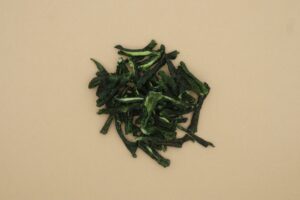
The Kyoto vegetable “Manganji pepper,” said to have originated in Maizuru, Kyoto Prefecture, is characterized by its thick, large size and refreshing aroma a sweet pepper. Even when dried, its thickness and satisfying bite remain intact, and the fresh aroma and clean flavor characteristic of a green pepper stand out.
Used as is in stir-fried simmered dishes or mixed rice, it adds color to Japanese cuisine. Easy to use as a topping for simple oil-based pasta, pizza, or bread as well, it serves as a savory ingredient that enhances menus, whether Japanese or Western.
Three commitments Agriture values
01 A Kyoto-vegetable brand originating in Maizuru
Manganji pepper is a Kyoto brand vegetable said to have originated in Maizuru, Kyoto Prefecture. Bearing the name “Kyoto vegetable” reinforces a product's storytelling and brand story.
02 Thick and juicy, satisfying to eat
Because it is a particularly thick variety even among sweet peppers, a firm texture remains even after drying. It becomes a starring ingredient with real presence even in dressed dishes and mixed rice.
03 An all-purpose sweet pepper with almost zero heat
Rather than spicy, it is mainly about sweetness and aroma. Easy to propose even to those who dislike spicy food, it is an ingredient easy to use in products for children and households.
Product catalog showing the items we handle
Flexible support from small lots to large lots
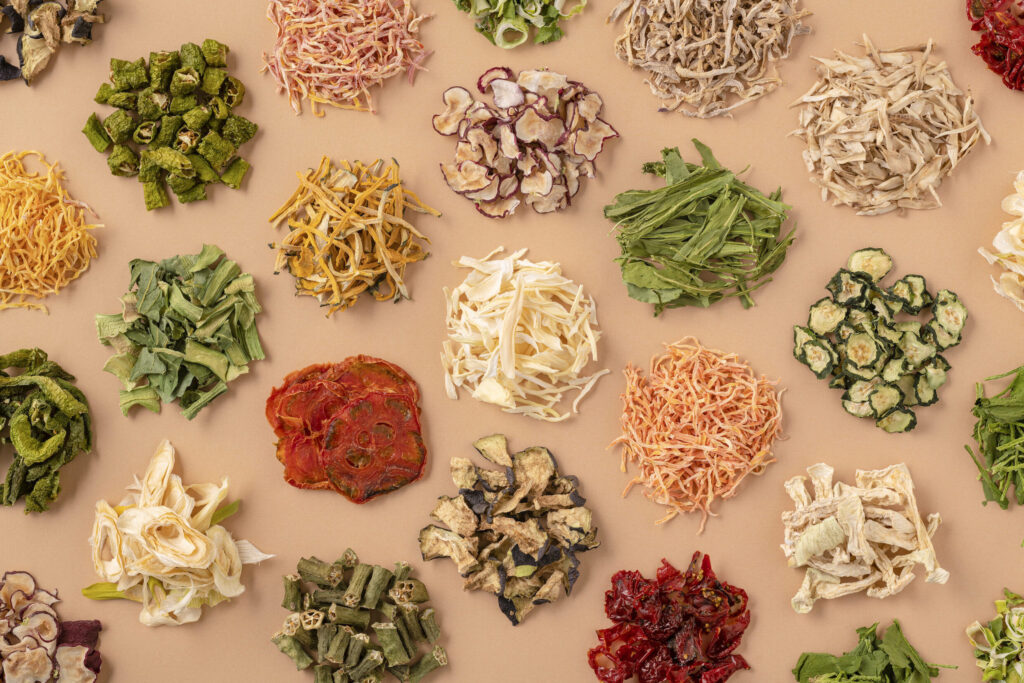
- Sold in small lots from 1 kg
- Handling heirloom vegetables from across Japan
- Dried fruits and herbs also supported
Six reasons to choose Manganji pepper
Grown in Fukuchiyama, Kyoto Prefecture
We use open-field and greenhouse-grown Manganji pepper from a partner farm in Miwa Town, Fukuchiyama, Kyoto Prefecture.
Thick and large
A particularly large, thick variety even among sweet peppers. The thickness of the fruit remains firm even after drying.
Refreshing aroma
The fresh aroma characteristic of a green pepper is intact. An all-purpose savory ingredient that suits both Japanese and Western dishes.
Almost no heat
As a sweet pepper, it is an easy-to-use raw material for those who dislike heat and for products for children.
Powder available
By making it into powder, it can also be developed into raw material for furikake, seasonings, blended spices, and more.
No glucose added
The raw material is 100% Manganji pepper. No sugars or preservatives are added.
Product specifications
Item | Details |
|---|---|
Raw material growing region | Kyoto Prefecture (partner farm) |
Specification | Slice cut |
Storage method | Room temperature (store away from high heat and humidity) |
Best-before date | 6 months from the shipping date |
Minimum lot | From 10 bags / 100 g |
Powder | Available |
Manufacturing period | September |
Customization support
We flexibly accommodate the following customizations to match your OEM product development. Please feel free to contact us for large-lot orders or consultations on specification changes. Even product concepts that can't be fully expressed with the standard specification can be supported by Agriture through combinations of drying conditions and cutting methods.
Item | Details |
|---|---|
Change in cut thickness | 10 kg or more |
Shapes such as rounds and coarse cuts | Consultation available |
Large-lot manufacturing | Advance consultation required three months before the manufacturing period |
Powder processing | Available |
Depending on the customization, there may be constraints on the raw material procurement period or lot size. Consulting us early, in line with the peak season of Manganji pepper and the production schedule, allows production to your desired specification to proceed smoothly.
About the Manganji pepper raw material
For its dried Manganji pepper, Agriture procures raw material through long-term relationships with partner farms within Kyoto Prefecture. By managing everything down to growing region, grower, and variety, we have built a system to deliver commercial raw material of stable quality every year.
BRAND
Variety:Manganji pepper (Kyoto brand vegetable)
PRODUCER
Producer:A partner farm in Miwa Town, Fukuchiyama, Kyoto Prefecture. A grower who relocated from Osaka has continued cultivation for more than eight years and is also working on processed-product development.
REGION
Growing region:Fukuchiyama, Kyoto Prefecture. Manganji pepper, which originated in Maizuru, is grown in Fukuchiyama's cool, morning-mist climate.
CULTIVATION
Cultivation method:Cultivation combining open field and greenhouse. Thick, large fruit at peak season is sorted and moved to drying while still fresh.
*Reference: OYAOYA product page
Agriture's low-temperature drying technology
To make the most of Manganji pepper's qualities, Agriture uses a proprietary drying process that removes moisture slowly at low temperature. It takes longer than high-temperature drying, but its greatest advantage is that it can preserve the color, aroma, and nutrients of the ingredient. Finely controlling all three of temperature, humidity, and airflow lets us draw the optimal drying curve for each ingredient—this is the feature of Agriture's low-temperature drying.
Raw material delivered from partner farmers is processed on an integrated line—washing, cutting, and drying—all on the same day. While reducing raw material loss, we lock the fresh flavor into the dried product. Being able to keep the time from harvest to processing short is a strength that comes precisely from having a processing base in the growing region of Kyoto.
After processing, each lot is checked one by one for moisture value and color tone, and only those meeting quality standards are shipped. Even for commercial lots, because checks are done both visually and by measurement, Manganji pepper can be delivered with stable finished quality.
💡 TIPS | Drying-processing trivia
Manganji pepper has high moisture content, and it is an ingredient in which humidity tends to remain in the inner seed portion. Drying slowly at low temperature achieves both uniform finishing and storability, curbing the risk of mold during storage.
Use scenes and OEM case studies
Dried Manganji pepper is used across a wide range of business types, from food manufacturers to restaurants to e-commerce brands. In addition to menus that make use of the ingredient as is, its adoption as an OEM raw material for processed foods, seasonings, and blended products is expanding. Here we introduce representative use cases.
Nibitashi and mixed rice
This is a use case easy to adopt as a standard ingredient by Japanese-side-dish manufacturers and in the ekiben and delicatessen business. Fresh Manganji pepper spoils easily during transport from the growing region and is difficult to adjust in prep quantity, but a dried product allows room-temperature inventory management; simply combining it with dashi after rehydration finishes it into Kyoto-style mixed rice or nibitashi. For business types wanting stable use regardless of season, such as hotel Japanese-food corners and school-meal centers, we can also handle regular supply from small lots.
Oil-based pasta and pizza
This is a use easy to adopt as a menu-differentiating ingredient by pasta specialty shops, pizza chains, and hotel restaurants. With fresh Manganji pepper, quality variation by growing region and season and storage loss become order-management challenges, but a dried product allows bulk room-temperature stock, curbing yield loss while offering stable color and flavor year-round. Since we can also consult on cut shapes such as slices, rounds, and whole, it can be adopted to menu specifications, from a topping for peperoncino to color accents finishing a pizza.
Cheese and snack processed products
With high flavor affinity for cream cheese and white miso, it can be adopted as an OEM ingredient for bottled dips and snack spreads. Because fresh Manganji has a limited harvest season and is difficult to manage for freshness, adopting dried slices makes year-round stable procurement and room-temperature storage possible. Since cut shape and graininess can be adjusted to a brand's texture design, it can also be considered as a differentiating ingredient for premium delicacies and local processed products by e-commerce brands and souvenir manufacturers.
Kyoto-vegetable mixes and tourist souvenirs
This is a use for which inquiries come from food trading companies and souvenir manufacturers as a raw material for local products and tourist souvenirs that promote the Kyoto-vegetable brand. Whereas fresh Manganji pepper tends to be unstable in procurement timing and growing-region lots, a dried raw material achieves stable year-round procurement and bulk room-temperature management, and it also suits small-lot OEM for blended vegetable mixes and bagged dried sets. Because the “grown in Kyoto” origin label and the background of contract cultivation are easy to build into a package story, it can be used to design differentiated products for souvenir routes and Michi-no-Eki.
About commercial OEM / processing consultations
Manganji pepper, highly recognized as a “Kyoto brand vegetable,” is an ingredient with good affinity for OEM proposals that emphasize regional identity, such as tourist souvenirs, Kyoto-vegetable products, and prepared-food brands.
Agriture also supports the launch of private-brand products centered on dried Manganji pepper and the renewal of existing products. From recipe design and prototyping to preparing specification sheets and package proposals, we accompany you through the entire development process.
Custom-size support (change in cut thickness, shape adjustment): consultation available from orders of 10 kg or more. OEM support: available. Large-lot manufacturing: available (advance consultation required three months before the manufacturing period). We guide you consistently through everything from quotation to sample arrangement to match your requests.
Past initiative case studies are here
Please also see related initiative case studies and columns.
- As If Meeting a Different Vegetable—Manganji Togarashi and the Story of "Season"
- Manganji Togarashi: The Large, Thick-Fleshed King of Kyoto Vegetables
- Summer Kyoto Vegetables: The Season of Fushimi Togarashi and Shishigatani Kabocha
Product catalog showing the items we handle
Flexible support from small lots to large lots
- Sold in small lots from 1 kg
- Handling heirloom vegetables from across Japan
- Dried fruits and herbs also supported
Frequently asked questions
Q1. Is it spicy?
As a sweet pepper variety, it basically has almost no heat. It is characterized by a refreshing aroma and faint bitterness.
Q2. Any tips for rehydrating?
About 5 minutes in lukewarm water is a guide. For mixed rice or nibitashi, you can also add it as is without rehydrating.
Q3. Is powder processing possible?
Q4. Are the seeds removed?
Basically, large seeds are removed at the slicing stage. Additional handling is also possible depending on the use.
Q5. What is the minimum commercial lot?
It can be handled from 10 bags (1 bag = 100 g).
Q6. Can it be used for brand promotion?
You can use the story of “Kyoto brand vegetable, Manganji pepper” as is.
Q7. What is the manufacturing period?
Production is centered on September each year. For large lots, please consult us at least three months in advance.
RETAIL
For those looking to purchase in small packs
If you wish to purchase in small quantities, our sister brand OYAOYA offers dried Manganji pepper in small packs from 15 g to 500 g. It can also be used for prototyping, internal testing, and gifts.
Samples and inquiries
We can also prepare trial samples first. For the initial transaction, samples are supplied for a fee. Please feel free to contact us for consultations on OEM development and stable supply as well.
Commercial-use dried vegetable OEM is here
Commercial vegetable powder is here
Recommended reading
- As If Meeting a Different Vegetable—Manganji Togarashi and the Story of "Season"
- Manganji Togarashi: The Large, Thick-Fleshed King of Kyoto Vegetables
- Summer Kyoto Vegetables: The Season of Fushimi Togarashi and Shishigatani Kabocha
Download the product catalog
We will send the materials to your email address based on the information you provide.